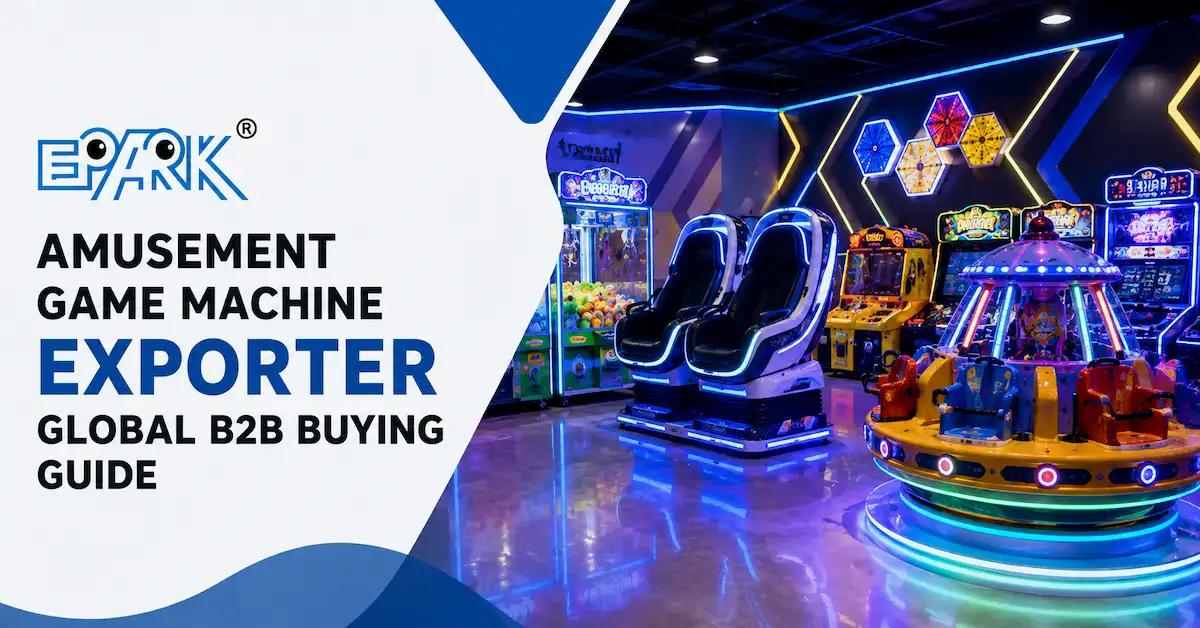
What Is an Amusement Game Machine Exporter?
An amusement game machine exporter supplies commercial entertainment equipment to overseas arcades, family entertainment centers, shopping malls, distributors, and other revenue-generating leisure projects.
A capable exporter should do more than provide a catalog and arrange international shipment. For B2B buyers, the real value is coordinating the complete purchasing process, from equipment selection and destination-market configuration to quality checks, spare-parts planning, export packing, and repeat supply.
This is especially important for projects that combine several equipment categories. A new FEC may need racing games, claw machines, redemption equipment, basketball machines, kids' attractions, and interactive machines in the same order.
Buyers preparing a project can review EPARK's commercial amusement and arcade equipment to compare different machine categories before building an RFQ.
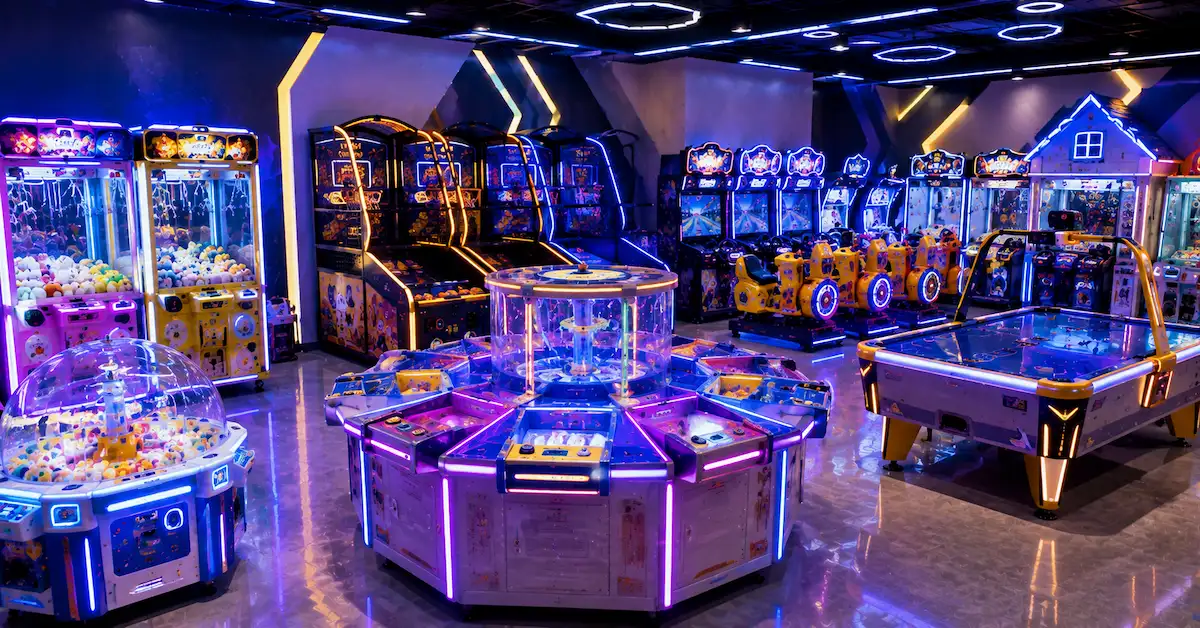
Who Buys Amusement Game Machines for Export?
The best equipment combination depends heavily on who is buying and how the venue will operate.
Family Entertainment Center Operators
FEC operators normally need a diversified product mix capable of serving children, teenagers, parents, and groups.
Their priorities often include:
- Multiple game categories
- Family-friendly attraction mix
- Consistent payment systems
- Spare-parts planning
- Easy maintenance
- Repeatable equipment configuration
For these buyers, the exporter should understand the project as a venue rather than as a collection of unrelated machines.
Arcade Operators
Arcade owners generally focus more on:
- Player attraction
- Machine uptime
- Commercial durability
- Revenue operation
- Maintenance accessibility
A machine can look impressive in a showroom but still create operating problems if controls, payment hardware, or replacement parts are difficult to maintain.
Distributors and Importers
Distributors may need several product categories for resale into different customer segments.
Their priorities often include:
- Stable models
- Consistent specifications
- OEM branding
- Mixed-container orders
- Repeat supply
- Spare-parts availability
For a distributor, the ability to reorder the same approved configuration can matter as much as the first shipment.
Shopping Mall and Entertainment Project Buyers
Project buyers usually evaluate equipment together with:
- Floor area
- Target customer profile
- Visual attraction
- Power availability
- Opening schedule
- Project budget
The exporter should therefore be able to discuss product mix and project suitability, not only individual machine specifications.
What Product Categories Should an Exporter Be Able to Supply?
A strong amusement game machine exporter should provide or coordinate categories that match different commercial entertainment models.
Racing and Driving Games
Racing machines can create strong visual impact and competitive play.
Buyers should evaluate:
- Steering response
- Pedal operation
- Seat durability
- Display configuration
- Linked multiplayer capability
- Service access
For larger venues, linked racing units can also help create social competition.
Shooting Games
Commercial shooting machines require more than an attractive cabinet.
Important areas include:
- Gun-controller durability
- Sensor stability
- Calibration
- Display synchronization
- Replacement-part availability
Claw and Prize Machines
Claw machines are common in arcades, malls, and FECs because they combine simple gameplay with prize-based revenue.
Buyers should confirm:
- Crane movement
- Prize settings
- Grab-strength adjustment
- Payment activation
- Door security
- Refill access
Redemption Games
Redemption equipment often connects gameplay with ticket or prize systems.
Relevant purchasing points include:
- Credit activation
- Scoring accuracy
- Ticket output
- Prize-system compatibility
- Maintenance access
Sports and Skill Games
Basketball machines, air hockey, and other skill-based games can broaden the attraction mix and encourage group play.
Commercial buyers should check sensors, scoring systems, moving parts, and parts that receive repeated physical use.
Kiddie and Family Machines
Kids' entertainment equipment may be used in FECs, malls, family zones, and mixed entertainment centers.
Selection should consider:
- Target age range
- Space requirements
- Operating method
- Maintenance needs
- Visual fit with the surrounding venue
Interactive Entertainment Machines
Interactive equipment can help diversify larger venues and reduce dependence on one type of gameplay.
The right choice depends on venue concept, target market, floor area, and operating budget.
How Should Buyers Build the Right Equipment Mix?
A complete amusement project should not simply contain the maximum possible number of machines. The mix should support the intended customers and commercial model.
| Venue Type | Recommended Equipment Mix | Main Buyer Goal |
|---|---|---|
| Small arcade | Racing + claw + skill games | Variety in limited space |
| Family entertainment center | Redemption + racing + kids + sports | Serve multiple age groups |
| Shopping mall zone | High-visual machines + family games | Attract passing traffic |
| Distributor inventory | Several proven categories | Cover different buyer needs |
| Entertainment complex | Mixed interactive and arcade equipment | Extend customer dwell time |
A good exporter should help the buyer think about balance instead of recommending only the most visually impressive machines.
Why Multi-Category Supply Matters for FEC Projects
A buyer sourcing ten machine categories from ten separate companies may face unnecessary coordination complexity.
Typical problems include:
- Different voltage configurations
- Inconsistent payment systems
- Separate spare-parts lists
- Multiple packaging standards
- Different documentation formats
- More complicated logistics coordination
Working with an exporter capable of consolidating several product categories can simplify communication and reduce configuration inconsistency.
This does not mean every product must come from the same production line. What matters is whether the exporter can clearly manage specifications, QC responsibility, packaging, and after-sales support across the order.
What Makes Amusement Machines Suitable for Commercial Operation?
Product variety is important, but reliability still determines long-term business value.
Cabinet and Structural Design
Commercial machines should be able to withstand repeated public use.
Buyers should review:
- Cabinet structure
- Doors and locks
- Control areas
- Internal mounting
- Service panels
High-Use Controls
Frequently used components may include:
- Buttons
- Joysticks
- Steering wheels
- Pedals
- Guns
- Sensors
The exporter should be able to identify which parts may require replacement over time.
Electrical Design
Important areas include:
- Power supplies
- Wiring organization
- Ventilation
- Internal component mounting
Maintenance Accessibility
A machine that is difficult to service can increase downtime even if its components are reliable.
Technicians should be able to access key service areas without unnecessary disassembly.
Destination-Market Configuration Before Export
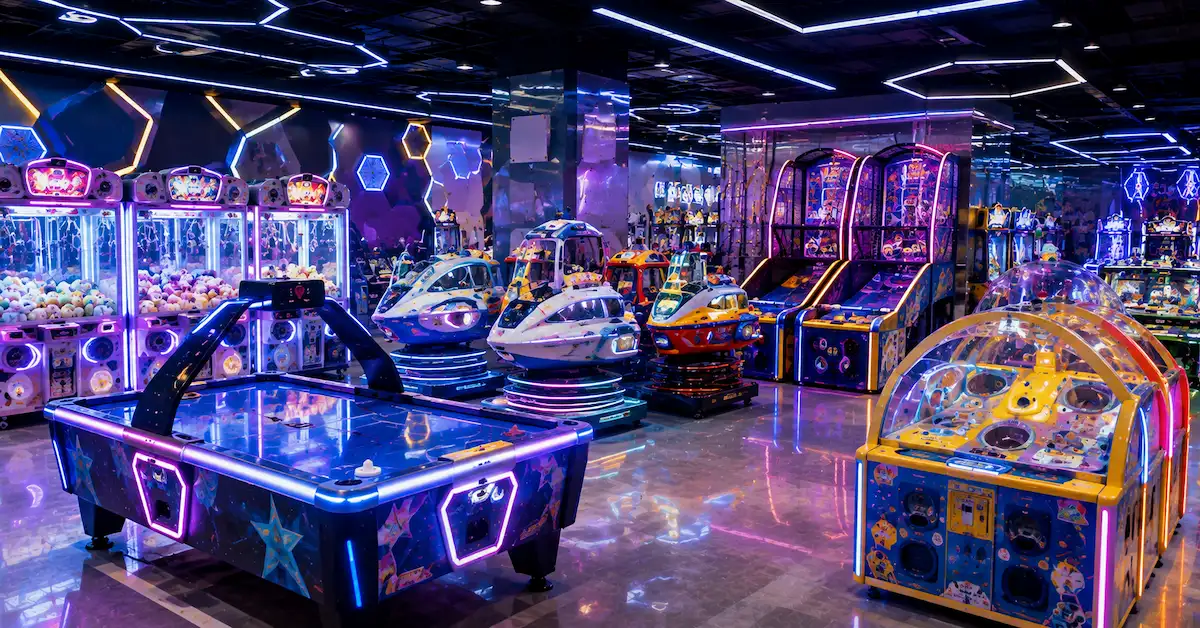
Commercial amusement machines should be configured for the destination market before shipment wherever possible.
Voltage and Frequency
Buyers should provide the exporter with the destination country and required electrical specifications.
Do not assume one configuration works in every market.
Plug Type
Plug requirements should be confirmed before final production.
Language
Depending on the machine, buyers may need to confirm:
- Game interface
- Operator settings
- Instruction labels
- External graphics
Payment System
Different venues may use:
- Coins
- Tokens
- Rechargeable cards
- Cashless systems
For third-party card or cashless systems, buyers should confirm the interface and installation responsibilities before production begins.
Why Payment Standardization Matters in Mixed Orders
In a multi-machine project, inconsistent payment configuration can create unnecessary operational problems.
For example, one group of machines may require one credit value while another may use a different payment signal.
Buyers should therefore standardize where practical:
- Coin or token specifications
- Card-reader requirements
- Credit logic
- Reader installation
- Operator settings
Payment testing should also be part of pre-shipment verification when specific payment configurations are ordered.
How Should Quality Control Work Before Export?
Generic claims such as "strict QC" are not enough for professional buyers.
A better question is:
What functions are tested before shipment, and how is the final configuration verified?
Buyers can review EPARK's quality and safety approach when evaluating equipment inspection processes.
Functional Testing
Depending on the product, testing may cover:
- Gameplay
- Controls
- Sensors
- Displays
- Sound
- Lighting
- Scoring
- Ticket output
Payment Testing
When machines are configured for coin, token, card, or another commercial payment system, the selected payment input should correctly create the intended game credit.
Configuration Verification
Before packing, confirm:
- Model
- Voltage
- Plug
- Artwork
- Payment setup
- Accessories
- OEM requirements
Finding a configuration problem before loading is generally far easier than solving it after international delivery.
OEM Amusement Game Machines for Overseas Buyers
OEM customization can be valuable for distributors, private-label businesses, arcade chains, and themed entertainment projects.
Brand Customization
Depending on product capability,options may include:
- Logo
- Cabinet graphics
- Color schemes
- Product identification
- Packaging
Regional Adaptation
International orders may require:
- Voltage
- Frequency
- Plug type
- Language
Payment Adaptation
Possible options include:
- Coin acceptors
- Token systems
- Card-reader preparation
- Cashless interfaces
Operating Settings
Depending on machine type, buyers may also need to discuss:
- Credit settings
- Game time
- Ticket payout
- Difficulty
- Prize-related parameters
More information is available through EPARK's OEM and equipment customization process.
Mixed Orders vs Single-Category Orders
The best purchasing model depends on the buyer's business.
Single-Category Orders
These can be suitable for:
- Distributor replenishment
- Proven local bestsellers
- Specialized arcades
- Repeat orders
They may simplify parts inventory and operating procedures.
Mixed Equipment Orders
These are more common for:
- New FECs
- Shopping mall projects
- New arcade centers
- Multi-zone entertainment venues
For mixed orders, buyers should standardize specifications wherever practical and request clear packing identification.
How to Evaluate an Amusement Game Machine Exporter
When comparing exporters, buyers should evaluate the complete project-support capability.
Product Range
Can the exporter supply the categories your venue actually needs?
A large catalog is not automatically better if the machines do not fit your target market.
Venue Understanding
The exporter should understand the different requirements of:
- FECs
- Arcades
- Mall entertainment zones
- Distributor markets
Technical Communication
The team should be able to clearly explain:
- Voltage
- Payment systems
- Controls
- Operating settings
- Packing information
Quality-Control Process
Ask specifically what is tested rather than accepting broad quality claims.
OEM Capability
Confirm which modifications can actually be supported before the order is approved.
Spare-Parts Support
A useful exporter should help buyers identify important spare parts before shipment.
Export Capability
International buyers may need:
- Packed dimensions
- Gross weight
- CBM
- Package quantity
- Shipping information
Repeat-Order Consistency
Distributors and chains should verify whether an approved machine configuration can be reproduced in future batches.
Buyers can learn more about EPARK's company and commercial equipment capabilities.
How to Compare Amusement Game Machine Export Quotations
Do not compare only the final unit price.
| Quotation Item | Why It Matters |
|---|---|
| Equipment mix | Determines venue suitability |
| Machine configuration | Enables fair comparison |
| Payment system | Affects commercial operation |
| Voltage and plug | Must match destination |
| OEM scope | Changes production requirements |
| Spare parts | Helps reduce future downtime |
| Export packing | Influences transportation protection |
| CBM | Affects freight planning |
| Lead time | Affects project opening schedule |
The better purchasing principle is:
Compare project suitability and total export scope before comparing unit price.
Spare Parts Planning for Multi-Machine Projects
Spare-parts planning becomes more important as the number and variety of machines increase.
High-Wear Parts
Depending on product type:
- Buttons
- Joysticks
- Pedals
- Sensors
- Frequently used controls
Machine-Specific Parts
These may include:
- Controllers
- Dedicated boards
- Specialized displays
- Model-specific sensors
Revenue-Critical Parts
A low-cost component can stop a machine from operating and generating revenue.
Examples may include:
- Coin acceptors
- Payment interfaces
- Ticket dispensers
- Power supplies
For larger FEC orders, buyers should ask for a spare-parts plan based on the actual machine list rather than purchasing a generic parts package.
Export Packing and Mixed Container Planning
International amusement equipment may contain displays, glass, electronic boards, mechanical components, decorative parts, seats, and accessories.
Buyers should confirm:
- Packed dimensions
- Gross weight
- CBM
- Screen protection
- Moving-part fixing
- Accessory packaging
- Machine labels
- Spare-parts identification
For mixed orders, package identification should match the packing list so the receiving team can quickly determine which accessories and parts belong to each machine.
Common Red Flags When Choosing an Exporter
The Exporter Only Sends a Product Catalog
A project buyer usually needs product-selection guidance, not just hundreds of models.
Product Configuration Is Unclear
The exporter should be able to explain:
- Electrical configuration
- Payment system
- Included accessories
- Major operating settings
No Experience Coordinating Mixed Orders
This can create problems for larger FEC and mall projects.
No Spare-Parts Recommendation
Commercial equipment should be evaluated across its operating lifecycle.
Packing Data Is Unclear
If packed dimensions, gross weight, or CBM are unavailable, freight planning becomes harder.
Price Is Extremely Low but Scope Is Missing
A lower quote may involve different components, packaging, accessories, or support.
Always compare specifications before deciding.
What Should Buyers Include in an RFQ?
A detailed RFQ makes it easier for an amusement game machine exporter to provide relevant recommendations and a usable quotation.
Include:
- Destination country
- Destination port or delivery location
- Venue type
- Available floor area
- Target customer group
- Required machine categories
- Estimated quantity
- Voltage and frequency
- Payment system
- OEM requirements
- Spare-parts requirements
- Target opening or delivery date
- Budget range if available
Buyers can contact EPARK for a project quotation with these details.
Buyer Decision Guide
| Buyer Type | Main Concern | Exporter Capability Needed |
|---|---|---|
| FEC owner | Balanced equipment mix | Multi-category supply |
| Arcade operator | Equipment uptime | QC + spare parts |
| Distributor | Repeat sales | Stable product configuration |
| Importer | Export readiness | Packing + logistics data |
| Private-label buyer | Market differentiation | OEM customization |
The right exporter is not necessarily the company with the largest catalog. It is the company whose product, technical, export, and support capabilities fit the buyer's project.
FAQ
What is an amusement game machine exporter?
An amusement game machine exporter supplies commercial arcade and entertainment machines to international buyers while coordinating product selection, configuration, testing, packing, spare parts, and export requirements.
What machines can an amusement game exporter supply?
Common categories include racing games, shooting machines, claw machines, redemption games, basketball equipment, air hockey, kiddie rides, skill games, and interactive entertainment machines.
How do I choose an amusement game machine exporter?
Evaluate product range, venue knowledge, commercial reliability, QC, destination configuration, OEM capability, spare parts, export packing, and repeat-order support.
Can an exporter supply a complete FEC equipment package?
A multi-category exporter may be able to coordinate several machine types for an FEC project. Buyers should confirm product scope, configuration, packing, and project-support capabilities before ordering.
Can different amusement machines be shipped together?
Mixed shipments may be possible depending on machine dimensions, quantities, packing, and logistics arrangements. The exporter should provide packing and shipment data before loading.
Can amusement machines support card or cashless systems?
Many commercial machines can be prepared for different payment methods, but compatibility with the selected card or cashless system should be confirmed before production.
Can amusement machines be customized for different countries?
Depending on product capability, customization may include voltage, plug type, language, branding, payment configuration, and selected operating settings.
What spare parts should buyers order?
Prioritize high-wear, machine-specific, and revenue-critical components based on the actual equipment list.
How should buyers compare export quotations?
Compare equipment configuration, payment system, voltage, OEM scope, spare parts, packing, CBM, lead time, and overall project support before comparing unit price.
What information should I provide for a quotation?
Provide venue type, floor area, destination, machine categories, quantity, voltage, payment system, OEM requirements, spare-parts needs, and target delivery schedule.
Conclusion
Choosing the right amusement game machine exporter is not simply about finding a company capable of shipping arcade machines internationally.
For FEC owners, arcade operators, distributors, importers, and private-label buyers, the stronger procurement approach is:
Equipment Mix → Commercial Reliability → Destination Configuration → QC → OEM → Spare Parts → Export Coordination → Repeat Supply
A capable exporter should help buyers build an equipment package that fits the venue, operates correctly in the destination market, arrives with clear packing and spare-parts planning, and can be supported through future repeat orders.
Explore EPARK's commercial amusement equipment, learn more about EPARK, review its quality and safety approach, explore OEM customization options, or contact EPARK with your venue type, floor area, equipment categories, quantity, destination, payment requirements, and target opening date for a project-specific recommendation and quotation.
General Disclaimer
All data on https://www.eparki.com is for general guidance only. As a leading indoor playground manufacturer and trampoline supplier, EPARK strives for accuracy but gives no express or implied warranty regarding completeness, performance or project fitness. Product specs, designs and results may vary with use and customer requirements. Buyers must verify technical details, compliance and suitability before purchase. EPARK OEM/ODM is not liable for any direct, indirect or consequential damages arising from site use. For custom solutions, contact our manufacturer and supplier team via the Contact page.
Intellectual Property
Text, images, videos, CAD files and software are Guangzhou EPARK Electronic Technology Co., Ltd. All rights reserved. No part may be copied, republished or used commercially without prior written permission. We will pursue legal action for copyright or design-patent infringement.
Trademarks
"EPARK", the EPARK logo and related graphics are registered trademarks of Guangzhou EPARK Electronic Technology Co., Ltd. Unauthorized use in ads, domain names or packaging is prohibited.
Governing Law
These terms are governed by the laws of the People's Republic of China.
Contact
Questions? Email sales@nanyuetech.com or WhatsApp +86 139 0307 9263.