Introduction
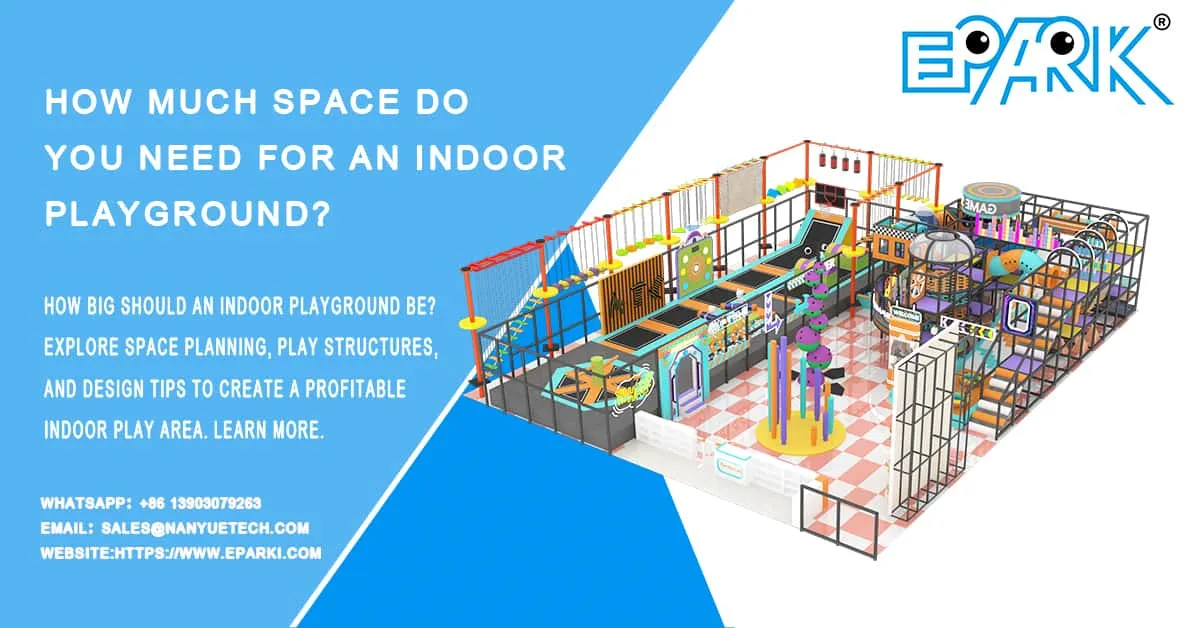
Indoor playgrounds have become one of the fastest-growing attractions in modern entertainment venues. Shopping malls, family entertainment centers (FECs), trampoline parks, and community recreation centers are increasingly incorporating indoor play areas to attract families and extend customer dwell time. For investors and B2B buyers, however, one of the first and most critical questions is: How much space do you actually need for an indoor playground?
The answer depends on several factors, including the type of equipment you plan to install, your target age group, ceiling height, and the overall business model of your venue. Some operators successfully run compact playgrounds in as little as 100 square meters, while others build large entertainment zones covering over 2,000 square meters.
Understanding the correct space requirements is essential for several reasons. First, the right layout ensures safety compliance with international standards. Second, proper planning maximizes the number of visitors your venue can accommodate. Finally, a well-designed playground improves customer experience, leading to higher revenue and repeat visits.
This comprehensive guide will explain how to calculate the ideal space for an indoor playground, the key factors that affect layout planning, and how to work with a professional supplier to build a profitable entertainment space.
What Is an Indoor Playground?
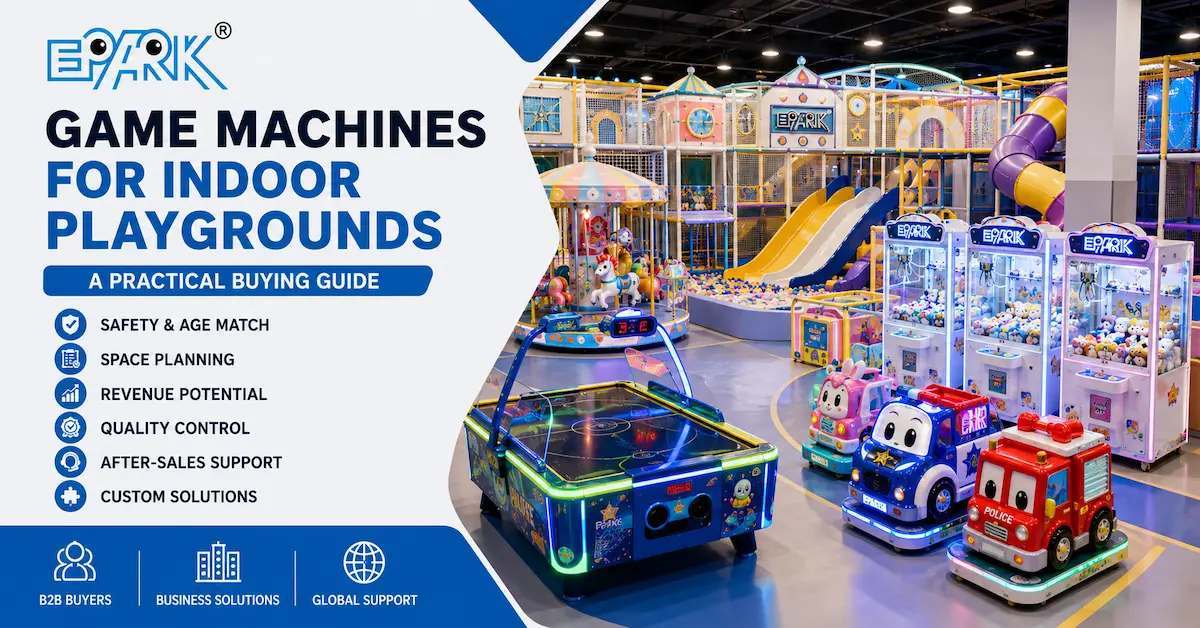
An indoor playground is a soft play entertainment facility designed for children, typically installed in commercial indoor environments such as shopping malls, amusement centers, restaurants, and educational venues. Unlike outdoor playgrounds, indoor playgrounds operate year-round regardless of weather conditions, making them highly attractive to operators seeking stable revenue streams.
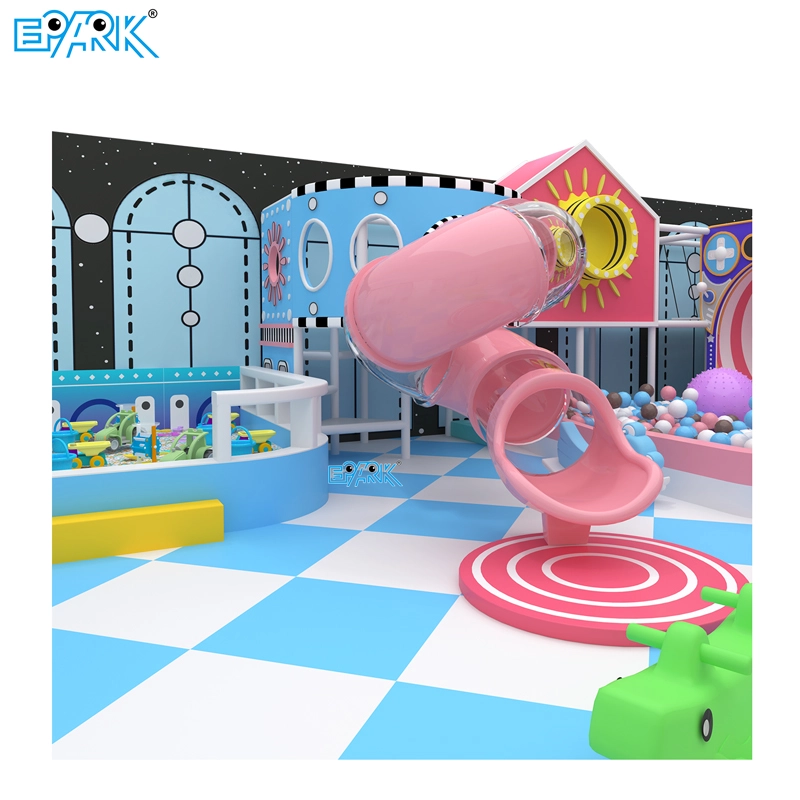
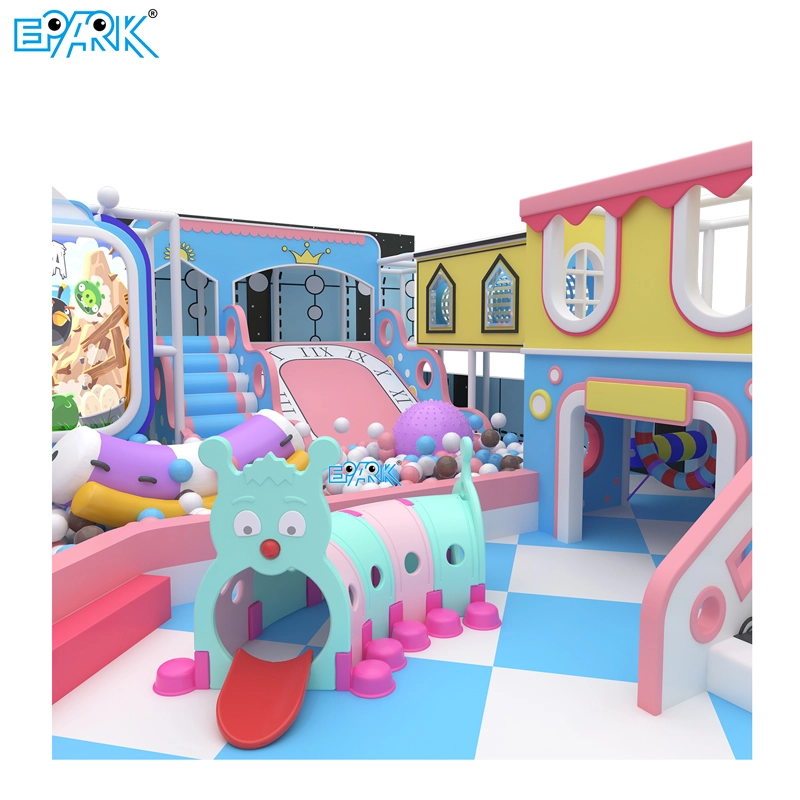
Indoor playground equipment is usually constructed from soft materials, steel frames, safety nets, and durable plastics to ensure child safety. The design emphasizes physical activity, exploration, and imaginative play. Many modern playgrounds also incorporate educational elements that support children’s cognitive and social development.
Common goals of indoor playgrounds include:
-
Encouraging physical movement and exercise
-
Providing a safe environment for social interaction
-
Creating an engaging experience that encourages longer visits
From a business perspective, indoor playgrounds are highly scalable. Operators can start with a small play area and gradually expand by adding new attractions such as climbing structures, interactive games, or trampoline zones.
 |
 |
Common Indoor Playground Equipment
Most indoor playgrounds include a combination of different attractions to maintain variety and excitement. The most popular equipment types include:
| Equipment Type | Function | Space Requirement |
|---|---|---|
| Ball Pit | Interactive play area with foam or plastic balls | Medium |
| Spiral or Tube Slides | High-energy attraction for climbing and sliding | Medium |
| Soft Climbing Structures | Multi-level play frames with obstacles | Medium to Large |
| Trampoline Zones | Jumping areas for active play | Large |
| Ninja Courses | Obstacle courses for older kids | Medium to Large |
| Interactive Games | Digital or sensor-based play activities | Small |
Combining multiple attractions helps create a balanced entertainment experience that appeals to children of different ages.
How Much Space Do You Need for an Indoor Playground?
Indoor playgrounds come in various sizes depending on the target market and investment budget. In the amusement industry, playground projects are often categorized into three main size levels.
Small Indoor Playground (100–300㎡ / 1,000–3,000 sq ft)
Small indoor playgrounds are ideal for businesses with limited space or lower startup budgets. They are commonly found in:
-
Cafes or restaurants with children’s areas
-
Community centers
-
Small shopping malls
-
Kindergarten or educational venues
Despite the compact space, small playgrounds can still provide engaging experiences by focusing on multi-functional equipment such as combined slide structures and ball pits.
Typical features may include:
-
A mini ball pit
-
Single or double slides
-
Small climbing frames
-
Soft obstacles and tunnels
Because of their smaller size, these playgrounds usually require lower investment and shorter installation times. Many operators choose this model as a starting point before expanding their entertainment offerings.
Medium Indoor Playground (300–800㎡ / 3,000–8,000 sq ft)
Medium-sized indoor playgrounds are the most common commercial model in the global amusement industry. They offer enough space to include multiple attractions while still remaining manageable in terms of cost and maintenance.
Typical locations include:
-
Shopping mall entertainment zones
-
Kids activity centers
-
Family entertainment centers
A medium playground often includes:
-
Multi-level soft play structures
-
Large ball pits
-
Interactive climbing areas
-
Trampoline sections
-
Toddler play zones
This size allows operators to divide the playground into separate activity zones, which improves safety and enhances the play experience for different age groups.
From a business perspective, medium playgrounds usually provide the best balance between investment and profitability.
Large Indoor Playground (800–2,000㎡ / 8,000–20,000 sq ft)
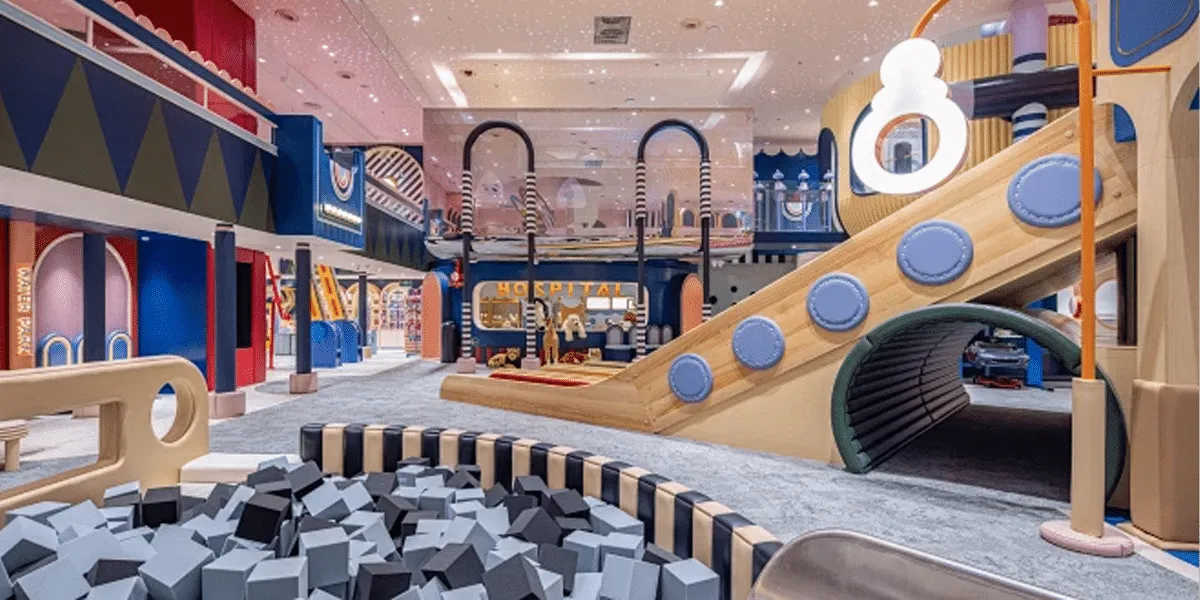
Large indoor playgrounds are typically part of large entertainment complexes or destination venues. These projects aim to attract significant foot traffic and offer a wide variety of attractions.
They are commonly installed in:
-
Large shopping malls
-
Theme parks
-
Integrated family entertainment centers
-
Resort entertainment areas
A large playground can include:
-
Multi-story play structures
-
Giant slides
-
Ninja obstacle courses
-
Rope courses
-
Trampoline parks
-
Interactive digital games
These facilities often serve as the main attraction of a venue, capable of hosting hundreds of visitors simultaneously.
However, larger playgrounds require careful planning to ensure safety, efficient crowd flow, and operational efficiency.
 Key Factors That Affect Indoor Playground Space Requirements
Choosing the correct playground size is not simply about filling the available space. Several key factors influence how much space is actually needed for a successful project.
Target Age Group
Different age groups require different types of play environments. For example, toddlers need soft, low-height structures designed for safety, while older children prefer more challenging attractions.
A well-designed indoor playground often includes separate zones for different age groups.
| Age Group | Recommended Features |
|---|---|
| 1–3 years | Soft play area, mini slides, sensory toys |
| 4–7 years | Climbing frames, ball pits, obstacle courses |
| 8–12 years | Ninja courses, trampolines, adventure challenges |
Separating these areas reduces safety risks and ensures that each group enjoys activities suited to their abilities.
Equipment Selection
The type of equipment you choose has a major impact on space requirements. Some attractions require large open areas, while others can be stacked vertically to save space.
Examples include:
-
Trampoline parks require wide open floors and safety clearance zones.
-
Multi-level soft playgrounds maximize vertical space and reduce floor usage.
-
Rope courses require higher ceilings but minimal floor footprint.
Strategic equipment selection allows operators to maximize entertainment value without exceeding space limitations.
Ceiling Height
Ceiling height is one of the most overlooked yet critical factors in indoor playground design.
Different attractions have different height requirements:
| Attraction Type | Recommended Ceiling Height |
|---|---|
| Soft playground | 3–5 meters |
| Multi-level play structure | 4–6 meters |
| Trampoline park | 5–8 meters |
| Rope course | 6 meters or higher |
Higher ceilings allow designers to create multi-level playground structures, which significantly increase play capacity.
Safety and Circulation Space
Safety standards require sufficient spacing between equipment and adequate walking areas for supervision and evacuation.
Industry guidelines typically recommend allocating 20–30% of total floor space for non-play areas, including:
-
Parent seating zones
-
Walkways
-
Emergency exits
-
Staff supervision areas
Proper circulation planning improves both safety and visitor comfort.
 Smart Layout Tips to Maximize Playground Space
Even if your venue has limited space, a well-planned layout can significantly increase play value and visitor capacity.
Use Multi-Level Structures
Vertical play structures are one of the most efficient ways to maximize indoor playground space. By stacking multiple activity levels, operators can include more attractions without expanding the floor area.
For example, a three-level soft play structure can include:
-
Slides on the top level
-
Obstacle tunnels on the middle level
-
Ball pits on the ground level
This design creates a dynamic and engaging environment while optimizing space usage.
Combine Multiple Attractions
Combining different types of attractions within the same area can improve play diversity and increase visitor satisfaction.
Popular combinations include:
-
Ball pits with interactive slides
-
Trampoline zones with foam pits
-
Climbing walls connected to obstacle courses
A diversified attraction mix helps ensure that children remain engaged longer, increasing customer dwell time and spending.
Plan Parent-Friendly Areas
Parents are an essential part of the indoor playground customer experience. Comfortable seating areas encourage them to stay longer while supervising their children.
Well-designed playgrounds often include:
-
Viewing areas with clear sightlines
-
Cafes or snack bars
-
Charging stations and seating lounges
These features enhance the overall experience and can generate additional revenue streams.
Why Work With a One-Stop Indoor Playground Supplier?
For many investors, building an indoor playground involves multiple stages including design, manufacturing, shipping, and installation. Working with a one-stop supplier simplifies the entire process.
Custom Playground Design
Professional suppliers usually offer custom layout services. Designers analyze your venue dimensions, ceiling height, and target customers to create an optimized plan.
This ensures that every square meter of space is used efficiently while maintaining safety standards.
Equipment Manufacturing and Quality Control
A reliable manufacturer ensures that all equipment meets international safety standards such as:
| Standard | Region |
|---|---|
| ASTM F1918 | United States |
| EN1176 | Europe |
| ISO 9001 | International quality management |
High-quality materials and strict production control ensure durability and long-term safety.
Installation and After-Sales Support
Experienced suppliers typically provide comprehensive support services, including:
-
Global shipping and logistics
-
Installation guidance
-
Maintenance support
-
Spare parts supply
These services reduce operational risks and help operators launch their playground projects more efficiently.
 Conclusion
The space required for an indoor playground can vary widely depending on the project scale and business goals. Small playgrounds may only require 100 square meters, while large entertainment complexes can exceed 2,000 square meters.
When planning your project, it is important to consider several key factors such as target age groups, equipment selection, ceiling height, and safety requirements. A well-planned layout can significantly improve customer experience while maximizing the profitability of your venue.
By combining smart design strategies with the right equipment mix, operators can create an indoor playground that is safe, engaging, and financially sustainable.
Partnering with an experienced indoor playground manufacturer can further simplify the process by providing professional design, high-quality equipment, and reliable installation support.
CTA
If you are planning to start an indoor playground project, choosing the right design and equipment is the key to success.
Our team specializes in custom indoor playground design, manufacturing, and global installation services. With extensive industry experience, we help clients transform empty spaces into profitable entertainment destinations.
Contact us today to receive a free playground layout design and professional project consultation.
General Disclaimer
All data on https://www.eparki.com is for general guidance only. As a leading indoor playground manufacturer and trampoline supplier, EPARK strives for accuracy but gives no express or implied warranty regarding completeness, performance or project fitness. Product specs, designs and results may vary with use and customer requirements. Buyers must verify technical details, compliance and suitability before purchase. EPARK OEM/ODM is not liable for any direct, indirect or consequential damages arising from site use. For custom solutions, contact our manufacturer and supplier team via the Contact page.
Intellectual Property
Text, images, videos, CAD files and software are Guangzhou EPARK Electronic Technology Co., Ltd. All rights reserved. No part may be copied, republished or used commercially without prior written permission. We will pursue legal action for copyright or design-patent infringement.
Trademarks
"EPARK", the EPARK logo and related graphics are registered trademarks of Guangzhou EPARK Electronic Technology Co., Ltd. Unauthorized use in ads, domain names or packaging is prohibited.
Governing Law
These terms are governed by the laws of the People's Republic of China.
Contact
Questions? Email sales@nanyuetech.com or WhatsApp +86 139 0307 9263.