Engineered Indoor Playground Systems for Commercial Venues
Commercial venue developers and entertainment operators face the ongoing challenge of converting interior square footage into safe, high-traffic family attractions. An indoor playground serves as an anchor amenity that increases dwell time, drives repeat family visits, and generates reliable revenue streams across retail malls, family entertainment centers, and hospitality resorts. Guangzhou EPARK Electronic Technology Co., Ltd. designs and manufactures modular play systems engineered to optimize challenging architectural layouts while providing safe, physically engaging environments for children.
Product Overview and Modular Architecture
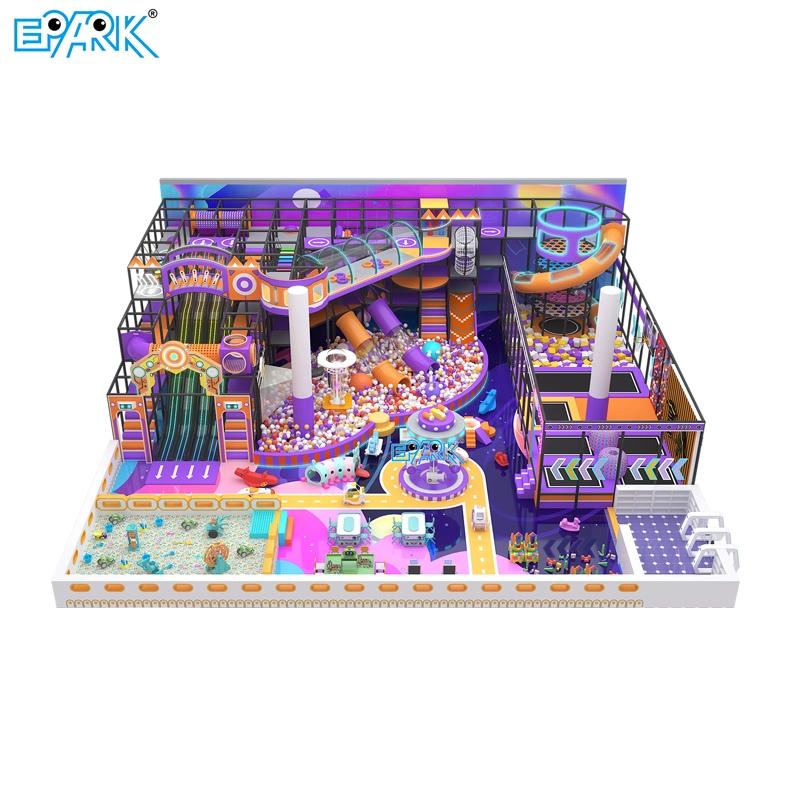
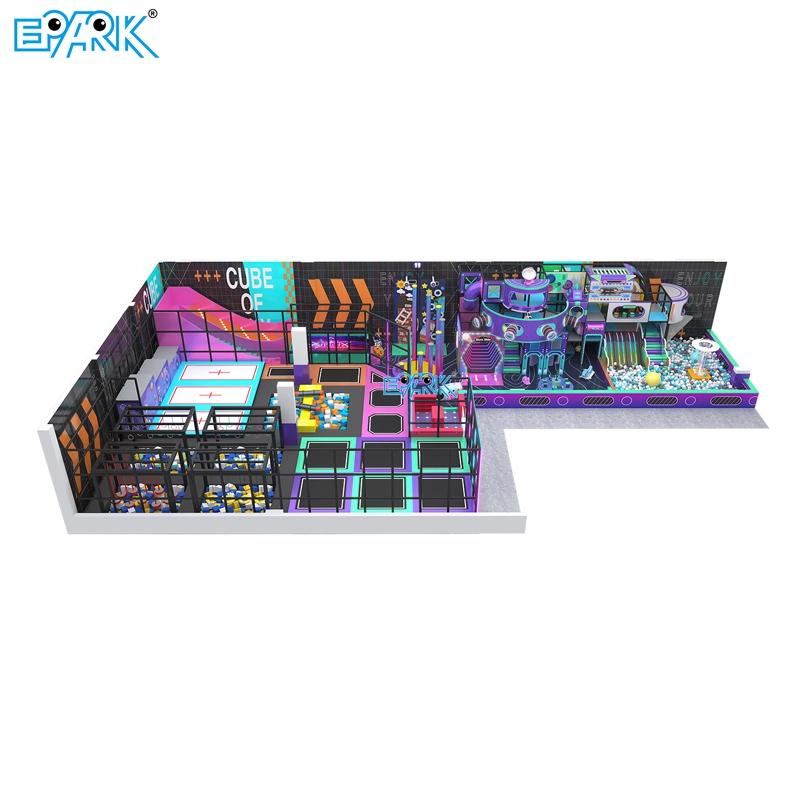
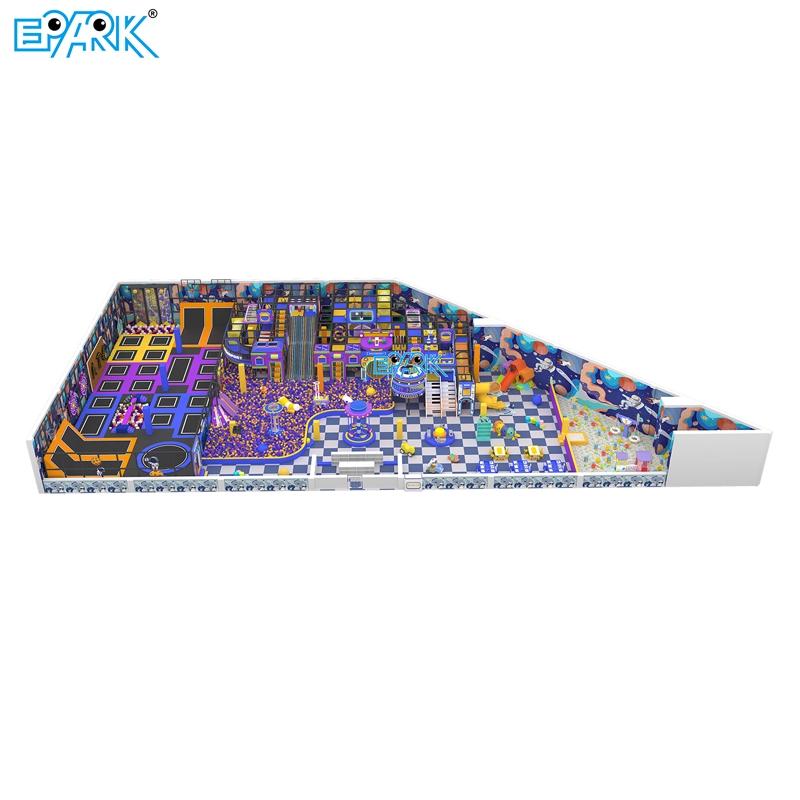
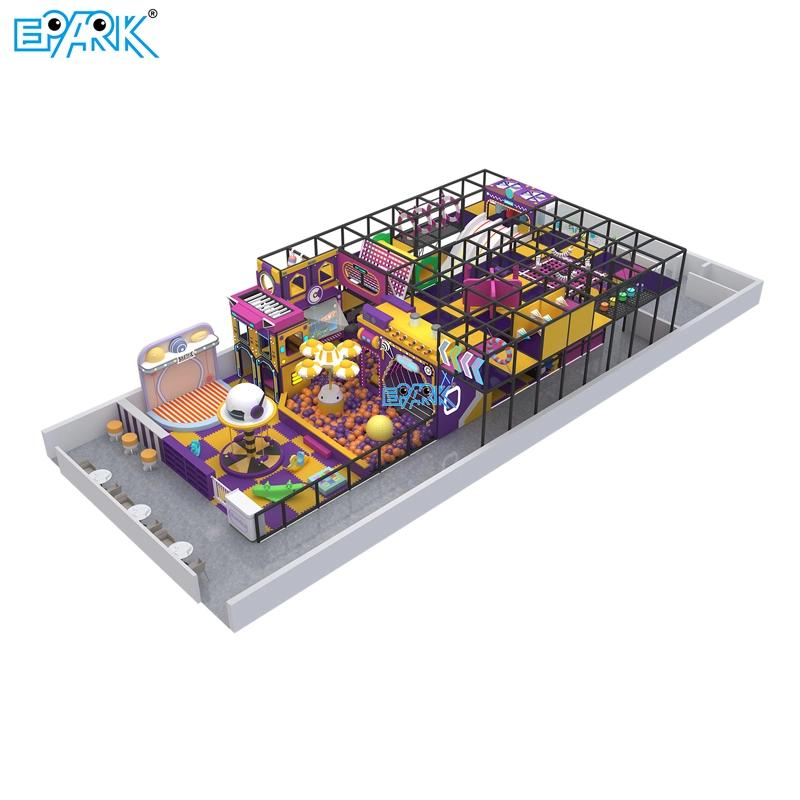
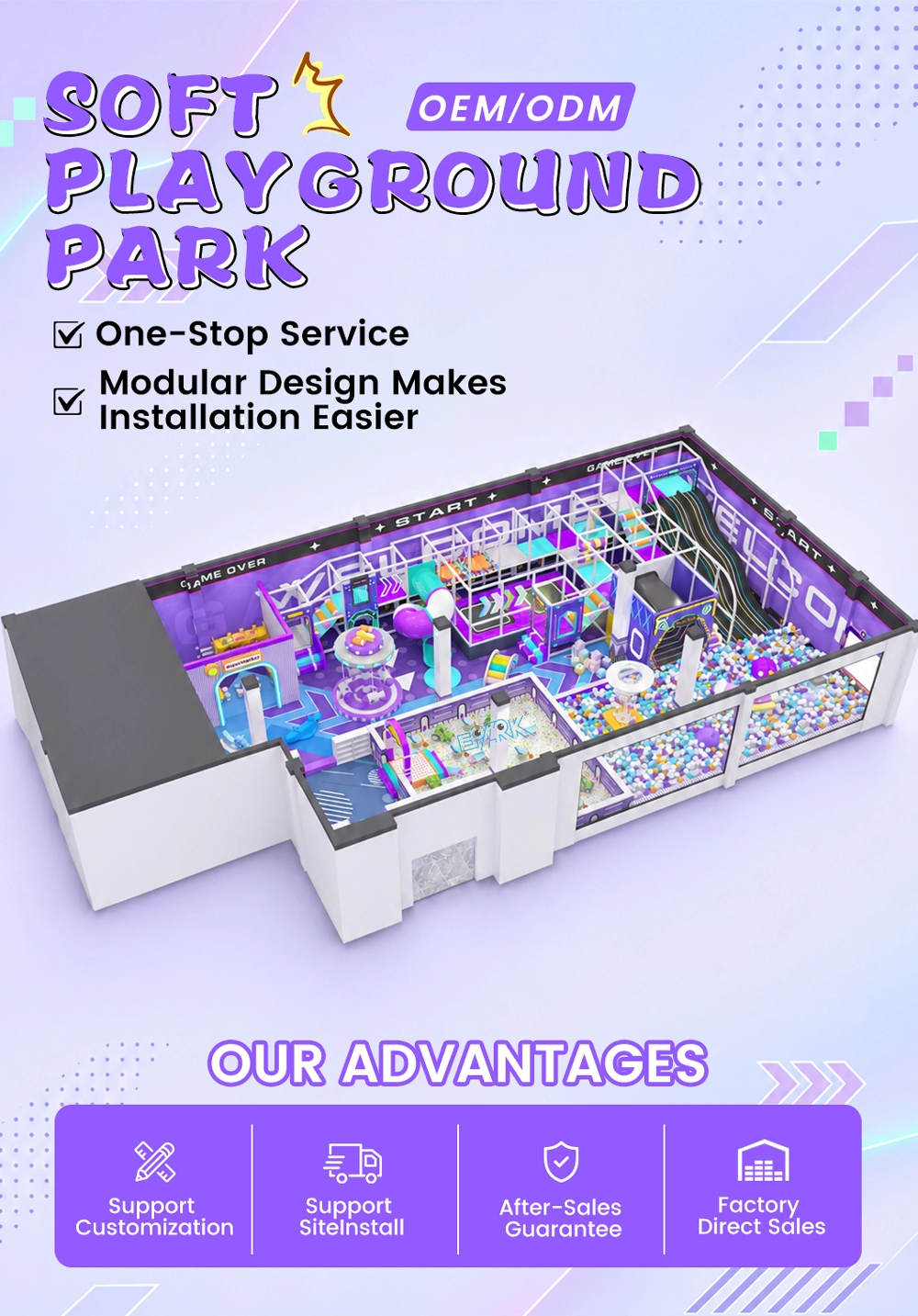
Modern commercial soft-play installations utilize interconnected structural steel frames divided into organized, multi-tiered activity zones. Rather than relying on static, single-purpose components, a properly engineered indoor children's playground integrates physical obstacles, vertical climbing matrices, horizontal transit tunnels, and open interactive zones into a coherent floor plan. Visual transparency is maintained across key elevations through tensioned safety netting and clear shatter-resistant panels, allowing parents and staff clear sightlines throughout the structure.
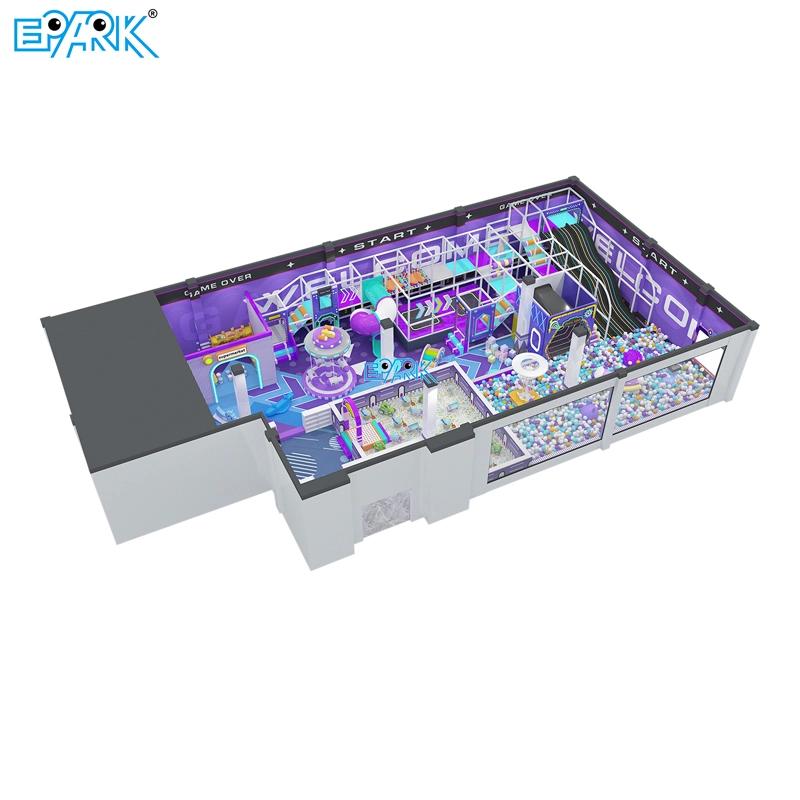
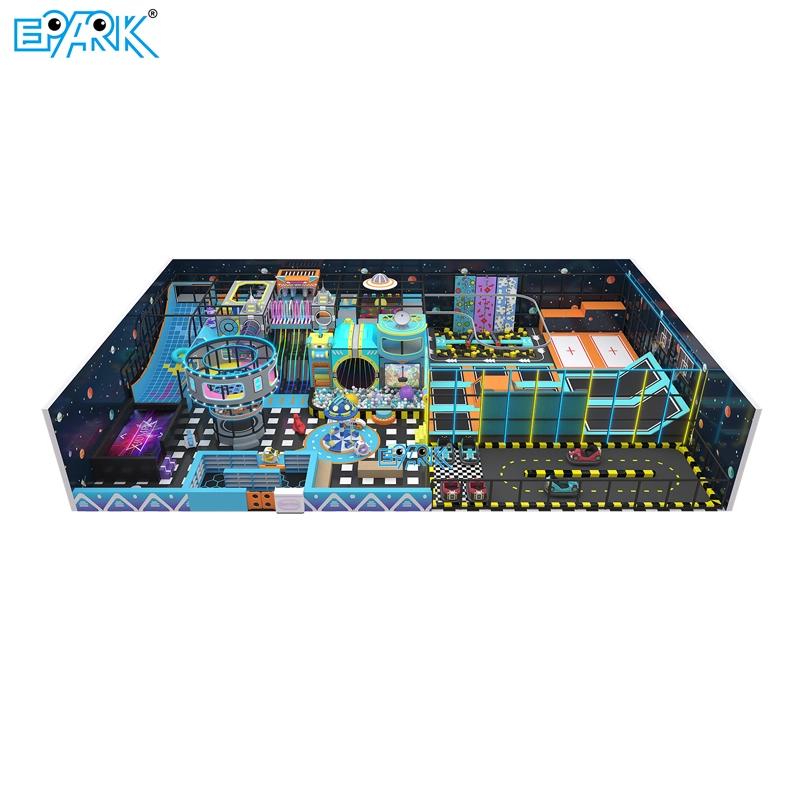
Visual presentation plays a central role in guest retention. Systems can be styled with cohesive graphics—such as contemporary digital gaming motifs using high-contrast purple, cyan, white, and black palettes—or custom-developed to match corporate identity guidelines. The structural geometry remains inherently modular, meaning horizontal deck levels, vertical access columns, and transit corridors can be adjusted to navigate structural building pillars, uneven ceiling heights, and designated emergency egress lanes.
Key Play Modules and Mechanical Features
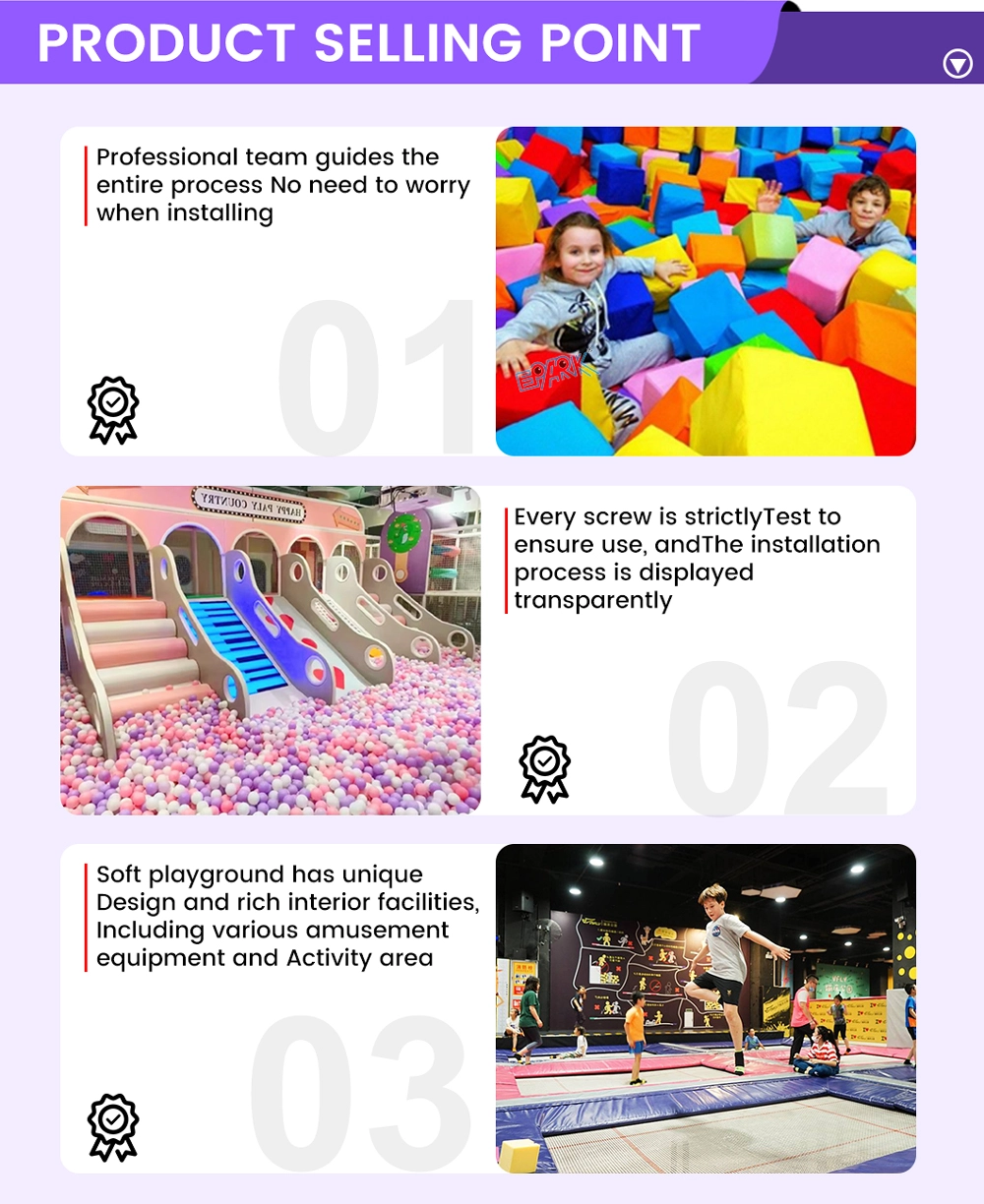
An integrated playground facility typically distributes traffic across several interactive sub-assemblies to prevent congestion and manage child flow during peak hours:
- Slide Complexes: A multi-lane indoor playground with slide configuration enables varied descent speeds. Common specifications include dual-lane straight fiberglass slides, high-incline drop runs, and enclosed spiral tube slides that exit into safety run-out zones or ball pits.
- Deep Ball Pools: High-capacity containment basins filled with hollow, rotationally molded plastic balls. These areas serve as safe landing buffers for adjacent slides and can incorporate mechanical ball-washers, vacuum feeding tubes, or target panels.
- Elevated Traverse Systems: Webbed rope bridges, suspended plank pathways, and clear polycarbonate crawl tubes that encourage balance, spatial awareness, and upper-body coordination across upper tiers.
- Soft Obstacle Courses: Vertical squeeze rollers, foam wedge climbs, hanging punching bags, and multi-tier spider web towers engineered to promote climbing and agility in an impact-absorbing environment.
- Interactive Ground Stations: Wall-mounted manipulative puzzle panels, low-profile rotating elements, and sensory play modules tailored for younger participants or lower-energy zones.
Material Specifications and Industrial Finishes
Durability in commercial environments depends on the physical characteristics of structural and surfacing materials. While exact formulations and wall thicknesses vary according to site-specific load calculations and budget specifications, commercial indoor playground equipment relies on a standardized hierarchy of materials:
- Core Framework: Hot-dip galvanized or powder-coated structural steel tubing connected via precision-cast fasteners, eliminating sharp exterior welds and exposed mechanical edges.
- Impact Padding: Closed-cell cross-linked polyethylene or high-density polyurethane foam sleeves applied directly over structural steel uprights and platform frames to absorb lateral body impacts.
- Surface Upholstery: Heavy-gauge, commercial PVC vinyl outer skins (typically flame-retardant and UV-stabilized) that resist tearing, punctures, and repeated chemical wipe-downs.
- Barrier Netting: High-tenacity polypropylene or polyester knotless netting installed continuously along open deck profiles to prevent falls without obscuring ambient light or airflow.
- Rigid Plastic Components: Food-grade LLDPE (linear low-density polyethylene) utilized for slide chutes, entry portals, and crawl tubes, produced via rotational molding to maintain uniform wall density.
Manufacturing Workflow and Quality Engineering
Developing dependable play factory soft play installations requires strict coordination between spatial planning and factory pre-fabrication. The manufacturing sequence progresses through deliberate engineering phases:
- Spatial Mapping and CAD Modeling: The facility layout begins with precise site measurements, noting ceiling clearance, HVAC ductwork, supporting columns, and access points to create a clash-free 3D layout.
- Structural Fabrication: Tubing is cut, deburred, drilled, and powder-coated under controlled conditions. Fastening brackets are jig-welded to maintain consistent dimensional tolerances across modular bays.
- Soft-Part Foaming and Sewing: Wood substrates are edge-routed, padded with designated foam densities, and bound in heavy-duty vinyl using reinforced double-stitched seams.
- Trial Erection: Key modular bays are dry-fitted inside the manufacturing facility to verify alignment, joint tolerances, and component interfaces before containerization.
- Quality Auditing: Technicians inspect stitch lines, check fastener clearances, evaluate mesh tensioning, and confirm that all surfaces meet standard entrapment probe criteria.
Commercial Application Scenarios
Sourcing an indoor playground for sale allows property operators to target family demographics across diverse market segments:
- Shopping Malls and Retail Centers: Functions as a retail anchor, converting underutilized mezzanine space into a paid-admission venue or free customer-appreciation amenity.
- Dedicated Family Entertainment Centers (FECs): Operates as the foundation of larger leisure hubs alongside trampoline arenas, redemption arcades, and party booking rooms.
- Hospitality and Resort Properties: Provides supervised, weather-independent recreation for hotel guests, boosting off-season family booking rates.
- Early Childhood Development Facilities: Supplies structured physical motor-skill play areas compliant with commercial early-learning operational standards.
Procurement, Customization, and Planning Guidance
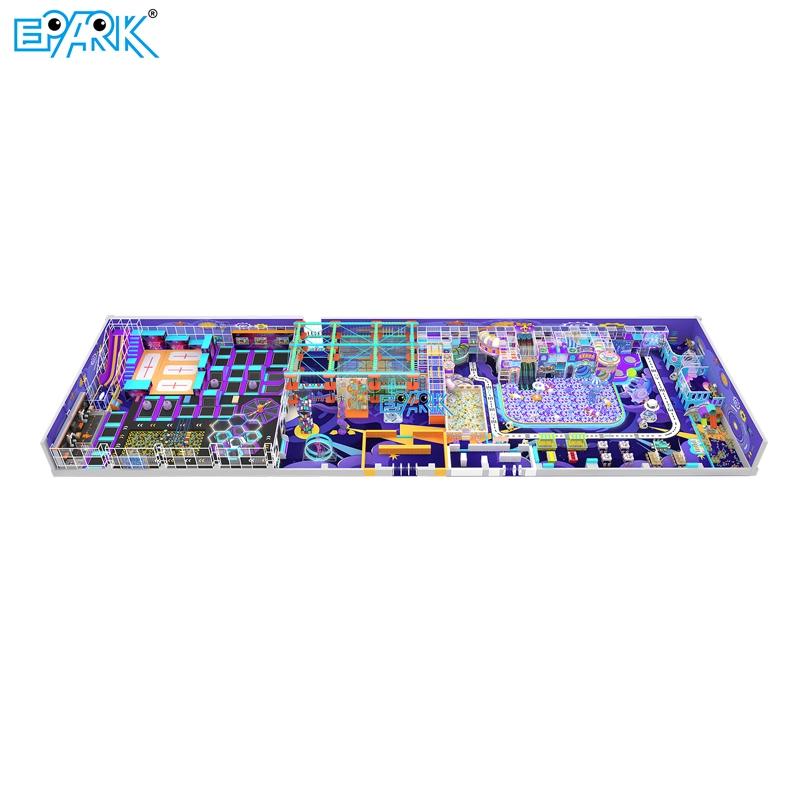
When evaluating soft play equipment for sale, commercial buyers must look beyond cosmetic renderings to evaluate practical project metrics. Conceptual 3D illustrations show potential visual flow and zone distribution, but field execution requires engineering adaptability. Key customization parameters include ceiling height optimization, partition zones for distinct age brackets (such as separating toddler crawl areas from high-speed junior obstacle runs), and perimeter entry gating designed for ticketing control.
Buyers should prepare architectural DWG drawings detailing beam clear-heights, floor load limits, and building utility layouts. Clearances around high-speed exits, such as slide run-outs, must comply with circulation standards, maintaining unobstructed pathways for facility supervisors and maintenance personnel.
Purchasing Decision Factors for Commercial Operators
Selecting durable commercial indoor playground equipment involves assessing structural longevity, daily operational overhead, and total cost of ownership. Operators must evaluate whether soft surfaces feature accessible industrial zippers or concealed maintenance seams that allow swift internal foam inspection. Modular configurations that allow operators to rotate, upgrade, or add new obstacle sections every few seasons extend the commercial lifecycle of the venue without requiring a full structural overhaul.
Factory Support and Project Consultation
Guangzhou EPARK Electronic Technology Co., Ltd. provides end-to-end design, manufacturing, and global export support for commercial indoor amusement projects. From initial site-plan optimization to final sea-freight logistics and technical installation guidance, EPARK helps leisure venues deploy compliant, durable play equipment tailored to local market requirements.
To request technical design layouts, verify custom modular specifications, or discuss an upcoming indoor playground project, contact the engineering sales department:
Contact: Bella Zhang
WhatsApp: +86 139 0307 9263
Email: sales@nanyuetech.com
Address: Building 9, 120 Donghuan Road, Shiqiao, Panyu District, Guangzhou, Guangdong, China