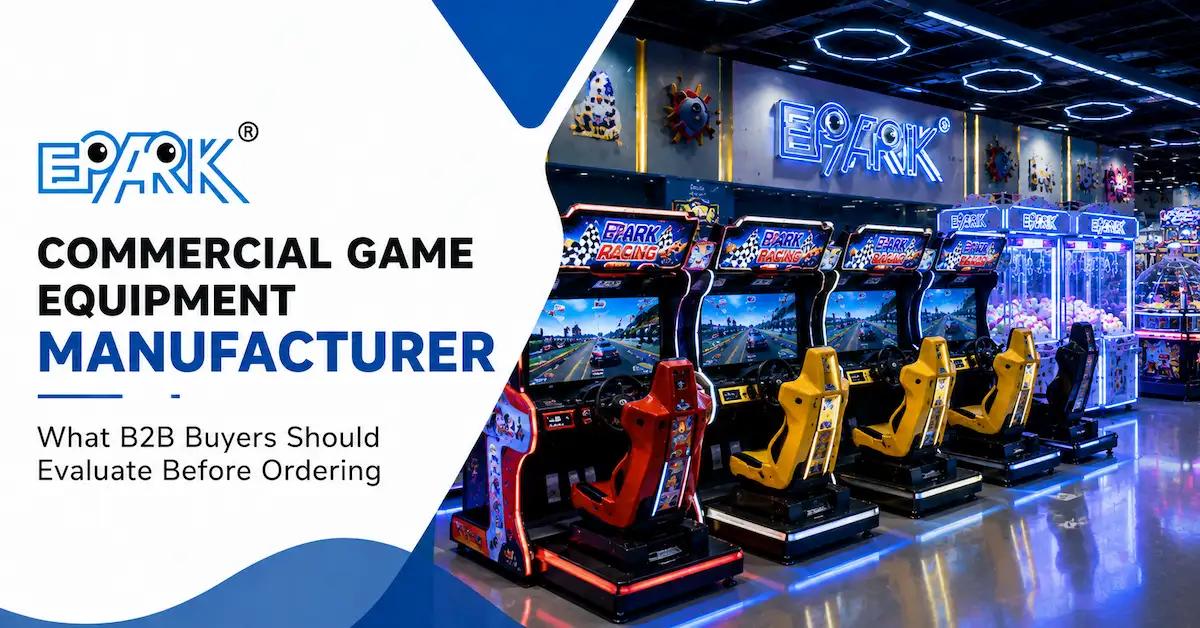
What Is a Commercial Game Equipment Manufacturer?
A commercial game equipment manufacturer develops and produces game machines specifically for revenue-generating entertainment venues rather than occasional home use.
Typical applications include family entertainment centers, arcade centers, shopping malls, indoor amusement venues, leisure complexes, and distributor projects.
Commercial machines must be designed around operational requirements such as frequent player interaction, long daily operating hours, payment-system integration, service access, spare-part replacement, and repeat-order consistency.
This means B2B buyers should evaluate much more than cabinet appearance or game graphics.
The manufacturer behind the equipment can directly influence maintenance costs, opening schedules, equipment consistency, customization flexibility, and long-term operation.
Buyers planning a new project can first review EPARK's commercial arcade and amusement equipment to compare different game categories.
Who Buys Commercial Game Equipment?
Different buyers evaluate commercial machines from different perspectives.
Family Entertainment Center Operators
FEC operators normally need a balanced equipment mix capable of serving different age groups and visit purposes.
A typical project may combine:
- Racing games
- Redemption machines
- Prize and claw machines
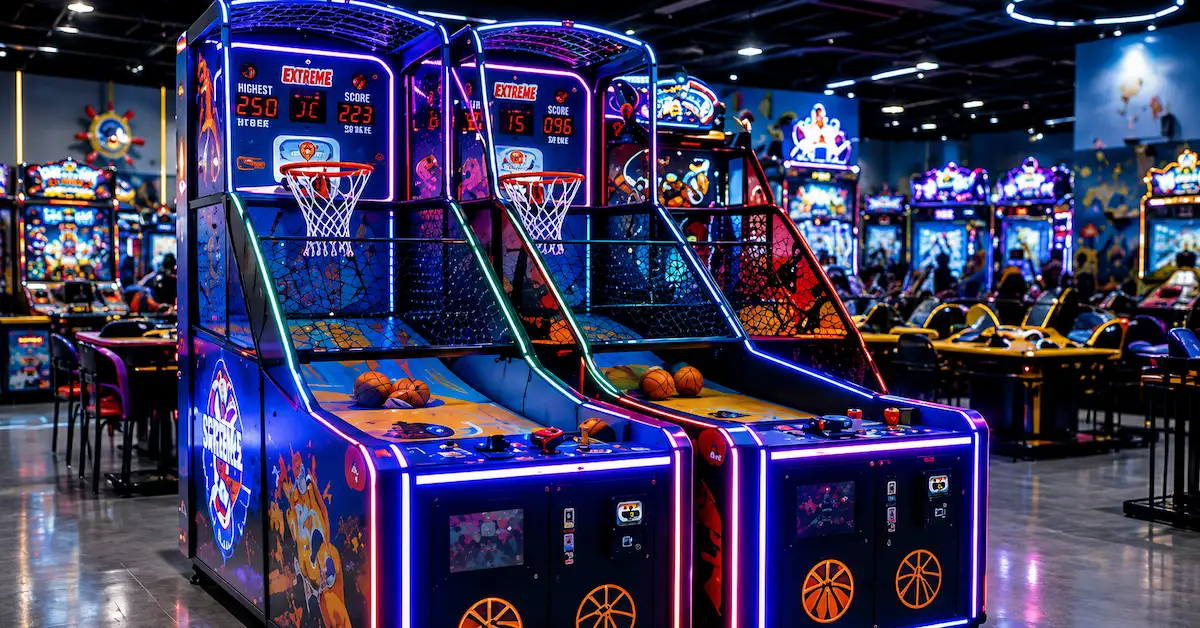
- Sports games
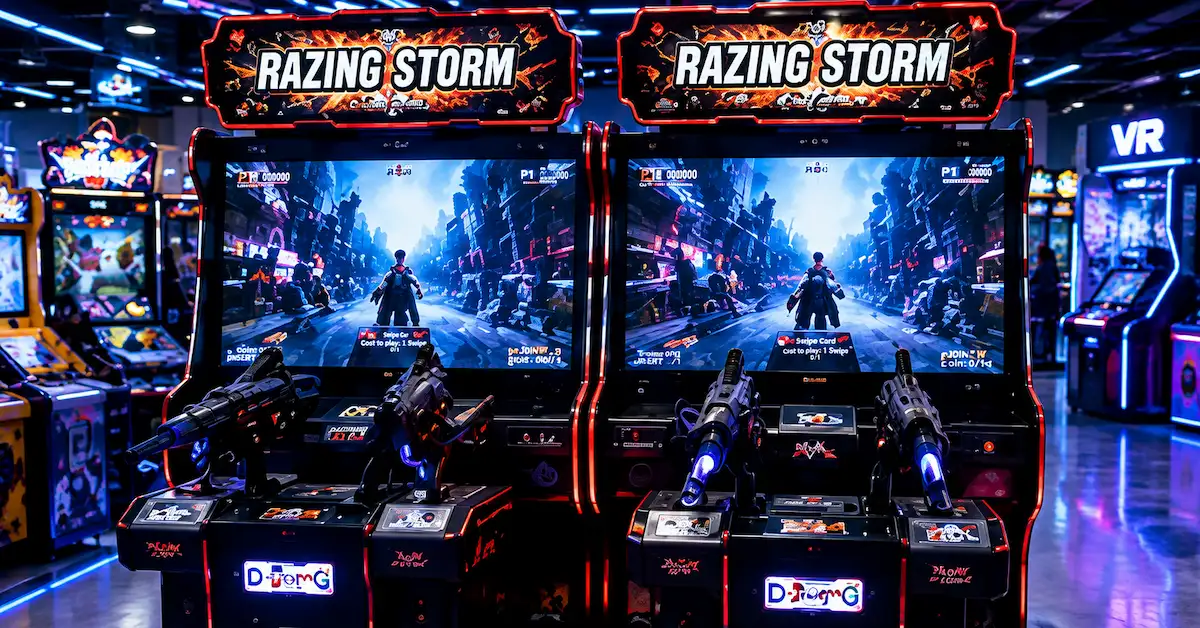
- Shooting games
- Kids' entertainment equipment
- Interactive machines
For these operators, product variety and project compatibility can be more important than finding the lowest individual machine price.
Arcade Operators
Arcade operators often focus on player engagement, visual attraction, machine reliability, maintenance accessibility, and the ability to refresh the game mix over time.
Equipment that generates interest but creates frequent downtime can quickly become an operational problem.
Shopping Mall Projects
Mall entertainment areas often have additional limitations involving floor space, access routes, noise, electrical supply, visitor flow, and installation schedules.
A suitable manufacturer should be able to provide accurate machine dimensions and technical specifications before layout planning begins.
Importers and Distributors
Distributors usually place more emphasis on repeatability.
They may need consistent:
- Product specifications
- Artwork
- Electrical configuration
- Packaging
- Spare parts
- OEM branding
For them, the ability to reproduce the same model months later can be as important as the first order.
What Products Should a Commercial Game Equipment Manufacturer Offer?
A manufacturer's product range should match the buyer's venue strategy rather than simply contain a large number of models.
Racing and Driving Games
Commercial racing equipment may include single-player and linked multiplayer machines.
Important purchasing factors include:
- Steering response
- Pedal durability
- Seat structure
- Display configuration
- Service access
Shooting Games
These machines require reliable controls, sensor calibration, display synchronization, and stable gameplay operation.
Redemption Games
Redemption equipment should be evaluated not only by gameplay but also by ticket output, score settings, credit configuration, and integration with the venue's reward system.
Prize and Claw Machines
Operators should consider:
- Grab mechanism
- Door security
- Prize loading
- Settings adjustment
- Internal maintenance access
Sports and Skill Games
Basketball, air hockey, and other skill-based attractions can help diversify an entertainment venue and create social or competitive play.
Interactive and Family Games
Family-oriented venues often need equipment that is visually approachable, easy to understand, and suitable for mixed-age customer groups.
A diversified manufacturer is especially useful for buyers building a complete FEC or entertainment center because multiple categories can be coordinated through one equipment program.
Commercial-Grade Design Matters More Than Appearance
Modern arcade machines often use bright lighting, animated displays, decorative graphics, and large cabinets to attract attention.
However, visual impact alone does not make a machine suitable for commercial operation.
| Design Factor | Why It Matters |
|---|---|
| Cabinet strength | Supports frequent commercial use |
| Cooling design | Helps protect electronic components |
| Service access | Makes maintenance and replacement faster |
| Modular components | Simplifies troubleshooting and repair |
| Organized wiring | Reduces technician confusion |
| Payment integration | Supports practical venue operation |
Cabinet Structure
The cabinet needs sufficient rigidity for repeated public use.
Doors, panels, locks, control surfaces, and internal mounting points should also support regular maintenance.
Cooling and Ventilation
Displays, controllers, power supplies, and lighting systems can generate heat.
Poor internal airflow may contribute to unstable equipment operation, particularly during long business hours.
Serviceability
A well-designed commercial machine should allow technicians to access high-maintenance components without unnecessary disassembly.
For operators managing dozens of machines, faster maintenance can reduce downtime across the venue.
How Manufacturers Design for Commercial Operation
A professional commercial game equipment manufacturer should understand that commercial use creates different engineering requirements from consumer gaming products.
Long Operating Hours
Many entertainment venues operate for extended periods each day.
This increases the importance of stable:
- Power systems
- Screens
- Lighting
- Controllers
- Sensors
Repeated Player Interaction
High-contact components may include:
- Buttons
- Joysticks
- Steering wheels
- Pedals
- Guns
- Handles
- Doors
These parts require consideration during both component selection and final testing.
Maintenance Accessibility
Commercial equipment should be designed for technicians as well as players.
A machine that looks impressive but requires excessive disassembly for routine repairs can increase labor cost and operating interruptions.
Manufacturing Capability Behind Commercial Game Equipment
Manufacturing capability determines whether a company can translate a product design into repeatable commercial equipment.
Buyers should look beyond a showroom and understand what processes the manufacturer actually manages.
Relevant capabilities may include:
- Cabinet and structural production
- Electronic assembly
- Hardware integration
- Complete machine assembly
- Functional testing
- Quality inspection
- Batch-order control
This is particularly important for customized projects and repeat orders.
Buyers can learn more about EPARK's manufacturing and company capabilities when evaluating potential cooperation.
How Quality Control Affects Commercial Game Equipment
Quality control should help identify problems before equipment reaches the buyer's venue.
A strong QC system generally checks products at several stages.
Incoming Component Inspection
Important components may be checked before assembly, including displays, controllers, payment parts, sensors, and power components.
Assembly Inspection
During production, inspectors may verify:
- Wiring
- Fasteners
- Mechanical movement
- Cabinet alignment
- Component installation
Functional Testing
A completed machine should be tested for the functions relevant to its model.
These can include:
- Gameplay
- Controls
- Sound
- Lighting
- Sensors
- Scoring
- Coin or card functions
- Ticket output
Pre-Shipment Inspection
Final inspection should confirm that the shipped configuration matches the approved order.
Buyers can review EPARK's equipment safety and quality approach for more information.
From a B2B perspective, effective QC helps reduce risks such as installation delays, early failures, unexpected repair work, and replacement-part expenses.
OEM and Custom Commercial Game Equipment
OEM capability becomes important when buyers need products adapted to their brand or market.
Branding Customization
Possible options may include:
- Brand logo
- Cabinet graphics
- Color schemes
- Packaging
Regional Configuration
International orders may require different:
- Voltage
- Frequency
- Plug standards
- Language settings
Payment System Integration
Depending on the machine and venue system,equipment may need to support:
- Coins
- Tokens
- Cards
- Cashless interfaces
Payment requirements should be confirmed before production rather than after the machines arrive.
Operational Settings
Some machines may allow adjustment of:
- Credits
- Ticket payout
- Difficulty
- Game parameters
Structural Customization
Larger projects may require modified dimensions, hardware layouts, themed appearance, or other engineering changes.
EPARK provides more information about its OEM and game equipment customization process.
Manufacturer vs Supplier: What Is the Difference?
Both manufacturers and suppliers can play useful roles in commercial entertainment procurement.
| Manufacturer | Supplier |
|---|---|
| Controls or participates directly in production | Focuses primarily on sourcing and supply |
| Supports engineering changes | Provides product selection |
| Often better suited to OEM projects | Can be useful for mixed sourcing |
| Has direct influence over production QC | Coordinates with manufacturing partners |
| Useful for repeat standardized production | Useful for flexible purchasing |
A manufacturer is not automatically better for every project.
A distributor sourcing many unrelated brands may prefer a broad supplier, while a buyer requiring repeated production, custom cabinets, or private labeling may place greater value on direct manufacturing capability.
How to Evaluate a Commercial Game Equipment Manufacturer
Before placing a large order, buyers should evaluate the manufacturer systematically.
Product Range
Confirm that the available categories match the venue concept.
A large catalog is less useful if most machines do not fit your target customers or business model.
Real Manufacturing Capability
Understand whether the company manages actual production, assembly, testing, and quality inspection.
Commercial Project Experience
The manufacturer should understand the operational differences between:
- FECs
- Arcades
- Shopping malls
- Indoor amusement centers
Quality Control Process
Ask how products are inspected before shipment and whether testing differs by machine category.
OEM Capability
If customization is required, determine which changes are standard and which require engineering development.
Batch Production Consistency
For larger orders, confirm how the manufacturer ensures the bulk production matches the approved sample.
Spare Parts Support
Ask which components are considered high-wear or machine-specific and what spare parts should ship with the order.
Export Experience
International projects require appropriate packing, documentation, electrical configuration, and delivery coordination.
What Should Buyers Include in an RFQ?
A clear RFQ helps the manufacturer recommend suitable equipment and provide a more accurate quotation.
Include:
- Venue type and destination country
- Target customer group
- Equipment categories required
- Estimated quantity
- Available floor area or layout
- Required voltage and frequency
- Coin, token, card, or cashless payment requirements
- OEM branding requirements
- Budget range
- Delivery destination
- Target opening or installation date
- Spare-part or technical-support requirements
For project inquiries, buyers can send these details through the EPARK contact page.
Red Flags Buyers Should Watch For
No Clear Product Specifications
A quotation without clear dimensions, electrical information, configuration, and included accessories makes comparison difficult.
Unclear Manufacturing Responsibility
Buyers should understand which operations are completed internally and which are outsourced.
No Sample Approval Process
Customized bulk orders should have an agreed reference before mass production begins.
Frequent Unapproved Component Changes
Unexpected substitutions may affect reliability, compatibility, and future spare-parts planning.
No Testing Information
Statements such as "quality checked" are less useful than a clear explanation of what functions are actually tested.
Weak Spare-Parts Support
Equipment may operate for years, so availability of replacement components can matter more than a small difference in purchase price.
Unusually Low Prices Without Configuration Details
Two machines with similar appearances may use different displays, controls, power components, payment systems, and internal hardware.
Buyers should compare configuration before comparing price.
How Commercial Game Equipment Supports Different Venues
| Venue | Equipment Focus | Main Buyer Priority |
|---|---|---|
| Family Entertainment Center | Mixed game categories | Family appeal and variety |
| Arcade center | Competitive and interactive games | Player engagement |
| Shopping mall | Visually attractive,space-efficient machines | Foot traffic and space use |
| Indoor amusement venue | Mixed entertainment systems | Project integration |
| Distributor | Multiple repeatable models | Supply consistency |
The best equipment mix depends on target customers, venue size, operating model, budget, and local entertainment preferences.
FAQ
What is a commercial game equipment manufacturer?
A commercial game equipment manufacturer produces machines intended for revenue-generating venues such as arcades, FECs, shopping malls, and indoor entertainment centers.
What equipment does a commercial game manufacturer produce?
Depending on its capabilities, a manufacturer may produce racing games, shooting games, redemption machines, claw machines, sports games, interactive machines, and family entertainment equipment.
How do I choose a commercial game equipment manufacturer?
Evaluate product range, actual manufacturing capability, commercial-grade design, QC, customization, bulk-order consistency, spare parts, and export support.
What makes a game machine commercial grade?
Commercial-grade equipment is designed around frequent use, serviceability, stable operation, payment integration, replaceable components, and long-term venue operation.
Can manufacturers provide OEM game machines?
Yes. Depending on capability, OEM services may include logos, cabinet artwork, colors, electrical configuration, language, payment systems, packaging, and structural changes.
Can commercial game equipment support cashless payment?
Many machines can be configured for different payment systems, but compatibility should be confirmed with the manufacturer and the intended venue system before ordering.
How should buyers evaluate quality control?
Ask how components, assembly, machine functions, appearance, payment systems, and final order configurations are inspected before shipment.
What information is required for a quotation?
Provide equipment requirements, quantity, destination, voltage, payment system, customization requirements, venue details, and target delivery schedule.
Do manufacturers provide spare parts?
Many manufacturers can provide spare parts based on the equipment ordered. Buyers should confirm recommended parts, quantities, and availability before shipment.
Can commercial game equipment be customized for overseas markets?
Yes, depending on model capability. Common adjustments include voltage, plug type, language, payment system, branding, and selected operating settings.
Conclusion
Selecting a commercial game equipment manufacturer is ultimately a long-term procurement decision rather than a simple comparison of machine prices.
B2B buyers should evaluate whether the manufacturer can provide the right product mix, commercial-grade design, controlled manufacturing, consistent QC, OEM customization, repeat-order stability, spare-parts support, and international project coordination.
For FEC operators, arcade owners, shopping mall projects, distributors, and entertainment investors, these factors directly influence installation risk, maintenance efficiency, equipment uptime, and future expansion.
Explore EPARK's commercial game equipment, learn more about EPARK's manufacturing capabilities, review its quality and safety approach, or contact EPARK for a project quotation with your venue type, equipment requirements, quantity, destination market, and customization needs.
General Disclaimer
All data on https://www.eparki.com is for general guidance only. As a leading indoor playground manufacturer and trampoline supplier, EPARK strives for accuracy but gives no express or implied warranty regarding completeness, performance or project fitness. Product specs, designs and results may vary with use and customer requirements. Buyers must verify technical details, compliance and suitability before purchase. EPARK OEM/ODM is not liable for any direct, indirect or consequential damages arising from site use. For custom solutions, contact our manufacturer and supplier team via the Contact page.
Intellectual Property
Text, images, videos, CAD files and software are Guangzhou EPARK Electronic Technology Co., Ltd. All rights reserved. No part may be copied, republished or used commercially without prior written permission. We will pursue legal action for copyright or design-patent infringement.
Trademarks
"EPARK", the EPARK logo and related graphics are registered trademarks of Guangzhou EPARK Electronic Technology Co., Ltd. Unauthorized use in ads, domain names or packaging is prohibited.
Governing Law
These terms are governed by the laws of the People's Republic of China.
Contact
Questions? Email sales@nanyuetech.com or WhatsApp +86 139 0307 9263.