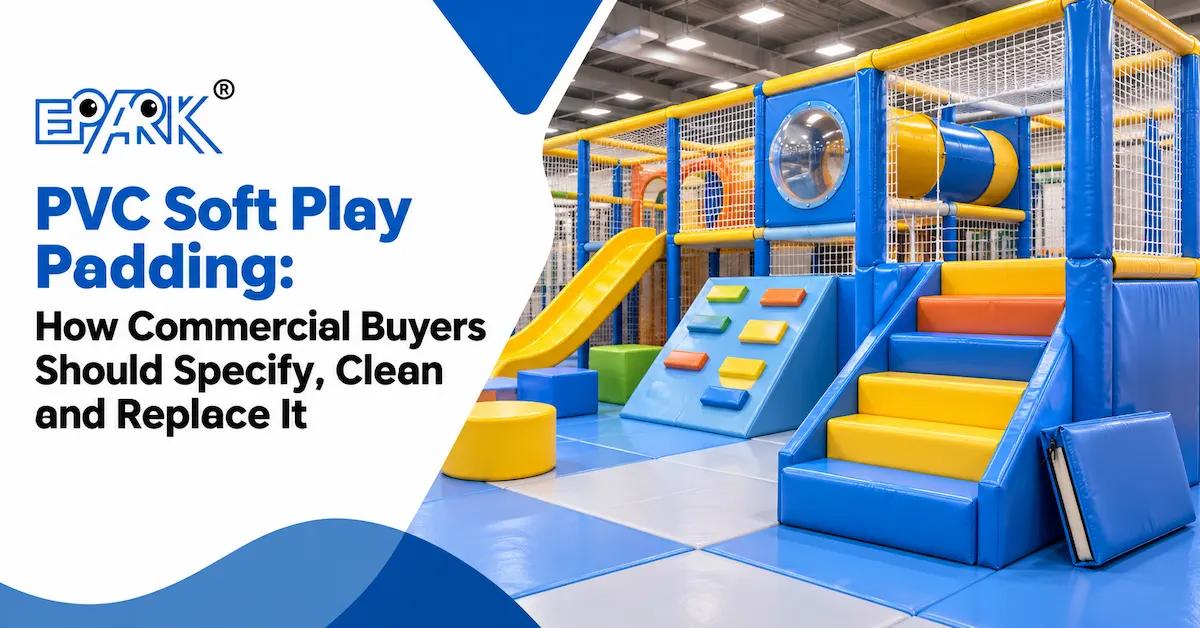
PVC soft play padding should be purchased as a documented protective assembly, not as a shiny cover selected from a color chart. Commercial buyers need to understand the structural support, foam layer, PVC cover, seams, fasteners, floor interface, cleaning method and replacement route. The correct specification depends on the activity, impact exposure, age group, cleaning routine and destination requirements.
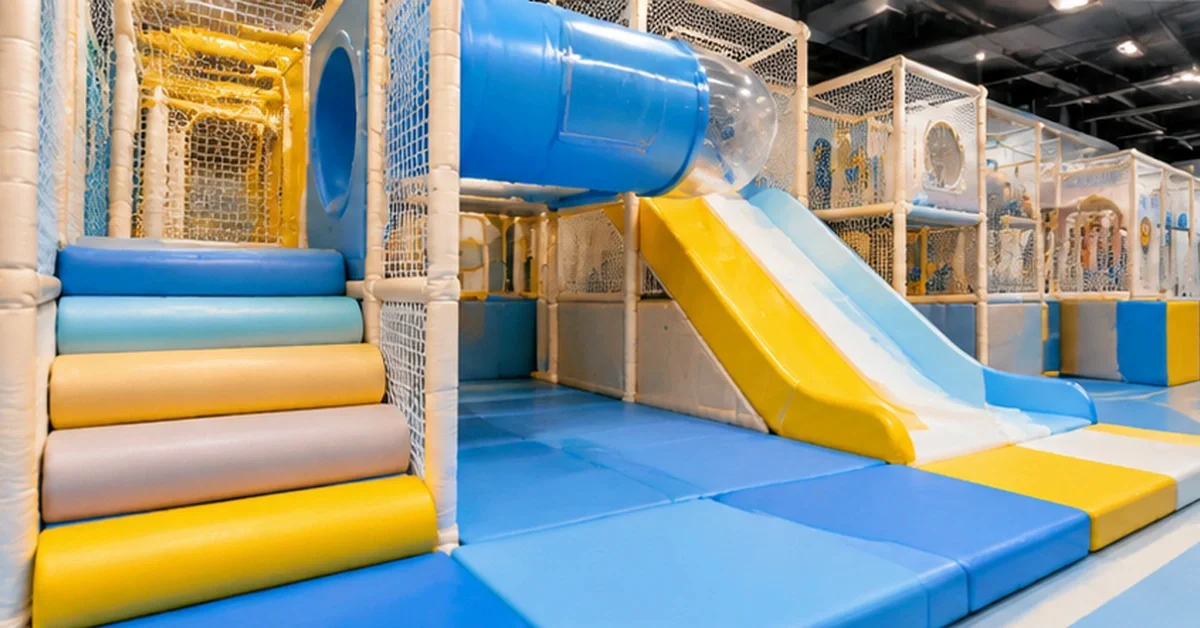
What PVC Soft Play Padding Is Supposed to Do
PVC padding normally performs several jobs at once. It cushions contact, covers a foam or structural form, creates a cleanable surface and communicates the visual theme. Those jobs can conflict. A highly textured surface may look distinctive but be harder to wipe. A tightly wrapped cover may look neat but need a different replacement method. A soft edge may feel comfortable while the fixing behind it remains difficult to inspect.
Begin with the activity rather than the material name. Padding around a low crawl element, a platform edge, a slide landing, a climbing post and a high-contact entrance does not experience the same wear. A toddler area may see spills and mouthing contact; an older-child route may see shoes, impacts and repeated gripping. The supplier should know where the padding will be used before recommending a construction detail.
A buyer should request these layers separately. “PVC soft play” describes the visible cover but does not prove the quality or suitability of the assembly underneath.
Ask for the Material Schedule, Not Only a Sample
Samples are useful for color, touch and basic appearance. They do not prove that the installed component uses the same foam, backing, seam construction or fixing. A material schedule connects the sample to the project.
Minimum fields for a PVC padding schedule
- Component name and location on the drawing.
- Support or substrate description.
- Foam type or cushioning description, where applicable.
- PVC cover description and color reference.
- Seam, edge and corner treatment.
- Fixing or attachment method accessible to inspection.
- Cleaning products and restrictions to confirm.
- Replaceable part identifier and ordering route.
- Applicable test, certificate or standard reference.
- Supplier, buyer or local contractor responsibility.
Evidence rule: Mark every sample with the drawing revision and component name. If the production material is a substitute, record who approved the change and whether it affects appearance, cleaning, safety documentation or maintenance.
EPARK’s public safety and quality information can be used as a starting point for questions about materials and inspection. It should be read with the project quotation and exact configuration, not treated as evidence that every component has identical properties.
Compare PVC Cover Construction by Use Case
There is no single “best” PVC cover for every commercial play area. The useful comparison is how the selected construction behaves in its actual location.
| Use area | Main exposure | Questions for the cover and padding | Evidence to request |
|---|---|---|---|
| Toddler crawl and touch zone | Close contact, spills, frequent wiping and adult assistance. | Are surfaces smooth enough to clean and edges easy to inspect? | Cleaning method, seam detail and age guidance. |
| Slide landing | Repeated impact, shoes or socks, concentrated traffic. | How is the landing protected and replaced if the cover wears? | Landing drawing, fixing detail and spare identifier. |
| Climbing or obstacle edge | Gripping, kneeling, friction and repeated body contact. | Can staff see damage at corners, seams and attachment points? | Component schedule and inspection checklist. |
| Ball-pool boundary | Constant touch, ball contact, cleaning and hidden edges. | Can the cover and foam be accessed, dried and repaired? | Cleaning route, access panel and closure rule. |
| Parent or staff touchpoint | High-frequency hand contact and visible appearance expectations. | Can the surface be wiped without damaging graphics or finish? | Approved cleaner and replacement method. |
When comparing suppliers, ask them to show the same information for the same component. A generic material promise is not a meaningful comparison if one quote includes a replacement cover and another includes only the initial assembly.
Foam, Shape and Edge Geometry Matter as Much as PVC
Padding performance is influenced by what the cover wraps and how the edge is formed. High-density foam is referenced in EPARK’s public material descriptions, but density, thickness, profile and assembly remain project-specific. Do not infer a universal performance value from the phrase “high-density foam.”
Review the shape in section view
- Where does the foam begin and end?
- Is a hard substrate close to a child’s contact path?
- Does the PVC turn around a corner or terminate at an exposed edge?
- Can a seam sit in a high-friction or wet area?
- Does the edge create a step, gap or trip transition at the floor?
- Can an adult open or inspect the area without dismantling the route?
Ask for a section or detail drawing for unusual edges, platforms, posts and landings. A front elevation can make a soft form look complete while hiding the exact place where the cover is fixed and where a replacement will be cut.
Buyer test: Place a finger or inspection marker on every seam, corner and transition shown in the detail drawing. Ask what staff should look for when the cover begins to lift, split, wrinkle or expose the support underneath.
Cleaning Compatibility Is a Procurement Requirement
PVC padding is often selected because it presents a wipeable surface, but cleanability depends on geometry, seams, access, cleaner compatibility and drying. A surface that can be wiped from the front may still hold dirt behind a panel, in a tunnel or under a ball-pool edge.
Turn “easy to clean” into a test
- Identify the high-touch surfaces and the most difficult hidden surfaces.
- Ask which cleaning agent and dilution are approved for the selected cover.
- Confirm whether the surface can be rinsed, wiped or requires a dry method.
- Record how long the area must remain closed while wet or drying.
- Check whether graphics, seams and edge treatments tolerate the routine.
- Repeat the test on a sample with the same construction as production.
The hotel, restaurant, school or FEC should add its real operating routine to the brief. A venue that closes briefly between sessions may need a different access strategy from a school that completes a deeper clean after each class.
Do not ask only whether PVC is “waterproof.” Ask how the complete component is cleaned, where moisture can collect and who removes or opens a part when drying is required. These questions are more useful for operations than a broad material adjective.
Color, Texture and Graphics Should Serve Maintenance
Color and graphics influence theme recognition, photography and wayfinding, but they also affect visible wear. Very light surfaces can show marks quickly; very dark surfaces can hide dirt until it is more difficult to remove. Strong graphics may need a replacement process that is different from a plain cover.
Use a finish review with three viewpoints
- Guest viewpoint: Does the finish support the intended theme and make the route understandable?
- Staff viewpoint: Can workers see soil, damage, loose seams and unauthorized decorations?
- Maintenance viewpoint: Can a damaged panel be replaced without creating a mismatched patch or a long closure?
Include color codes, graphic files, surface samples and approval dates in the project file. If the buyer supplies artwork, confirm which parts are printed, laminated, embossed or applied as a separate panel. Do not assume that a rendered graphic represents the final cleanability or replacement method.
Inspect PVC Padding Before Shipment and After Installation
A factory inspection should verify the approved component, not simply confirm that boxes are complete. Use the same drawing revision, material schedule and sample references during inspection. Photograph representative surfaces and any deviation that needs approval.
| Inspection stage | Check | Record | Action if not accepted |
|---|---|---|---|
| Material approval | Cover, foam and color match the approved schedule. | Sample code, revision and photos. | Hold approval or document substitute. |
| Factory assembly | Seams, corners, edges and fixing are complete. | Component ID and close-up photos. | Repair, replace or obtain written approval. |
| Packing | Padding is protected from folding, abrasion and moisture. | Packing photos and packing list. | Record damage before dispatch. |
| Site installation | Panels, transitions and access points match the plan. | As-installed photos and punch list. | Close deviation before public opening. |
| Opening inspection | No loose cover, exposed support, harmful gap or blocked access. | Signed checklist and owner. | Remove from service until corrected. |
Certification and testing should be linked to the relevant product or project scope. EPARK’s certificate page is a document starting point, but the buyer should ask which exact configuration and destination the document covers.
Plan Replacement Parts Before the First Wear
Replacement planning is not an admission that a product failed. It is normal commercial maintenance for high-contact equipment. A hotel or FEC should know how to identify a cover, foam insert, net, floor tile or graphic panel before an urgent repair occurs.
Request a spare-parts map
- Assign a part name and identifier to every replaceable padding element.
- Show the part on the approved drawing or an exploded reference.
- Record color, surface, seam orientation and compatible cleaner.
- State whether replacement requires a technician or can be completed locally.
- List the information needed for a reorder: photo, part code, project number or drawing revision.
- Define how a damaged area is isolated while waiting for the replacement.
Modular replacement can reduce downtime, but only when the original design leaves access. Ask the supplier whether a cover can be replaced independently or whether a whole route must be dismantled. This distinction belongs in the quotation and handover file.
Test PVC Padding Under the Venue's Real Conditions
Material approval should reflect the environment in which the padding will operate. A cool, lightly used school room and a humid resort play area do not create identical maintenance questions. A restaurant or hotel may expose the surface to food residue, wet clothing and frequent resets. An FEC may combine high traffic with shoes, socks, parties and occasional decorative changes.
Conditions to disclose before production
- Expected operating hours and peak days.
- Age bands and whether adults enter the play route.
- Socks, shoes, bare feet, wet clothing or food near the equipment.
- Cleaning products, frequency, drying method and closure time.
- Humidity, direct sunlight, air-conditioning and nearby water features.
- Whether local staff or the supplier will complete replacement work.
These are not arguments that one material will always fail in one environment. They are reasons to ask for project-specific confirmation. A buyer who supplies the operating conditions early gives the manufacturer a better chance to recommend a workable cover and access detail.
| Condition | Risk to review | Question for the supplier |
|---|---|---|
| High humidity | Moisture may remain in seams, tunnels or under removable parts. | Where can moisture be checked and how is the part dried? |
| Food nearby | Oil, sugar or colored residue may change the cleaning routine. | Which approved cleaner and response time apply? |
| High sunlight | Visible surfaces may change appearance over time. | Is the location protected and how are replacement colors matched? |
| Heavy footwear contact | Edges, landings and seams may receive concentrated abrasion. | Which parts are inspected most frequently? |
| Seasonal closure | Stored or covered components may need a re-opening check. | What should staff inspect before returning the route to service? |
Packaging and Installation Can Damage Good Padding
A compliant material can still arrive with a damaged corner, compressed foam or marked cover if packing and delivery are not considered. Ask how padded parts are protected from abrasion, moisture, sharp edges and excessive folding. Request packing photographs or a packing list tied to the component schedule, especially for a project with a long transport route.
Inspect the first installation area
Before the team installs the complete route, agree how the first representative panel or module will be checked. Review the fit against the approved drawing, the seam direction, the edge transition, access to fasteners and the relationship to flooring. This is a practical opportunity to identify a mismatch before many similar panels are installed.
Record any deviation with a photo, location, drawing revision and decision owner. Do not rely on a verbal statement that a replacement will be “sent later.” State whether the item is accepted, repaired, replaced or held from public use. A punch list protects both the buyer and the manufacturer because it creates a shared record of what remains open.
Train Staff to Recognize Cover and Padding Failure
Most operators do not need to diagnose the chemistry or engineering of PVC. They do need to recognize conditions that require closure or escalation. Add clear photographs to the opening checklist and show staff where the part identifier is located.
Remove or isolate a component when staff find:
- A lifted, split or open seam that can catch a finger, clothing or loose part.
- Exposed foam, board, fastener or structural edge.
- A loose panel, unexpected movement or a gap at a transition.
- Water, cleaning residue or an odor that cannot be resolved by the approved routine.
- A sharp corner, damaged graphic film or a surface that has become unusually slippery.
- A cover that no longer matches its approved position or leaves an adjacent part unprotected.
The exact response should follow the venue’s safety policy and the manufacturer’s instructions. The important procurement point is that the supplier should provide a practical escalation route: photo, location, part code, date, temporary control and requested action.
Include PVC Padding in the Total Project Scope
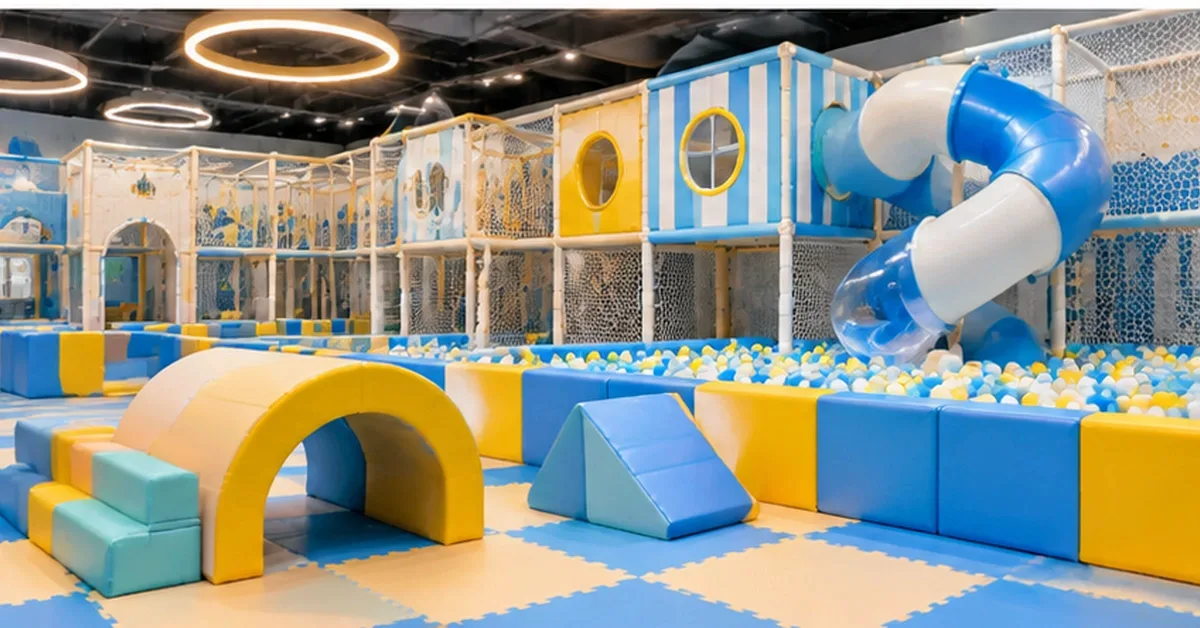
Padding may appear as a small line in a large playground quotation, but it affects design, installation and future maintenance. Separate the initial cover and foam assembly from flooring, local wall protection, graphics, freight, installation, technician travel, cleaning tools and spare parts. Otherwise, a buyer may compare a detailed proposal with a package that hides these items.
Ask whether the quotation includes color samples, production samples, inspection, packing protection, replacement covers, local fitting and staff instructions. Confirm which parts are included in warranty or after-sales support, while avoiding assumptions about universal warranty terms. The contract should state the approved construction and what happens if a substitute is proposed.
Commercial comparison test: Take one representative padded component and compare supplier proposals line by line. If you cannot identify its support, foam, cover, seams, fixing, cleaner, inspection point and replacement part, the quote is not yet normalized.
Use a Material Approval Gate Before Production
For a custom project, create an approval gate with a defined owner and date. The gate should close only when the buyer has reviewed the drawing, material schedule, colors, section details, cleaning notes, documents and replacement assumptions. This prevents production from beginning on the basis of a rendering that has not been translated into a buildable specification.
Approval gate checklist
- Confirm the exact component and its position in the layout.
- Match the PVC sample and color reference to the schedule.
- Review foam or cushioning description and edge construction.
- Confirm seams, access panels, fasteners and floor transitions.
- Check the cleaning method and any chemical restrictions.
- Identify applicable certificates or test documents and their scope.
- Approve the spare identifier and replacement route.
- Record exclusions, substitutions and the person authorized to change them.
The approval gate is not bureaucracy for its own sake. It creates a stable reference for factory inspection, installation, staff training and future reorder. It also makes a later change easier to evaluate because the original decision is visible.
Compare Supplier Proposals Without Falling for Material Labels
“PVC leather,” “soft PVC,” “eco PVC” and “premium padding” can appear in different proposals. The label alone does not tell you the construction, cleaning restrictions or documentation. Normalize the comparison.
| Comparison line | Useful answer | Weak answer |
|---|---|---|
| Cover | Component, surface reference, seam and replacement route. | “High-quality PVC” with no part connection. |
| Foam | Project-specific description, profile and location. | “Thick foam” without a drawing or schedule. |
| Cleaning | Approved cleaner, method, frequency and closure rule. | “Easy to wipe” with no test. |
| Safety evidence | Applicable document linked to the configuration. | One certificate presented as universal. |
| Maintenance | Part IDs, access and ordering process. | After-sales promise without a spare list. |
| Scope | Equipment, flooring, installation, freight and local works separated. | One total with hidden exclusions. |
For a complete soft-play system, review the EPARK soft play category together with the material questions in this article. Ask for the padding specification on the selected product rather than assuming that every soft-play item uses one standard assembly.
RFQ Checklist for PVC Soft Play Padding
Send the supplier the venue type, target age, activity list, floor plan, clear height, cleaning routine, operating hours, destination, preferred theme, color references, local standards, installation route and opening schedule. Identify areas with unusually high contact, moisture, shoes, food or parent assistance.
Request a response package containing the dimensioned layout, component schedule, material and color schedule, section details for edges and landings, cleaning guide, applicable documents, inspection plan, packing assumptions, installation boundary, spare-parts list and unresolved questions. EPARK’s customization process provides a route from consultation to delivery and support; the buyer should connect each step to the approved project file.
FAQ About PVC Soft Play Padding
What is PVC soft play padding?
It is a protective soft-play assembly that commonly uses a PVC cover over a cushioning or formed support. The exact foam, backing, seam and fixing depend on the component and project.
Is PVC suitable for commercial indoor playgrounds?
PVC can be used in commercial soft play when the selected construction, cleaning routine, age group, activity and destination requirements are confirmed. A cover name alone does not prove suitability.
What should I ask about the foam underneath PVC?
Ask for the component location, foam description, profile, access, replacement method and any relevant project documentation. Do not infer density, thickness or impact performance from a general label.
How do I clean PVC playground padding?
Use the supplier’s approved cleaner, method, dilution and drying instruction for the selected cover. Confirm compatibility on a representative sample and record the closure rule for wet or damaged areas.
How long does PVC padding last?
There is no universal service life. Wear depends on traffic, age, activity, footwear, cleaning, sunlight, humidity, installation and maintenance. Ask the supplier how wear is inspected and how parts are replaced.
Can I order replacement PVC covers?
Replacement depends on the original component design and supplier records. Request part identifiers, drawings, color references and the information needed for a reorder before the project opens.
Does a PVC sample prove the final product?
No. A sample shows appearance and touch. The buyer should link it to the production material schedule, foam layer, seam detail, fixing and applicable documentation.
What certifications apply to PVC padding?
Applicable standards and documents depend on the destination, equipment type and selected configuration. Ask the supplier to identify the exact scope rather than presenting a general certificate as universal proof.
Conclusion
PVC soft play padding should be evaluated as a maintainable protective assembly: support, foam, cover, seams, edges, fixing, cleaning and replacement all matter. A professional RFQ ties each padding part to a drawing, material schedule, inspection point and spare identifier. EPARK can review a soft-play project through its product and customization channels, but the final construction, documents, cleaning method, schedule and installation scope must be confirmed for the actual venue. Buyers who verify the complete assembly before ordering are better prepared to protect children, control downtime and keep the play area presentable after opening.
General Disclaimer
All data on https://www.eparki.com is for general guidance only. As a leading indoor playground manufacturer and trampoline supplier, EPARK strives for accuracy but gives no express or implied warranty regarding completeness, performance or project fitness. Product specs, designs and results may vary with use and customer requirements. Buyers must verify technical details, compliance and suitability before purchase. EPARK OEM/ODM is not liable for any direct, indirect or consequential damages arising from site use. For custom solutions, contact our manufacturer and supplier team via the Contact page.
Intellectual Property
Text, images, videos, CAD files and software are Guangzhou EPARK Electronic Technology Co., Ltd. All rights reserved. No part may be copied, republished or used commercially without prior written permission. We will pursue legal action for copyright or design-patent infringement.
Trademarks
"EPARK", the EPARK logo and related graphics are registered trademarks of Guangzhou EPARK Electronic Technology Co., Ltd. Unauthorized use in ads, domain names or packaging is prohibited.
Governing Law
These terms are governed by the laws of the People's Republic of China.
Contact
Questions? Email sales@nanyuetech.com or WhatsApp +86 139 0307 9263.