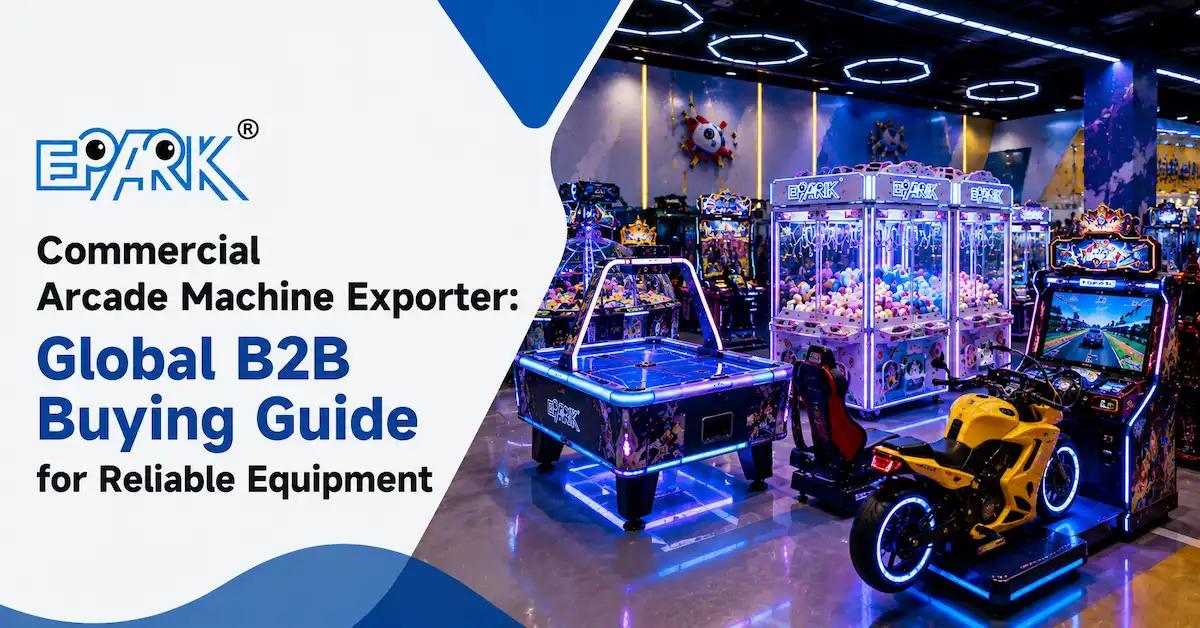
What Is a Commercial Arcade Machine Exporter?
A commercial arcade machine exporter supplies game machines designed for revenue-generating entertainment venues and coordinates the configuration, testing, packing, spare parts, and international delivery requirements needed for overseas operation.
Commercial arcade machines are different from equipment intended mainly for occasional personal use. They may operate for long periods every day, accept repeated player interaction, process paid credits, and require regular maintenance over a multi-year operating lifecycle.
For international buyers, this means the exporter should help manage more than shipment. The equipment should arrive configured for the intended market and ready for practical commercial use.
Important areas include:
- Machine specifications
- Voltage and frequency
- Plug type
- Payment configuration
- Operating settings
- Pre-shipment testing
- Export packing
- Spare parts
- Technical support
Buyers preparing a new arcade, FEC, or distributor order can review EPARK's commercial arcade and amusement equipment when building an initial machine list.
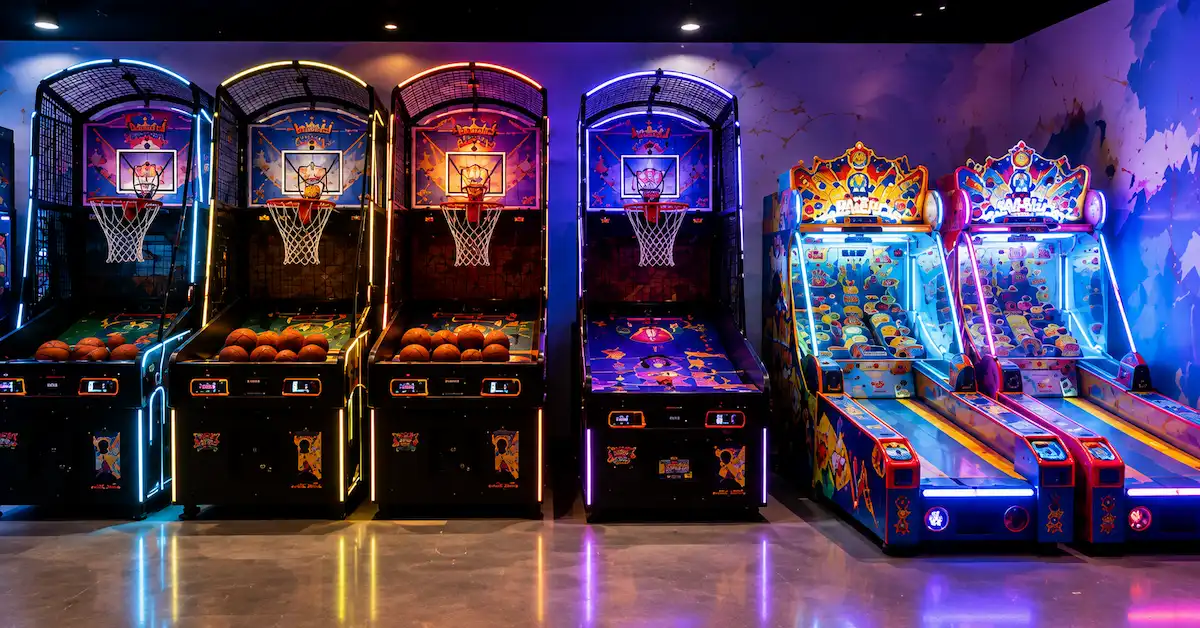
Who Buys Commercial Arcade Machines for Export?
Different buyers have different operational priorities, so the right exporter should understand the intended business model.
Arcade Operators
Arcade operators normally focus on equipment that can support frequent use while remaining practical to service.
Their priorities often include:
- Player attraction
- Machine uptime
- Payment reliability
- Maintenance access
- Replacement parts
- Repeat-order availability
A visually impressive machine that frequently stops operating can quickly reduce its commercial value.
Family Entertainment Center Owners
FEC projects normally require a broader equipment mix.
A venue may combine:
- Racing games
- Shooting games
- Redemption equipment
- Claw machines
- Basketball games
- Kiddie rides
- Interactive attractions
For FEC buyers, consistency across voltage, payment systems, accessories, and spare parts can make installation and daily operation easier.
Distributors and Importers
Distributors often place greater emphasis on repeatability.
They may need consistent:
- Product specifications
- OEM branding
- Payment settings
- Packaging
- Spare-parts support
A successful first order is only part of the relationship. The exporter should also be able to support future replenishment.
Shopping Mall and Entertainment Projects
Project buyers often evaluate equipment together with:
- Floor area
- Visitor flow
- Visual impact
- Target age group
- Power requirements
- Installation schedule
These buyers benefit from exporters that understand project-level coordination rather than individual-machine sales only.
What Makes an Arcade Machine Commercial Grade?
One of the most important questions when selecting a commercial arcade machine exporter is whether the equipment is truly suitable for continuous commercial operation.
Bright LEDs and attractive graphics are useful for player attraction, but they are not enough.
Cabinet Durability
Commercial cabinets should be designed for frequent public use.
Buyers should examine:
- Structural rigidity
- Door construction
- Locks
- Panel alignment
- Control-area strength
- Internal mounting points
Commercial Controls
High-contact parts receive repeated physical use.
Depending on machine type, these can include:
- Buttons
- Joysticks
- Steering wheels
- Pedals
- Gun controllers
- Handles
- Sensors
The exporter should be able to discuss replacement parts for these components.
Electrical and Cooling Design
Commercial machines may operate for extended periods, which increases the importance of:
- Stable power supplies
- Organized internal wiring
- Suitable ventilation
- Heat management
- Secure electrical connections
Maintenance Accessibility
Technicians should be able to access frequently serviced components without excessive disassembly.
Important service areas may include:
- Controllers
- Power supplies
- Payment devices
- Sensors
- Displays
- Ticket mechanisms
| Commercial Design Area | Buyer Value |
|---|---|
| Strong cabinet structure | Supports frequent commercial use |
| Service access | Reduces maintenance time |
| Organized wiring | Simplifies troubleshooting |
| Replaceable controls | Helps reduce downtime |
| Stable electrical design | Supports longer daily operation |
What Types of Commercial Arcade Machines Can an Exporter Supply?
A strong exporter should recommend equipment based on venue strategy rather than simply offering the largest possible catalog.
Racing Arcade Machines
Buyers should evaluate:
- Steering response
- Pedal operation
- Seat construction
- Display quality
- Linked multiplayer capability
- Maintenance access
Shooting Arcade Games
Important areas include:
- Gun controls
- Sensor accuracy
- Calibration
- Display synchronization
- Control durability
Claw and Prize Machines
Commercial buyers should confirm:
- Crane movement
- Prize settings
- Door security
- Payment activation
- Refill access
- Maintenance layout
Redemption Machines
Redemption equipment may require coordination between:
- Credit activation
- Scoring
- Ticket output
- Prize-management systems
Sports and Skill Machines
Basketball, air hockey, and other skill-based machines can broaden an arcade or FEC equipment mix.
Buyers should evaluate sensors, scoring systems, mechanical wear points, and service access.
Kids and Family Entertainment Machines
Family-oriented equipment should be considered in relation to the venue's customer profile, available space, and operating model rather than selected purely by appearance.
Destination-Market Configuration Before Export
Commercial arcade machines should be configured for the destination market before shipment whenever possible.
Voltage and Frequency
Buyers should provide:
- Destination country
- Required voltage
- Frequency
Do not assume that the same electrical configuration is suitable for every market.
Plug Type
The required plug should be included in the order specification.
Changing plugs after arrival may be possible in some situations, but confirming the correct configuration before shipment reduces unnecessary work.
Language
Depending on machine capability, buyers may need to confirm:
- User-interface language
- Operator menus
- Instructions
- External labels
Payment System
Different venues may operate with:
- Coins
- Tokens
- Rechargeable cards
- Cashless systems
For third-party card systems, the exporter and buyer should confirm the required reader interface and integration responsibility before production.
Why Payment Configuration Matters
Payment configuration directly affects whether a commercial machine can generate revenue.
Incorrect setup may lead to:
- Wrong credit values
- Coin incompatibility
- Card-reader communication problems
- Machines that cannot activate play
- Rework after import
- Delayed venue opening
For this reason, payment testing should be included in pre-shipment verification when a machine is ordered with a specific commercial payment configuration.
How Should a Commercial Arcade Machine Exporter Handle Quality Control?
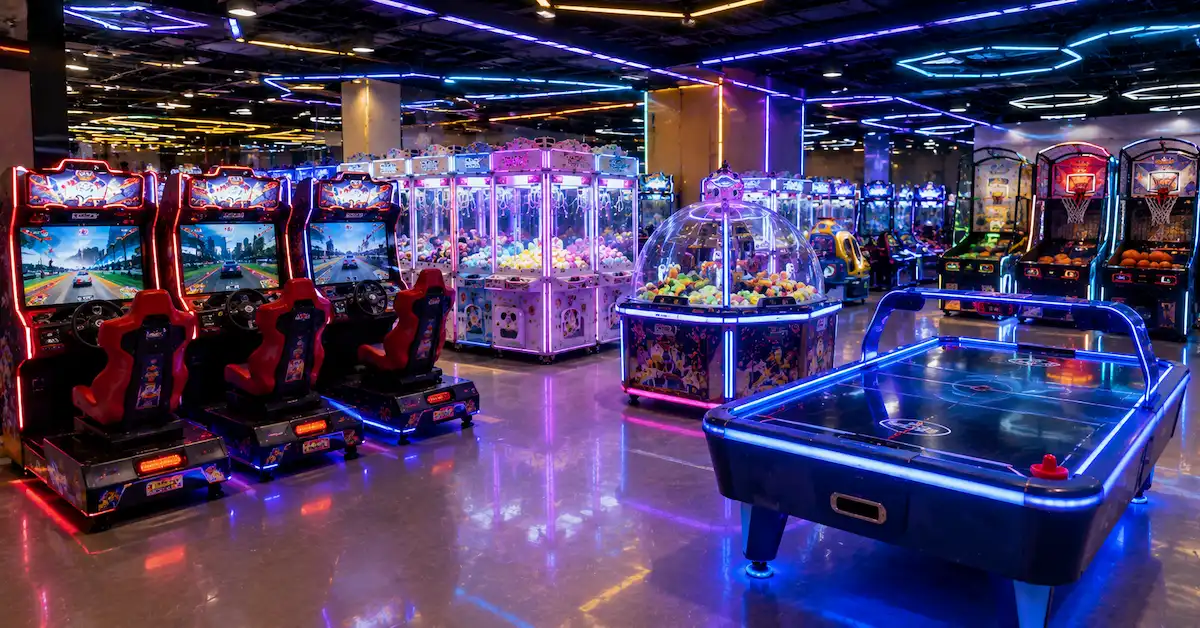
Statements such as "strict QC" are not enough for professional B2B buyers.
A stronger question is:
What exactly is inspected and tested before shipment?
EPARK provides additional information about its quality and safety approach.
Incoming Component Checks
Depending on the machine, important components may include:
- Displays
- Controllers
- Sensors
- Power supplies
- Motors
- Payment components
Assembly Inspection
During production, important checks may include:
- Wiring
- Fasteners
- Component positions
- Mechanical movement
- Cabinet alignment
Functional Testing
Completed machines should be tested according to their functions.
Possible checks include:
- Gameplay
- Controls
- Sensors
- Scoring
- Display
- Sound
- Lighting
- Ticket output
Payment Testing
If the machine uses coin, token, card, or cashless activation, the agreed payment input should correctly generate the intended credit.
Pre-Shipment Verification
Before packing, confirm that the machine matches:
- Approved configuration
- Voltage
- Plug
- Artwork
- Payment setup
- Accessories
- OEM requirements
Finding a configuration problem before export is usually easier than correcting it after international delivery.
OEM Commercial Arcade Machines for Overseas Buyers
OEM capability is valuable for distributors, chains, private-label businesses, and commercial project developers.
Branding Customization
Depending on product capability,options may include:
- Logo
- Cabinet artwork
- Color schemes
- Product identification
- Packaging
Regional Configuration
International orders may require adjustments involving:
- Voltage
- Frequency
- Plug type
- Language
Payment Customization
Possible requirements include:
- Coin acceptors
- Token acceptors
- Card-reader preparation
- Cashless interface
Operator Settings
Depending on the machine, buyers may also discuss:
- Credit settings
- Game time
- Ticket payout
- Difficulty
- Selected operational parameters
Buyers requiring customized products can review EPARK's OEM and customization process.
How to Evaluate a Commercial Arcade Machine Exporter
A reliable exporter should be evaluated as a complete commercial partner rather than only a product seller.
Product Knowledge
The exporter should understand the relationship between:
- Venue type
- Target customers
- Floor area
- Product categories
- Budget
Commercial Equipment Experience
A supplier experienced with arcades, FECs, shopping malls, and distributors is more likely to understand practical operating requirements.
Export Capability
International buyers should be able to obtain relevant logistics data such as:
- Packed dimensions
- Package quantity
- CBM
- Gross weight
- Shipping information
Quality-Control Capability
Ask for a clear explanation of inspection and functional testing rather than relying on generic quality claims.
Spare-Parts Support
The exporter should help identify useful spare parts based on the machines purchased.
OEM Capability
Private-label buyers should verify which customization work can actually be supported.
Repeat Supply
For distributors, the ability to reproduce an approved configuration can be critical.
Buyers can learn more about EPARK's company and equipment capabilities.
How to Compare Commercial Arcade Machine Export Quotations
Two machines with similar appearance can have different internal components, payment configurations, packing, and included support.
Compare the complete scope.
| Quote Item | Why Buyers Should Compare It |
|---|---|
| Machine configuration | Prevents false price comparisons |
| Display and controls | Influences operating reliability |
| Payment system | Determines venue compatibility |
| Voltage and plug | Must match destination market |
| OEM scope | Changes production requirements |
| Spare parts | Affects future downtime |
| Export packing | Influences transportation risk |
| CBM | Affects freight planning |
| Warranty scope | Clarifies support responsibility |
A useful purchasing principle is:
Compare commercial configuration and lifecycle support before comparing unit price.
Spare Parts for Exported Commercial Arcade Machines
International buyers should plan spare parts before shipment rather than waiting for the first failure.
High-Wear Parts
Depending on machine type:
- Buttons
- Joysticks
- Pedals
- Gun controls
- Sensors
Machine-Specific Parts
These may be harder to source locally:
- Controllers
- Custom boards
- Special displays
- Dedicated sensors
Revenue-Critical Parts
A relatively inexpensive component can stop a machine from generating revenue.
Examples may include:
- Coin acceptors
- Payment interfaces
- Ticket dispensers
- Power supplies
The exact spare-parts package should depend on the machines purchased rather than a generic list.
Export Packing for Commercial Arcade Machines
Arcade equipment may contain fragile displays, electronics, glass, decorative panels, mechanical controls, and seats.
Before shipment, buyers should confirm:
- Screen protection
- Moving-part fixing
- Cabinet protection
- Accessory packing
- Spare-parts labeling
- Packed dimensions
- Gross weight
- CBM
There is no single packaging method appropriate for every arcade machine. Packing should match machine structure and transportation requirements.
Bulk Orders and Mixed Arcade Shipments
Trial Orders
Suitable for:
- Market testing
- Distributor evaluation
- Product validation
Trial orders can help buyers check product quality, payment compatibility, and local customer response before expanding.
Mixed Arcade Orders
New arcades and FECs may require several equipment categories in one project.
Whenever possible, standardize:
- Voltage
- Plug
- Payment system
- Credit logic
- Spare-parts planning
Distributor Bulk Orders
Distributors should pay particular attention to:
- Batch consistency
- Repeat model availability
- OEM consistency
- Spare-parts inventory
- Packaging standards
What Should Buyers Include in an RFQ?
A detailed RFQ helps a commercial arcade machine exporter provide a more accurate quotation and reduces unnecessary communication.
Include:
- Destination country and port
- Venue or business type
- Machine categories
- Required quantity
- Voltage and frequency
- Coin, token, card, or cashless requirements
- OEM branding requirements
- Spare-parts requirements
- Preferred shipping term
- Target delivery or opening date
- Available floor area if relevant
- Budget range if available
Buyers can contact EPARK for a project-specific quotation with these details.
Red Flags When Choosing an Arcade Machine Exporter
Only Product Photos Are Provided
Product photos do not explain:
- Technical specifications
- Payment configuration
- Electrical requirements
- Packing data
- Spare parts
Commercial Configuration Is Unclear
If the exporter cannot clearly explain voltage, payment systems, controls, or operational settings, buyers should investigate further.
Packed Dimensions or CBM Are Unavailable
Accurate shipping planning requires realistic packaging information.
No Spare-Parts Recommendation
Commercial machines should be evaluated across their operating lifecycle.
Pre-Shipment Testing Is Vague
Ask what functions are actually tested.
The Price Is Extremely Low but Details Are Missing
A very low quotation may reflect differences in:
- Components
- Configuration
- Accessories
- Packing
- Support scope
Compare specifications before deciding.
Buyer Decision Guide
| Buyer Type | Main Concern | Exporter Capability Needed |
|---|---|---|
| Arcade operator | Equipment uptime | QC + spare parts |
| FEC owner | Mixed machine project | Product integration |
| Distributor | Repeat orders | Stable specifications |
| Importer | International delivery | Export coordination |
| Private-label buyer | Product differentiation | OEM capability |
The right exporter should match the buyer's operating model rather than simply provide the largest product catalog.
FAQ
What is a commercial arcade machine exporter?
A commercial arcade machine exporter supplies revenue-generating arcade machines to international buyers and coordinates configuration, testing, packing, spare parts, and export requirements.
What makes an arcade machine commercial grade?
Commercial-grade machines should be designed for repeated public use, long operating hours, practical maintenance, payment integration, and replacement-part support.
What commercial arcade machines can be exported?
Common categories include racing games, shooting machines, claw machines, redemption equipment, basketball games, skill machines, interactive games, and family entertainment machines.
Can arcade machines support coin, card, or cashless systems?
Many commercial machines can be configured for different payment methods, but compatibility with the intended system should be confirmed before production.
How do exporters test arcade machines before shipment?
Testing may include gameplay, controls, sensors, displays, sound, lighting, payment activation, ticket functions, and other machine-specific features.
Can commercial arcade machines be customized?
Depending on product capability, customization may include branding, artwork, colors, voltage, plug type, language, payment setup, and selected operating settings.
What spare parts should buyers order?
Buyers should prioritize high-wear, machine-specific, and revenue-critical parts based on the specific equipment being purchased.
How should buyers compare arcade machine quotations?
Compare configuration, components, payment setup, voltage, packing, spare parts, CBM, warranty, and export scope before comparing unit price.
Can different arcade machines be shipped together?
Mixed shipments may be possible depending on the models, quantity, packing dimensions, and logistics arrangement. These details should be confirmed before shipment.
What information should I provide for a quotation?
Provide the equipment categories, quantity, destination, voltage, payment requirements, OEM needs, spare-parts requirements, and target delivery date.
Conclusion
Choosing the right commercial arcade machine exporter is a long-term procurement decision rather than a search for the cheapest machine.
For global buyers, commercial value depends on how well the exporter manages:
Commercial Reliability → Destination Configuration → Payment Compatibility → QC → Spare Parts → Export Packing → Long-Term Supply
Arcade operators, FEC owners, distributors, importers, and private-label buyers should evaluate the complete operating lifecycle before approving an order.
Explore EPARK commercial arcade equipment, learn more about EPARK, review its quality and safety approach, explore OEM customization options, or contact EPARK with your machine list, quantity, destination market, voltage, payment system, OEM requirements, and target delivery date for a project-specific quotation.
General Disclaimer
All data on https://www.eparki.com is for general guidance only. As a leading indoor playground manufacturer and trampoline supplier, EPARK strives for accuracy but gives no express or implied warranty regarding completeness, performance or project fitness. Product specs, designs and results may vary with use and customer requirements. Buyers must verify technical details, compliance and suitability before purchase. EPARK OEM/ODM is not liable for any direct, indirect or consequential damages arising from site use. For custom solutions, contact our manufacturer and supplier team via the Contact page.
Intellectual Property
Text, images, videos, CAD files and software are Guangzhou EPARK Electronic Technology Co., Ltd. All rights reserved. No part may be copied, republished or used commercially without prior written permission. We will pursue legal action for copyright or design-patent infringement.
Trademarks
"EPARK", the EPARK logo and related graphics are registered trademarks of Guangzhou EPARK Electronic Technology Co., Ltd. Unauthorized use in ads, domain names or packaging is prohibited.
Governing Law
These terms are governed by the laws of the People's Republic of China.
Contact
Questions? Email sales@nanyuetech.com or WhatsApp +86 139 0307 9263.