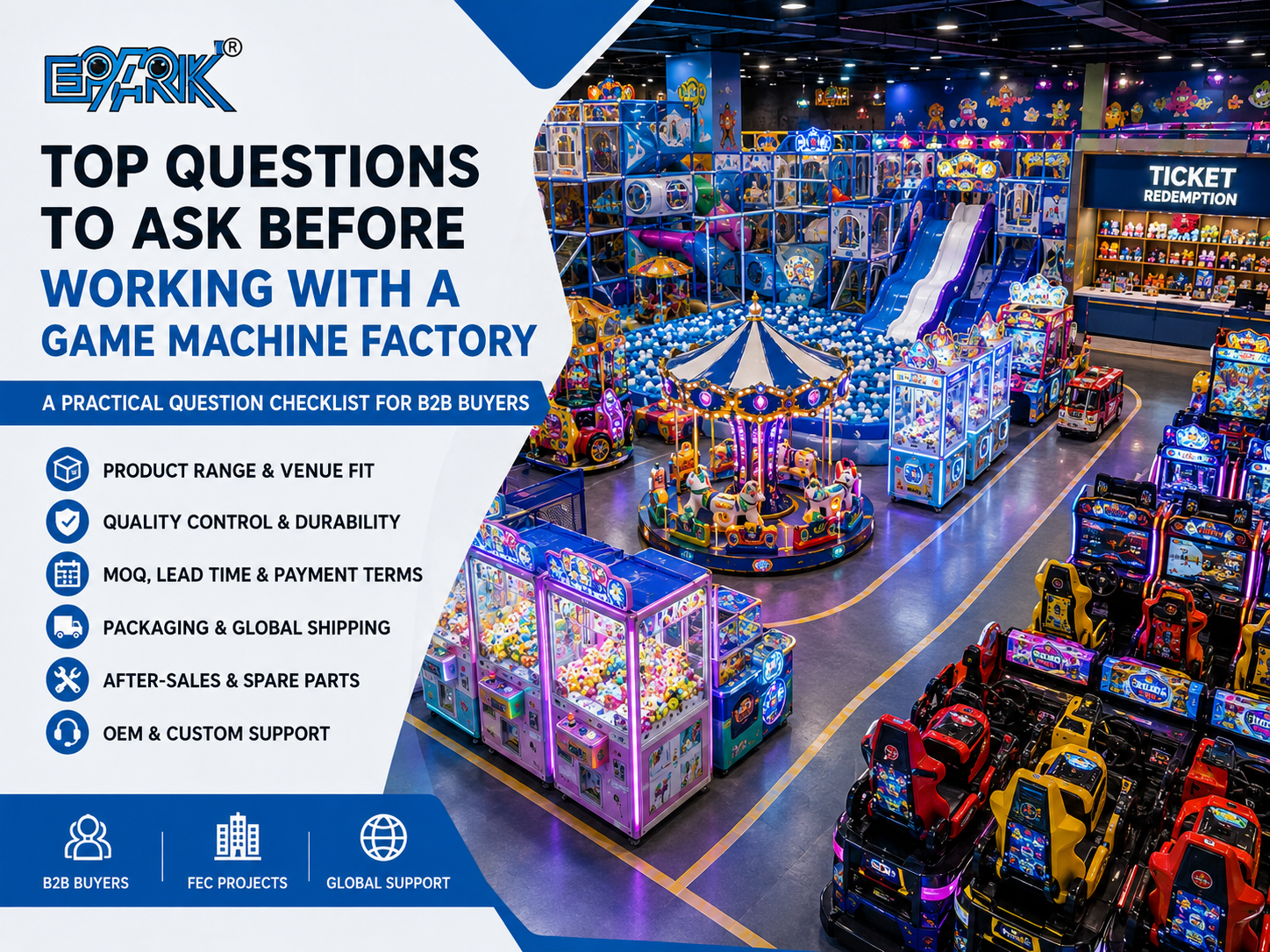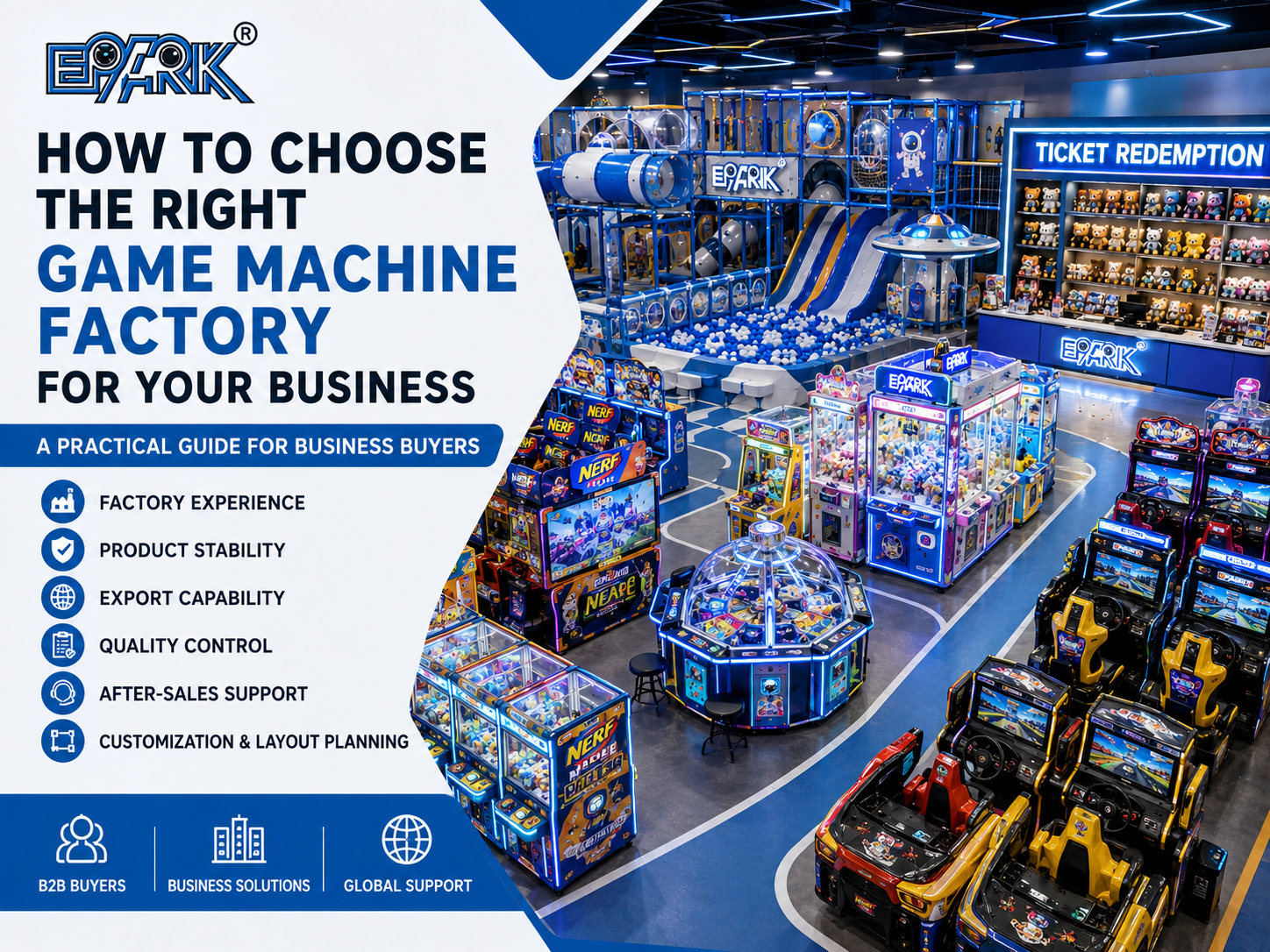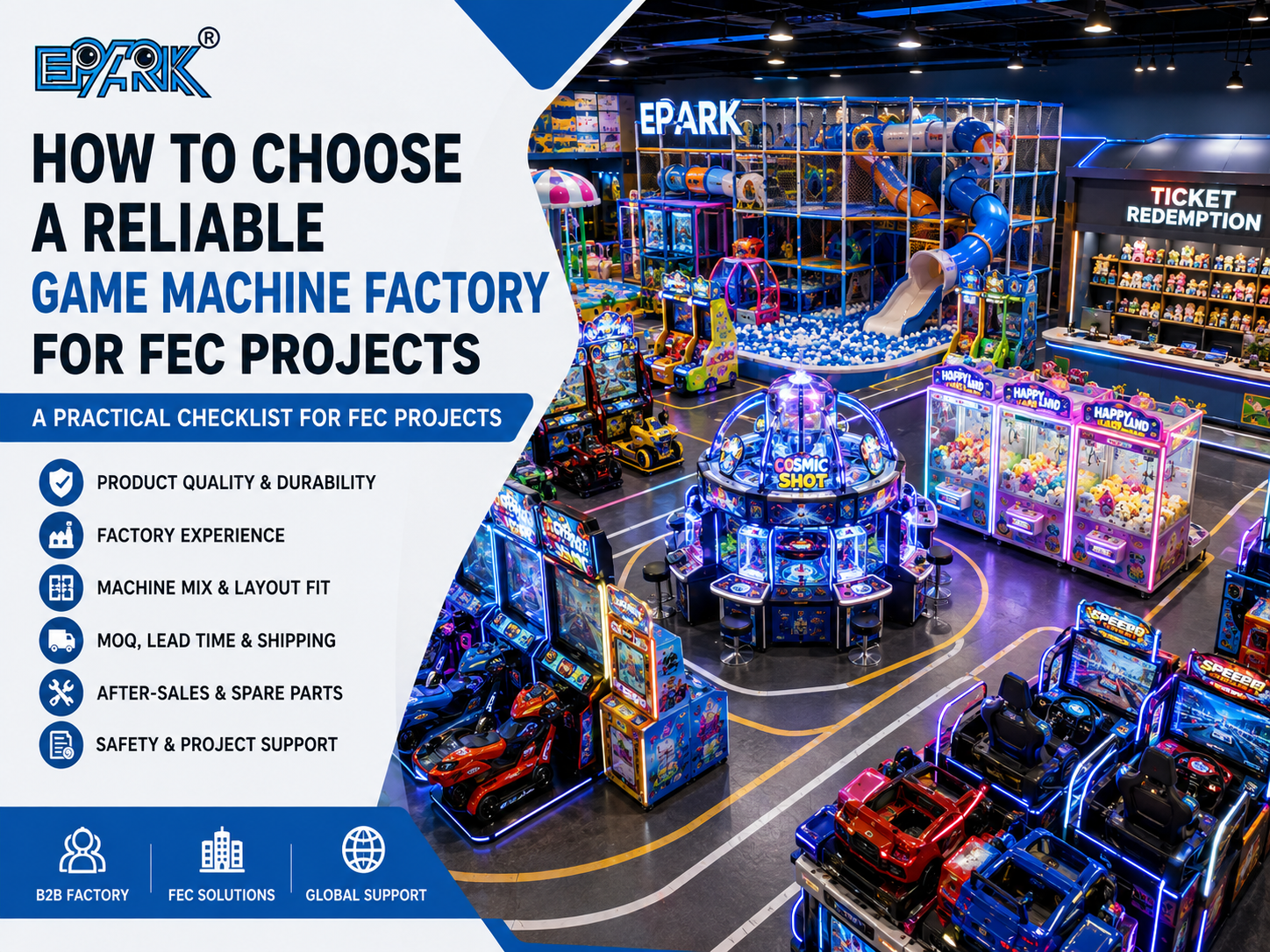
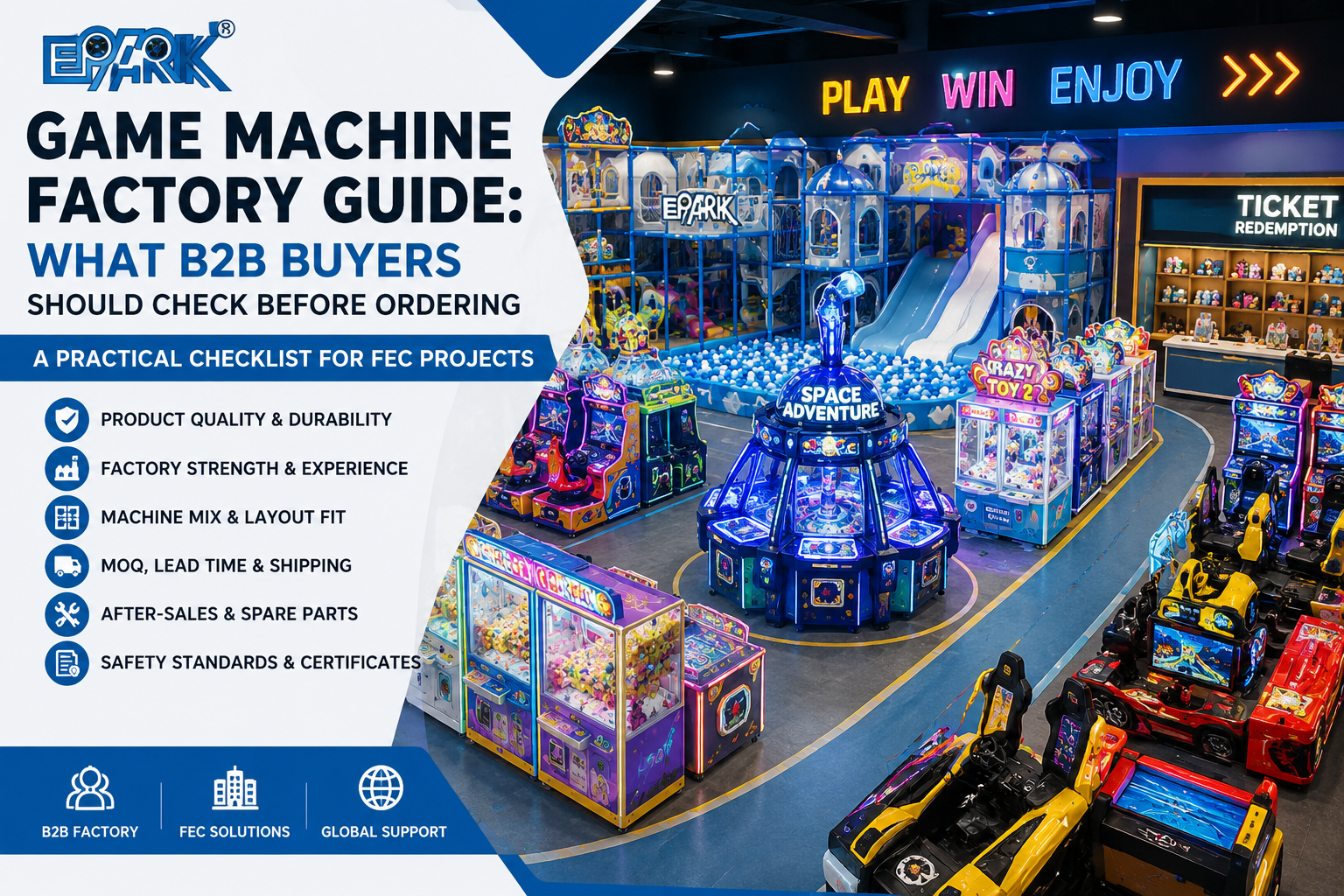
Choosing a game machine factory is a business decision, not just a product purchase. For FEC operators, indoor playground investors, arcade center owners, distributors, and commercial entertainment buyers, the wrong supplier can create problems long after delivery: unstable machines, unclear installation documents, weak spare parts support, delayed opening schedules, and equipment that does not fit the venue layout.
A reliable factory should help buyers think beyond individual machines. In a real family entertainment center, arcade game machines, redemption games, kids machines, indoor playground equipment, soft play areas, trampoline zones, seating areas, and prize counters must work together. EPARK’s company profile positions the brand as an indoor playground and children’s amusement equipment supplier with experience in arcade machines, game machines, trampoline parks, themed playgrounds, ocean ball pools, and customized entertainment projects. Buyers can learn more from the EPARK About Us page.
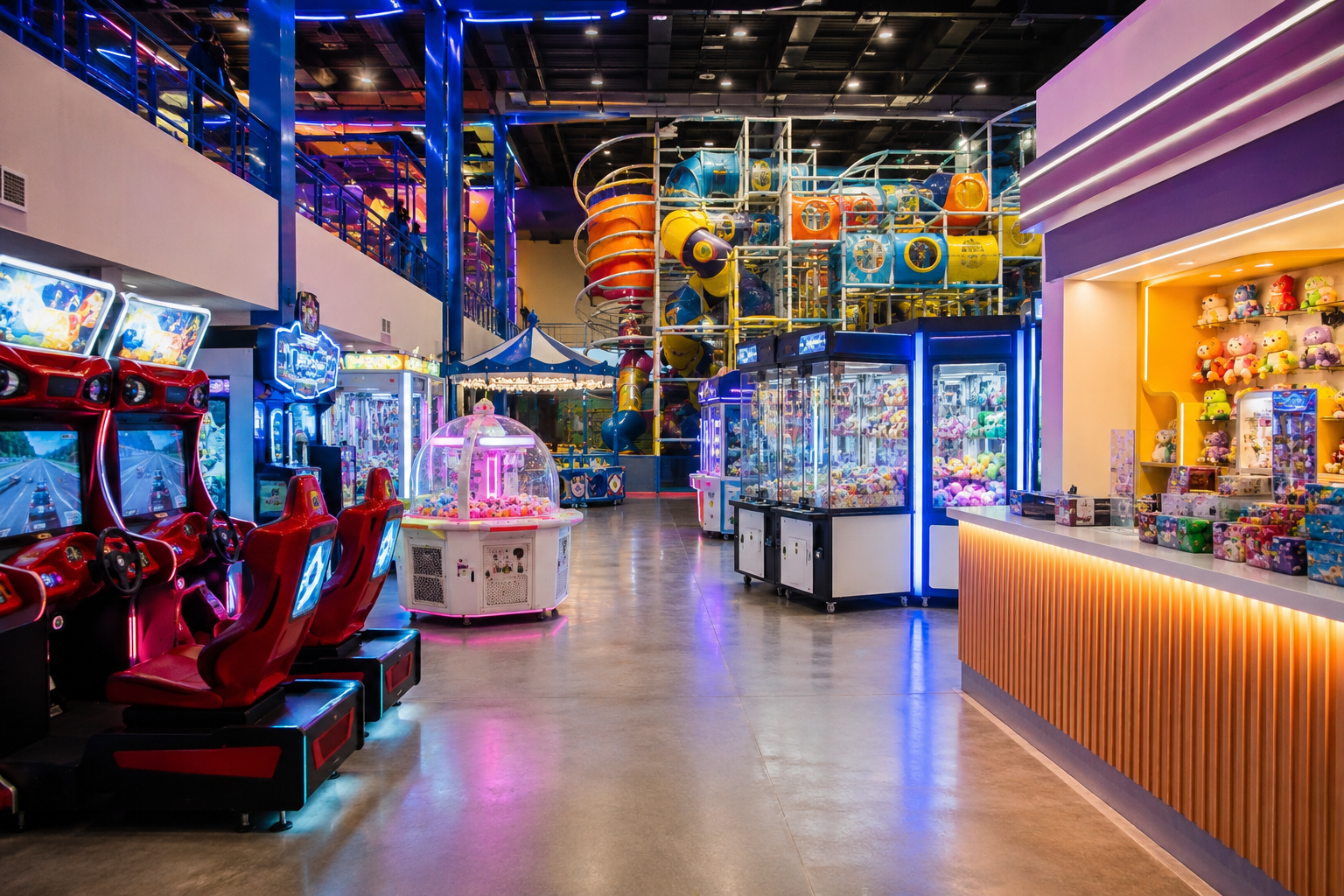
Why B2B Buyers Should Not Order Game Machines by Price Alone
Price is important, but it should never be the only factor when comparing suppliers. A low machine price may look attractive at first, but commercial buyers must also consider daily usage frequency, maintenance costs, spare parts availability, packaging quality, shipping damage risk, and after-sales response.
For FEC projects, the business cost of equipment failure is often higher than the repair cost itself. If a machine stops working during weekends, holidays, or peak hours, it can affect visitor experience and reduce revenue. If spare parts are hard to obtain, the problem lasts longer. If the machine layout is poorly planned, even good equipment may fail to generate enough play frequency.
This is why B2B buyers should evaluate a game machine factory from a project perspective. The goal is not only to buy machines, but to build a stable commercial entertainment area that supports traffic flow, repeat play, family engagement, and long-term operation.
Check the Factory’s Project Experience
A qualified supplier should understand how commercial entertainment venues operate. Game machines used in shopping malls, FECs, indoor playgrounds, resorts, and arcade centers face different requirements from machines used in private or low-traffic environments.
Before ordering, buyers should ask:
- Does the factory serve commercial entertainment projects?
- Does it understand FEC layouts and visitor flow?
- Can it support mixed projects with arcade machines and indoor playground equipment?
- Has it exported to the buyer’s target market?
- Can it provide guidance for machine placement, age-group zoning, and revenue areas?
EPARK’s official information states that its products are used in shopping malls, family entertainment centers, early education institutions, cultural tourism projects, and commercial real estate developments. This makes project experience especially relevant when buyers want to combine game machines with indoor playground or soft play zones.
Review Product Categories Before Confirming the Order
A strong FEC usually needs a balanced machine mix. Buyers should not fill the venue with only one type of game machine. Different machines serve different age groups, play behaviors, and revenue models.
Common commercial game machine types include:
| Machine Type | Best Use in FEC Projects | Buyer Focus |
|---|---|---|
| Arcade Machines | Teenagers, families, general entertainment zones | Visual appeal, gameplay stability, screen quality |
| Redemption Games | Repeat play and prize-based spending | Ticket system, prize counter integration |
| Kids Game Machines | Younger children near soft play zones | Safety, simple controls, colorful design |
| Interactive Game Machines | High-engagement activity zones | Motion response, durability, user experience |
| Sports Arcade Machines | Active play and older children | Structure strength, scoring accuracy, space needs |
| Claw Machines | Waiting areas, entrance zones, prize areas | Prize visibility, cabinet quality, maintenance |
Before placing a bulk order, buyers can review EPARK’s Products page to understand how different amusement equipment categories can support a wider indoor entertainment project. The current public product list page shows the site’s product section and category structure, while detailed project planning may require direct consultation.
Confirm Quality Control and Commercial Durability
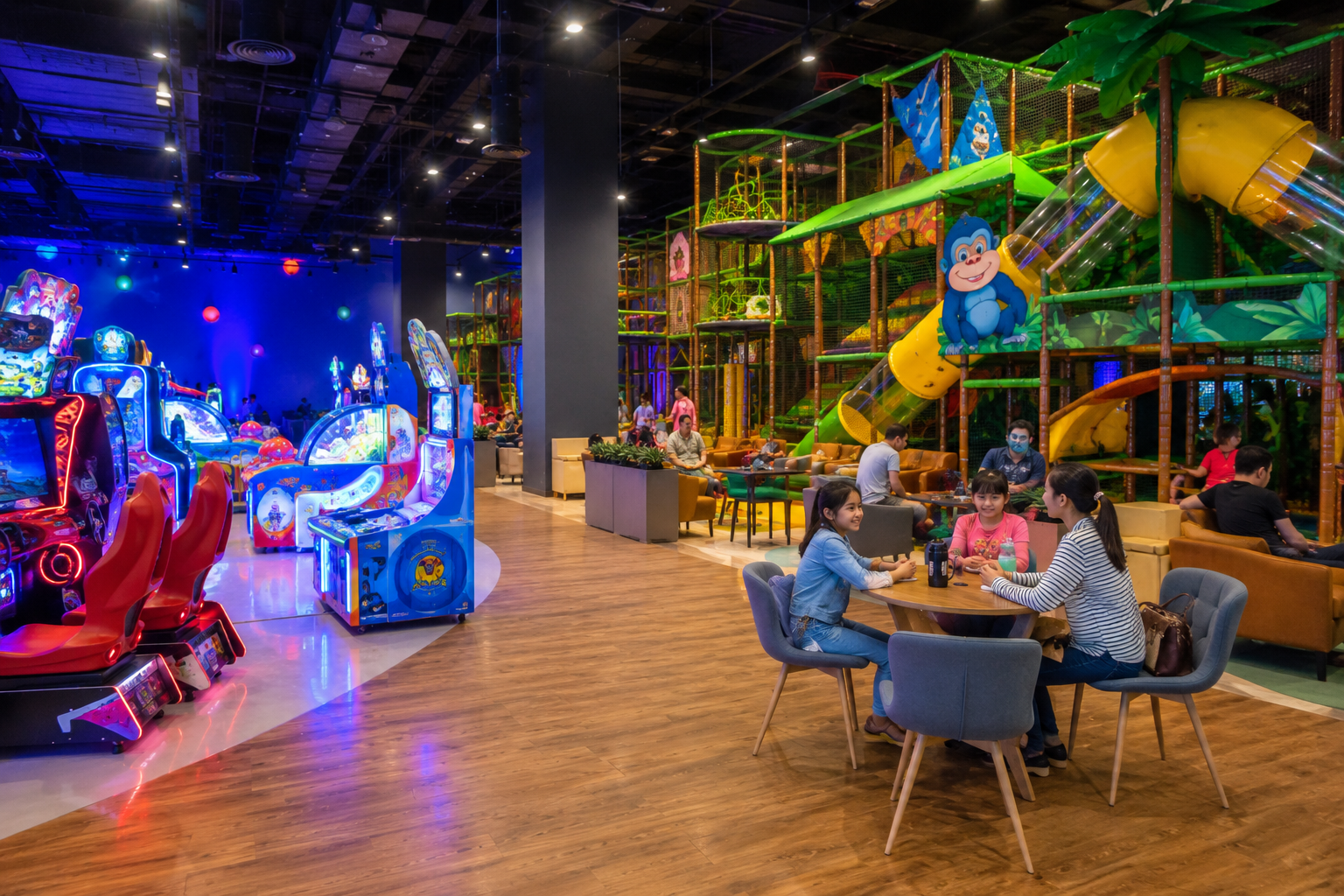
For B2B buyers, commercial durability matters more than appearance alone. A good-looking machine that cannot withstand frequent use will quickly become a cost burden.
Buyers should check:
- Cabinet material and structure
- Screen and electronic component stability
- Coin, card, or payment system compatibility
- Wiring protection
- Control panel durability
- Spare parts availability
- Packaging protection for export shipping
- Factory testing before shipment
For mixed FEC projects that include soft play or indoor playground areas, buyers should also evaluate material safety and structural quality. EPARK’s safety and quality page describes high-strength steel frameworks, hot-dip galvanization, high-density foam padding, soft PVC sleeves, EVA or PU foam mats, FRP or composite resin slides, and anti-slip flooring for playground equipment. These details help buyers evaluate project-level safety and durability, not just machine appearance.
ASTM F1918 provides safety and performance guidance for soft contained play equipment, while ISO 9001 is globally recognized for quality management systems. These external references are useful when buyers evaluate suppliers for commercial amusement projects where quality control, repeatable processes, and safety expectations matter.
Check Layout Compatibility with Your FEC Business Model
A game machine factory should not only ask how many machines you want. For a real FEC project, the supplier should understand how machines fit into the layout.
Buyers should prepare:
- Floor plan
- Total venue size
- Ceiling height
- Entrance and exit locations
- Target age groups
- Existing or planned indoor playground area
- Soft play or trampoline zone position
- Prize counter location
- Parent seating and waiting areas
- Expected business model
Machine placement affects spending behavior. Redemption games often work well near prize counters. Kids machines can perform better near soft play entrances or waiting areas. Sports arcade machines need open space and safe circulation. Claw machines can work near entrances, exits, and family waiting zones.
IAAPA’s industry coverage on arcade revenue operations notes that high-performing arcade mixes often rely heavily on redemption games, while video games and merchandisers add variety and engagement. For B2B buyers, this supports a practical point: machine selection should be tied to revenue structure, not only product appearance.
Verify MOQ, Lead Time, Packaging, and Shipping Details
Before ordering, B2B buyers should clarify all commercial terms. Many problems happen because the buyer and supplier only confirm price, but not operational details.
| Item to Check | Why It Matters |
|---|---|
| MOQ | Determines whether the supplier supports trial orders or mixed models |
| Lead Time | Affects opening schedules and project launch planning |
| Payment Terms | Helps buyers manage budget and production risk |
| Packaging | Reduces damage during long-distance shipping |
| Shipping Method | Impacts delivery cost, customs process, and project timing |
| Voltage & Plug | Ensures machines match the destination market |
| Installation Documents | Helps local teams set up equipment correctly |
| Spare Parts | Reduces downtime after opening |
| Warranty Scope | Clarifies responsibility after delivery |
| After-Sales Response | Affects long-term operating stability |
EPARK’s FAQ page includes buyer-focused questions on OEM/ODM customization, production lead time, products and services, installation service, after-sales service, safety, quality, shipping, and logistics. This makes it a useful page for buyers preparing practical ordering questions before submitting an inquiry.
Ask About OEM, ODM, and Customization Options
For distributors, chain FEC brands, shopping mall projects, and private-label buyers, customization can be more important than standard product selection.
Buyers may need:
- Custom cabinet color
- Branding or logo placement
- Themed appearance
- Local voltage and plug configuration
- Game language adjustment
- Packaging customization
- Mixed container order planning
- Project-specific machine combination
- Integration with indoor playground or arcade zone design
This is where the supplier’s wider amusement project experience becomes valuable. EPARK’s customization process describes consultation, space planning, professional design, material selection, custom manufacturing, quality inspection, delivery, installation, and after-sales maintenance. For buyers building a complete entertainment center, this process is more useful than a simple product catalog.
Prepare the Right Information Before Requesting a Quote
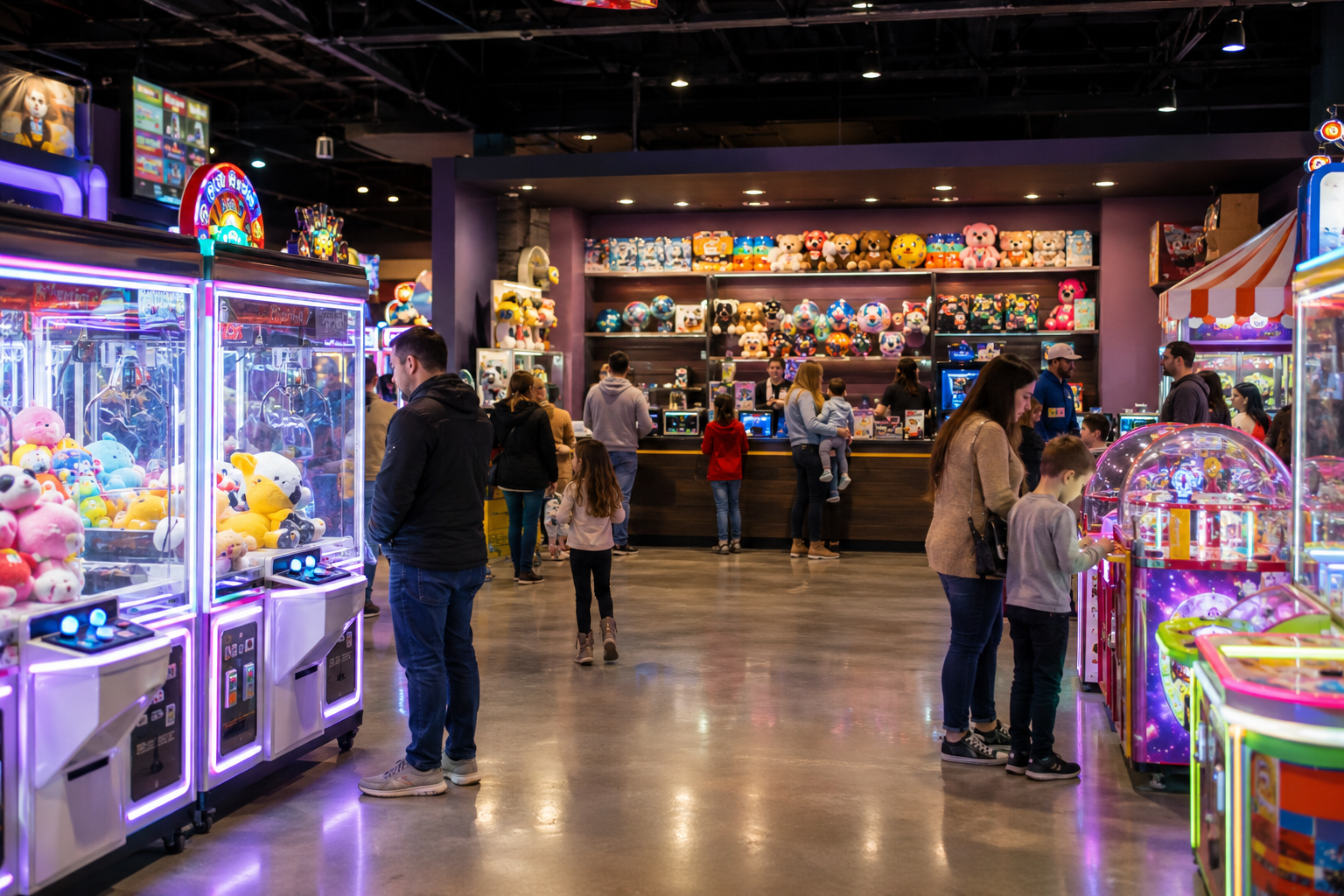
A professional supplier can provide a better quotation when the buyer gives complete information. Before contacting a game machine factory, prepare a clear project brief.
Recommended information includes:
- Country and city
- Venue type
- Floor plan or CAD drawing
- Available area for game machines
- Target customer age group
- Preferred machine types
- Quantity range
- Budget range
- Voltage requirements
- Expected opening date
- Shipping destination
- Need for indoor playground, soft play, trampoline, or prize counter areas
- OEM/ODM customization requirements
If buyers are still comparing ideas, EPARK’s Blog page can support future planning around indoor playground business, FEC equipment solutions, game machines, safety, installation, and themed playground design. The blog section also shows categories such as Product Guide, Indoor Playground Business & Trade, Game Machine & Arcade Equipment, and FEC Equipment Solutions.
FAQ
Q1: What should B2B buyers check before ordering from a game machine factory?
B2B buyers should check factory experience, product categories, commercial durability, quality control, MOQ, lead time, export packaging, voltage options, installation documents, spare parts, warranty terms, and after-sales support. For FEC projects, buyers should also confirm whether the supplier understands layout planning and machine mix.
Q2: Is the cheapest game machine factory always the best choice?
No. A lower price may lead to higher maintenance costs, weaker spare parts support, shipping damage, unstable machine operation, or poor after-sales communication. For commercial venues, buyers should compare total operating value, not only unit price.
Q3: Can game machines be ordered together with indoor playground equipment?
Yes. For FEC projects, game machines can be planned together with indoor playground equipment, soft play areas, trampoline parks, ocean ball pools, and prize counters. This helps create a stronger entertainment mix for different age groups and spending behaviors.
Q4: What information should I send to get an accurate quotation?
Send your floor plan, venue size, target age group, preferred game machine types, quantity, budget range, voltage requirements, delivery country, expected opening date, and whether you need customization, installation documents, spare parts, or a full FEC layout plan.
Build a More Reliable FEC Project with EPARK
Choosing a game machine factory is ultimately about reducing project risk and improving long-term operating value. For B2B buyers, the best supplier should understand product quality, machine mix, venue layout, commercial durability, bulk order management, export delivery, spare parts, and after-sales support.
EPARK supports indoor playground equipment, arcade machines, game machines, trampoline parks, themed playgrounds, ocean ball pools, soft play areas, and customized amusement projects for global commercial buyers. If you are planning a new FEC, shopping mall entertainment area, indoor playground upgrade, or arcade zone, prepare your floor plan, budget range, target age group, and equipment list.
You can submit your project requirements through the EPARK Contact Us page so the team can help evaluate the right machine mix, layout direction, and supporting amusement equipment for your venue.
General Disclaimer
All data on https://www.eparki.com is for general guidance only. As a leading indoor playground manufacturer and trampoline supplier, EPARK strives for accuracy but gives no express or implied warranty regarding completeness, performance or project fitness. Product specs, designs and results may vary with use and customer requirements. Buyers must verify technical details, compliance and suitability before purchase. EPARK OEM/ODM is not liable for any direct, indirect or consequential damages arising from site use. For custom solutions, contact our manufacturer and supplier team via the Contact page.
Intellectual Property
Text, images, videos, CAD files and software are Guangzhou EPARK Electronic Technology Co., Ltd. All rights reserved. No part may be copied, republished or used commercially without prior written permission. We will pursue legal action for copyright or design-patent infringement.
Trademarks
"EPARK", the EPARK logo and related graphics are registered trademarks of Guangzhou EPARK Electronic Technology Co., Ltd. Unauthorized use in ads, domain names or packaging is prohibited.
Governing Law
These terms are governed by the laws of the People's Republic of China.
Contact
Questions? Email sales@nanyuetech.com or WhatsApp +86 139 0307 9263.