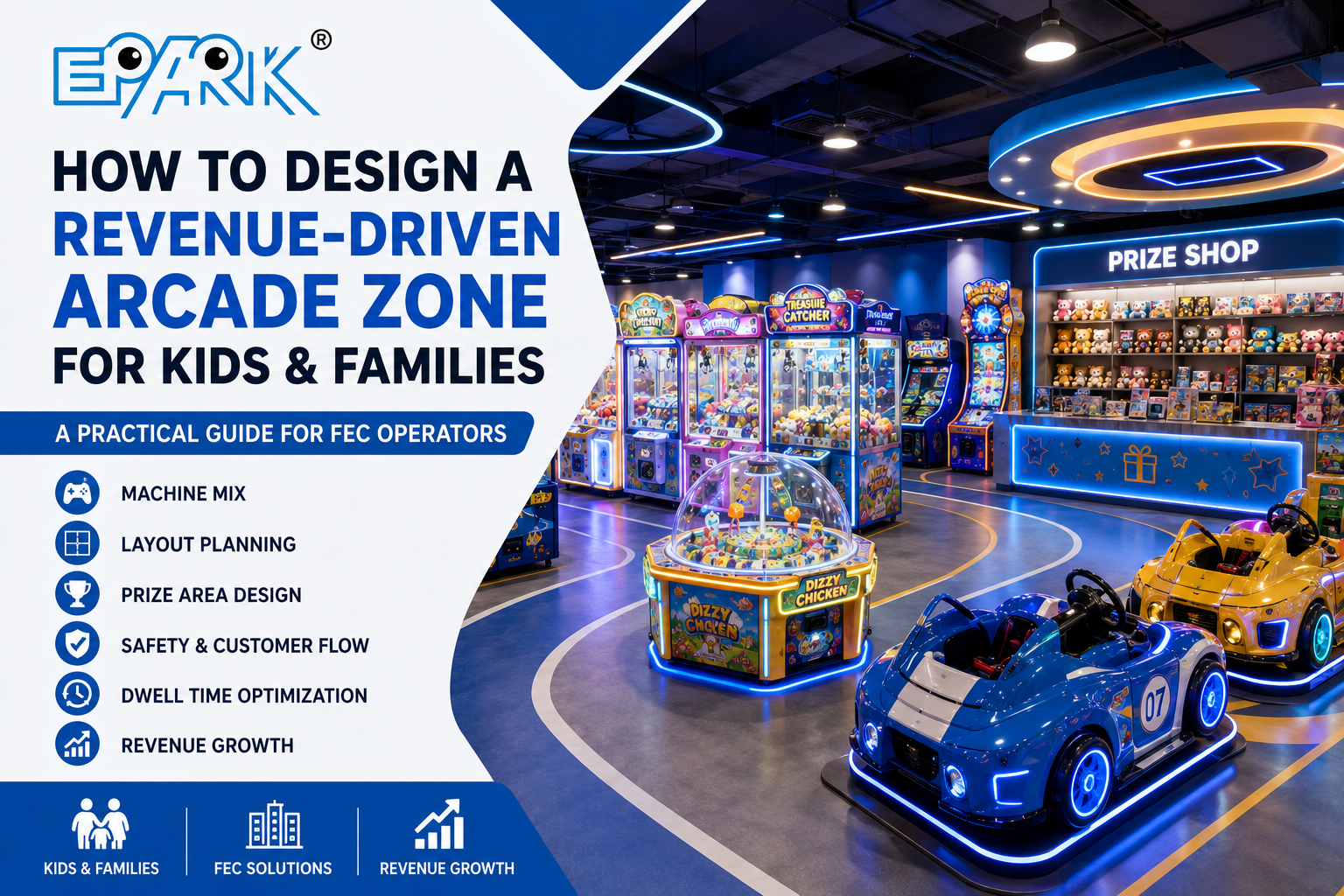
A successful arcade zone is not just a group of game machines placed inside a venue. For family entertainment centers, shopping malls, indoor playgrounds, hotels, resorts, and commercial leisure spaces, arcade zone design directly affects customer flow, play frequency, dwell time, repeat spending, and long-term revenue.
When kids and families enter an arcade area, they should quickly understand where to play, where to win prizes, where parents can watch, and how different machines connect into one enjoyable experience. A strong arcade zone layout can turn a simple entertainment corner into a profitable family attraction.
This guide explains how to design an arcade zone for kids and families with revenue in mind. It covers machine mix, age zoning, prize placement, traffic flow, safety, payment systems, maintenance planning, and B2B sourcing considerations.
If you are planning a family entertainment center or upgrading an existing game area, you can explore EPARK’s amusement equipment catalog for arcade machines, game machines, indoor playground equipment, and FEC project solutions.
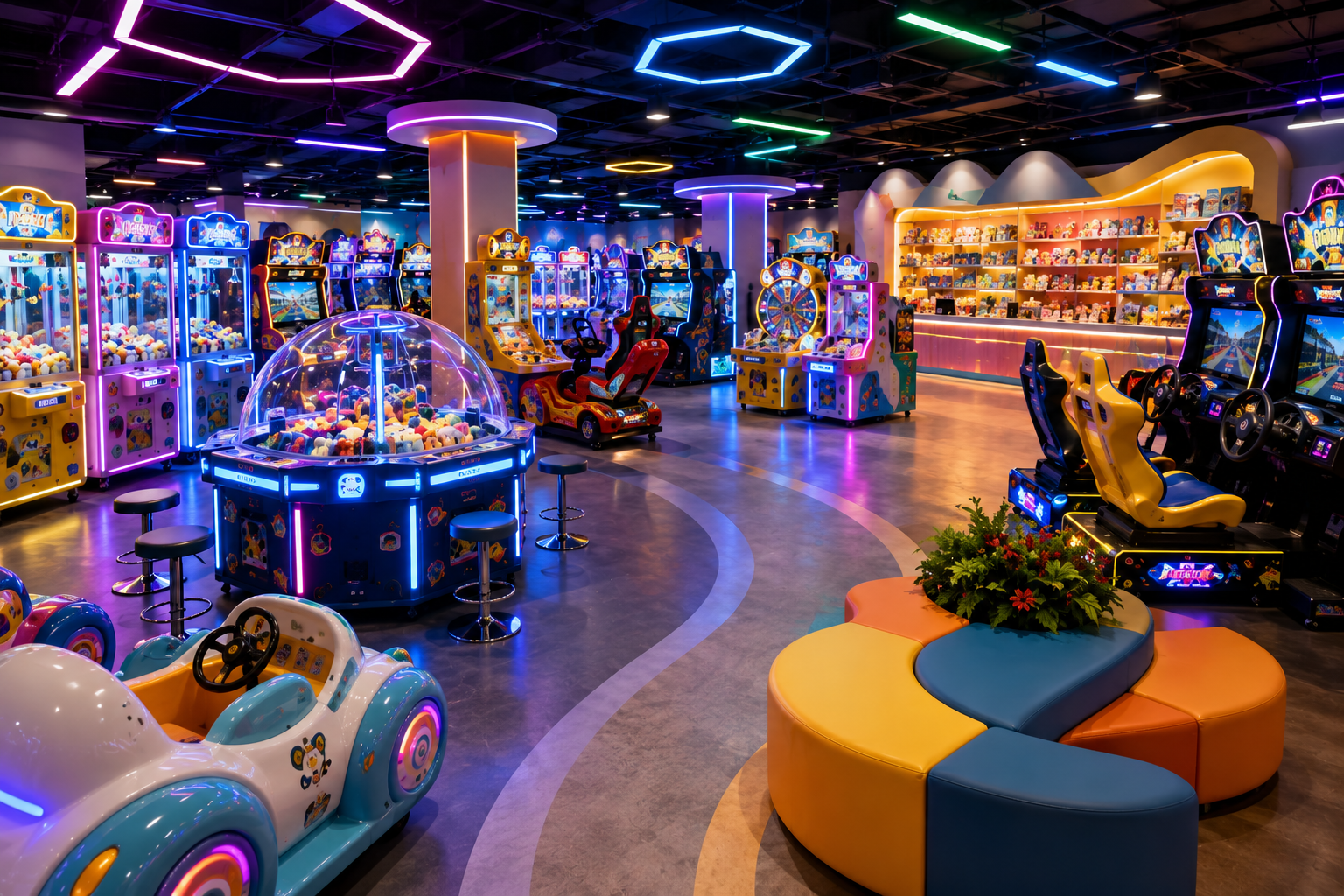 What Is Arcade Zone Design?
Arcade zone design is the planning process for arranging arcade machines, redemption games, claw machines, kiddie rides, racing games, VR machines, prize counters, walkways, seating areas, and payment systems inside a commercial entertainment space.
A good arcade zone design should balance four goals:
- Attract customers from a distance
- Make the space easy to navigate
- Encourage repeat play
- Increase revenue per visit
For kids and family venues, the design must also consider visibility, safety, age groups, parent supervision, traffic flow, and comfort.
An arcade zone can be a standalone arcade center, a section inside a family entertainment center, a shopping mall entertainment corner, an add-on area beside an indoor playground, or part of a hotel and resort family activity space.
Why Arcade Zone Design Matters for Revenue
Many operators focus heavily on which machines to buy, but machine placement and layout are just as important. A high-quality game machine may perform poorly if it is hidden in a low-traffic corner. A simple claw machine may generate strong revenue if placed near the entrance, cashier area, or prize counter.
A revenue-driven layout can help operators:
- Increase spontaneous play
- Extend customer dwell time
- Improve machine visibility
- Encourage prize redemption spending
- Support birthday party packages
- Separate younger kids from older players
- Improve parent comfort
- Reduce crowding
- Improve machine maintenance access
- Increase return visits
For B2B buyers, arcade zone design should be planned before purchasing machines. The right layout helps determine machine quantity, size, type, payment system, and traffic path.
For complete equipment selection, buyers can review EPARK’s product catalog before finalizing a layout plan.
Who Needs Revenue-Driven Arcade Zone Design?
| Buyer Type | Main Goal | Recommended Arcade Zone Focus |
|---|---|---|
| FEC Operators | Increase per-visit spending | Redemption games, racing games, prize area |
| Shopping Mall Owners | Attract family traffic | Claw machines, kiddie rides, visible entrance layout |
| Indoor Playground Operators | Add secondary revenue | Small arcade area near exit or parent zone |
| Hotel & Resort Buyers | Improve family guest experience | Compact machines, soft lighting, easy operation |
| Arcade Investors | Build full pay-per-play business | Complete machine mix and strong traffic flow |
| Kids Café Owners | Keep children entertained | Small claw machines, kiddie rides, soft game area |
| Project Contractors | Deliver commercial venues | Layout planning, machine zoning, installation support |
| Chain Entertainment Brands | Standardize multiple locations | Repeatable layout, OEM branding, consistent flow |
An arcade zone may not need to be very large. Even a small area can perform well when machines are selected and positioned correctly.
Core Principles of Arcade Zone Design
1. Design Around Customer Flow
Customer flow is the path visitors naturally take through the venue. A strong arcade zone design places attractive machines along the main flow instead of forcing customers into hidden corners.
Good locations include:
- Entrance area
- Main walkway
- Waiting area
- Near parent seating
- Near food and beverage area
- Near party rooms
- Near indoor playground exits
- Around prize counters
Customers should see the most attractive machines before they decide whether to play.
2. Use High-Attraction Machines at the Entrance
The entrance should create visual excitement. Bright lighting, colorful machines, and moving screens can attract children and families immediately.
Suitable entrance machines include:
- Claw machines
- Prize machines
- LED redemption games
- Kiddie rides
- Large visual arcade machines
- Interactive sports machines
These machines help pull customers into the arcade area and create the first spending opportunity.
3. Place Redemption Machines Near the Prize Counter
Redemption machines work best when the reward is visible. If customers can see the prize counter, they understand the value of collecting tickets or points.
Place redemption machines close to:
- Prize shelves
- Ticket counters
- Recharge counters
- Family traffic areas
- High-visibility walls
This layout creates a loop: play game → earn tickets → view prizes → play again.
For FEC operators, this loop is one of the most important revenue drivers.
4. Create Age-Based Zones
Kids and families include different age groups. A toddler, a 7-year-old child, a teenager, and a parent do not play the same machines.
A strong arcade zone design should separate areas by user type.
| Age Group | Recommended Machines | Layout Notes |
|---|---|---|
| Toddlers | Kiddie rides, simple light games | Near parents, low noise, soft traffic |
| Young Children | Claw machines, mini redemption games | Easy controls, bright visuals |
| Older Children | Sports games, ticket games, racing games | More challenge and competition |
| Teenagers | Racing games, shooting games, VR machines | More immersive and competitive |
| Parents | Skill games, claw machines, family games | Near seating or child activity zones |
Age zoning improves safety, comfort, and play efficiency.
5. Balance Fast-Play and Long-Play Machines
Not every machine should create the same type of play. A profitable arcade zone needs both quick games and longer experiences.
Fast-play machines include:
- Claw machines
- Ticket games
- Kiddie rides
- Simple prize machines
Long-play machines include:
- Racing games
- VR simulators
- Shooting games
- Multiplayer arcade games
- Interactive sports games
Fast-play machines create frequent small transactions. Long-play machines increase dwell time and attract groups. A balanced mix improves overall revenue.
6. Keep Walkways Open and Comfortable
Crowded layouts reduce customer comfort. Families need space for strollers, children, parents, and groups. Staff also need space for cleaning, maintenance, and machine access.
Recommended design points:
- Avoid placing machines too close together
- Keep main walkways clear
- Leave enough turning space near large machines
- Avoid blocking emergency exits
- Keep parent sightlines open
- Allow maintenance access behind machines
- Prevent queues from blocking other games
A cleaner layout can increase customer satisfaction and make the venue feel more professional.
Machine Mix for a Family Arcade Zone
A revenue-driven arcade zone should combine different machine types based on customer behavior.
| Machine Type | Revenue Role | Best Placement |
|---|---|---|
| Claw Machine | Repeat attempts and prize motivation | Entrance, walkway, prize area |
| Redemption Machine | Ticket-based repeat play | Near prize counter |
| Kiddie Ride | Young child engagement | Parent waiting zone or soft play area |
| Racing Game | Group competition | Teen or family challenge zone |
| Shooting Game | Skill and excitement | Older kids and teen zone |
| VR Simulator | Premium experience | High-value attraction area |
| Sports Game | Active family interaction | Open activity area |
| Classic Arcade Cabinet | Repeat gameplay | Arcade row or retro zone |
A venue designed for families should not rely on only one machine type. The strongest revenue usually comes from a mixed layout that supports different ages and spending behaviors.
Suggested Arcade Zone Layout by Area
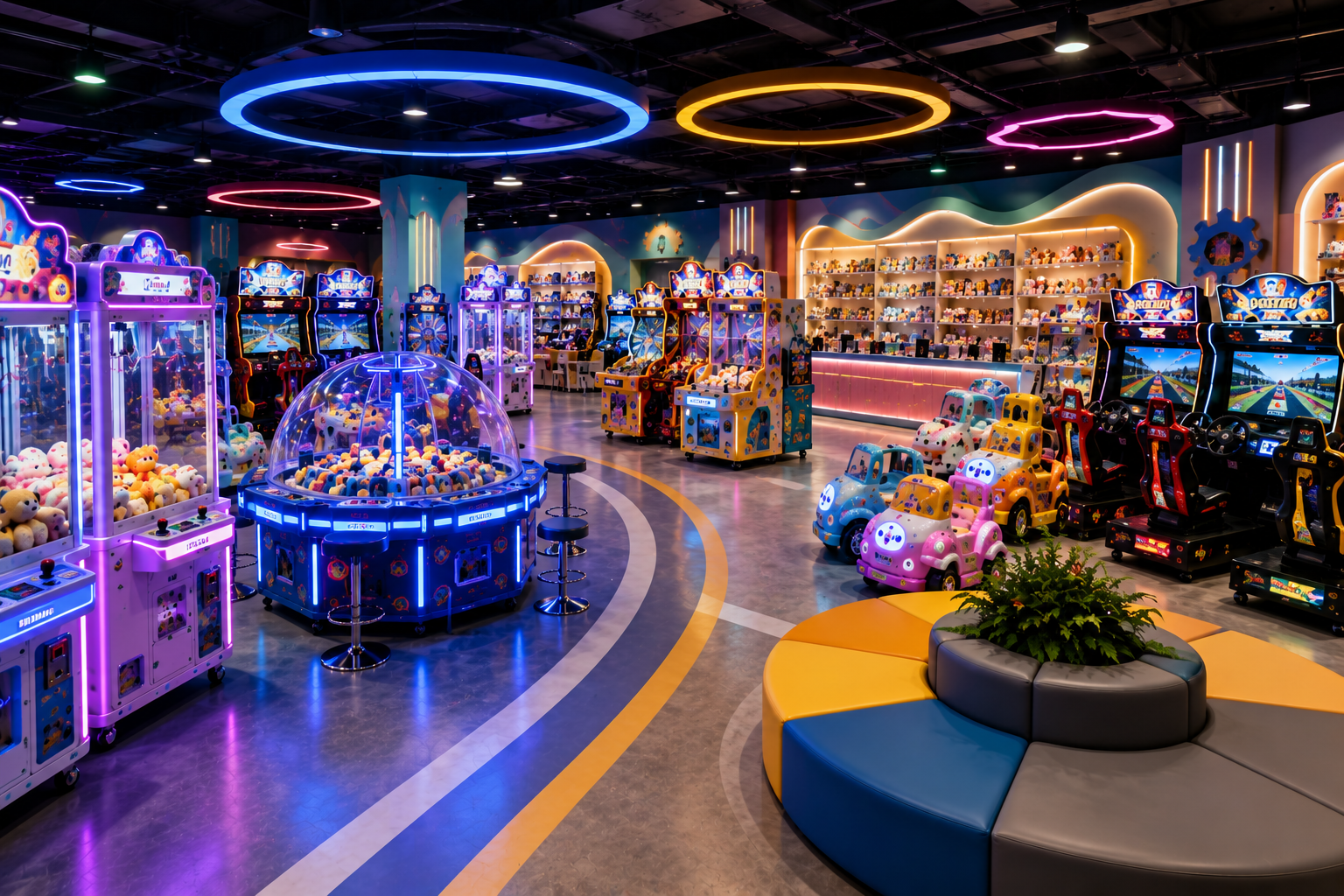
Entrance Attraction Zone
Purpose: attract attention and create first play.
Recommended machines:
- Claw machines
- LED prize machines
- Kiddie rides
- Small redemption games
Design tip: use bright machines and open visibility to pull families into the space.
Core Revenue Zone
Purpose: generate steady play and repeat spending.
Recommended machines:
- Redemption machines
- Ticket games
- Basketball or sports games
- Skill games
- Prize games
Design tip: connect this zone visually with the prize counter.
Family Competition Zone
Purpose: encourage group play and longer dwell time.
Recommended machines:
- Racing games
- Shooting games
- Multiplayer arcade games
- Interactive sports games
Design tip: allow enough space behind machines for waiting family members.
Toddler and Young Kids Zone
Purpose: serve younger children safely.
Recommended machines:
- Kiddie rides
- Mini arcade games
- Soft interactive games
- Parent-child machines
Design tip: place near parent seating, soft play, or low-noise areas.
Premium Experience Zone
Purpose: increase high-value spending.
Recommended machines:
- VR simulators
- Motion-based machines
- Large interactive arcade machines
Design tip: keep this area visually strong, but avoid blocking main traffic flow.
Prize and Recharge Zone
Purpose: support repeat spending.
Recommended elements:
- Prize shelves
- Ticket redemption counter
- Card recharge area
- Membership promotion area
- Staff support station
Design tip: make prizes visible from the main arcade area.
Technical Factors in Arcade Zone Design
Before buying machines, B2B buyers should check technical requirements.
| Factor | Why It Matters |
|---|---|
| Floor area | Determines machine quantity and layout density |
| Ceiling height | Affects large machines and lighting design |
| Power supply | Prevents overload and wiring issues |
| Machine size | Affects traffic flow and installation |
| Payment system | Supports coins, tokens, cards, QR, or stored value |
| Network needs | Required for some smart systems or card systems |
| Lighting | Influences atmosphere and machine visibility |
| Sound control | Prevents noise fatigue |
| Maintenance access | Reduces downtime |
| Safety spacing | Improves customer comfort and movement |
For project buyers, it is helpful to prepare floor plans before requesting machine recommendations. You can contact EPARK with floor size, target age group, and machine requirements for project consultation.
Safety and Comfort for Kids and Families
An arcade zone designed for children and families should not only focus on revenue. Safety and comfort directly affect repeat visits.
Key points include:
- Rounded machine edges where possible
- Stable cabinet placement
- Clear walkways
- Non-slip flooring
- Visible staff areas
- Good lighting
- Parent supervision sightlines
- Safe distance between high-motion machines
- Easy emergency access
- Age-appropriate machine placement
When families feel safe and comfortable, they are more likely to stay longer and return.
For common questions about EPARK products and services, buyers can also visit the EPARK FAQ page.
How Arcade Zone Design Supports Birthday Parties and Group Sales
Family entertainment centers often generate strong revenue from birthday parties, school activities, and group bookings.
A good arcade zone can support these packages by offering:
- Party game credits
- Group racing competitions
- Prize redemption cards
- Birthday bonus tokens
- Membership recharge promotions
- Arcade + indoor playground bundles
- Arcade + food and beverage packages
Place selected machines near party rooms or group activity areas. This encourages post-party play and increases spending after the main event.
Revenue Mistakes to Avoid
Many arcade zones underperform because of layout mistakes.
Avoid these problems:
- Machines placed randomly without traffic logic
- Prize counter hidden from customers
- Too many similar machines
- No clear age zoning
- Narrow walkways
- Poor lighting
- Too much noise in toddler areas
- No seating for parents
- No visible recharge area
- Machines that do not match target users
- Difficult maintenance access
- No plan for machine rotation
A revenue-driven arcade zone design should make the customer journey easy and natural.
How to Measure Arcade Zone Performance
After opening, operators should track machine performance.
Important metrics include:
| Metric | What It Shows |
|---|---|
| Plays per machine | Which machines attract users |
| Revenue per square meter | Whether space is used efficiently |
| Average dwell time | Whether families stay longer |
| Recharge value | Strength of stored-value system |
| Redemption activity | Prize system performance |
| Maintenance frequency | Machine reliability |
| Peak hour usage | Layout efficiency |
| Repeat visit rate | Long-term customer loyalty |
Use these metrics to adjust machine placement, replace underperforming machines, improve prize selection, and plan future equipment purchases.
OEM/ODM Customization for Arcade Zone Branding
For chain FECs, shopping malls, and themed family venues, customization helps create a stronger brand experience.
OEM/ODM options may include:
- Machine logo
- Cabinet color
- Exterior artwork
- Lighting style
- Language setting
- Payment system
- Prize system
- Theme matching
- Packaging design
- Full venue layout support
A consistent visual style can make the arcade zone feel more professional and memorable.
For branded arcade projects, you can send your customization requirements to EPARK.
Arcade Zone Design Checklist
| Checklist Item | Confirmed? |
|---|---|
| Target users are defined | ☐ |
| Floor area is measured | ☐ |
| Machine quantity is planned | ☐ |
| Age zones are separated | ☐ |
| Entrance attraction machines are selected | ☐ |
| Prize counter is visible | ☐ |
| Main traffic path is clear | ☐ |
| Parent seating is considered | ☐ |
| Power supply is planned | ☐ |
| Payment system is confirmed | ☐ |
| Maintenance access is reserved | ☐ |
| Safety spacing is checked | ☐ |
| OEM branding is considered | ☐ |
| Revenue tracking plan is prepared | ☐ |
This checklist can help B2B buyers avoid common design mistakes before purchasing machines.
Why Work with EPARK for Arcade Zone Design?
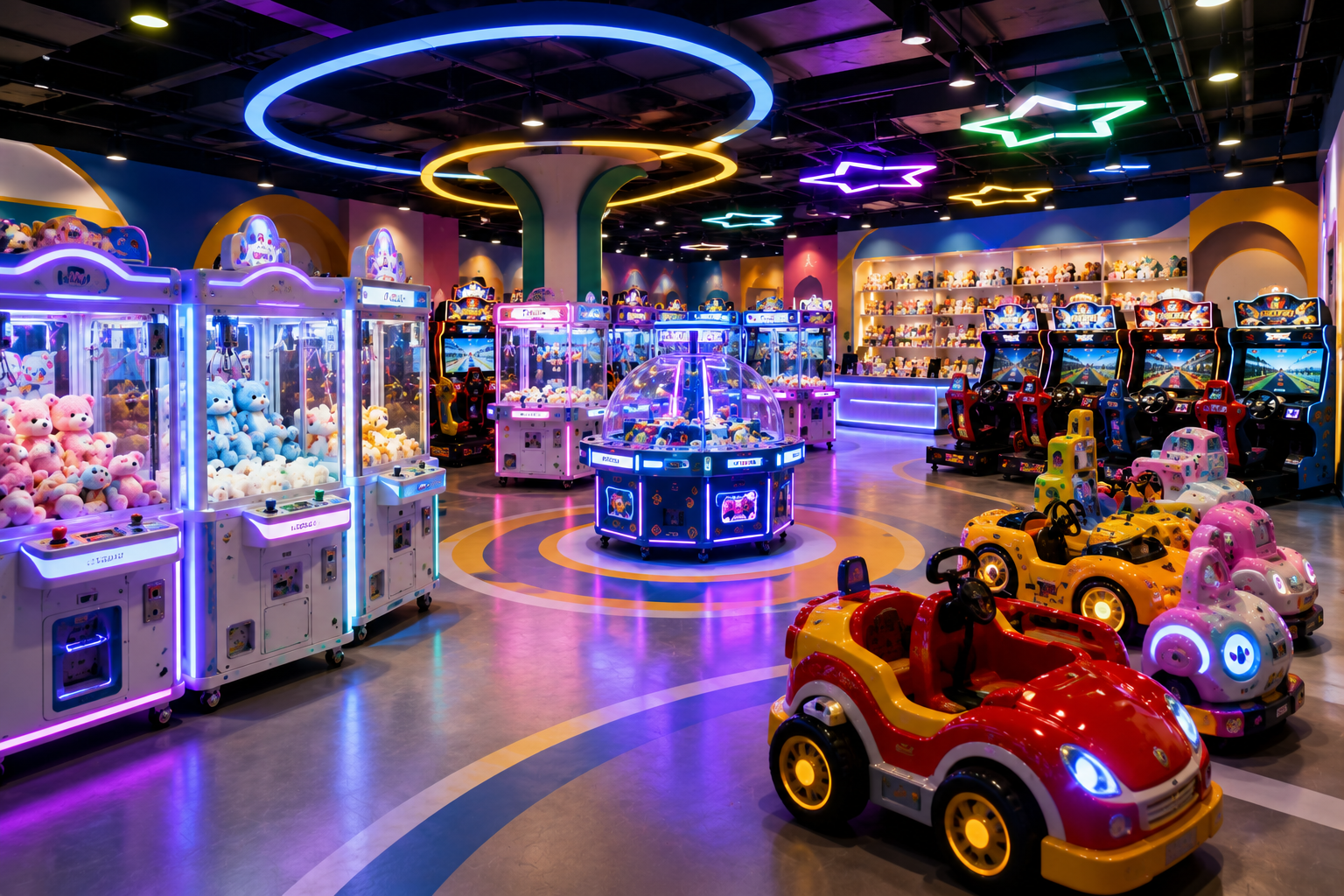
EPARK provides amusement equipment solutions for commercial buyers, including game machines, arcade machines, indoor playground equipment, and FEC-related products.
For B2B projects, EPARK can support discussions around:
- Arcade machine selection
- Game machine sourcing
- FEC equipment planning
- Machine layout ideas
- OEM/ODM customization
- Commercial amusement equipment
- Export packaging
- Project consultation
- Long-term cooperation
Buyers can explore EPARK’s product catalog, review EPARK’s company background, or contact EPARK to discuss arcade zone design and equipment planning.
FAQ: Arcade Zone Design
1. What is arcade zone design?
Arcade zone design is the process of planning machine layout, customer flow, prize areas, age zones, payment systems, and revenue paths inside a commercial arcade or FEC space.
2. Why is arcade zone design important for family entertainment centers?
Good design helps increase visibility, repeat play, dwell time, prize redemption activity, and revenue per square meter while improving customer comfort.
3. What machines should be included in a family arcade zone?
A family arcade zone may include claw machines, redemption games, kiddie rides, racing games, sports machines, shooting games, VR machines, and interactive arcade machines.
4. Where should claw machines be placed?
Claw machines work well near entrances, main walkways, waiting areas, and prize zones because they attract attention and encourage repeat play.
5. How do redemption machines increase revenue?
Redemption machines encourage customers to collect tickets or points and exchange them for prizes. This creates repeat play and longer engagement.
6. How should I design an arcade zone for young children?
Use simple machines, safe spacing, low-noise areas, parent visibility, and easy controls. Kiddie rides and small interactive games work well.
7. How much space does an arcade zone need?
Space depends on machine quantity, machine size, walkway width, seating, prize area, and safety spacing. Buyers should prepare a floor plan before choosing machines.
8. Can an arcade zone be added to an indoor playground?
Yes. Many operators add arcade machines near exits, parent seating, or party rooms to create extra revenue beyond admission tickets.
9. Can EPARK help with arcade zone equipment planning?
Yes. Buyers can review EPARK’s product catalog, check company information, or contact EPARK to discuss arcade zone design, equipment selection, and OEM options.
10. What is the biggest mistake in arcade zone design?
The biggest mistake is placing machines randomly without considering traffic flow, age groups, prize visibility, parent comfort, and maintenance access.
Conclusion
A successful arcade zone design should do more than look attractive. It should guide customer flow, support different age groups, improve prize visibility, encourage repeat play, increase dwell time, and create stronger revenue for the venue.
For kids and families, the best arcade zones are easy to understand, safe to use, visually exciting, and comfortable for parents. For operators, the best design supports long-term revenue, efficient maintenance, and future equipment upgrades.
Before purchasing machines, plan the layout, define the target users, compare machine types, confirm technical requirements, and design a clear revenue path.
To start your project, explore EPARK’s amusement equipment catalog, learn more about EPARK’s company capabilities, or contact the EPARK team with your floor plan, target age group, machine list, and customization needs.
General Disclaimer
All data on https://www.eparki.com is for general guidance only. As a leading indoor playground manufacturer and trampoline supplier, EPARK strives for accuracy but gives no express or implied warranty regarding completeness, performance or project fitness. Product specs, designs and results may vary with use and customer requirements. Buyers must verify technical details, compliance and suitability before purchase. EPARK OEM/ODM is not liable for any direct, indirect or consequential damages arising from site use. For custom solutions, contact our manufacturer and supplier team via the Contact page.
Intellectual Property
Text, images, videos, CAD files and software are Guangzhou EPARK Electronic Technology Co., Ltd. All rights reserved. No part may be copied, republished or used commercially without prior written permission. We will pursue legal action for copyright or design-patent infringement.
Trademarks
"EPARK", the EPARK logo and related graphics are registered trademarks of Guangzhou EPARK Electronic Technology Co., Ltd. Unauthorized use in ads, domain names or packaging is prohibited.
Governing Law
These terms are governed by the laws of the People's Republic of China.
Contact
Questions? Email sales@nanyuetech.com or WhatsApp +86 139 0307 9263.