Why Space-Themed Concepts Are Reshaping Commercial Indoor Play
Space-themed indoor playgrounds are no longer treated as decorative concepts. In many fun factory indoor playground projects, space themes are used strategically to attract older children, introduce higher challenge levels, and extend the lifecycle of commercial play venues. Compared with soft or fantasy themes, space concepts rely more heavily on structure, circulation logic, and age-based progression.
This article focuses on five equipment suppliers that approach space themes from an engineering and operational perspective rather than visual styling alone.
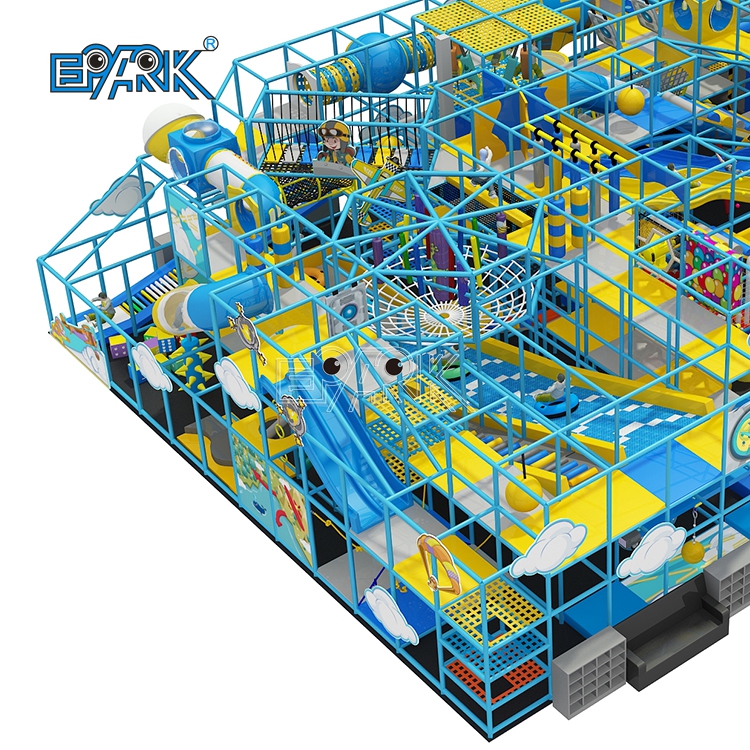
Top 5 Space Theme Indoor Playground Equipment Suppliers
(Listed in no particular order)
1. KOMPAN
Space Theme Strength
KOMPAN’s space-themed indoor systems emphasize movement logic and physical development rather than decorative surfaces.
Typical Space Elements
-
Vertical climbing frames
-
Rotating balance modules
-
Elevated observation decks
Why Buyers Select Them
Chosen for projects where physical challenge and long-term durability are prioritized over heavy theming.
Best Fit
Educational leisure centres, hybrid sport-play environments, structured fun factory indoor playground zones for older children.
2. Playnation
Space Theme Strength
Playnation integrates space themes through layout storytelling and modular sequencing rather than fixed decorative components.
Typical Space Elements
-
Mission-based play routes
-
Multi-entry climbing towers
-
Themed transition corridors
Why Buyers Select Them
Favoured when space themes need to fit irregular buildings or phased commercial rollouts.
Best Fit
Urban entertainment venues, conversion projects, modular fun factory indoor playground installations.
3. iPlayCo
Space Theme Strength
iPlayCo treats space themes as immersive environments rather than standalone equipment sets.
Typical Space Elements
-
Interactive space stations
-
LED-integrated play panels
-
Narrative-based climbing paths
Why Buyers Select Them
Selected for high-visibility projects where experience design and branding matter.
Best Fit
Flagship attractions, destination fun factories, premium fun factory indoor playground concepts.
4. Playnation Projects
Space Theme Strength
This division focuses on bespoke space environments with clear zoning for different age groups.
Typical Space Elements
-
Tiered play decks
-
Transparent observation zones
-
Controlled-height challenge modules
Why Buyers Select Them
Preferred for operators balancing challenge with supervision clarity.
Best Fit
Retail-led entertainment spaces, mid-size commercial playgrounds.
5. Brave Play
Space Theme Strength
Brave Play applies space themes through physical challenge sequencing rather than visual density.
Typical Space Elements
-
Obstacle-based climbing loops
-
Low-visibility distraction zones
-
Progression-focused layouts
Why Buyers Select Them
Appeals to venues focused on repeat visits driven by skill progression.
Best Fit
Activity-based fun factories, mixed-age fun factory indoor playground projects.
Detailed Comparison: Space Theme Capability by Supplier
| Supplier | Core Space Theme Logic | Typical User Age | Structural Height Range | Best Project Stage | Operational Advantage |
|---|---|---|---|---|---|
| KOMPAN | Physical challenge & movement | 6–12 yrs | Medium–High | Core installation | Extremely durable, low wear |
| Playnation | Modular narrative flow | 5–10 yrs | Medium | Phased rollout | Easy expansion |
| iPlayCo | Immersive storytelling | 6–14 yrs | Medium–High | Flagship launch | Strong visitor recall |
| Playnation Projects | Zoning & supervision balance | 4–10 yrs | Medium | Retail adaptation | Clear sightlines |
| Brave Play | Skill progression design | 7–14 yrs | Medium–High | Expansion phase | High repeat engagement |
Common Play Equipment and Zones in Space-Themed Indoor Playgrounds
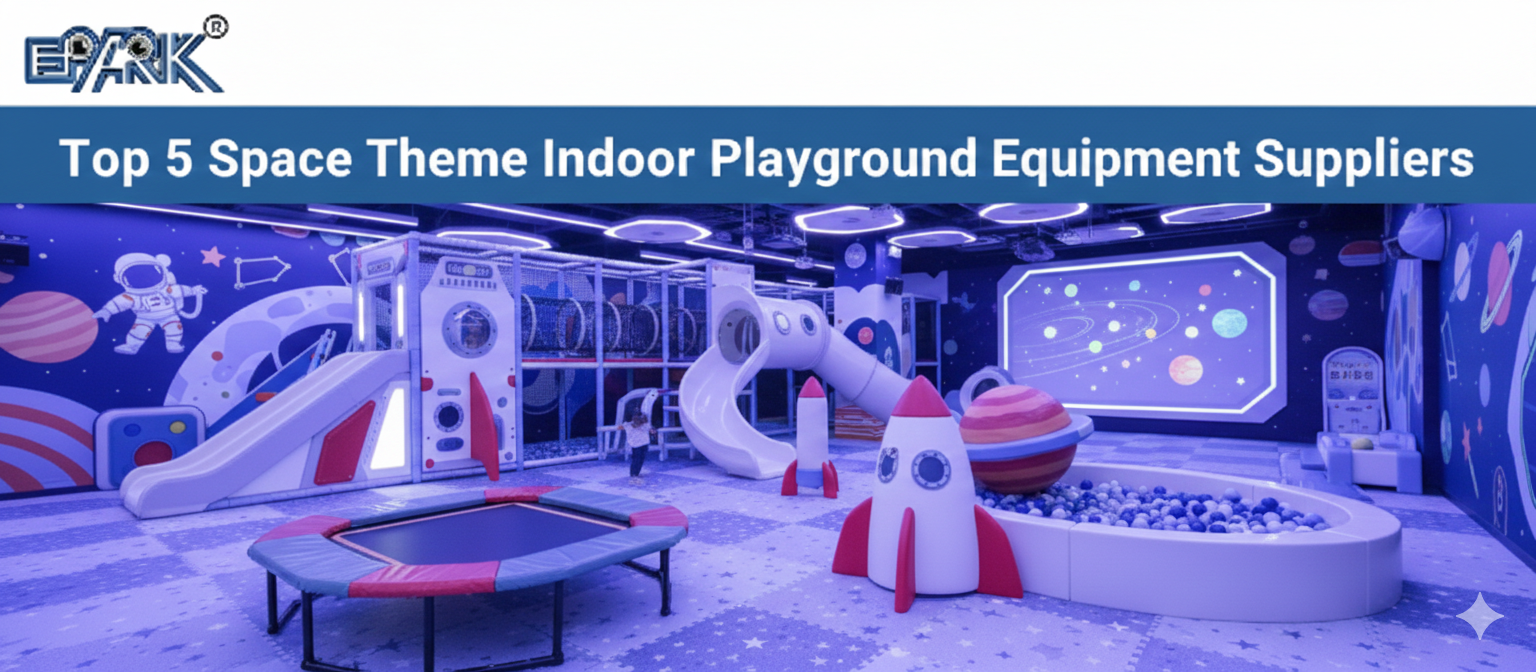
Space-themed indoor playgrounds typically combine exploration, challenge, and progression through clearly defined zones. These zones help operators manage age separation while creating a coherent “mission-style” play experience.
Common equipment and areas include launch or entry zones, designed as low-intensity spaces where children begin exploration through crawl tunnels, soft obstacles, and introductory climbing elements. These areas often set the narrative tone without high physical demand.
Central adventure structures form the core of most space-themed layouts. These usually feature multi-level platforms, climbing nets, angled ramps, and obstacle bridges that simulate movement through space stations or spacecraft interiors. Vertical circulation is a defining feature, encouraging continuous upward and lateral movement.
Many projects also include mission or challenge zones, where activities become more skill-based. Examples include timed climbing routes, balance modules, rope crossings, or interactive panels that promote problem-solving rather than pure physical play.
For mixed-age venues, observation and rest zones are integrated near main circulation paths. These areas allow guardians clear sightlines while providing quieter transitions between high-energy sections. In larger venues, expansion-ready zones are often reserved for future additions such as interactive technology or advanced obstacle elements.
Together, these zones create a structured yet flexible layout that supports both immediate engagement and long-term operational adaptability.
Practical Guidance for Space Theme Indoor Playground Planning
Space-themed layouts perform best when challenge intensity increases gradually. Entry zones should focus on exploration and curiosity, while deeper zones introduce vertical climbs and obstacle sequencing. Ceiling height should be validated early, as space themes rely heavily on vertical perception.
Lighting is a functional element rather than decoration. Operators should avoid dark zones that reduce supervision clarity. Modular systems with standardized components are often preferred in fun factory indoor playground operations to support future upgrades and reduce downtime.
Moving Forward with Space Theme Projects
Space themes continue to gain traction as commercial indoor playgrounds evolve toward experience-driven models. While this article highlights equipment suppliers, successful projects often require early layout validation, phased planning, and theme-density control.
EPARKI supports space-themed playground projects through structured layout planning, theme zoning, and compliance-oriented design coordination—helping operators build scalable fun factory indoor playground environments.
Explore our space planning approach here:
https://www.eparki.com/products/space-theme
Learn how custom projects are structured from concept to delivery:
https://www.eparki.com/customization-process
General Disclaimer
All data on https://www.eparki.com is for general guidance only. As a leading indoor playground manufacturer and trampoline supplier, EPARK strives for accuracy but gives no express or implied warranty regarding completeness, performance or project fitness. Product specs, designs and results may vary with use and customer requirements. Buyers must verify technical details, compliance and suitability before purchase. EPARK OEM/ODM is not liable for any direct, indirect or consequential damages arising from site use. For custom solutions, contact our manufacturer and supplier team via the Contact page.
Intellectual Property
Text, images, videos, CAD files and software are Guangzhou EPARK Electronic Technology Co., Ltd. All rights reserved. No part may be copied, republished or used commercially without prior written permission. We will pursue legal action for copyright or design-patent infringement.
Trademarks
"EPARK", the EPARK logo and related graphics are registered trademarks of Guangzhou EPARK Electronic Technology Co., Ltd. Unauthorized use in ads, domain names or packaging is prohibited.
Governing Law
These terms are governed by the laws of the People's Republic of China.
Contact
Questions? Email sales@nanyuetech.com or WhatsApp +86 139 0307 9263.