Why the Manufacturer’s Engineering Package Matters More Than the Rendering
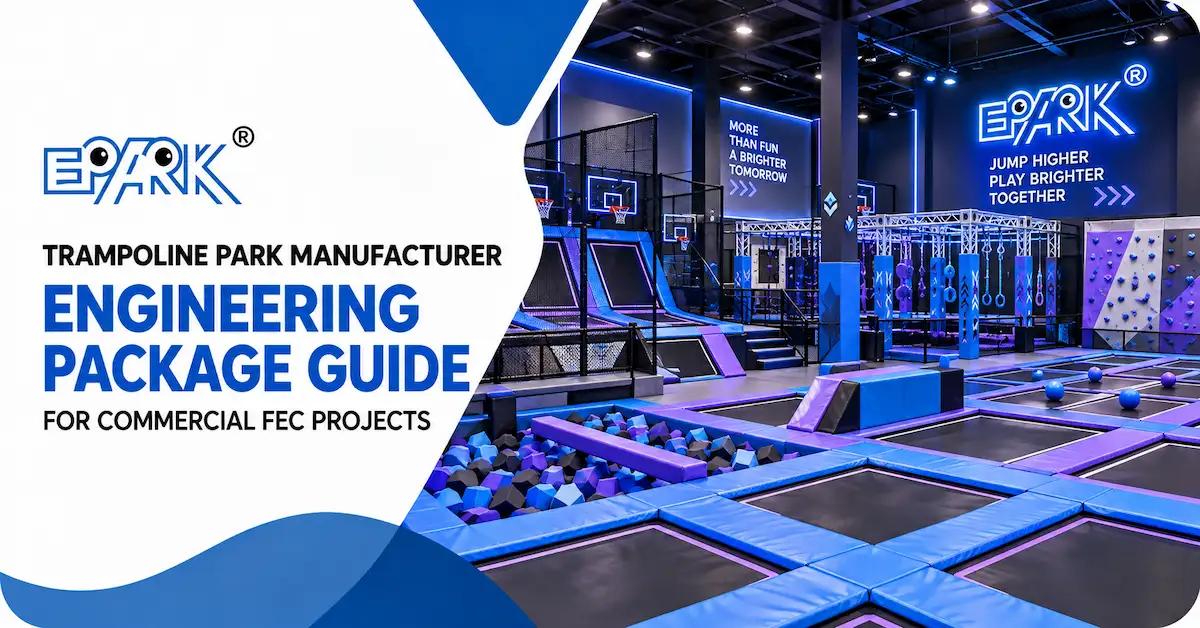
A commercial trampoline park may begin with an impressive 3D concept, but a rendering alone cannot tell a buyer exactly what will be manufactured, how activity zones connect, what materials will be used, how equipment will be installed, or which parts require future inspection.
That is why working with a trampoline park manufacturer should move from visual design into a documented engineering and project-approval process before production begins.
For FEC investors, shopping mall operators, entertainment chains, project contractors, distributors, and indoor recreation businesses, the most important pre-production question is not:
“Does the design look exciting?”
It is:
“Do we have enough approved information to manufacture, install, inspect, operate, and maintain this exact project?”
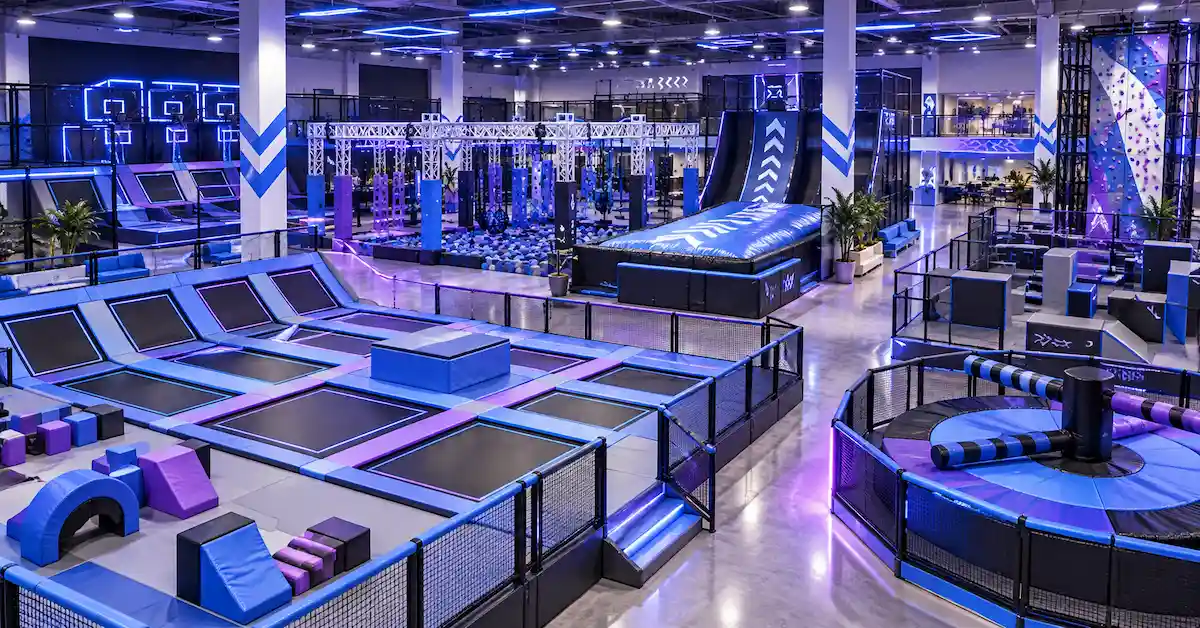
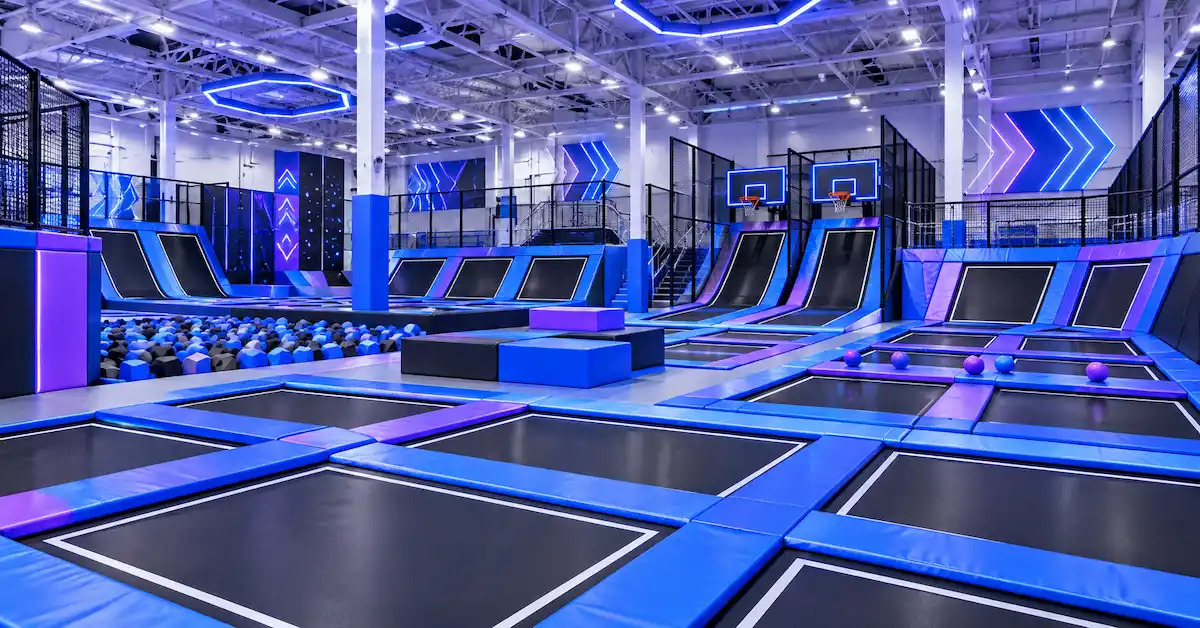
A trampoline park can combine free-jump courts, basketball zones, dodgeball areas, foam pits, climbing challenges, obstacle courses, parkour elements, soft-play activities, and age-separated zones. Each activity creates different planning, access, maintenance, and operational requirements.
Buyers can first review EPARK’s Trampoline Park solutions to understand the types of activity combinations available before developing a project-specific approval package.
What Should a Trampoline Park Manufacturer Provide Before Production?
A professional project package should convert the commercial idea into clearly defined production information.
At minimum, the buyer should understand:
| Approval Area | What the Buyer Needs to Know |
|---|---|
| Site layout | Where the park fits inside the building |
| Activity zoning | Which attractions are located in each zone |
| Equipment schedule | What equipment is actually included |
| Materials | What is used in major structural and protective components |
| Dimensions | Key equipment and circulation dimensions |
| Customization | Theme, colors, branding, and project-specific changes |
| QC | What will be checked before shipment |
| Documentation | What project records will be supplied |
| Installation | How equipment will be assembled on site |
| Maintenance | Which components require inspection or replacement |
| Spare parts | How future replacement components are identified |
A complete trampoline park manufacturer proposal therefore needs to be more than a price quotation plus rendering.
1. Approve the Building Information First
Before designing equipment, the manufacturer needs accurate information about the venue.
A trampoline project should normally begin with:
- floor plan;
- usable floor area;
- ceiling height;
- columns;
- entrances and exits;
- fixed walls;
- installation access;
- surrounding commercial areas;
- destination market;
- intended operating concept.
Why ceiling height deserves special attention
Trampoline parks involve vertical movement.
The available height can influence which activities are appropriate for different sections of the venue.
A supplier should therefore understand the building dimensions before proposing activity zones rather than designing attractions first and trying to fit them later.
Why columns cannot be ignored
Columns affect:
- trampoline grid arrangement;
- circulation;
- equipment boundaries;
- sightlines;
- structural planning;
- padding requirements;
- maintenance access.
A realistic layout should treat columns as part of the design problem from the beginning.
EPARK’s Customization Process starts with consultation, needs assessment, space planning, and professional design before custom manufacturing.
2. Create an Activity-Zone Matrix
A modern trampoline park rarely consists of one large jumping area.
Depending on the target market, the project may combine several attractions.
Examples include:
- main trampoline court;
- basketball dunk lanes;
- dodgeball area;
- foam pit;
- parkour zone;
- obstacle course;
- climbing activities;
- balance challenges;
- younger-child activity area;
- soft play;
- complementary FEC attractions.
EPARK’s multi-activity indoor trampoline park provides an example of a project combining interconnected trampoline areas with basketball, dodgeball, foam-pit, parkour, and obstacle activities.
Use a zone matrix before final approval
| Zone | Target User | Activity Level | Main Buyer Concern |
|---|---|---|---|
| Main court | General visitors | High | Capacity and circulation |
| Basketball | Older kids / teens | High | Activity clearance |
| Dodgeball | Groups | High | Separation and flow |
| Foam pit | Active users | High | Entry and exit planning |
| Obstacle zone | Older children / teens | High | Difficulty and supervision |
| Junior zone | Younger users | Lower | Separation and accessibility |
| Soft play | Younger children | Lower | Padding and visibility |
The exact combination should follow the business model, target ages, venue dimensions, and operating plan.
3. Approve the Floor Plan Before Approving the 3D Design
The floor plan should control the project.
The 3D rendering should explain the approved floor plan visually.
It should not replace it.
Before moving into production, check:
- attraction locations;
- zone boundaries;
- entrances;
- circulation routes;
- operator access;
- parent viewing areas;
- equipment spacing;
- columns;
- exit routes;
- service access.
Look for operational conflicts
A visually attractive design can still create poor operations if visitors need to cross another active zone to reach an attraction.
Similarly, a high-interest activity positioned in a narrow circulation area may create congestion.
A trampoline park manufacturer should therefore design for both attraction value and daily operation.
4. Build an Equipment Schedule That Matches the Layout
The buyer should be able to compare the layout against an actual equipment list.
Do not rely on:
“Equipment according to final design.”
Instead, the project should identify the primary equipment scope.
For example:
| Equipment Group | Approval Question |
|---|---|
| Trampoline courts | What areas and configurations are included? |
| Basketball zone | How many activity positions? |
| Foam pit | What is included in the complete zone? |
| Obstacle area | Which challenges are supplied? |
| Climbing elements | Which units are included? |
| Protective padding | Which areas receive protection? |
| Nets / barriers | Where are they installed? |
| Access elements | What stairs, ramps, or entries are included? |
| Theme elements | Which decorative components are included? |
| Accessories | What hardware and small components are supplied? |
This list becomes useful later during manufacturing, QC, packing, and installation.
5. Ask for Component-Level Material Information
Material approval should be specific enough for the buyer to understand what function each material performs.
EPARK’s Safety and Quality information describes material systems used across its commercial amusement products, including galvanized steel structures, high-density foam, soft PVC protection, EVA or PU flooring, FRP or composite components, and safety nets.
For a trampoline project, buyers should confirm the actual materials relevant to the selected equipment.
Structural materials
Ask:
- What supports the equipment?
- How are structural components protected?
- Which areas are exposed?
- Which areas can be inspected later?
Padding
Padding should be considered according to the activity zone rather than treated as decoration.
Check:
- location;
- coverage;
- finish;
- high-contact areas;
- replacement method.
Surface and flooring materials
Buyers should consider:
- activity level;
- cleaning;
- wear;
- slip resistance;
- inspection;
- replacement.
A trampoline park manufacturer should be able to connect material selection with the function of the actual equipment.
6. Separate Activity Design From Safety Protection
A useful project-review method is to examine every active attraction in two layers.
Layer 1: The activity itself
Ask:
- What does the visitor do?
- Where do they enter?
- Where do they land or exit?
- How does the visitor move to the next attraction?
Layer 2: The protection system
Ask:
- Which hard areas require padding?
- Where are barriers required?
- How are adjacent activities separated?
- Where does staff need visibility?
- Which components require inspection?
This approach helps buyers avoid approving a visually complete attraction without understanding its surrounding protection system.
7. Confirm Age Segmentation Before Manufacturing
A commercial trampoline park may attract:
- younger children;
- school-age children;
- teenagers;
- families;
- adult groups.
Not every attraction should necessarily be designed for every visitor category.
Age or activity segmentation can influence:
- zone placement;
- equipment difficulty;
- circulation;
- supervision;
- signage;
- activity mix.
If younger visitors are part of the business model, buyers should decide whether they require a separate junior area or complementary soft-play zone.
A mixed FEC concept may also integrate trampoline activities with indoor playground equipment. EPARK’s custom indoor playground and trampoline park project shows how different entertainment formats can be combined within a larger commercial concept.
8. Lock Customization Before Production
Customization can include much more than the color of trampoline padding.
A commercial project may require:
- brand colors;
- logo integration;
- themed graphics;
- attraction names;
- mascot elements;
- wall design;
- customized activity mix;
- project-specific dimensions.
Create one approved visual package
Before manufacturing, consolidate:
- final color direction;
- final logo files;
- final artwork;
- final theme;
- approved equipment appearance.
Do not continue changing graphic files after production has started unless a formal project revision is agreed.
Late visual changes can affect:
- printed panels;
- coverings;
- decorative components;
- packaging;
- production sequence.
9. Establish Revision Control
Large custom projects often go through several drawings.
For example:
- Concept 01
- Layout 02
- Revised zoning 03
- Theme update 04
- Final production drawing 05
The buyer and trampoline park manufacturer must know exactly which version controls production.
A final approval record should contain
- drawing revision;
- date;
- equipment scope;
- customization reference;
- major materials;
- approved changes.
This is especially important for multi-person buying teams where the owner, contractor, designer, installer, and purchasing manager may all participate.
10. Define Quality-Control Checkpoints Before Production
Quality control should not be an undefined process that begins on the final day.
Buyers should understand which project items will be checked against approved references.
A practical QC matrix can include:
| QC Point | Approval Reference |
|---|---|
| Equipment dimensions | Final drawing |
| Quantity | Equipment schedule |
| Colors | Approved visual reference |
| Structural components | Production specification |
| Padding | Approved equipment requirement |
| Accessories | Equipment list |
| Custom graphics | Approved artwork |
| Hardware | Packing / installation list |
| Package identification | Installation plan |
| Documentation | Required document list |
Defining these references before production makes final inspection more objective.
11. Confirm Which Documents Apply to the Project
Certification should not be treated as a row of logos.
Different destinations, products, equipment configurations, and project requirements may require different supporting documents.
EPARK publishes examples of certificates and testing documentation on its Certificates page.
Before manufacturing, ask:
- Which document applies to this product?
- What does the document cover?
- Does the destination require additional information?
- Who is responsible for local approval?
- Are on-site inspections required?
The objective is to understand the actual compliance path of the project rather than simply asking whether the manufacturer “has certificates.”
12. Review Installation While the Equipment Is Still Being Designed
Installation planning should begin before shipment.
A commercial trampoline park may contain many structural, padded, modular, and accessory components.
Before production, confirm:
- installation responsibility;
- local contractor involvement;
- supplier technician involvement;
- drawings;
- numbering system;
- assembly sequence;
- tool requirements;
- site preparation.
Why installation affects manufacturing
If components need clear installation identification, numbering and packaging should be planned during production.
Waiting until equipment is already packed makes this much harder.
EPARK’s project process includes delivery and professional installation after production and quality inspection. Buyers can review the complete workflow through the Customization Process.
13. Approve Packing and Part Identification
International projects can contain a large number of parts.
Poor identification can create unnecessary installation delays.
Ask your trampoline park manufacturer:
- Are packages numbered?
- Are components linked to drawings?
- Are hardware kits separated?
- Are special parts clearly marked?
- Is a packing list provided?
- Are spare parts identified independently?
Good packing is not simply about preventing physical damage.
It also helps installers find the correct component efficiently.
14. Build a Spare-Parts Strategy Before Opening
Commercial equipment requires long-term maintenance.
Buyers should identify which components may require future replacement and how those parts will be reordered.
Questions include:
- Which parts are considered wear components?
- How are part numbers recorded?
- Can a replacement be made without rebuilding the whole zone?
- Are project drawings retained?
- Can the supplier reproduce custom colors or parts later?
This is especially important for chain venues and distributors.
A one-time installation may tolerate more customization complexity than a business planning to build five or ten similar locations.
15. Ask for Maintenance Access, Not Only Maintenance Instructions
A maintenance manual is useful only if operators can physically access the areas that need inspection.
During design review, ask whether staff can reach:
- connections;
- padding;
- barriers;
- nets;
- hardware;
- equipment transitions;
- frequently used areas.
Decorative elements should not make routine inspection unnecessarily difficult.
For additional project and maintenance questions, buyers can review EPARK’s FAQ.
What Should the Manufacturer Package Contain Before Production Approval?
The exact document set will vary by project, but commercial buyers can use the following checklist.
| Document / Approval | Status Before Production |
|---|---|
| Site information | Final |
| Floor plan | Approved |
| Activity zoning | Approved |
| Equipment schedule | Approved |
| Key dimensions | Confirmed |
| Material scope | Confirmed |
| Colors and theme | Approved |
| Branding files | Approved |
| Age segmentation | Confirmed |
| QC checkpoints | Defined |
| Documentation scope | Confirmed |
| Installation responsibility | Confirmed |
| Packing approach | Defined |
| Spare-parts plan | Discussed |
If several critical items remain undefined, the project may not yet be ready for manufacturing.
How to Compare Two Trampoline Park Manufacturers at the Approval Stage
Suppose two suppliers offer similar prices and attractive renderings.
The difference may become clearer when you compare project documentation.
Manufacturer A provides
- final floor plan;
- detailed zoning;
- equipment list;
- material information;
- revision control;
- QC references;
- installation planning;
- packing identification;
- maintenance discussion.
Manufacturer B provides
- 3D rendering;
- total area;
- general equipment description;
- total price.
Manufacturer A gives the buyer more information to control project risk.
This does not mean more paperwork automatically means a better supplier.
The important question is whether the documentation is specific enough to support manufacturing, installation, inspection, and long-term operation.
Common Pre-Production Mistakes
Approving the rendering but not the floor plan
A beautiful image cannot replace dimensional coordination.
Leaving activities undefined
A quotation should clearly reflect the equipment that will actually be supplied.
Approving “premium materials”
Material descriptions should connect to actual components.
Changing branding too late
Final colors and graphics should be locked before relevant components are produced.
Ignoring installation until shipment
Installation preparation should influence labeling and packing.
Asking about documentation after production
Market and project requirements should be discussed earlier.
Forgetting spare parts
Maintenance planning should begin before opening, not after the first component wears out.
What Information Should You Send a Trampoline Park Manufacturer?
A strong inquiry helps the manufacturer develop a more accurate engineering package.
Prepare:
- venue type;
- floor plan;
- total area;
- ceiling height;
- columns;
- entrances and exits;
- target ages;
- preferred activity zones;
- desired theme;
- branding requirements;
- destination market;
- installation preference;
- planned opening schedule;
- future expansion needs.
These details can be submitted through EPARK’s Contact Us page for project-specific discussion.
Frequently Asked Questions
What should a trampoline park manufacturer provide before production?
The project should clearly define the floor plan, activity zones, equipment scope, relevant materials, customization, QC references, documentation, installation responsibilities, packing method, and maintenance approach.
Is a 3D trampoline park rendering enough to approve production?
No. A 3D rendering helps visualize the project, but manufacturing approval should also rely on dimensions, layout, equipment scope, materials, and other project-specific information.
What information should I provide before requesting a trampoline park layout?
Provide the floor plan, dimensions, ceiling height, columns, entrances, target audience, preferred attractions, destination market, and commercial objectives.
Should trampoline parks have multiple activity zones?
Many commercial projects combine several attractions to serve different users and increase activity variety. The correct mix depends on venue size, audience, and business model.
How should buyers evaluate trampoline park materials?
Review materials by component and function. Ask what supports the equipment, what provides padding, how user-contact areas are protected, and which components require later inspection or replacement.
When should certification requirements be discussed?
They should be discussed before production. Buyers should confirm which documents or requirements apply to their exact equipment, destination, and project.
Who should install trampoline park equipment?
Installation responsibility varies by project. It may involve manufacturer technicians, local contractors, or a combined team. Responsibilities should be defined before equipment is produced and shipped.
Why is part numbering important?
Commercial trampoline parks may contain many components. Clear numbering helps installers match delivered parts to drawings and can reduce installation confusion.
Should I request spare parts with the initial project?
The correct spare-parts strategy depends on the equipment. Buyers should at least identify likely wear components and confirm how replacements will be ordered later.
Can a trampoline park manufacturer support an FEC with multiple attractions?
A manufacturer with broader project capability may integrate trampoline zones with complementary indoor entertainment equipment. Buyers should confirm the equipment scope, layout responsibilities, and support required for the complete FEC.
Conclusion
A trampoline park manufacturer should provide more than equipment and a 3D rendering. Before production, buyers should lock the layout, activity zones, equipment scope, materials, QC references, installation responsibilities, documentation, and maintenance strategy.
For a project-specific plan, review EPARK’s Trampoline Park solutions and submit your floor plan, ceiling height, target users, and activity requirements through Contact Us.
General Disclaimer
All data on https://www.eparki.com is for general guidance only. As a leading indoor playground manufacturer and trampoline supplier, EPARK strives for accuracy but gives no express or implied warranty regarding completeness, performance or project fitness. Product specs, designs and results may vary with use and customer requirements. Buyers must verify technical details, compliance and suitability before purchase. EPARK OEM/ODM is not liable for any direct, indirect or consequential damages arising from site use. For custom solutions, contact our manufacturer and supplier team via the Contact page.
Intellectual Property
Text, images, videos, CAD files and software are Guangzhou EPARK Electronic Technology Co., Ltd. All rights reserved. No part may be copied, republished or used commercially without prior written permission. We will pursue legal action for copyright or design-patent infringement.
Trademarks
"EPARK", the EPARK logo and related graphics are registered trademarks of Guangzhou EPARK Electronic Technology Co., Ltd. Unauthorized use in ads, domain names or packaging is prohibited.
Governing Law
These terms are governed by the laws of the People's Republic of China.
Contact
Questions? Email sales@nanyuetech.com or WhatsApp +86 139 0307 9263.