Why an Amusement Arcade Equipment Manufacturer Is More Than a Cabinet Factory
For a family entertainment center, shopping mall arcade, indoor playground, amusement center, or distribution business, arcade machines are commercial assets expected to operate repeatedly under demanding conditions.
This means selecting an amusement arcade equipment manufacturer should involve more than asking which factory offers the lowest unit price.
B2B buyers need to evaluate whether the manufacturer can support:
- Multiple amusement machine categories
- Commercial-duty components
- Consistent production
- Payment-system compatibility
- OEM and branding requirements
- Destination-market electrical configurations
- Quality inspection
- Export packaging
- Spare parts
- Technical and after-sales support
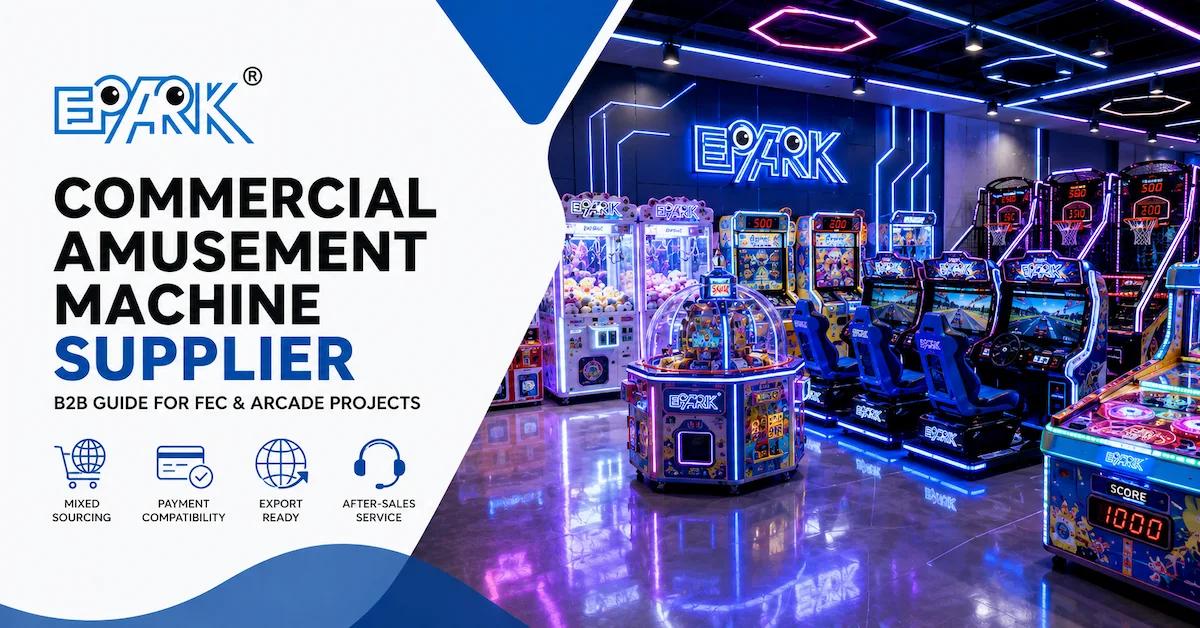
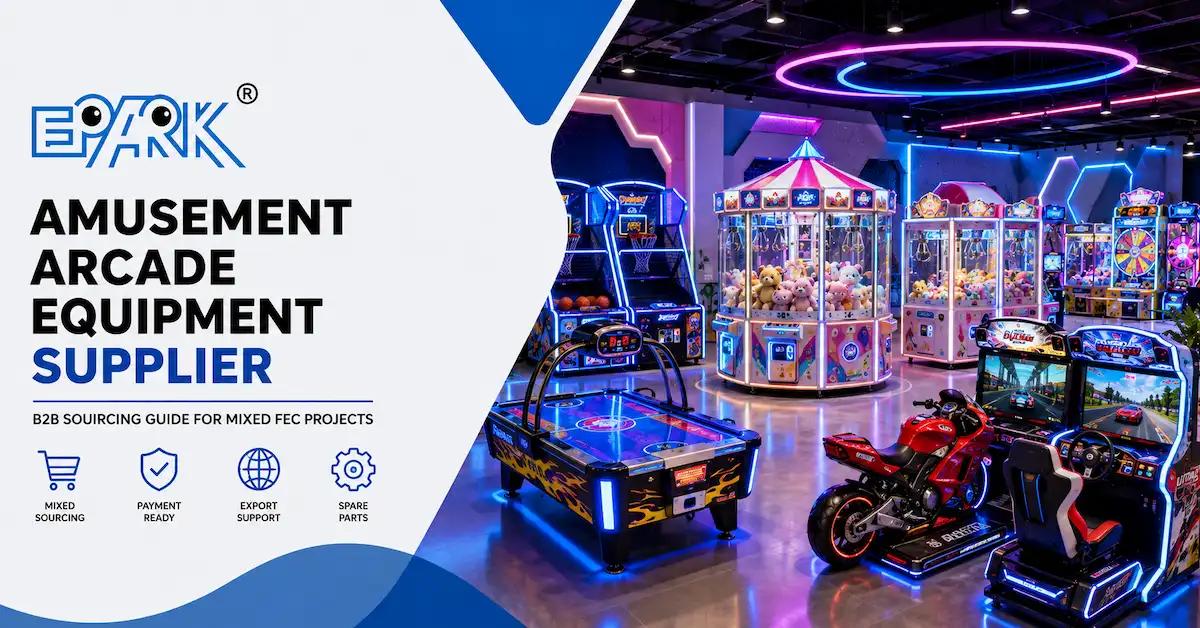
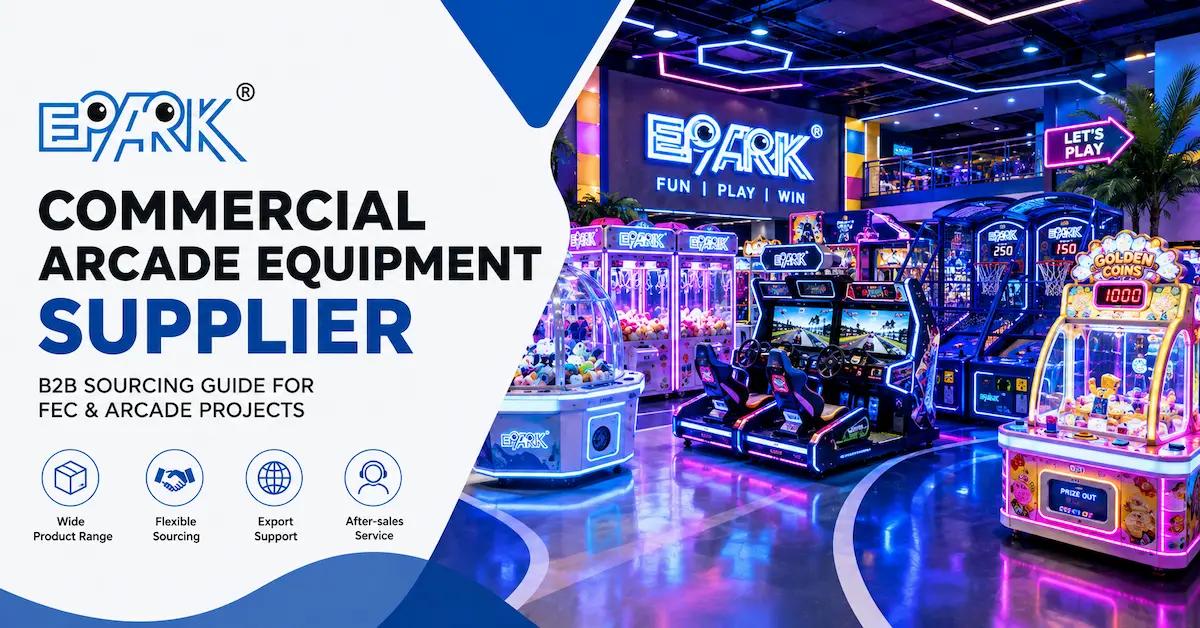
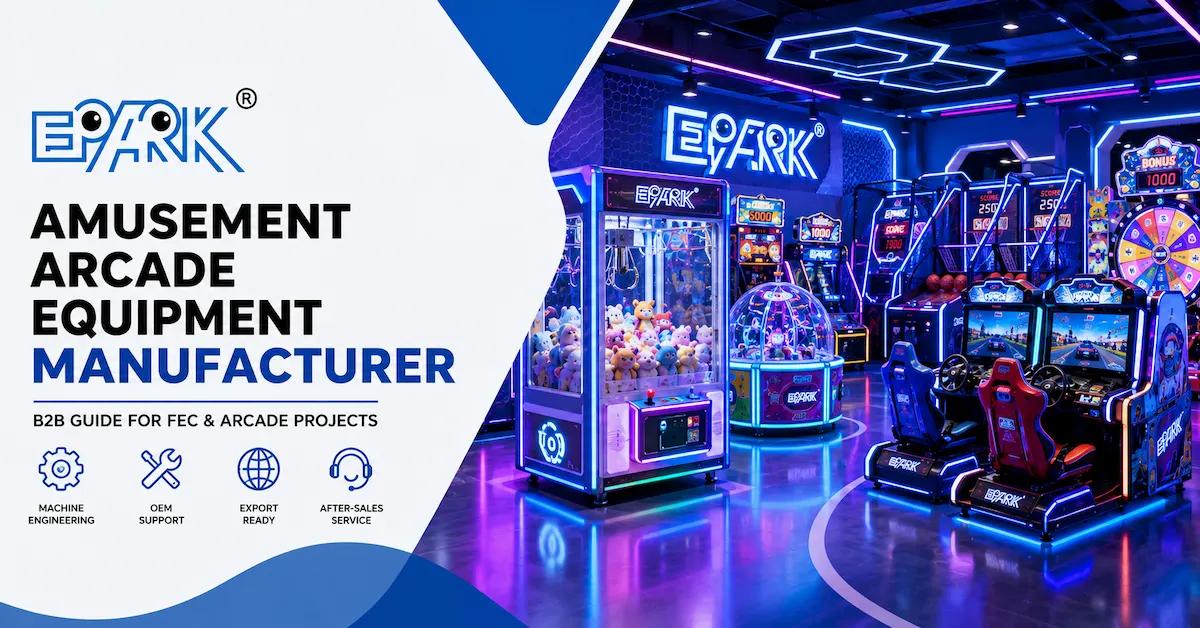
EPARK currently describes its business as covering arcade machines, game machines, indoor playground equipment, trampoline parks, and customized amusement projects for commercial entertainment venues. Buyers can review the EPARK company profile and its game machine and arcade equipment resources before evaluating project compatibility.
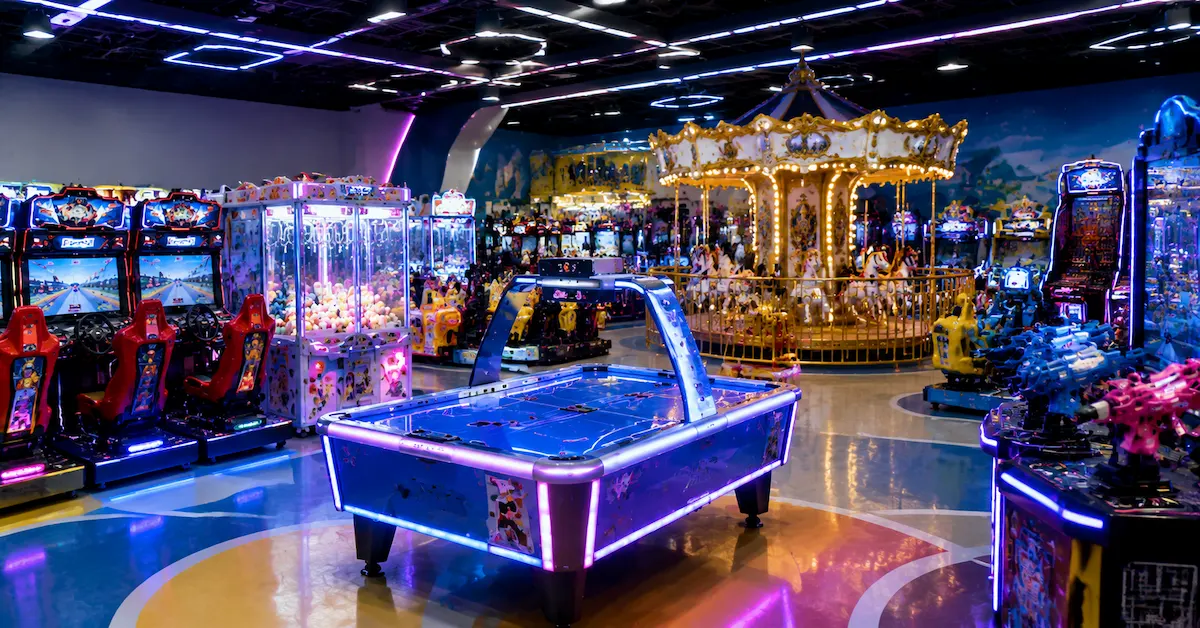
Start With the Venue Before Choosing Arcade Machines
A manufacturer should not recommend the same equipment package for every buyer.
Machine selection should begin with the venue's customer profile, business model, available space, and operating goals.
Family Entertainment Centers
A full FEC usually benefits from a diversified attraction mix rather than relying heavily on one game category.
Possible categories include:
- Redemption games
- Claw and prize machines
- Racing simulators
- Shooting games
- Basketball and sports machines
- Kiddie rides
- Interactive games
- Selected immersive attractions
The objective is to create several reasons for visitors to move through the arcade and continue playing.
Shopping Mall Entertainment Zones
Shopping mall projects may prioritize:
- Strong visual impact
- Family-friendly machines
- Compact footprints
- Easy supervision
- High-frequency operation
- Simple maintenance
Machines positioned near entrances should often have stronger visual attraction, while competitive games may work better deeper inside the venue.
Indoor Playground Plus Arcade Projects
Indoor playground operators can add an arcade zone without converting the entire business into a traditional arcade.
Game machines can be positioned near:
- Reception areas
- Parent waiting zones
- Party rooms
- Food and beverage areas
- Playground exits
This can extend the entertainment mix while serving visitors who want activities beyond soft play.
EPARK's existing content also treats game machines as part of broader shopping mall and FEC entertainment planning rather than as isolated equipment.
Build a Balanced Amusement Machine Portfolio
A strong amusement project combines machines with different play motivations.
| Equipment Type | Main Play Motivation | Typical Commercial Role |
|---|---|---|
| Claw machines | Prize motivation | Entry, waiting and prize areas |
| Redemption games | Skill + reward | Core FEC revenue zone |
| Racing games | Competition | Teen and family attraction |
| Shooting games | Competition + skill | High-energy arcade zone |
| Basketball games | Physical challenge | Active entertainment |
| Kiddie rides | Simple interaction | Younger-child areas |
| Interactive games | Digital engagement | Modern mixed-age venues |
| Prize machines | Reward anticipation | Repeat-play zones |
The correct question is not:
Which machine is most popular?
It is:
Which combination fits my customers, floor area, payment system, maintenance capacity, and business model?
A manufacturer that understands this difference can provide more value than one that simply sends hundreds of catalog images.
Check the Engineering Behind the Arcade Cabinet
Visual design attracts players, but internal engineering affects operating reliability.
Cabinet Structure
Commercial buyers should inspect:
- Frame rigidity
- Panel fit
- Door alignment
- Locking points
- Service openings
- Internal component mounting
- Cable protection
Technicians should be able to reach frequently serviced components without unnecessarily dismantling the entire cabinet.
Controls and Sensors
Depending on the machine type, key components can include:
- Joysticks
- Buttons
- Steering wheels
- Pedals
- Guns
- Optical sensors
- Motion sensors
- Scoring sensors
- Ticket dispensers
Ask whether commonly serviced parts can be replaced independently.
Electrical Components
Buyers should understand the configuration of:
- Power supply
- Display
- Main controller
- Wiring harness
- Speakers
- Lighting
- Cooling
- Payment interface
Two visually similar machines may use different internal components and therefore have different maintenance requirements.
Commercial-Duty Quality Control Matters
Factory inspection should verify machine operation, not only appearance.
Recommended Pre-Shipment Checks
A practical QC process should include:
- Power-on testing
- Continuous functional testing
- Display inspection
- Control response
- Sensor operation
- Sound and lighting
- Score calculation
- Payment interface
- Ticket dispensing where applicable
- Door and lock operation
- Wiring inspection
- Cabinet finishing
- Accessories
- Spare-parts verification
For a bulk purchase, buyers can request operating videos or representative inspection records before shipment.
The goal is to detect configuration and assembly issues before equipment travels internationally, where repair becomes more expensive and time-consuming.
Standardize Components for Chain and Distributor Orders
One overlooked advantage of working directly with an amusement arcade equipment manufacturer is the opportunity to standardize components across multiple models.
For example, buyers may ask whether several machines can use compatible:
- Power supplies
- Buttons
- Locks
- Coin acceptors
- Card readers
- Sensors
- Ticket dispensers
This matters especially for:
- Arcade chains
- Franchise operators
- Distributors
- Multi-site FEC groups
Reducing the number of unique spare parts can simplify technician training, local inventory, and maintenance planning.
Confirm Payment Systems Before Production
Modern amusement venues may use different payment models.
Possible systems include:
- Coins
- Tokens
- Bill acceptors
- Rechargeable cards
- RFID cards
- E-ticket systems
- Other cashless integrations
Do not leave this decision until installation.
Ask the Manufacturer
- Can the cabinet accept our card reader?
- Is the electrical interface compatible?
- Is enough internal space available?
- Can redemption machines support e-tickets?
- Can payment configurations be standardized?
- Can default credit settings be adjusted?
A factory may manufacture a mechanically reliable machine but still create installation problems if payment-system requirements were never confirmed during the RFQ stage.
Electrical Configuration Must Match the Destination Market
For export orders, buyers should specify:
- Destination country
- Voltage
- Frequency
- Plug type
- Intended commercial environment
IEC currently publishes IEC 60335-2-82:2024, a safety standard covering electric commercial amusement machines and personal service machines, including categories such as amusement machines, gaming machines, driving simulators and kiddie rides. Buyers can consult the official IEC information for IEC 60335-2-82 when reviewing requirements relevant to a project.
The existence of a standard does not prove that a specific arcade machine complies with it.
Professional procurement therefore requires verifying the actual machine, configuration, documentation, and destination-market requirements.
Verify Compliance Documents for the Actual Machine
European buyers should apply the same principle to CE marking.
According to official EU guidance, CE marking applies where relevant EU harmonisation rules require it; manufacturers are responsible for identifying applicable requirements, completing conformity assessment procedures, preparing technical documentation and issuing the required declaration where applicable.
Therefore, buyers should not stop at:
Do you have CE?
Instead ask:
- Which legislation applies to this machine?
- Is documentation available for this exact model?
- Does it match the ordered voltage?
- Are electrical modifications covered?
- Which reports support the supplied configuration?
This reduces the risk of receiving generic documentation unrelated to the actual order.
OEM and ODM Capabilities for B2B Buyers
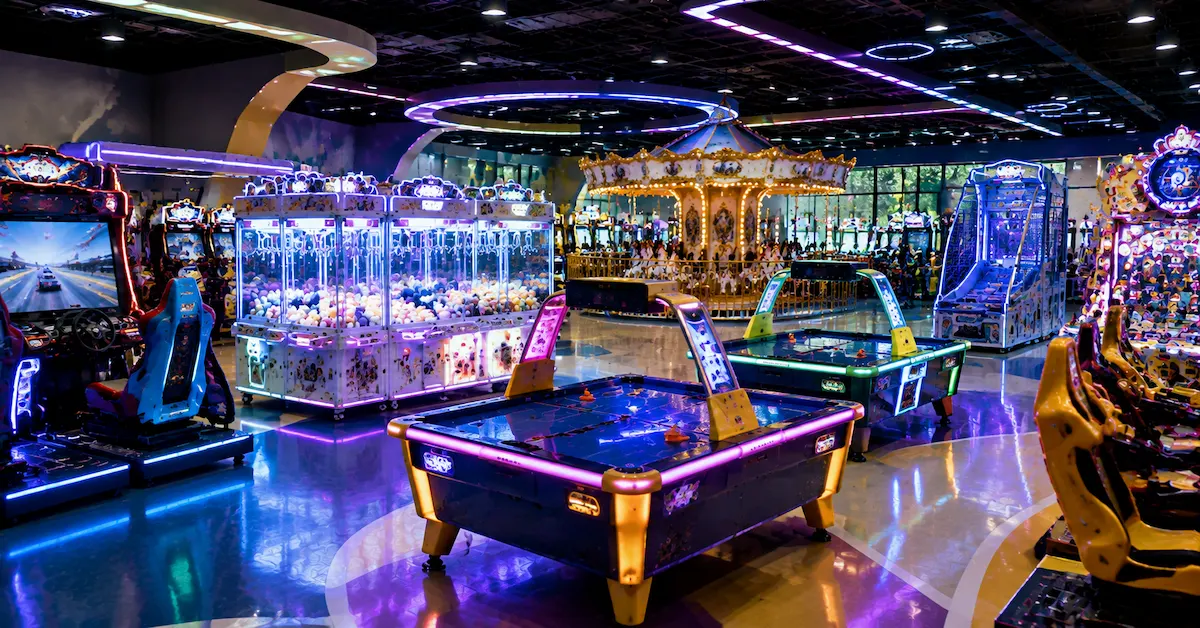
Commercial buyers frequently need more than standard machines.
Branding Customization
Possible requirements include:
- Company logo
- Venue branding
- Cabinet colors
- Artwork
- Lighting style
- Packaging
Operational Customization
Depending on the machine, buyers may need:
- Different languages
- Credit settings
- Difficulty settings
- Prize parameters
- Ticket settings
- Payment interfaces
Export Customization
International projects may also require:
- Voltage configuration
- Plug type
- Labels
- Manuals
- Packaging
- Spare-parts kits
EPARK states that OEM/ODM customization is part of its current project capability. Buyers can check frequently asked customization and cooperation questions through the EPARK FAQ.
Compare Manufacturers by Total Operating Value
The lowest factory quotation is not necessarily the lowest-cost choice.
A more useful purchasing model is:
Purchase price + customization + freight + import cost + spare parts + maintenance + downtime risk
Consider two machines with similar initial prices.
Machine A may use common replacement components and provide clear wiring diagrams.
Machine B may require proprietary parts with long replacement lead times.
The second machine can become more expensive during operation even if its purchase price was lower.
Compare These Factors
| Buyer Question | Why It Matters |
| Are spare parts available? | Reduces downtime risk |
| Are common components standardized? | Simplifies maintenance |
| Can payment systems be integrated? | Prevents installation problems |
| Is export packaging suitable? | Reduces shipping damage |
| Are documents model-specific? | Supports market entry |
| Is technical support available? | Helps operators solve faults |
| Can identical models be reordered? | Important for chains and distributors |
What Should You Send an Arcade Manufacturer for a Quote?
Avoid sending only:
Please send your catalog and best price.
A useful RFQ should include:
- Venue type
- Floor area or floor plan
- Target visitors
- Preferred machine categories
- Quantity
- Budget range
- Destination country
- Voltage and frequency
- Payment system
- OEM requirements
- Spare-parts requirements
- Target opening date
- Shipping destination
This allows the manufacturer to respond to the actual project rather than provide an unrelated generic quotation.
For buyers planning a mixed commercial entertainment venue, EPARK's Products page provides an overview of its broader amusement solutions, while detailed requirements can be submitted through Contact EPARK.
When Does a One-Stop Manufacturer Make More Sense?
A manufacturer with multiple amusement categories can be useful when a project combines several zones.
Examples include:
- Arcade + indoor playground
- Arcade + trampoline park
- FEC + redemption area
- Mall entertainment center
- Multi-category distributor order
Potential advantages include:
- Fewer supplier interfaces
- More coordinated project communication
- Consolidated equipment planning
- Easier shipment coordination
- More consistent spare-parts planning
EPARK currently presents arcade machines and game machines alongside indoor playgrounds, trampoline parks and customized entertainment projects as part of its wider amusement business.
FAQ
What is an amusement arcade equipment manufacturer?
An amusement arcade equipment manufacturer produces commercial game and amusement machines for venues such as FECs, arcades, shopping malls, indoor playgrounds and other entertainment businesses.
What types of machines can an arcade manufacturer produce?
Typical categories can include claw machines, redemption games, racing simulators, shooting games, basketball machines, kiddie rides, prize games and interactive equipment.
How should B2B buyers evaluate an arcade manufacturer?
Evaluate machine engineering, component quality, QC procedures, product range, OEM capability, payment compatibility, electrical configuration, export packaging, spare parts and after-sales support.
Can amusement arcade machines support cashless payment?
Many commercial machines can be configured for card readers or other cashless systems, but compatibility must be confirmed for each machine before production.
Can arcade cabinets be customized?
Depending on the model and order quantity, customization may include logo, cabinet graphics, color, language, payment settings, voltage and packaging.
What spare parts should buyers prepare?
Common requirements may include buttons, sensors, power supplies, locks, coin mechanisms, card-reader components, ticket dispensers and model-specific parts.
Should I request a sample before bulk production?
For customized or large orders, sample or pre-production approval can help confirm appearance, configuration, controls, payment setup and branding before mass production.
How do manufacturers test arcade machines before shipment?
Testing may include power-on operation, controls, sensors, displays, sound, lighting, payment functions, ticket systems, cabinet inspection and accessory checks. Buyers should confirm the actual factory QC process before ordering.
Manufacturer or supplier: which is better for large orders?
A manufacturer can be advantageous when buyers need repeated production, technical changes, OEM customization and long-term component consistency. A supplier may offer greater flexibility when sourcing many unrelated product categories.
How can I request an EPARK arcade equipment proposal?
Prepare your machine categories, floor plan if available, quantity, destination market, voltage, payment system, customization needs and project schedule, then send them through the EPARK contact page.
Conclusion
Choosing an amusement arcade equipment manufacturer is ultimately a decision about product engineering, machine portfolio, production consistency and long-term operating support.
FEC operators, arcade owners, distributors, importers and commercial project buyers should evaluate what is inside the machines, how they are tested, whether payment and electrical configurations match the destination market, how spare parts are managed and whether future orders can remain consistent.
A visually impressive arcade cabinet can attract customers, but reliable engineering and support determine how successfully the equipment performs after opening.
For buyers planning arcade, FEC or mixed amusement projects, explore EPARK's game machine and arcade equipment content, review About EPARK, or contact EPARK with your machine list and project requirements.
General Disclaimer
All data on https://www.eparki.com is for general guidance only. As a leading indoor playground manufacturer and trampoline supplier, EPARK strives for accuracy but gives no express or implied warranty regarding completeness, performance or project fitness. Product specs, designs and results may vary with use and customer requirements. Buyers must verify technical details, compliance and suitability before purchase. EPARK OEM/ODM is not liable for any direct, indirect or consequential damages arising from site use. For custom solutions, contact our manufacturer and supplier team via the Contact page.
Intellectual Property
Text, images, videos, CAD files and software are Guangzhou EPARK Electronic Technology Co., Ltd. All rights reserved. No part may be copied, republished or used commercially without prior written permission. We will pursue legal action for copyright or design-patent infringement.
Trademarks
"EPARK", the EPARK logo and related graphics are registered trademarks of Guangzhou EPARK Electronic Technology Co., Ltd. Unauthorized use in ads, domain names or packaging is prohibited.
Governing Law
These terms are governed by the laws of the People's Republic of China.
Contact
Questions? Email sales@nanyuetech.com or WhatsApp +86 139 0307 9263.