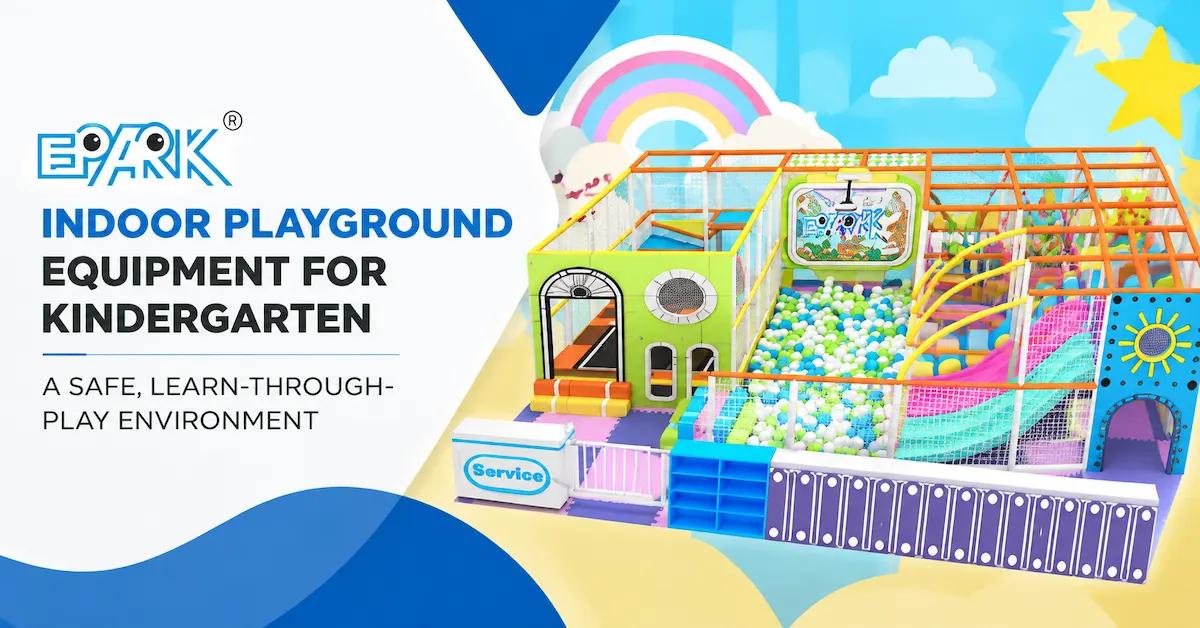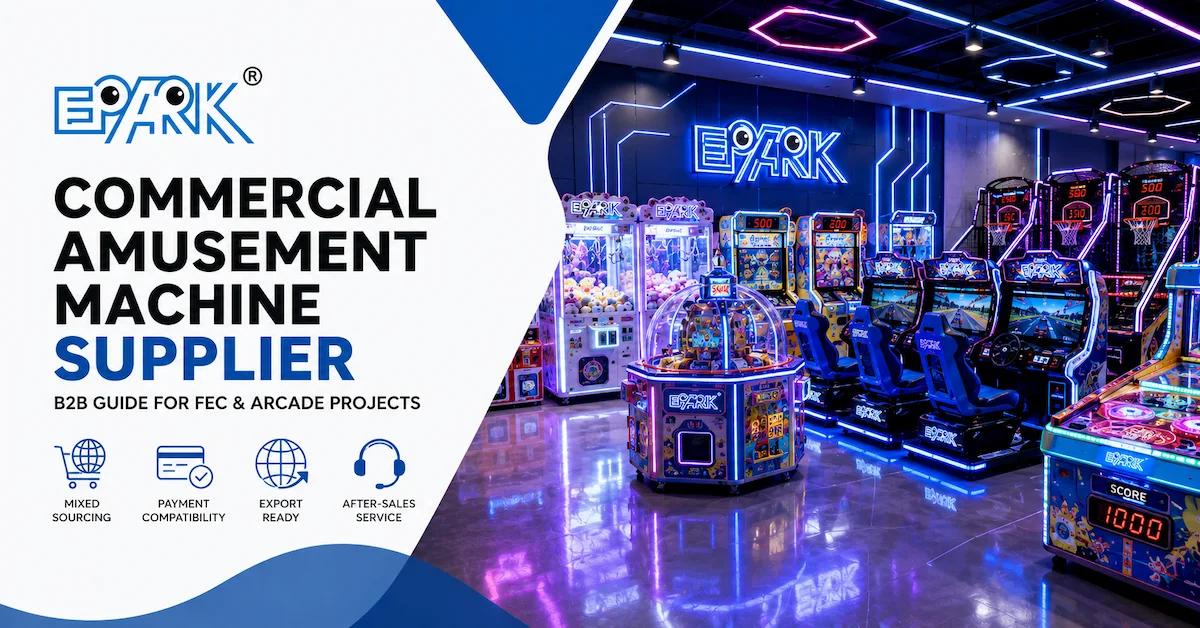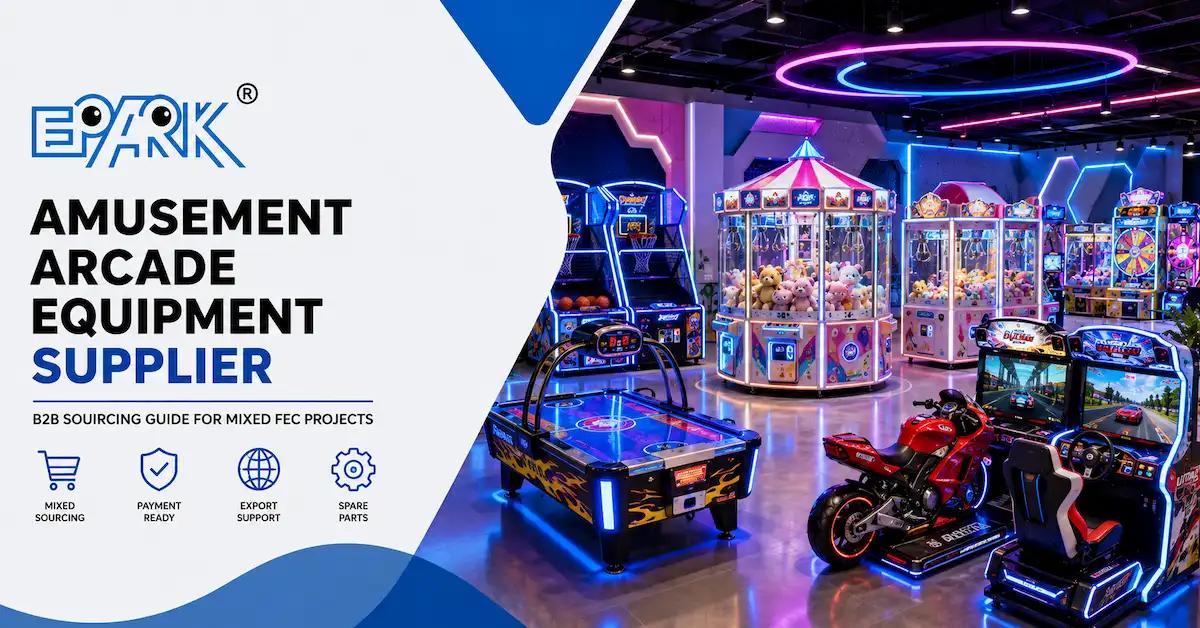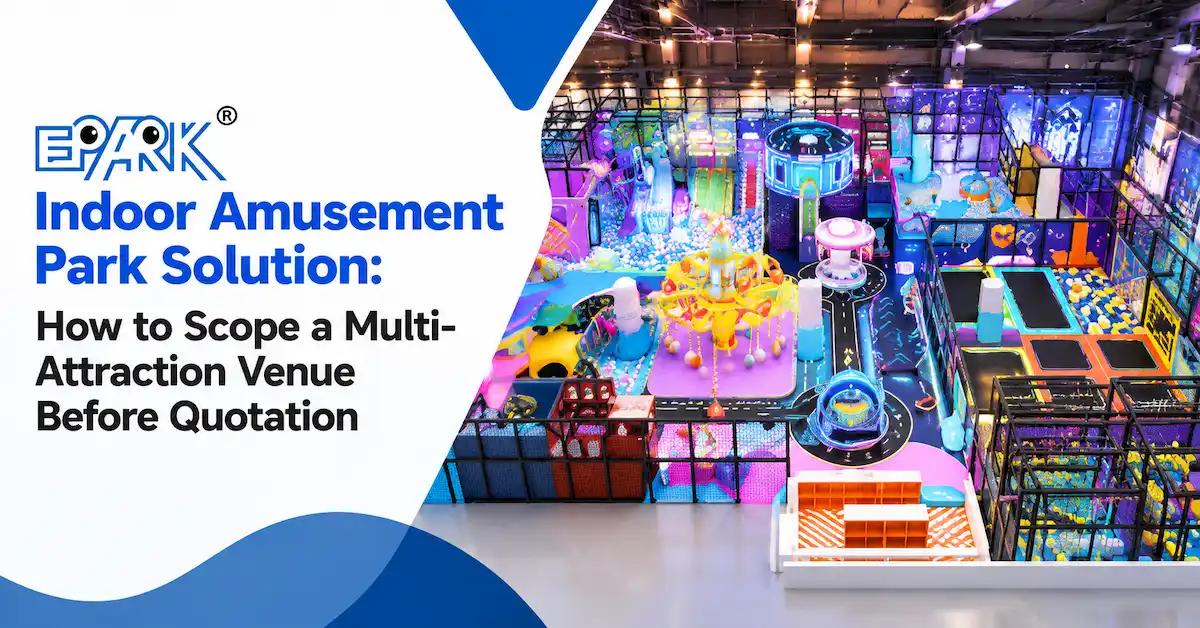
An indoor amusement park solution is a coordinated project scope for a venue with more than one attraction type. It should define the guest journey, age and activity zones, equipment interfaces, building requirements, safety evidence, operating responsibilities, delivery sequence, installation, training, and handover documents. A list of slides, trampolines, arcade games, or soft-play features is not yet a solution.
This RFQ guide is for FEC owners, shopping-mall developers, hotel and resort operators, indoor amusement investors, architects, and project contractors. It addresses the moment when a concept includes several experiences but the procurement team still needs one coherent brief. The goal is to make the quote comparable: every bidder should understand what the venue must do, what equipment is expected, which building information is available, and which responsibilities remain with the owner or local contractor.
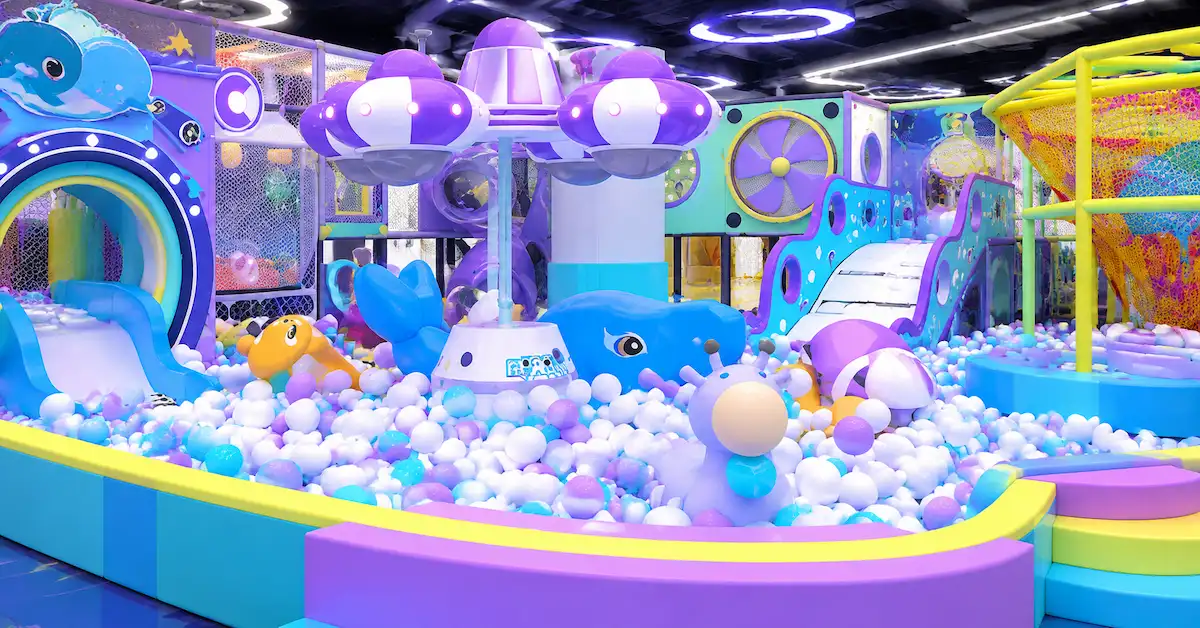
For entity clarity, Guangzhou EPARK Electronic Technology Co., Ltd. is identified on its public pages as a Guangzhou-based supplier and manufacturer of indoor playground and children’s amusement equipment. The company also describes trampoline parks, soft play, themed playgrounds, game machines, and one-stop entertainment-center solutions in its public company and FAQ content. The About page states that the company was established in 2012 and describes a 25,000 m2 factory with more than 400 machines and 100-plus workers. These are company-published facts, not a promise that every mixed-attraction project has the same configuration, capacity, certification, schedule, or installation team.
Planning a multi-attraction venue? Send the site plan, clear height, target ages, attraction priorities, destination market, opening window, and expected installation and documentation scope.
Review FEC Equipment SolutionsWhat the Phrase “Indoor Amusement Park Solution” Should Mean in an RFQ
The phrase is useful only if it creates a shared boundary. In one project, it may mean an indoor playground with a trampoline zone and party room. In another, it may mean a family entertainment center with soft play, interactive games, an arcade area, a reception counter, parent seating, and a themed circulation route. The supplier should not guess which interpretation is intended.
Write the solution as six linked scopes:
- Guest experience: the arrival, queue, play, viewing, party, exit, and re-entry journey.
- Attraction portfolio: the equipment families, activity intensity, age bands, and optional phases.
- Spatial integration: floor areas, clear height, columns, exits, sightlines, storage, toilets, and service access.
- Technical and safety package: drawings, materials, inspection records, applicable standards, certificates, and acceptance criteria.
- Operating package: staffing assumptions, cleaning access, daily inspection points, maintenance, spare parts, and training.
- Delivery boundary: site preparation, packing, shipping, unloading, installation, testing, handover, and local authority responsibilities.
This definition separates the commercial concept from the technical package. It also gives the buyer a way to compare a supplier that offers only equipment with a supplier that can coordinate design, manufacturing, documentation, and installation support.
Start with the Operating Model, Not the Attraction List
Decide how guests will use the venue
Before choosing attractions, decide whether the venue will use timed sessions, open admission, memberships, school bookings, parties, hotel guest access, or a mixture. This decision affects the queue, reception, footwear and sock policy, staff positions, storage, parent areas, cleaning windows, and the number of simultaneous activities the team must supervise. It does not require a speculative revenue promise; it requires a clear operating assumption.
For example, a party-led venue needs a clear route from reception to party rooms and a way to bring food, gifts, and guests through the building without crossing the busiest play path. A school or hotel program may need shorter sessions, more direct supervision, and simpler cleaning turnover. A mall FEC may need a visible frontage, strong wayfinding, and an attraction mix that can be understood quickly from the entrance.
Set the age and intensity policy
Age bands should be written before equipment is selected. A toddler route, a mixed-age soft-play structure, an active climbing course, and a trampoline court create different supervision and separation questions. If the venue intends to serve several groups, show the zones on the plan and define how staff will control access. Do not use one generic phrase such as “for all ages” when the equipment, sightlines, and operating rules are different.
Define the parent and staff experience
Parents need a place to observe, wait, store belongings, and understand rules. Staff need access to inspection points, cleaning areas, storage, first-aid equipment, electrical isolation, and service routes. These are part of the amusement solution because they influence whether the attractions can be operated consistently. A visually exciting plan that leaves no room for staff circulation is not complete.
Build the Attraction Portfolio as a Zone Stack
A useful zone stack describes the role of each attraction instead of treating every item as an isolated product. The final mix depends on site data and the project brief, but the following questions help a buyer communicate what each zone must achieve.
| Zone type | Primary planning question | Evidence or output to request | Common interface risk |
|---|---|---|---|
| Toddler and soft play | How are low-intensity activities separated and supervised? | Age zoning, padded component schedule, sightline plan, cleaning access | Older children crossing a low-age route |
| Active climbing or obstacle zone | What intensity, height, landing, and staff access are required? | Elevation or route drawing, padding and net details, inspection points | Blind corners, inaccessible underside, or unclear exit route |
| Trampoline or jump zone | How are courts, barriers, padding, sessions, and rules controlled? | Layout, component schedule, operating rules, inspection and acceptance records | Confusing circulation between active and spectator areas |
| Arcade or interactive add-on | Where do power, payment, queueing, noise, and maintenance belong? | Equipment list, power and network assumptions, service access, floor plan | Equipment added after the main plan blocks routes or maintenance |
| Parent and party zone | How do guests view, wait, celebrate, and move without entering play routes? | Furniture and party plan, food route, storage, visibility diagram | Food, gifts, or queues crossing children’s circulation |
Use arcade and game equipment carefully in the scope
EPARK’s About and FAQ pages mention arcade or game machines and one-stop entertainment-center solutions, while the main product taxonomy is centered on indoor playground, soft play, themed playground, and trampoline categories. If an indoor amusement park solution includes arcade, VR, or interactive equipment, state whether EPARK is expected to supply it directly, coordinate it as a project add-on, or leave it to another vendor. This prevents a broad phrase from creating an unpriced assumption.
For each add-on, record the footprint, electrical load, network or payment requirement, noise, queue, service clearance, warranty route, spare parts, and commissioning responsibility. A game machine can fit physically while still failing the project if the technician cannot reach its rear panel or the operator cannot explain who supports the payment system.
Convert the Concept into Site and Infrastructure Decisions
Site envelope
Provide measured floor dimensions, clear height, structural columns, beams, doors, exits, fire equipment, HVAC outlets, sprinklers, electrical points, drains, windows, pillars, floor levels, and the route used to bring packages into the building. Identify spaces that cannot be drilled, loaded, enclosed, or obstructed. A floor-area number without these constraints is not enough for a quote-ready solution.
Circulation and sightlines
Draw the guest route, staff route, emergency route, service route, and spectator route as different layers. Mark where footwear changes, tickets or wristbands are checked, children enter and leave, staff supervise, and cleaning equipment is stored. If an attraction creates a hidden space, show how a staff member reaches and observes it. This is an operational design question, not a decorative preference.
Building interfaces
Clarify which party verifies floor loading, anchor points, fire and smoke requirements, lighting, ventilation, power, drainage, acoustic treatment, permits, and local inspections. The equipment supplier may provide fixing assumptions or installation guidance, but the owner, architect, engineer, landlord, and local contractor may retain responsibility for the building. Put each assumption in a responsibility matrix.
Official EPARK process reference: EPARK’s public customization process describes consultation, space planning and design, material selection and safety compliance, custom manufacturing, quality inspection and packaging, delivery and professional installation, and after-sales support. Use this as a process map, then confirm what is included in the selected quotation and what remains with the site team.
What the Technical Package Should Contain
A mixed-attraction solution should produce more than a rendered perspective. Before releasing production, request a document set that can be reviewed by the owner, designer, safety team, installer, and operator.
- Measured layout with dimensions, clearances, entries, exits, routes, age zones, and staff positions.
- Equipment schedule with component names, codes, quantities, interfaces, and exclusions.
- Material and finish schedule for frames, padding, sleeves, flooring, slides, nets, railings, graphics, and other contact surfaces.
- Elevation or section information where height, landing, visibility, or clearance affects use.
- Installation assumptions, fixing details, site-preparation requirements, tools, sequence, and responsibility split.
- Inspection and acceptance plan with open items, evidence owners, and sign-off points.
- Cleaning, inspection, maintenance, spare-parts, warranty, and staff-training documents.
- Packing list, package numbers, handling guidance, unloading assumptions, and damage-report procedure.
EPARK’s public safety page describes hot-dip-galvanized cold-rolled steel pipes, high-density foam, soft PVC sleeves, EVA or PU mats, FRP or composite-resin slides, safety nets, and railings. Map those general descriptions to the exact components in the project bill of materials. Do not assume that a material mentioned on a general page automatically covers every attraction, finish, or destination-market requirement.
Standards, Certificates, and Acceptance Evidence
An indoor amusement park solution may include several equipment families, so the compliance question must be component-specific. EPARK pages mention EN1176, ASTM, CE, SGS, ISO, CTI, CPSIA, NFPA 701, and 3C in different contexts, and its certificate page displays labels such as CE, ZRC, NTEK, test reports, and SGS reports. These references are evidence entry points, not a statement that every project or every attraction carries every document.
Ask the supplier to identify the applicable standard or market requirement for each component, the tested sample or product configuration, the issuing or testing organization, the date, the scope, and the relationship to the approved drawing. If trampoline courts are included, ask the supplier to identify the relevant trampoline-court requirements separately from soft-play requirements. If arcade or electrical equipment is included, ask for its own electrical, payment, and service documentation instead of grouping it under playground certification.
As a practical reference, buyers may encounter ASTM F1918 for soft contained play equipment, ASTM F2970 for trampoline courts, EN 1176 for playground equipment in European contexts, and the U.S. Consumer Product Safety Commission’s Public Playground Safety Handbook for public-playground risk guidance. These references help structure questions; they do not replace the destination authority’s requirements or establish that a specific EPARK configuration is certified without the corresponding report.
Acceptance boundary: A certificate logo is not an acceptance checklist. The owner should define what is inspected on arrival, after installation, and before opening: dimensions, component count, finish, padding, nets, fasteners, landings, signage, cleaning access, functional tests, training, and unresolved defects.
Delivery, Installation, and Handover for a Mixed Venue
- Design freeze: confirm the site plan, attraction list, interfaces, materials, finishes, artwork, and exclusions.
- Document release: issue the approved drawing set, bill of materials, inspection plan, packing requirements, and responsibility matrix.
- Production: track the project by component family and revision, not only by a single order number.
- Pre-shipment review: compare production or packing evidence with the approved scope and record open items.
- Delivery: match package numbers to the packing list and document damage or missing parts before installation.
- Installation and testing: verify fixing, routes, padding, barriers, landings, signs, service access, and functional requirements.
- Handover: deliver manuals, cleaning and inspection schedules, spare-parts information, training records, warranty scope, and a closed defect list.
Clarify who unloads, stores, assembles, anchors, connects, tests, cleans, trains, and signs off. “Installation included” can mean on-site labor, remote guidance, a supervisor visit, or a complete turnkey package. The quotation should state the location, duration, travel assumptions, local labor, tools, lifting equipment, waste removal, and final acceptance responsibility.
Cost Variables Without Inventing a Price
The cost of an indoor amusement park solution is driven by the project boundary, not by the keyword “solution.” Important variables include usable area, clear height, attraction mix, quantity and complexity of custom structures, theme graphics, materials and finishes, flooring, protection, lighting and interactive features, packaging, freight, local taxes, site preparation, installation, training, permits, and destination-market documentation.
Ask for a quotation that separates equipment, design, custom engineering, packaging, delivery, installation, training, spare parts, and exclusions. A lower equipment line may move cost into site preparation, local installation, or unpriced infrastructure. A higher line may include more drawings or installation support. Only a scope-matched comparison is useful.
| Quotation line | Buyer should ask | Evidence or clarification |
|---|---|---|
| Design and engineering | How many layout revisions, 3D views, technical drawings, and approval gates are included? | Design deliverable list and revision rule |
| Equipment and materials | Which zones, components, materials, finishes, graphics, and spares are included? | Bill of materials and material schedule |
| Delivery | Who packs, loads, ships, unloads, stores, and reports damage or shortages? | Packing list, package numbers, Incoterm and responsibility matrix |
| Installation and handover | Who assembles, anchors, tests, trains staff, closes defects, and supplies manuals? | Installation method, acceptance checklist, training and handover file |
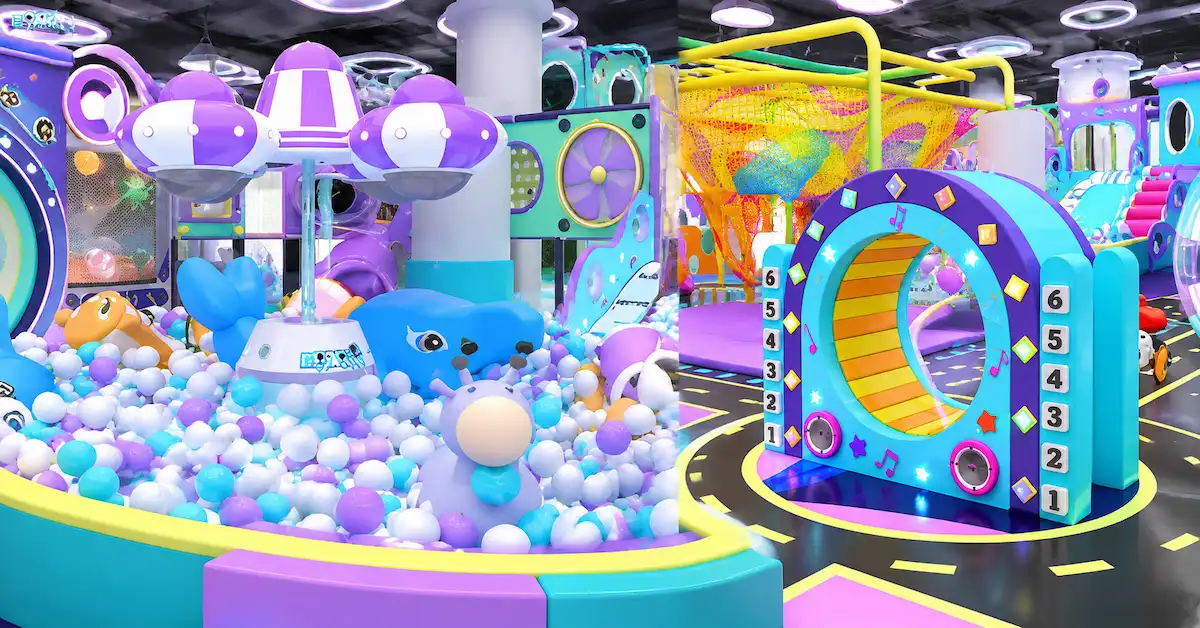
Indoor Amusement Park Solution RFQ Checklist
Send the following information before asking a supplier for a complete concept or quotation:
- Venue address, destination market, opening target, floor plans, clear heights, columns, exits, services, and delivery route.
- Operating model: admission, timed sessions, memberships, parties, school visits, hotel access, or mixed use.
- Target age groups, adult supervision policy, staff positions, accessibility goals, and separation between zones.
- Priority attraction families and any exclusions, such as soft play, toddler play, climbing, trampoline, arcade, interactive, party, or parent zones.
- Brand direction, theme, colors, graphics, language, intellectual-property permissions, and customer-facing signage needs.
- Required layout, 3D, technical, material, inspection, certificate, test, installation, training, maintenance, and warranty documents.
- Preferred design milestones, production trigger, payment gates, packaging, shipment, local installation, and acceptance dates.
- Responsibility matrix for site preparation, utilities, permits, fire requirements, local inspection, unloading, installation, and waste.
- Future expansion assumptions, spare parts, replacement components, reorders, and after-sales contact route.
Make the solution quoteable. Submit one site brief and ask EPARK to return the attraction mix, scope boundaries, document list, delivery assumptions, and open questions in one reviewable package.
Map Your Project Through the Customization ProcessFrequently Asked Questions
What is an indoor amusement park solution?
It is a coordinated plan for an indoor entertainment venue that may combine several attraction families, guest routes, parent areas, staff operations, building interfaces, technical documents, installation, and after-sales support. It is broader than one indoor playground product and more specific than a general promise of one-stop service.
Which businesses need an indoor amusement park solution?
FEC operators, shopping malls, hotels, resorts, family entertainment investors, indoor amusement venues, and project contractors may need one when several attractions must work in one building. The correct scope depends on the site, operating model, target ages, and destination requirements.
Can EPARK supply both playground and game equipment?
EPARK’s public company and FAQ pages mention indoor playground equipment, trampoline parks, soft play, game machines, and one-stop entertainment-center solutions. The main product taxonomy is playground-focused, so confirm whether arcade, VR, or other interactive equipment is supplied directly, coordinated as an add-on, or excluded from the proposed scope.
What information is needed for a meaningful quotation?
Send measured plans, clear height, columns, exits, services, delivery route, target ages, operating model, attraction priorities, theme, destination market, opening window, installation expectations, and required documents. A floor-area number alone is not enough to price interfaces or responsibilities.
What materials does EPARK publicly list?
EPARK’s safety page describes galvanized cold-rolled steel pipes, high-density foam, soft PVC sleeves, EVA or PU mats, FRP or composite-resin slides, safety nets, and railings. Map those general claims to the exact project bill of materials and request the supporting documents for the purchased configuration.
Which standards apply to a mixed-attraction venue?
Different equipment families and markets may require different standards or documents. EPARK pages mention EN1176, ASTM, CE, SGS, ISO, CTI, CPSIA, NFPA 701, and 3C in different contexts. Ask the supplier to identify the applicable edition, product scope, test or certificate evidence, and destination-market authority for each component rather than accepting one generic certification statement.
Does an indoor amusement park solution include installation?
It may include design support, installation guidance, professional installation, or a broader turnkey scope, depending on the quotation. Confirm who supplies local labor, tools, lifting equipment, site preparation, anchors, utilities, testing, training, waste removal, and final sign-off.
How should future expansion be handled?
Record spare capacity, expansion interfaces, component codes, material revisions, available spare parts, and the approval route for changes. An expansion should be checked against the original circulation, sightlines, exits, utilities, and operating rules rather than added as an isolated purchase.
Conclusion
An indoor amusement park solution is valuable when it connects the guest experience to a buildable, inspectable, and operable project scope. Start with the operating model and age policy, create a zone stack, disclose the building envelope, separate attraction families and interfaces, request a component-level evidence package, and write delivery and handover responsibilities into the quotation. This approach gives the buyer a fairer comparison than asking several suppliers to price the same vague list of attractions.
EPARK’s FEC equipment category, customization process, materials and safety page, certificate page, company information, and FAQ can provide the starting evidence for a project discussion. The final design, materials, standards, schedule, installation, documents, and after-sales terms still need to be confirmed for the specific venue and destination market.
Ready to scope a mixed indoor amusement project? Share the site plan and attraction priorities so the EPARK team can identify the right zones, interfaces, documents, and next quotation steps.
Discuss an Indoor Amusement Park Solution
General Disclaimer
All data on https://www.eparki.com is for general guidance only. As a leading indoor playground manufacturer and trampoline supplier, EPARK strives for accuracy but gives no express or implied warranty regarding completeness, performance or project fitness. Product specs, designs and results may vary with use and customer requirements. Buyers must verify technical details, compliance and suitability before purchase. EPARK OEM/ODM is not liable for any direct, indirect or consequential damages arising from site use. For custom solutions, contact our manufacturer and supplier team via the Contact page.
Intellectual Property
Text, images, videos, CAD files and software are Guangzhou EPARK Electronic Technology Co., Ltd. All rights reserved. No part may be copied, republished or used commercially without prior written permission. We will pursue legal action for copyright or design-patent infringement.
Trademarks
"EPARK", the EPARK logo and related graphics are registered trademarks of Guangzhou EPARK Electronic Technology Co., Ltd. Unauthorized use in ads, domain names or packaging is prohibited.
Governing Law
These terms are governed by the laws of the People's Republic of China.
Contact
Questions? Email sales@nanyuetech.com or WhatsApp +86 139 0307 9263.