What Should an Arcade Equipment OEM Supplier Actually Provide?
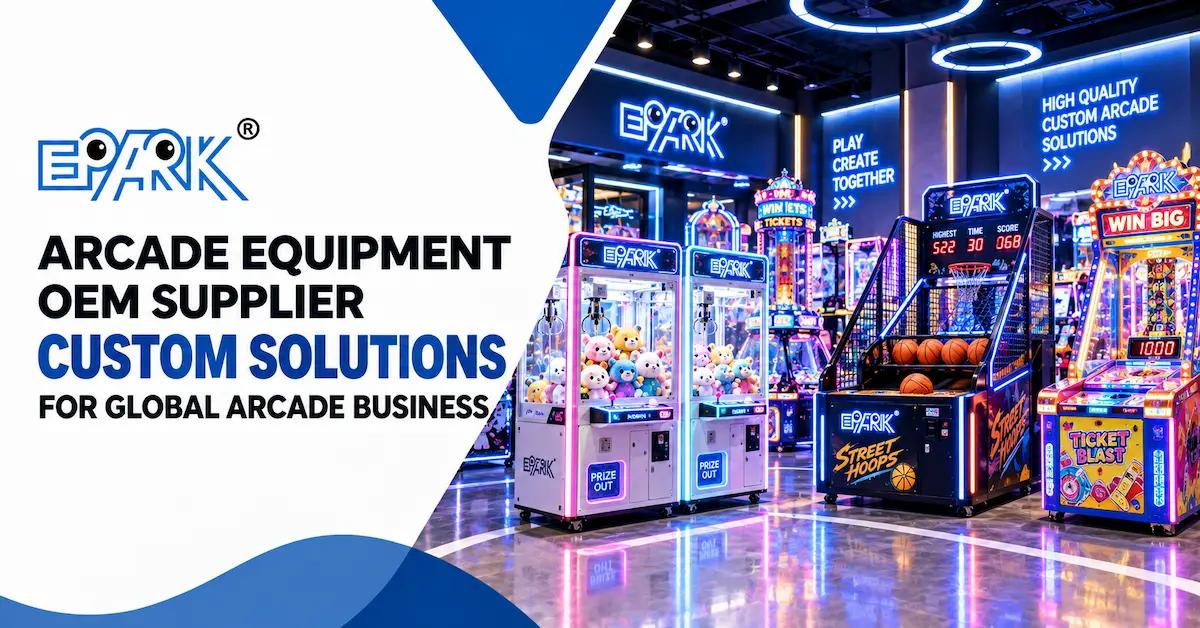
An arcade equipment OEM supplier should provide more than access to standard arcade machines with a different logo. For a serious B2B project, the supplier needs to help convert a buyer requirement into a controlled production configuration covering appearance, cabinet structure, controls, electrical setup, payment hardware, software settings, accessories, packaging and repeat-order records. EPARK’s current OEM & Customization content hub groups custom arcade-machine content around branded production and repeatable manufacturing, while its China arcade equipment OEM guide describes OEM work across product appearance, cabinet design, branding, hardware configuration, software settings and payment systems.
The purchasing question is therefore not simply, “Can you customize this?” It is, “Which parts of this machine will change, who is responsible for each change, how will the result be approved, and how will the same configuration be reproduced later?” That distinction is especially important for distributors, arcade chains and private-label brands because an OEM product becomes part of a longer-term product portfolio rather than a one-time purchase.
Who Should Work With an Arcade Equipment OEM Supplier?
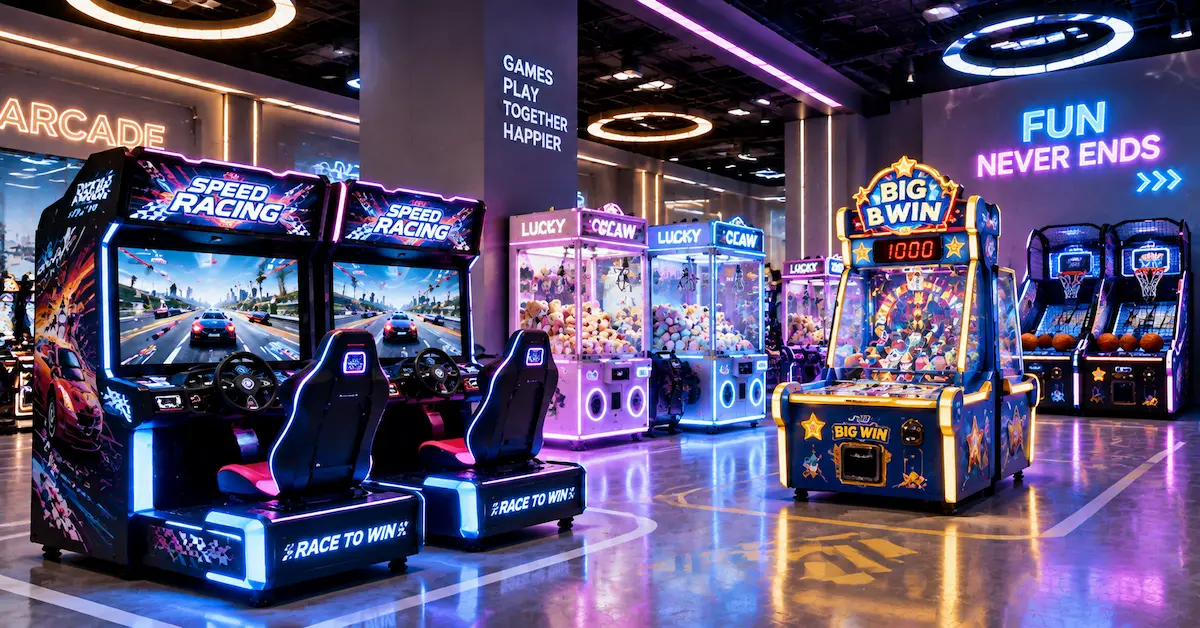
OEM supply is most relevant to regional distributors building a branded arcade range, FEC operators that need equipment aligned with a venue identity, importers adapting machines to local electrical or payment requirements, chain entertainment businesses seeking consistent equipment across several sites, and companies that already know which commercial game category they want but require a differentiated configuration. Buyers who still have not defined the venue, target customer, product category or technical requirement may be better served by selecting a suitable standard machine first from EPARK’s product range before adding unnecessary customization. EPARK’s products page currently presents the business as an OEM & ODM amusement equipment manufacturer and wholesale supplier, supporting the use of existing product platforms as a starting point for project discussions.
OEM is also different from buying a completely new concept. If an existing racing machine already has the correct cockpit, steering system and gameplay, changing its branding, regional electrical version or payment setup may solve the buyer’s problem without redesigning the complete platform. The deeper the requested change, the more the buyer should treat the project as engineering work rather than ordinary private labeling.
Separate Branding Customization From Technical Customization
One of the most useful steps in evaluating an arcade equipment OEM supplier is dividing customization into layers. This prevents a quotation for logo placement from being confused with a quotation involving cabinet redesign, payment integration or software changes.
| Customization layer | Typical buyer request | Main control point | Main purchasing risk |
|---|---|---|---|
| Visual branding | Logo, cabinet graphics, colors, labels | Approved artwork revision | Production artwork differs from approved design |
| Regional configuration | Voltage, frequency, plug, language | Technical specification | Wrong destination configuration |
| Payment customization | Coin, token, card or cashless interface | Integration and transaction testing | Reader fits physically but does not work correctly |
| Hardware customization | Buttons, steering, pedals, sensors, displays | Prototype and component record | New hardware changes wiring or service parts |
| Cabinet customization | Dimensions, panels, mounting points, access | Drawing and physical sample | Appearance approved before hardware fit is checked |
| Software configuration | Language, settings, multiplayer or reward logic | Approved software/version record | Later batches use different behavior |
| Private-label packaging | Cartons, labels, manuals | Packaging artwork and packing list | Brand inconsistency or incorrect accessories |
EPARK’s game machine OEM options guide describes branding, cabinet colors, artwork, language settings, payment configuration, prize-system adjustment and packaging as potential OEM directions. Availability still needs to be confirmed for each selected machine rather than assumed across the entire catalog.
Start With a Buyer Requirement Sheet Before Requesting a Quote
A strong OEM inquiry should explain what the buyer wants the machine to do, not simply how it should look. Create one document used by purchasing, design, engineering and the supplier. This avoids a common problem in which cabinet graphics are approved in one message, payment hardware is discussed elsewhere and voltage appears only on an old quotation.
| Requirement area | Information to define |
|---|---|
| Base equipment | Existing EPARK model or proposed platform |
| Commercial application | FEC, arcade center, mall venue, chain or distributor range |
| Target users | Intended player group and applicable product restrictions |
| Player format | Single-player, multiplayer or linked operation |
| Cabinet | Required dimensions, finish and service access |
| Controls | Joysticks, steering, pedals, buttons, guns, sensors or other interfaces |
| Display | Screen quantity, size and mounting requirement |
| Electrical setup | Voltage, frequency, plug and power requirement |
| Payment | Coin, token, card or supported cashless interface |
| Software | Language, version and agreed operating settings |
| Branding | Logo, graphics, colors, identification and labels |
| Accessories | Keys, cables, manuals and supplied items |
| Spare parts | Required initial parts and part references |
| Packaging | Export packing and private-label requirements |
| Quantity | Prototype, first order and forecast reorder quantity |
| Project control | Model code, hardware revision and artwork revision |
The specification should distinguish buyer requirement, supplier proposal, approved item and open item. Production should not quietly convert an unresolved discussion point into a final specification.
Choose the Right Existing Machine Platform First
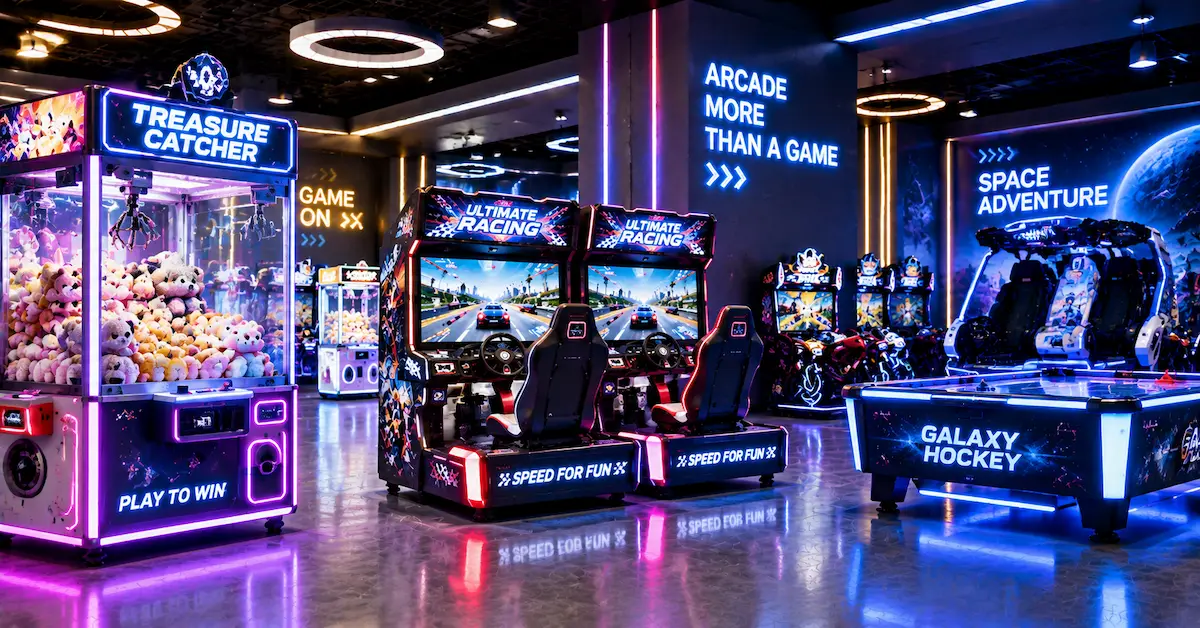
The most efficient OEM development often begins with the closest existing platform rather than a blank design. A distributor may want a racing product family, while another buyer may need branded claw machines, basketball equipment or redemption games. Start by identifying which existing platform already solves the core gameplay and structural requirements.
Then document the gap between the standard machine and the intended OEM version. For example, the standard machine may already provide acceptable cabinet structure and controls but require the buyer’s graphics, destination voltage and payment interface. That project is materially different from a request to redesign the control panel, replace the display, change player position and add new software behavior.
This gap analysis helps prevent customization for customization’s sake and makes quotations easier to compare.
Audit the Supplier’s Real OEM Production Responsibilities
An OEM supplier may manufacture some processes directly while coordinating specialized components from external partners. Buyers need to know who controls the final product rather than relying on the words “factory,” “manufacturer” or “supplier.”
EPARK’s arcade equipment factory audit guide recommends checking cabinet assembly, electrical assembly, wiring, hardware installation, software configuration, artwork installation, functional testing, final inspection and packaging, while also distinguishing processes controlled internally from components obtained from specialized suppliers.
Ask five practical questions: who approves engineering changes, who installs the customized components, who performs final functional testing, who owns the approved production specification and who authorizes a substitution. Those answers tell you more about OEM control than the size of a catalog.
Use Drawings to Control Cabinet Changes
If the OEM request changes the cabinet structure, approve controlled drawings before the physical sample. Dimensions, panel openings, screen mounting, control positions, service doors and payment-hardware locations should be clearly identified.
EPARK’s arcade cabinet factory guide describes cabinet manufacturing as a combination of structural design, material selection, surface finishing, artwork and component integration. That is why a custom cabinet should not be evaluated only through a rendered exterior image.
During review, verify whether the actual display, controls and payment hardware fit the drawing. If a cabinet revision changes a critical mounting point, issue a new revision number rather than modifying the product informally.
Approve the Actual Hardware, Not Generic Descriptions
Terms such as “high-quality joystick,” “commercial steering wheel” or “premium screen” are difficult to reproduce. For components that influence gameplay or after-sales service, request identifiable references.
Important components can include controls, displays, payment hardware, controllers, sensors, speakers and machine-specific mechanisms. The buyer does not need to publish a complete internal BOM on the website, but the purchasing record should contain enough information to determine whether a later machine is the same configuration.
This matters most for distributors. A customer asking for a replacement component six months after installation needs a specific answer, not a photograph and the phrase “same type.”
Validate Payment as a Complete Transaction
Payment customization is one of the areas where physical installation and functional integration are often confused. A cabinet can contain a card-reader opening without proving that the intended cashless system works with the machine.
For every OEM configuration, verify:
Payment recognized → credit registered → correct game session activated → credit consumed correctly → next payment operates normally.
For redemption or prize equipment, include the relevant reward-output step. If a third-party payment provider is involved, identify which company is responsible for hardware, interface, wiring, configuration and final testing.
Keep the tested payment setup attached to the approved machine revision. A later component substitution should trigger a compatibility review rather than being treated as a cosmetic change.
Control Software and Language as Production Specifications
Software differences can be invisible from outside the cabinet. Save the approved software version, language and important operating settings with the sample record.
For linked racing games, confirm that the production version preserves the approved multiplayer behavior. For redemption equipment, preserve scoring and reward settings. For machines exported into a new region, review the actual player-facing language instead of assuming translation affects only the menu.
The more important a software function is to the promised customer experience, the less it should be left as an undocumented factory setting.
Turn the Prototype Into an Approved Production Reference
A prototype should have a clear identity rather than being called simply “the sample.” Record its cabinet revision, controls, display, payment system, software, artwork and unresolved issues.
If changes are made after review, create a new identifiable version. EPARK’s factory guidance recommends documenting samples with specifications, components, artwork, electrical settings and software configuration so the approved sample can become a mass-production reference.
A practical approval record might read:
Prototype P2 — Hardware Rev B — Artwork Rev 04 — Software 2.1 — Payment Configuration C — Approved with no open functional items.
The exact format is up to the buyer, but the principle is critical: production should know which machine is being reproduced.
Use a Change-Order Process After Sample Approval
OEM projects often become expensive when customization continues informally after sample approval. Once the production reference is approved, every requested change should answer four questions:
- What is changing?
- Why is it changing?
- Does it affect cost, testing or delivery?
- Does the revision require renewed buyer approval?
A color adjustment may require only artwork approval. Changing a steering assembly or payment board may require technical validation. A cabinet change may also alter packing dimensions.
This change-order process prevents the final shipment from becoming a collection of improvements that were never evaluated together.
Verify QC Against the OEM Revision
OEM quality control should answer a simple question: does the production unit match what the buyer approved?
EPARK’s arcade equipment sourcing guide lists functionality, buttons, joysticks, steering, pedals, sensors, screens, sound, lighting, scoring, payment configuration, cabinet finish, artwork, voltage, plug and accessories among possible pre-shipment verification points depending on the machine.
For a customized project, add the OEM-specific records:
| QC area | What to compare |
|---|---|
| Model/revision | Production record vs approved OEM revision |
| Cabinet | Dimensions, panels and critical openings |
| Hardware | Approved controls, displays and components |
| Payment | Approved device and credit behavior |
| Software | Approved version, language and settings |
| Artwork | Final signed-off files |
| Electrical version | Destination voltage, frequency and plug |
| Accessories | Keys, cables, manuals and supplied items |
| Spare parts | Correct references and quantities |
| Packing | Approved packaging and labels |
Do not allow “looks the same” to substitute for configuration verification.
Review Certifications and Quality Claims by Scope
EPARK publishes Safety and Quality information and company certification resources, but its current Safety and Quality page is primarily focused on indoor playground materials such as steel structures, foam, flooring and play components. Therefore, buyers sourcing custom arcade machines should not automatically extend playground-specific material claims to an arcade cabinet or electrical configuration.
For an arcade OEM project, request documentation that identifies what product, component or configuration it actually covers. If the destination market requires particular technical or compliance review, raise that requirement during product definition rather than after the customized batch has already been produced.
Compare OEM Suppliers by Production Control, Not Customization Count
The supplier offering the longest list of customization options is not automatically the stronger OEM partner. Compare how each supplier handles requirements, drawings, prototypes, change control, production transfer, QC, packing and repeat orders.
| Supplier comparison area | Questions to ask |
|---|---|
| OEM scope | Which visual and technical changes can this model support? |
| Engineering control | Who reviews feasibility and approves revisions? |
| Sample control | How is the approved configuration recorded? |
| Change management | How are later substitutions communicated? |
| QC | What is checked against the OEM revision? |
| Spare parts | Can custom components be identified later? |
| Production | How is the approved sample transferred to mass production? |
| Packing | Are custom labels and packages controlled by revision? |
| Reorders | How is the previous configuration reproduced? |
| Support | Who diagnoses and authorizes replacement parts? |
This is a stronger supplier-evaluation framework than comparing the number of logos, colors or themes a factory can offer.
Separate OEM Development Cost From Production Cost
A custom quotation may contain one-time and recurring costs. Buyers should separate them before comparing suppliers.
One-time project costs can involve design, sample preparation or deeper engineering where applicable. Recurring production costs can involve specialized hardware, customized cabinet materials, artwork application, packaging or additional components.
A useful commercial structure is:
Development / sample cost + production unit cost + OEM components + spare parts + export packing + logistics + local installation/support
The exact items depend on the project. Keeping them separate prevents a first-order development expense from being treated as a permanent per-unit cost in future purchasing comparisons.
Evaluate MOQ by Customization Scope
Do not assume that one minimum order quantity applies to every OEM change. A standard machine with new graphics can have different commercial conditions from a custom cabinet or specialized hardware configuration.
Ask for minimum quantities by:
- standard machine;
- branding customization;
- packaging customization;
- hardware modification;
- structural change;
- repeat order.
If a supplier has not published one universal MOQ, do not invent it for the article or quotation. Request project-specific terms.
Build Spare-Parts Support Into the OEM Program
A customized machine can create customized spare-part responsibilities. Identify which service components remain standard and which are unique to the OEM version.
For example, customized artwork may not affect service parts at all. A changed control panel or payment interface could.
Build a parts matrix containing the machine revision, component reference, supplied initial quantity and replenishment process. This is especially important when the buyer plans to sell the machine into several customer locations.
An OEM product should be easier to support as the installed base grows, not progressively harder to identify.
Plan Repeat Orders Before Mass Production Starts
A reliable arcade equipment OEM supplier should be able to reproduce the approved configuration later or explain what has changed.
Before completing the first batch, archive:
- final model code;
- drawing revision;
- cabinet configuration;
- hardware;
- software;
- payment setup;
- artwork;
- accessories;
- spare parts;
- packaging;
- QC reference.
EPARK’s private-label guidance emphasizes consistency of artwork, specifications, configuration and packaging for distributors developing repeat product lines.
On the next order, request a quote against that record and require proposed deviations to be identified before production.
When Should a Buyer Move From OEM to Deeper Development?
OEM is usually efficient when a proven base platform already satisfies the central commercial requirement. Deeper product development becomes more relevant when the existing cabinet, hardware architecture or player experience cannot meet the project.
Use this decision framework:
| Project situation | More suitable approach |
|---|---|
| Existing machine works; logo and artwork need changing | Branding OEM |
| Machine works; regional voltage/payment/language needs adapting | Configuration OEM |
| Controls or cabinet layout require meaningful changes | Engineering-heavy OEM |
| Existing product architecture cannot solve the requirement | Deeper custom/ODM-style development |
| Buyer has no defined product requirement yet | Product selection before customization |
The terminology can vary between suppliers. Document responsibilities instead of assuming that the words OEM and ODM have identical meanings everywhere.
Why EPARK May Be Considered for an OEM Project
EPARK’s About Us page identifies Guangzhou EPARK Electronic Technology Co., Ltd. as a Guangzhou-based company established in 2012 and describes its product scope as including indoor playground equipment, arcade machines, game machines and children’s amusement facilities. The company describes itself as an integrated industrial and trading business serving indoor entertainment projects.
Its current website also maintains a dedicated OEM & Customization category, recent arcade OEM manufacturing content and an arcade factory audit guide. These sources support discussing EPARK as a project-specific arcade OEM supplier, while exact model capabilities, quantities, documentation and timelines still need confirmation for each inquiry.
What Should You Send an Arcade Equipment OEM Supplier?
A productive inquiry should allow the engineering and commercial teams to understand the project without guessing. Send the proposed machine category or base model, application, target users, quantity, destination, cabinet requirements, display and controls, electrical version, payment system, software/language needs, branding files, packaging requirements, spare-parts expectations and target delivery schedule.
If you are still comparing standard platforms, begin with EPARK’s products page. Buyers who want additional background on customization can review the OEM & Customization category and OEM manufacturer guide, then submit the defined requirement through EPARK Contact Us.
Frequently Asked Questions About Arcade Equipment OEM Suppliers
1. What is an arcade equipment OEM supplier?
An arcade equipment OEM supplier provides commercial arcade equipment configured or manufactured according to an agreed buyer specification. Depending on the project, OEM work may include branding, cabinet appearance, electrical configuration, payment systems, hardware, software settings and packaging.
2. Is OEM the same as private labeling?
Private labeling is one form of OEM cooperation, usually emphasizing branding. OEM can extend further into electrical, payment, hardware or cabinet configuration. The exact work should be defined in the quotation rather than inferred from the term alone.
3. Can I start from an existing arcade machine?
Yes, and doing so can reduce unnecessary development when the existing platform already meets the main gameplay and structural requirements. Buyers can review EPARK’s product range before defining modifications.
4. Can I customize payment hardware?
Depending on the machine, payment-system requirements can be evaluated. Confirm the exact coin, token, reader or cashless interface, wiring, credit logic and integration responsibility before production.
5. Should I approve an OEM arcade machine sample?
For meaningful customization, an approved physical sample or clearly controlled production reference helps reduce risk. Save the hardware, software, artwork, payment and electrical configuration represented by that approval.
6. Can I change the cabinet structure?
Structural changes can be evaluated when technically feasible, but they may affect component mounting, service access, player ergonomics, packing and cost. Treat them as engineering changes rather than normal artwork customization.
7. How should OEM arcade equipment be inspected?
Compare production against the approved revision. Inspect relevant cabinet, hardware, payment, software, gameplay, artwork, electrical setup, accessories and packaging items rather than relying only on exterior appearance.
8. What is the MOQ for OEM arcade equipment?
MOQ can vary by machine and customization scope. Branding, custom packaging, hardware changes and deeper structural work may have different commercial conditions. Ask for the specific terms of the proposed project rather than assuming one universal MOQ.
9.How do I protect repeat-order consistency?
Keep the approved drawings, hardware configuration, software, payment setup, artwork, spare-part references and packaging. Ask the supplier to identify any proposed deviation before the next production batch.
10. How can I request an OEM quotation from EPARK?
Prepare your base machine or category, quantity, destination, technical changes, electrical setup, payment requirement, artwork, packaging and project schedule, then submit the brief through EPARK Contact Us.
Conclusion
Choosing an arcade equipment OEM supplier should be treated as a controlled product-development and sourcing decision rather than a request for cosmetic customization. Start with the closest suitable machine platform, separate branding from technical changes, document the complete configuration, approve an identifiable production reference and use change control after approval. Quality inspection should verify the OEM revision, while spare parts, packaging and repeat-order records should be planned before the first batch leaves the factory. Buyers can review EPARK’s OEM & Customization resources, arcade OEM manufacturing guide and factory audit guide, then contact EPARK with the intended machine, customization scope, quantity, destination and delivery requirements for project-specific evaluation.
General Disclaimer
All data on https://www.eparki.com is for general guidance only. As a leading indoor playground manufacturer and trampoline supplier, EPARK strives for accuracy but gives no express or implied warranty regarding completeness, performance or project fitness. Product specs, designs and results may vary with use and customer requirements. Buyers must verify technical details, compliance and suitability before purchase. EPARK OEM/ODM is not liable for any direct, indirect or consequential damages arising from site use. For custom solutions, contact our manufacturer and supplier team via the Contact page.
Intellectual Property
Text, images, videos, CAD files and software are Guangzhou EPARK Electronic Technology Co., Ltd. All rights reserved. No part may be copied, republished or used commercially without prior written permission. We will pursue legal action for copyright or design-patent infringement.
Trademarks
"EPARK", the EPARK logo and related graphics are registered trademarks of Guangzhou EPARK Electronic Technology Co., Ltd. Unauthorized use in ads, domain names or packaging is prohibited.
Governing Law
These terms are governed by the laws of the People's Republic of China.
Contact
Questions? Email sales@nanyuetech.com or WhatsApp +86 139 0307 9263.