Logo Customization Should Create a Controlled Commercial Product
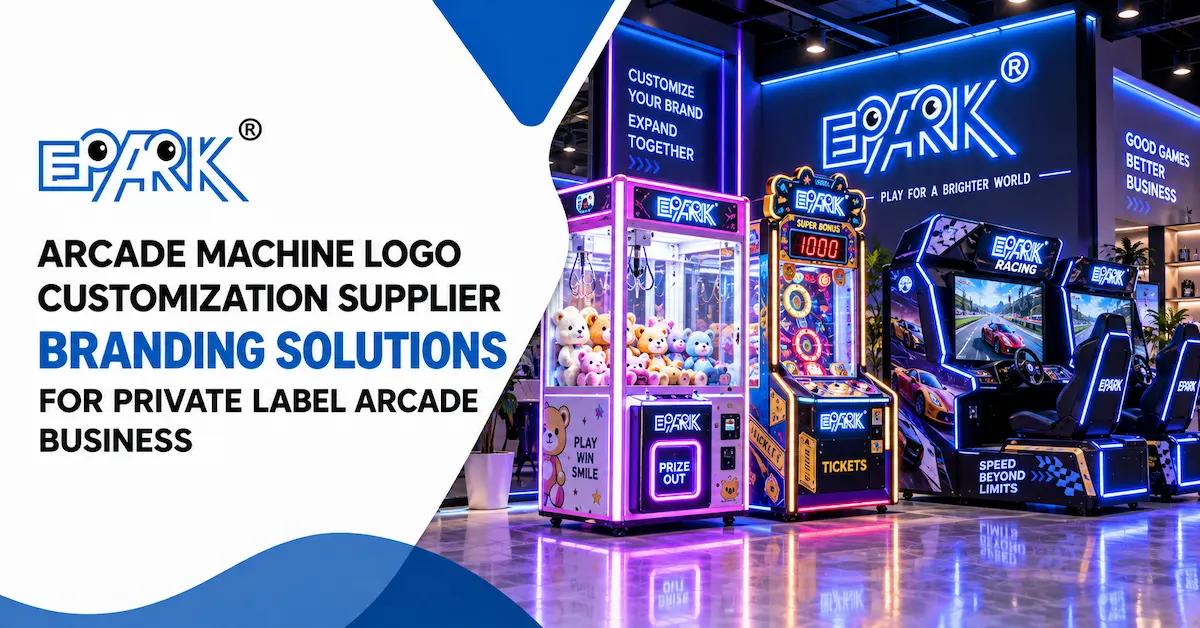
An arcade machine logo customization supplier should do more than place a buyer’s logo on an existing cabinet. For distributors, FEC chains and entertainment brands, logo customization needs to connect visual identity with a clearly identified machine configuration so the branded product can be produced, serviced and reordered consistently. A logo may appear on the marquee, side panel, front base, control area or packaging, but every position interacts with cabinet geometry, hardware access, lighting and other graphics. Buyers planning a wider branded product range can first review EPARK’s OEM & Customization resources and existing arcade equipment before deciding whether the project only needs logo customization or deeper OEM development.
The most important distinction is between branding changes and technical changes. A new logo position may only require artwork approval. Moving a payment reader, changing a control panel or modifying a cabinet to create space for illuminated branding is an engineering change. Keeping those scopes separate prevents a simple private-label project from becoming an uncontrolled product redesign.
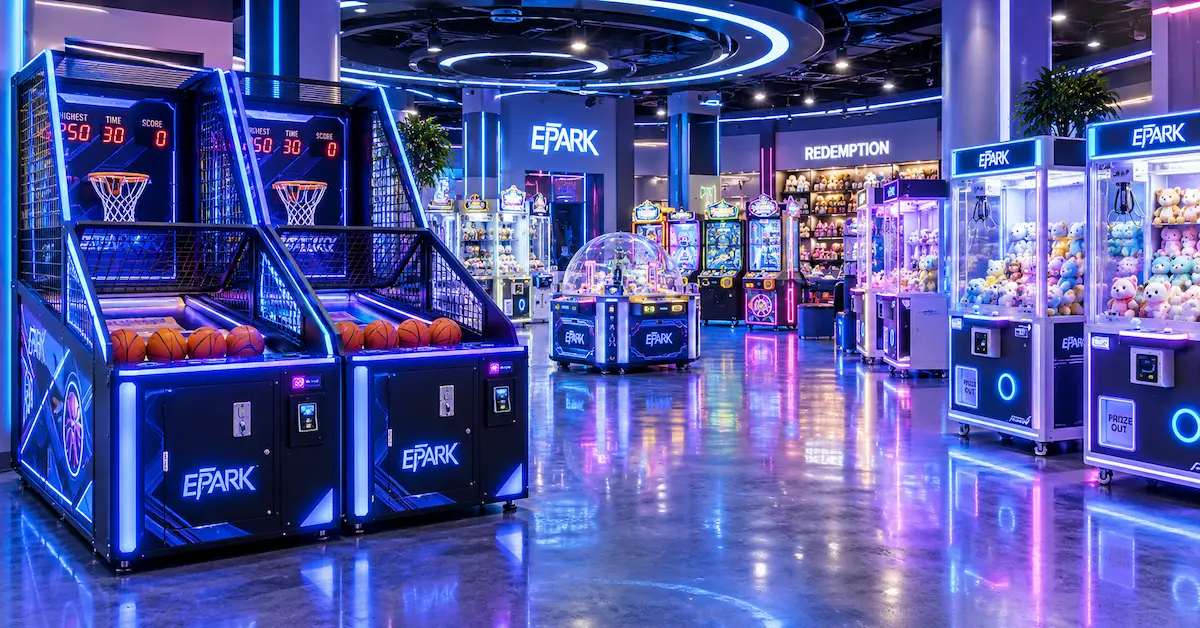
Who Needs Arcade Machine Logo Customization?
Logo customization is particularly useful for arcade distributors selling equipment under their own name, FEC chains creating consistent visual identity across multiple locations, franchise entertainment businesses, shopping-mall game centers, regional importers and private-label amusement brands. These buyers often purchase several game categories—such as claw machines, racing simulators, basketball games and redemption equipment—and want customers to recognize them as part of one brand family.
A buyer purchasing only one standard machine for one venue may not need a formal private-label program. In that case, standard equipment from EPARK’s product range may be more efficient. A structured branding program becomes more valuable when the buyer intends to order repeatedly, distribute machines to downstream customers or maintain the same brand identity across different equipment categories.
Decide Whether You Need Logo-Only Branding or Full OEM Customization
Logo customization can exist at several levels. Define the required level before requesting a quotation.
| Customization level | Typical scope | Main advantage | Main risk to control |
|---|---|---|---|
| Logo only | Logo added to approved cabinet artwork | Fast brand identification | Logo placement may conflict with existing graphics |
| Logo + colors | Logo plus buyer color palette | Stronger visual consistency | Different materials may reproduce colors differently |
| Full exterior branding | Logo, side graphics, marquee, front panel and labels | Creates a recognizable product family | Artwork versions can become difficult to control |
| Private-label package | Exterior branding plus product name, labels, manuals and packaging | Distributor can build its own SKU system | Technical supplier model may become hidden |
| Configuration OEM | Branding plus payment, language or hardware adjustments | Better regional market fit | Technical changes increase validation requirements |
| Structural OEM | Branding plus cabinet redesign | Strongest differentiation | Higher engineering, prototype and reorder complexity |
EPARK’s game machine OEM customization guide provides useful background on branding, cabinet appearance, language, payment and packaging customization. Buyers should still define exactly which changes apply to the selected machine.
Create a Brand Brief Before Sending Artwork
A useful logo project starts with a short brand brief instead of a single JPG or PNG attachment. The supplier needs enough information to understand how the logo should appear across different machines.
Prepare:
- the official brand name;
- production-ready logo artwork;
- approved horizontal and vertical logo versions where applicable;
- primary and secondary brand colors;
- acceptable light and dark logo versions;
- product naming convention;
- preferred logo hierarchy;
- areas where the logo must not appear;
- packaging and label requirements;
- intended machine categories.
The purpose is not to create unnecessary design paperwork. It is to prevent each cabinet from interpreting the brand differently.
Choose Logo Placement by Cabinet Function
Logo placement should follow the architecture of the machine. The most visible position is not always the most practical position.
| Cabinet area | Branding advantage | What buyers should check |
|---|---|---|
| Top marquee/header | Strong visibility from a distance | Existing title, lighting and mounting structure |
| Side panel | Large graphic area | Ventilation, service panels and cabinet curves |
| Front base | Visible during play | Payment doors and technician access |
| Control panel | Close to the player | Buttons, joystick, instructions and wear |
| Seat/cockpit area | Useful for racing or simulator branding | Seat movement and replaceable components |
| Transparent prize cabinet | High visual impact | Do not block merchandise visibility |
| Payment area | Connects brand with customer transaction | Reader, coin door and instruction labels |
| Packaging | Brand remains identifiable during logistics | SKU, model and handling information |
A strong logo position attracts attention without blocking controls, safety information, ventilation, access panels or product visibility.
Review Logo Method and Surface Compatibility
Different arcade cabinets use different surfaces, finishes, lighting structures and panel shapes. The visual branding method should therefore be reviewed against the actual production surface rather than selected independently.
A flat opaque side panel can support a different graphic treatment from a transparent prize cabinet. An illuminated marquee needs a design suitable for backlighting or edge lighting. A curved panel may distort artwork designed for a flat surface. Frequently touched areas may need different durability considerations from decorative side panels.
The supplier should confirm the proposed production method for the selected cabinet and provide an approval reference. Avoid assuming that one logo application method should automatically be used across every machine category.
Do Not Place Branding Over Service or Functional Areas
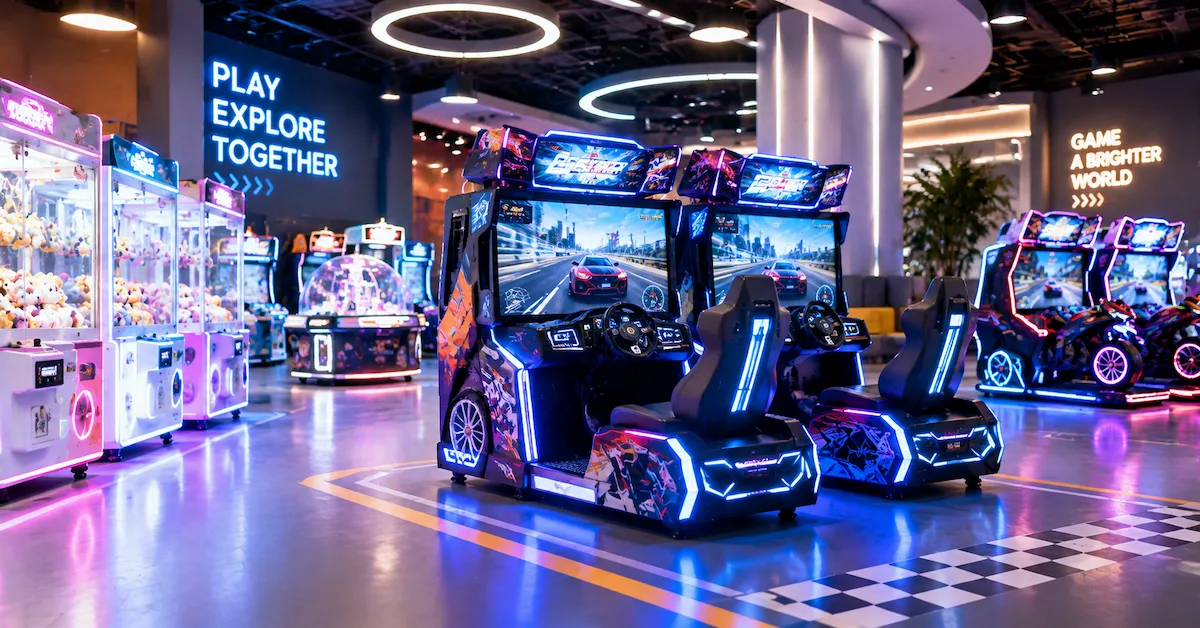
One of the most practical checks in logo customization is whether the final artwork interferes with maintenance.
Before artwork approval, identify:
- access doors;
- ventilation openings;
- payment doors;
- removable panels;
- cable access;
- speakers;
- control hardware;
- screen boundaries;
- locks and fasteners;
- product-viewing windows.
A large side graphic may look excellent in a render but become fragmented when a service panel opens. A logo positioned over a frequently replaced part may be lost during maintenance. Branding should therefore be designed using the production cabinet drawing rather than only a marketing photograph.
Coordinate Logo Design With Existing Cabinet Artwork
Many arcade machines already use strong game graphics. Adding another brand logo can create visual competition rather than brand recognition.
Instead of simply making the buyer logo larger, establish a hierarchy:
Brand identity → product/game identity → instructions → decorative artwork
For a distributor product family, the brand logo might remain in a consistent upper position while each machine keeps its own game-specific artwork below. Another strategy is to use one repeated logo panel or illuminated badge across multiple categories.
EPARK’s custom branded arcade machines guide can help buyers think about branding as a multi-machine product system rather than a series of unrelated graphic changes.
Keep Logo Artwork Separate From the Hardware Revision
A branded arcade machine needs at least two types of revision control:
Technical revision: cabinet, controls, display, payment hardware, software and other operating components.
Artwork revision: logo, graphics, colors, labels and product identification.
A simple internal record might look like:
Model: PL-R01
Hardware Rev: B
Artwork Rev: 05
This allows the buyer to update branding without automatically changing the machine configuration. It also prevents a hardware substitution from being hidden inside what purchasing believes is only a new graphic version.
Use Production-Ready Artwork Files
The supplier should receive artwork that can be used consistently in production. Low-resolution screenshots or social-media logo files can cause unnecessary recreation and interpretation.
Before approval, confirm that the production file reflects the final:
- logo proportions;
- color references;
- wording;
- product name;
- orientation;
- placement;
- scale;
- background treatment;
- language.
Also maintain your own archive of the final approved files. Do not rely on the supplier as the only holder of your branding assets.
Create a Model-Level Logo Specification
When several arcade machines are being branded, use one controlled specification for every model.
| Specification item | What to record |
|---|---|
| Branded product name | Buyer-facing machine name |
| Supplier model | Original technical model |
| Logo file | Approved production artwork |
| Artwork revision | Current approved version |
| Logo location | Marquee, side, front, control area, etc. |
| Approximate scale | Approved proportion for the cabinet |
| Brand colors | Approved color references |
| Cabinet colors | Base production colors |
| Lighting | Illuminated or non-illuminated branding |
| Product labels | SKU, model and identification |
| Technical revision | Underlying machine configuration |
| Packaging | Branded package or standard export package |
| Approval reference | Sample, render or production photograph |
This specification becomes especially useful when a distributor is simultaneously ordering claw machines, racing games and sports equipment.
Use a Physical Sample or Production Reference
A render can confirm concept and composition, but it cannot show every real-world detail. For significant branding programs, an approved sample or clearly controlled production reference can verify how the logo looks under actual lighting and on the real cabinet surface.
Review:
- logo size;
- alignment;
- color;
- edge quality;
- lighting effect where applicable;
- interaction with existing graphics;
- visibility from normal viewing distance;
- service-panel alignment;
- cleaning and handling areas.
If changes are made after the first review, create another identifiable revision instead of allowing several different versions to remain labeled “final.”
Test Branding Across Several Machine Categories
A logo that works on a claw cabinet may not work on a racing machine. Before mass production of a multi-category order, compare the brand system across at least the actual machine types being purchased.
For example:
Claw machine: header + front-base branding.
Racing machine: marquee + cockpit branding.
Basketball machine: scoreboard/header + side panel.
Redemption machine: top header + front cabinet.
Simulator: illuminated exterior badge + platform graphics.
The design does not need identical placement. Consistency can come from color, proportion, typography and visual hierarchy instead.
Coordinate Logo Customization With Payment Branding
For distributors and chain operators, the payment area is part of the customer experience. If a card reader, token system or coin interface is installed, decide whether the buyer brand also appears around payment instructions.
However, visual branding and payment integration are different approvals. A branded card-reader panel does not prove the hardware works.
When the machine is supplied with a configured payment system, verify:
Payment accepted → credit registered → correct game starts → transaction resets correctly
Keep the validated payment configuration linked to the technical revision while the logo panel remains part of the artwork revision.
Include Labels, Instructions and Product Naming
A professional branded machine often needs more than one visible logo. Product identity can include a branded model name, operating labels, payment instructions, serial/model labels and customer-support references.
Use a consistent naming convention across equipment. If the distributor calls one product “Galaxy Racer R1,” the carton, manual and internal product database should not use three unrelated names without a cross-reference.
A useful internal mapping is:
Buyer SKU → branded product name → supplier model → hardware revision
This allows sales teams to use the brand name while technicians can still identify the original machine configuration.
Treat Packaging as Part of Logo Customization
Packaging can reinforce brand identity and also improve warehouse control. Depending on project scope, the buyer may request logo printing, branded labels, SKU identification or custom carton markings.
At minimum, branded packaging should still communicate operational information such as model identity, package number and handling references clearly.
For machines shipped in several sections, use consistent identification such as:
Brand Model X — Package 1/3
Brand Model X — Package 2/3
Brand Model X — Package 3/3
This helps distributors reconnect the correct parts during receiving and installation.
Build Logo Customization Into QC
An arcade machine logo customization supplier should have a defined method for verifying the buyer-specific branding before packing.
| QC point | What to verify |
|---|---|
| Correct model | Branding is applied to the intended machine |
| Correct logo | Approved file/version is used |
| Placement | Position matches approval |
| Scale | Logo proportion is correct |
| Color | Matches approved production reference |
| Orientation | Logo is not reversed or incorrectly rotated |
| Surface finish | Graphic is applied cleanly |
| Lighting | Illuminated branding operates correctly where applicable |
| Existing graphics | Logo does not cover required artwork or instructions |
| Service panels | Graphic alignment remains acceptable when panels open |
| Labels | Correct product and SKU information |
| Packaging | Correct branded package/marking |
The artwork inspection should happen alongside—not instead of—functional QC for the underlying machine.
Control Logo Consistency Across Production Batches
A common private-label problem is that the first batch looks correct, but later orders use slightly different logo sizes, colors or positions. Save the approved artwork and production reference from the first batch.
For a reorder, send:
Machine model + technical revision + artwork revision + packaging revision
and ask the supplier to identify any proposed change before production.
This makes logo consistency a measurable production requirement rather than an informal expectation.
Understand What Can Change the Logo Customization Price
Logo customization cost can depend on the selected machine, logo size, number of branded surfaces, surface treatment, illuminated branding, artwork preparation, quantity and packaging requirements.
Do not compare two quotations unless the customization scope is the same.
A useful cost breakdown is:
Base Machine + Branding Setup + Production Branding + Special Lighting/Hardware + Private-Label Packaging + Sample/Prototype + Freight
This is a buyer-planning structure, not an EPARK pricing formula. Actual quotations should identify what is included and whether any setup cost applies only to the first order.
Ask About MOQ by Branding Scope
The minimum quantity for a basic logo application may differ from the quantity required for custom cabinet colors, special packaging or deeper OEM changes.
Instead of asking only “What is your MOQ?”, request commercial conditions for the actual scope:
- logo-only customization;
- logo + artwork;
- private-label packaging;
- multi-model branded order;
- repeat production;
- deeper OEM customization.
This gives a distributor a more realistic picture of the investment required to launch a branded product line.
Clarify Brand and Artwork Ownership
Logo customization involves intellectual property. Buyers should provide artwork they have the right to use and define what happens to supplier-created cabinet graphics or modified brand files.
Clarify:
- who owns the original logo;
- who owns new artwork created for the project;
- whether production files will be provided to the buyer;
- whether third-party characters or game artwork are involved;
- whether the branding is exclusive;
- whether the supplier can display the customized machine in marketing.
Private labeling does not automatically create exclusivity. If territorial, product or design exclusivity matters, it should be addressed separately from the normal manufacturing quotation.
Logo Customization vs Private Label vs Full OEM
| Sourcing route | Branding depth | Technical change | Best suited to |
|---|---|---|---|
| Standard machine | None | None/minimal | Standard FEC purchases |
| Logo customization | Basic | Usually minimal | Dealers adding brand identity |
| Full branded machine | High visual customization | Low to moderate | Distributors and arcade chains |
| Private-label product | Brand, SKU, packaging and selected configuration | Moderate | Long-term branded product lines |
| Configuration OEM | Full branding plus technical adaptation | Moderate to high | Market-specific products |
| Structural OEM | Extensive branding and cabinet changes | High | Unique product development |
A buyer does not need the deepest customization level to create a successful branded product.
How to Compare an Arcade Machine Logo Customization Supplier
When selecting an arcade machine logo customization supplier, compare the process rather than only the design mockup. Ask how the supplier receives artwork, adapts it to different cabinets, records revisions, produces samples, inspects branded batches and preserves files for future orders.
A supplier should also be able to explain where logo requests end and technical engineering begins. If a proposed branding position requires changing a cabinet panel or lighting system, the supplier should identify that as a technical change rather than quietly incorporating it into artwork work.
Buyers can compare this process with EPARK’s broader arcade equipment OEM sourcing guide and custom arcade machine OEM guide.
What Should You Send EPARK for Logo Customization?
Prepare the machine categories or preferred models, quantities, destination, logo files, brand colors, product naming, preferred placement, cabinet color requirements, packaging requirements and whether the project also needs payment, language or electrical customization.
If you are still selecting equipment, review EPARK’s product catalog. For deeper branding projects, use the OEM & Customization section, private-label game machine guide and custom branded arcade machine guide to define the scope before requesting a quotation.
Once the branding brief is ready, submit the project through EPARK Contact Us.
Frequently Asked Questions About Arcade Machine Logo Customization
1. What does an arcade machine logo customization supplier do?
An arcade machine logo customization supplier adapts commercial arcade equipment to carry a buyer’s brand identity. Depending on the project, this can include logo placement, cabinet graphics, colors, product labels and branded packaging, while deeper technical changes are handled separately.
2. Can I add my company logo to an existing arcade machine?
Logo customization can often begin from an existing product platform. The exact logo area, size, production method and quantity need to be confirmed for the selected cabinet.
3. Where can my logo be placed on an arcade machine?
Possible positions can include the marquee, side panels, front base, control area or selected illuminated branding zones, depending on cabinet structure and service access.
4. Can several game types use the same branding?
Yes. Different cabinets can share the same logo, color system, product naming and visual direction while using model-specific artwork layouts.
5.Should I approve a sample before bulk logo customization?
For a significant branded program, a sample or clear production reference helps verify placement, scale, colors, cabinet compatibility and lighting before the full batch is produced.
6.Can logo customization include private-label packaging?
Packaging branding can be discussed as part of a private-label project. Confirm carton/crate format, labels, product SKU, artwork and order requirements before production.
7. Does logo customization change the machine hardware?
Not necessarily. Basic logo customization can be primarily visual. If logo placement requires structural, lighting, payment or other hardware changes, those should be treated as separate technical revisions.
8. How do I keep logo colors consistent between orders?
Maintain approved production artwork, color references and a sample or production reference. Attach the artwork revision to every reorder and require changes to be disclosed before production.
9. What affects the price of arcade machine logo customization?
Cost may depend on machine type, logo size, number of branded areas, cabinet finish, lighting, artwork preparation, packaging and quantity. Request an itemized project quotation.
10. How can I request logo customization from EPARK?
Prepare your preferred machine models, quantity, logo files, brand colors, required placement, packaging and any additional OEM requirements, then submit them through EPARK Contact Us.
Conclusion
Choosing an arcade machine logo customization supplier should be treated as a branding and production-control decision rather than simply sending a logo file to a factory. Define the brand brief, choose logo positions around real cabinet structures, confirm surface and hardware compatibility, separate artwork from technical revisions, approve a production reference and include branding checks in QC. For distributors and FEC chains building multi-model product families, consistent naming, packaging and repeat-order artwork control are just as important as the initial design. Buyers can review EPARK’s OEM & Customization resources, custom branded arcade machines guide and private-label guide, then contact EPARK with the selected machines, logo files, quantities and branding requirements for a project-specific evaluation.
General Disclaimer
All data on https://www.eparki.com is for general guidance only. As a leading indoor playground manufacturer and trampoline supplier, EPARK strives for accuracy but gives no express or implied warranty regarding completeness, performance or project fitness. Product specs, designs and results may vary with use and customer requirements. Buyers must verify technical details, compliance and suitability before purchase. EPARK OEM/ODM is not liable for any direct, indirect or consequential damages arising from site use. For custom solutions, contact our manufacturer and supplier team via the Contact page.
Intellectual Property
Text, images, videos, CAD files and software are Guangzhou EPARK Electronic Technology Co., Ltd. All rights reserved. No part may be copied, republished or used commercially without prior written permission. We will pursue legal action for copyright or design-patent infringement.
Trademarks
"EPARK", the EPARK logo and related graphics are registered trademarks of Guangzhou EPARK Electronic Technology Co., Ltd. Unauthorized use in ads, domain names or packaging is prohibited.
Governing Law
These terms are governed by the laws of the People's Republic of China.
Contact
Questions? Email sales@nanyuetech.com or WhatsApp +86 139 0307 9263.