Introduction: Why Trampoline Park Costs Matter for Indoor Playground Investors
As the global indoor playground and family entertainment center (FEC) market continues to expand, trampoline parks have become one of the most profitable and scalable indoor amusement formats. Investors, mall developers, and operators are increasingly asking a critical question: How much money does it take to build a trampoline park?
Unlike traditional indoor playgrounds, a trampoline park combines high-energy activities, modular design, and strong repeat visitation. However, building a trampoline park involves more than purchasing equipment. It requires strategic planning around space utilization, safety standards, operational efficiency, and long-term return on investment.
This article provides a clear and realistic breakdown of trampoline park costs, explains the key factors that affect investment size, and forecasts how much revenue a trampoline park can generate. If you are evaluating an indoor playground project or expanding an entertainment portfolio, this guide will help you make informed decisions with confidence.
What Is a Trampoline Park? Understanding the Business Model
Definition and Core Elements of a Trampoline Park
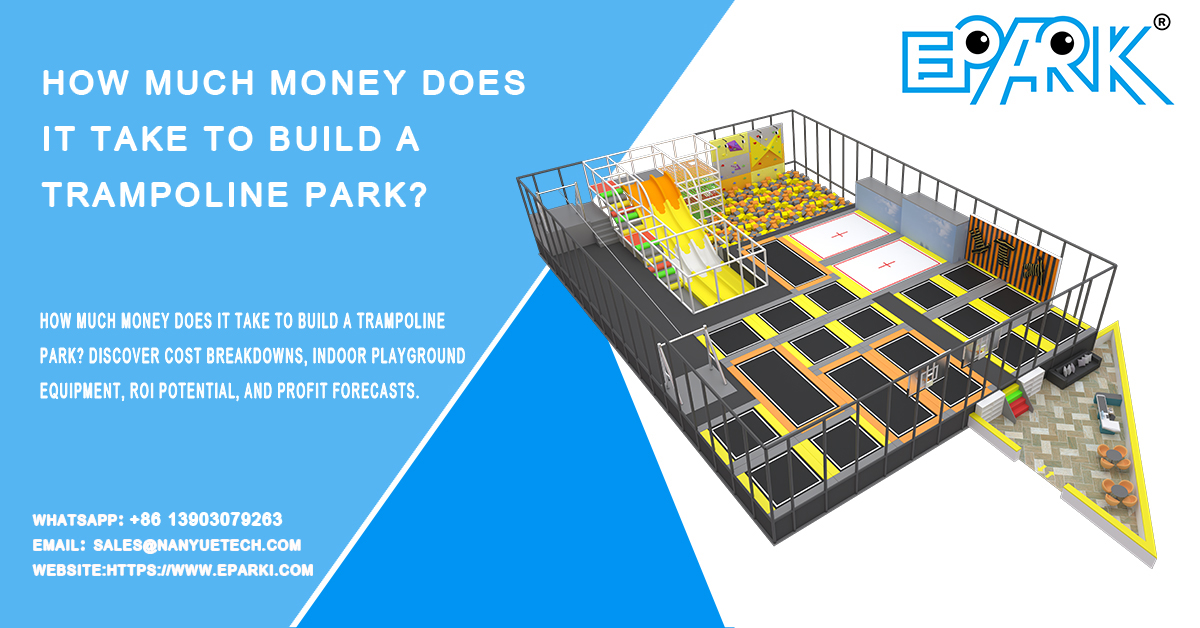
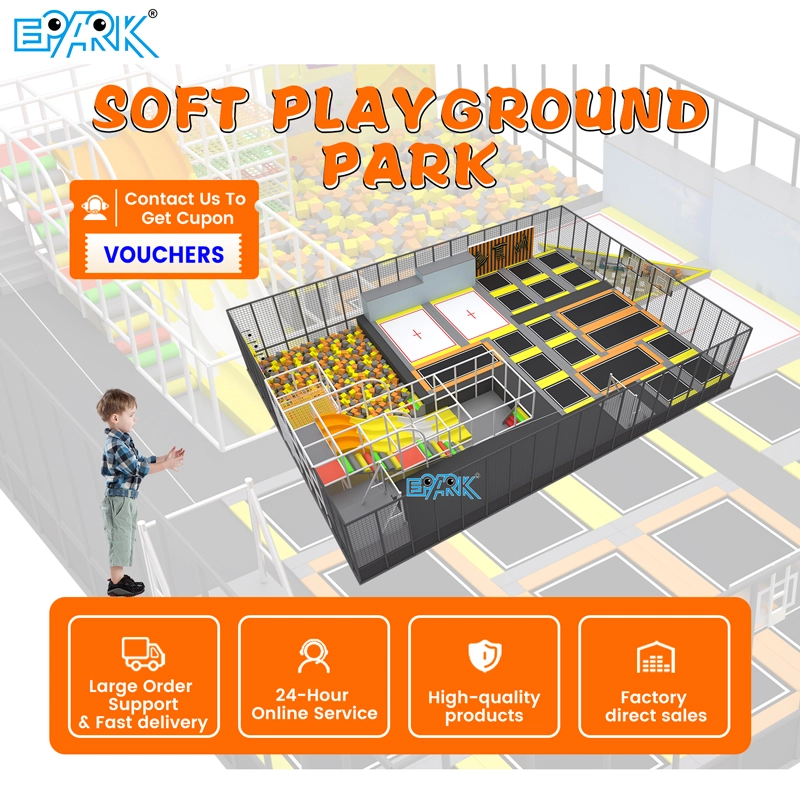
A trampoline park is a specialized type of indoor playground designed around interconnected trampoline systems and activity zones. These facilities typically operate indoors and cater to children, teenagers, families, and group events.
Common trampoline park components include:
-
Open jump trampoline courts
-
Foam pits and airbag landing areas
-
Dodgeball and basketball dunk zones
-
Ninja warrior and obstacle courses
-
Kids and toddler areas
-
Party rooms and lounge spaces
From an operational perspective, trampoline parks rely on high guest turnover and timed entry sessions, which allows operators to maximize revenue per square meter.
Why Trampoline Parks Are Attractive for B2B Investors
Compared with other indoor amusement park formats, trampoline parks offer several advantages:
-
Lower land and construction costs than outdoor theme parks
-
Year-round operation with stable demand
-
Flexible, modular layouts that support phased expansion
-
Strong appeal within family entertainment centers and shopping malls
For investors already familiar with indoor playground projects, trampoline parks often deliver higher revenue density and faster ROI.
How Much Money Does It Take to Build a Trampoline Park?
Average Trampoline Park Startup Cost
The cost to build a trampoline park varies based on size, location, and customization level. Based on industry benchmarks, typical investment ranges are shown below:
| Trampoline Park Size | Area (sqm) | Estimated Cost |
|---|---|---|
| Small | 300–600 sqm | USD 150,000 – 300,000 |
| Medium | 800–1,500 sqm | USD 300,000 – 700,000 |
| Large | 2,000+ sqm | USD 800,000 – 1.5M+ |
These figures represent average trampoline park costs and may change depending on safety regulations, equipment quality, and local construction expenses.
Detailed Cost Breakdown of Building a Trampoline Park
1. Trampoline Park Equipment (30%–50% of Total Cost)
Trampoline park equipment is the largest single investment category. It includes:
-
Steel support structures
-
Trampoline mats and springs
-
Safety padding and netting
-
Integrated attractions and custom modules
Typical pricing ranges from USD 120 to 350 per sqm, depending on design complexity and compliance level.
High-quality equipment that meets ASTM F2970 or EN 13219 standards reduces maintenance costs and enhances long-term safety.
Internal link suggestion:
Explore Trampoline Park Equipment Solutions
2. Venue Preparation and Construction
Most trampoline parks are built inside warehouses or shopping malls. Venue preparation usually involves:
-
Floor reinforcement and leveling
-
Wall padding and impact protection
-
Electrical systems, lighting, and HVAC
Ceiling height is critical. A minimum clear height of 5–7 meters is recommended to support diverse trampoline park attractions and ensure safety compliance.
3. Design and Layout Planning
Professional trampoline park design directly affects:
-
Customer flow and capacity
-
Safety zoning and supervision
-
Revenue per square meter
Experienced suppliers typically provide 2D layouts, 3D renderings, and structural calculations, often bundled with equipment packages.
Internal link suggestion:
Trampoline Park Design & Layout Planning Guide
4. Operational Setup Costs
To operate efficiently, trampoline parks require:
-
POS and online booking systems
-
Wristband or access control technology
-
Staff training and operational manuals
-
Insurance and third-party safety inspections
These costs are essential for daily management and legal compliance.
5. Marketing and Pre-Opening Expenses
Marketing plays a crucial role in shortening the time to profitability. Common expenses include:
-
Digital advertising campaigns
-
Local promotions and school partnerships
-
Website setup and SEO optimization
Many successful indoor playground operators allocate 5%–10% of total investment to pre-opening marketing.
Key Factors That Influence Trampoline Park Cost
Park Size and Capacity Planning
Larger trampoline parks benefit from scale but require higher upfront capital. Smaller parks are easier to launch but may face revenue limitations. The ideal size depends on:
-
Local population density
-
Competition from other indoor playgrounds
-
Target customer demographics
Equipment Quality and Customization
Standard trampoline modules are more affordable, while custom attractions improve differentiation and ticket pricing. Premium trampoline park equipment often results in:
-
Higher customer satisfaction
-
Longer equipment lifespan
-
Better online reviews and repeat visits
Safety Standards and Regional Compliance
Safety compliance is non-negotiable in the indoor playground industry. Common standards include:
-
ASTM F2970 (North America)
-
EN 13219 (Europe)
-
ISO / TUV certifications
Meeting these requirements influences material selection, installation methods, and overall trampoline park cost.
How Much Money Can a Trampoline Park Make?
Main Revenue Streams
A trampoline park generates income through multiple channels:
-
Hourly jump tickets
-
Memberships and loyalty programs
-
Birthday parties and private events
-
Food, beverages, and merchandise
Diversified revenue streams reduce operational risk and stabilize cash flow.
Revenue and Profit Forecast
A well-operated medium-sized trampoline park typically achieves:
-
Monthly revenue: USD 40,000 – 120,000
-
Annual revenue: USD 500,000 – 1.2 million
Operating costs usually account for 60%–75% of revenue, resulting in net profit margins of 25%–40%, which is competitive within the indoor amusement park sector.
ROI and Payback Period
Most trampoline parks reach breakeven within 18–36 months, depending on:
-
Initial trampoline park cost
-
Location and foot traffic
-
Pricing strategy and marketing execution
How to Reduce Costs and Maximize ROI
Work with a Turnkey Trampoline Park Supplier
A turnkey supplier provides:
-
Design and engineering
-
Equipment manufacturing
-
Installation and after-sales support
This approach minimizes coordination risk and helps control overall trampoline park cost.
Internal link suggestion:
Turnkey Indoor Playground Solutions
Optimize Layout for Revenue per Square Meter
High-performing trampoline parks focus on:
-
High-capacity jump zones
-
Premium attractions with higher ticket value
-
Party rooms with strong profit margins
Every square meter should contribute to revenue generation.
Plan for Modular Expansion
Modular trampoline systems allow operators to:
-
Add new attractions over time
-
Refresh the park experience
-
Extend the lifecycle of the indoor playground
This flexibility protects long-term investment value.
Conclusion: Is Building a Trampoline Park Worth the Investment?
Understanding how much money it takes to build a trampoline park is the foundation of a successful indoor playground investment. While startup costs can be significant, trampoline parks offer strong cash flow, scalable growth, and attractive ROI when designed and operated correctly.
For investors and operators seeking a proven indoor amusement business model, a professionally planned trampoline park remains a compelling opportunity.

Start Your Trampoline Park Project Today
Planning to build a trampoline park or expand an indoor playground business?
We provide professional turnkey trampoline park solutions, from concept design to installation and long-term support.
Contact us for a free trampoline park cost estimate
General Disclaimer
All data on https://www.eparki.com is for general guidance only. As a leading indoor playground manufacturer and trampoline supplier, EPARK strives for accuracy but gives no express or implied warranty regarding completeness, performance or project fitness. Product specs, designs and results may vary with use and customer requirements. Buyers must verify technical details, compliance and suitability before purchase. EPARK OEM/ODM is not liable for any direct, indirect or consequential damages arising from site use. For custom solutions, contact our manufacturer and supplier team via the Contact page.
Intellectual Property
Text, images, videos, CAD files and software are Guangzhou EPARK Electronic Technology Co., Ltd. All rights reserved. No part may be copied, republished or used commercially without prior written permission. We will pursue legal action for copyright or design-patent infringement.
Trademarks
"EPARK", the EPARK logo and related graphics are registered trademarks of Guangzhou EPARK Electronic Technology Co., Ltd. Unauthorized use in ads, domain names or packaging is prohibited.
Governing Law
These terms are governed by the laws of the People's Republic of China.
Contact
Questions? Email sales@nanyuetech.com or WhatsApp +86 139 0307 9263.