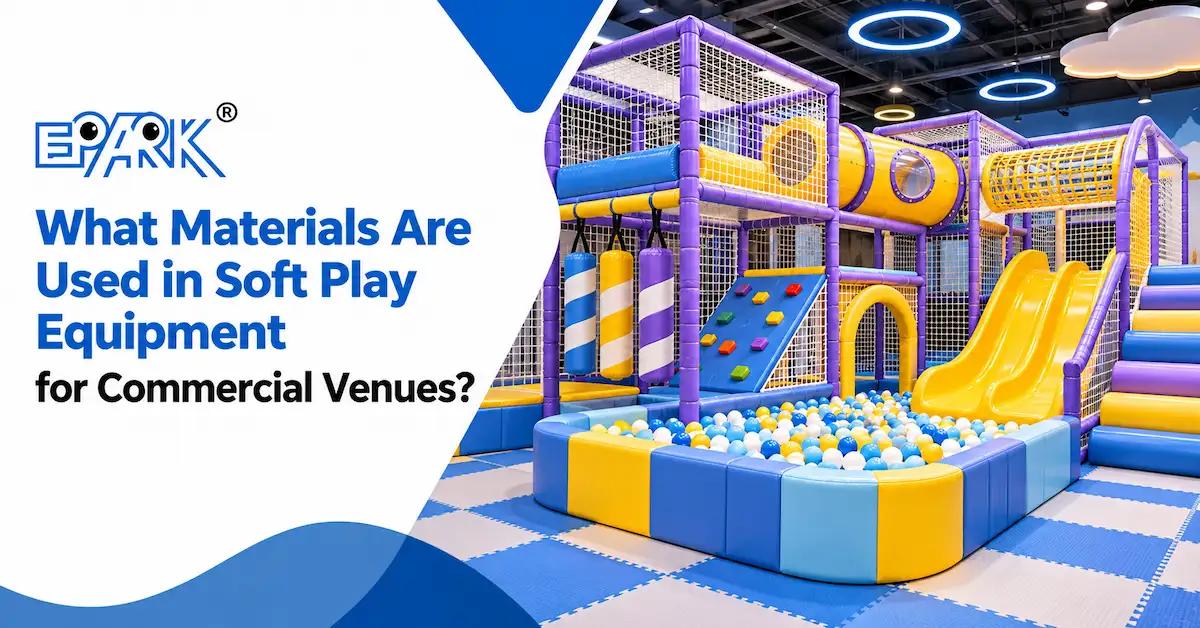
Commercial soft play equipment is usually a material system, not a single material. The structural frame may use hot-dip galvanized cold-rolled steel pipes; impact zones may use high-density foam or EVA foam; outer coverings may use soft PVC or another specified upholstery; floors may use EVA or PU; slides may use FRP or a composite resin; and nets, railings, connectors and protective trim complete the assembly. The right purchase decision is not to choose the longest material list. It is to verify which material is used in each component, how it is cleaned, what evidence covers it and how it can be replaced.
People searching what materials are used in soft play equipment often want a short list. A project buyer needs a more useful answer: which layers touch children, which parts carry loads, which surfaces receive repeated cleaning, which components are hidden behind upholstery, and which documents prove that the quoted configuration matches the proposed use? This article is written for FEC owners, mall developers, schools, hotels, kids cafes, distributors and architects who need to compare supplier specifications rather than copy a generic materials paragraph.
1. Read a Soft Play System From the Inside Out
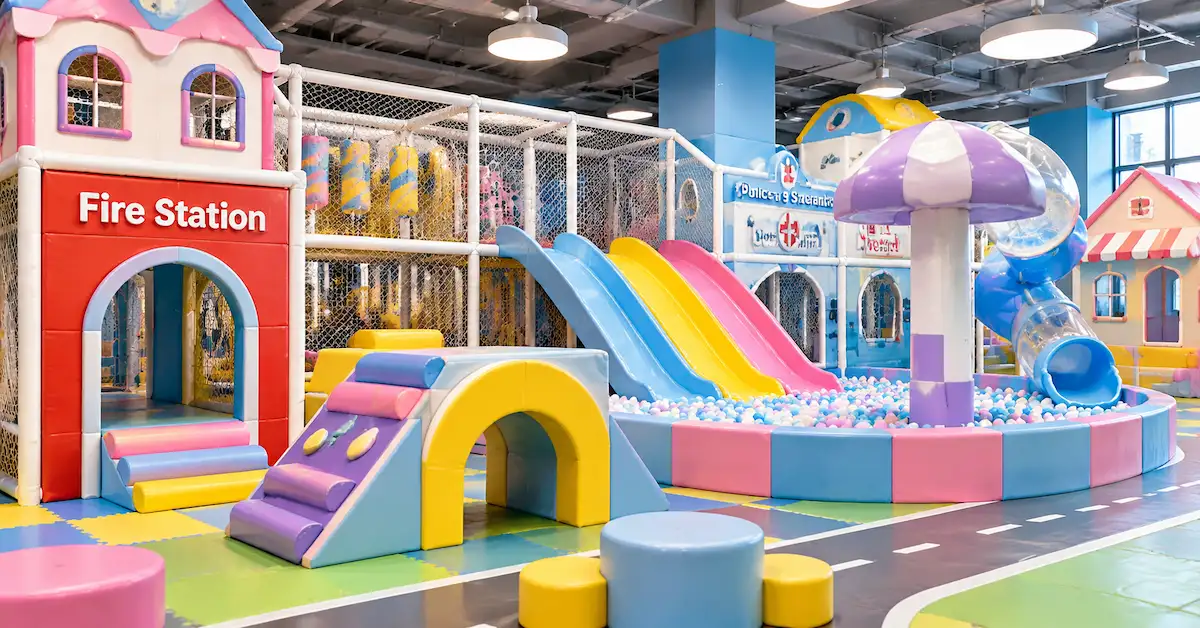
Start with the load path. A child may see a colorful padded wall, but the quotation should identify what supports it, what protects the contact surface and what separates one component from another. Read the specification in layers: structure, impact core, outer cover, surface finish, connection hardware, floor protection and loose parts. This order helps a buyer notice gaps that are hidden by a polished 3D rendering.
Layer 1: Structural frame and support
Commercial systems often use steel pipes or other structural members behind soft surfaces. EPARK publicly references hot-dip galvanized cold-rolled steel pipes in its material information. Galvanizing is a finish description, not a complete structural calculation. Ask where the pipes are used, how the frame connects to the floor or platform, how joints are protected, and which drawing identifies the member. If the site is humid, coastal or close to a pool, ask how the selected finish and inspection routine address the environment.
Layer 2: Impact-absorbing core
High-density foam is used in many commercial soft play elements because it can provide shape support as well as cushioning. EVA foam may appear in flooring, soft blocks or protective components. Do not treat “high density” as a performance grade unless the supplier provides a project-specific specification. Ask whether the foam is open-cell or closed-cell where relevant, how the core is protected from moisture, and whether a damaged block can be replaced without removing an entire route.
Layer 3: Outer cover and touch surface
Soft PVC sleeves or PVC-coated materials are common outer layers for cushions, protective padding and decorative surfaces. The cover controls touch, color, cleaning and wear at the point of contact. Ask for seam locations, edge finishing, resistance to the venue’s cleaning products and the method for replacing a torn or heavily worn panel. A cover that looks attractive in a sample may still be difficult to service if it is permanently bonded or hidden beneath a structural connection.
Layer 4: Floor, nets, rails and transitions
EVA or PU flooring, safety nets and railings are not decorative afterthoughts. They manage transitions between play and circulation, protect the floor, guide movement and help parents understand the boundary of a zone. Request the flooring scope by area, the net and railing locations, and a detail showing how the edge of a platform meets the floor. “Flooring included” should state the material and the square area or zone, not only a general promise.
2. Material Comparison for a Commercial RFQ
The table below is a procurement map. It does not claim that every supplier uses identical grades or that one material is universally superior. Its purpose is to turn a material name into a question a supplier can answer with a drawing, sample, test report or maintenance instruction.
| Material or component | Typical role in soft play | What it affects in operation | Evidence to request |
|---|---|---|---|
| Galvanized steel pipe | Hidden frame, posts, rails or supports. | Load path, corrosion environment, joint inspection and anchoring. | Structural drawing, finish description and connection detail. |
| High-density foam | Platforms, obstacles, padded walls and climbing shapes. | Shape retention, impact comfort, repair and replacement. | Component schedule, foam specification and replacement method. |
| EVA foam | Floor tiles, blocks, edge protection and soft accessories. | Cleaning, compression, edge wear and color replacement. | Flooring map, material statement and cleaning guidance. |
| Soft PVC or PVC-coated cover | Upholstery, cushions, posts and decorative panels. | Touch, seam wear, stain removal and artwork durability. | Cover sample, seam detail and compatible cleaner list. |
| PU flooring or coating | Specified floor zones or protective surfaces. | Slip management, cleaning, repair and transition detail. | Area schedule and surface maintenance instruction. |
| FRP or composite-resin slide | Slide body or molded transition. | Surface continuity, edges, cleaning and installation interface. | Product drawing, material statement and inspection point. |
| Safety net and railing | Route boundary, platform protection and separation. | Visibility, tension, damage inspection and replacement. | Net/rail location plan and fixing details. |
| Connectors and fasteners | Join frames, panels, covers and replaceable elements. | Loosening risk, access for inspection and spare-part identification. | Hardware schedule, protective caps and torque/inspection notes. |
3. Foam Is Not One Answer: Match the Core to the Activity
A buyer should classify foam by the job it performs. A soft block that children lift and move is not the same as a fixed climbing platform. A low floor tile has a different exposure to compression, moisture and cleaning than a vertical padded column. Use the activity list to ask which foam component is proposed and why.
Fixed platforms and climbing forms
These elements need shape stability, protected edges and an attachment method that does not create a hard contact point. Ask whether the cover can be opened for inspection, how the foam is supported, and whether the supplier has a replacement code for the complete unit or only for the outer cover. If a platform is part of a raised route, verify the underlying structure separately from the visible padding.
Blocks, cylinders and movable pieces
Loose soft pieces are frequently handled, stacked, dragged or placed against walls. Their risk is not only impact; it is loss, contamination and inconsistent placement. Request an inventory list, storage location and replacement policy. If the venue will sanitize the pieces daily, confirm whether the cover, seam and foam tolerate that routine.
Edge protection and transition pads
Transition pads sit where children change direction, climb, land or leave a slide. Ask for a cross-section or close-up detail. The important question is not whether the piece is “soft,” but whether the transition remains continuous, whether the cover stays secured and whether staff can identify damage during a normal opening check.
Supplier evidence rule: If the quotation says “premium foam,” ask for the component name, material specification, location on the drawing and the inspection or replacement instruction. A marketing adjective is not a material record.
4. Covers, Seams and Cleaning Compatibility
Soft play hygiene is controlled at the surface and seam level. PVC-coated covers can be practical for commercial cleaning, but the exact chemical compatibility depends on the product and finish. Ask the supplier to identify approved cleaning agents, dilution limits, drying requirements and areas that should not be saturated. If the venue uses disinfectants selected by a local health or housekeeping team, send the product data sheet before production.
What to inspect on a cover sample
- Surface texture and whether dirt can sit in a grain or emboss.
- Seam position relative to knees, hands, slide landings and climbing edges.
- Corner radius and whether the cover can be pulled tight without exposing a hard edge.
- Fastening method and the time required to remove or replace the cover.
- Color and artwork approval under the venue’s actual lighting.
- Label or code that lets staff identify the component when requesting a spare.
For ball pools and toddler areas, add the basin wall, balls, entry mat and surrounding floor to the same review. For multi-level systems, include enclosed tunnels, crawl areas and slide landings. A material that is easy to wipe on an open panel may be difficult to dry inside a low-ventilation tunnel. This is why a manufacturer should receive the operation’s cleaning routine before the final materials are approved.
5. Floors, Slides and Hard Components Need Their Own Specification
Soft play does not mean every component is foam. Floors may use EVA or PU; slides may use FRP or composite resin; interactive panels may include plastics, laminates, wood-based boards or electronic parts; and the hidden structure may be steel. Each material has a different inspection and replacement logic.
Flooring
Ask for a floor plan that shows which zones are supplied by the playground manufacturer and which are left to the local contractor. Confirm thickness or product code only where the supplier can provide it for the selected system. Review edge ramps, thresholds, joints, water exposure and the relationship between flooring and fire exits. A soft floor that stops at the equipment perimeter can still leave a hard landing outside the route.
Slides
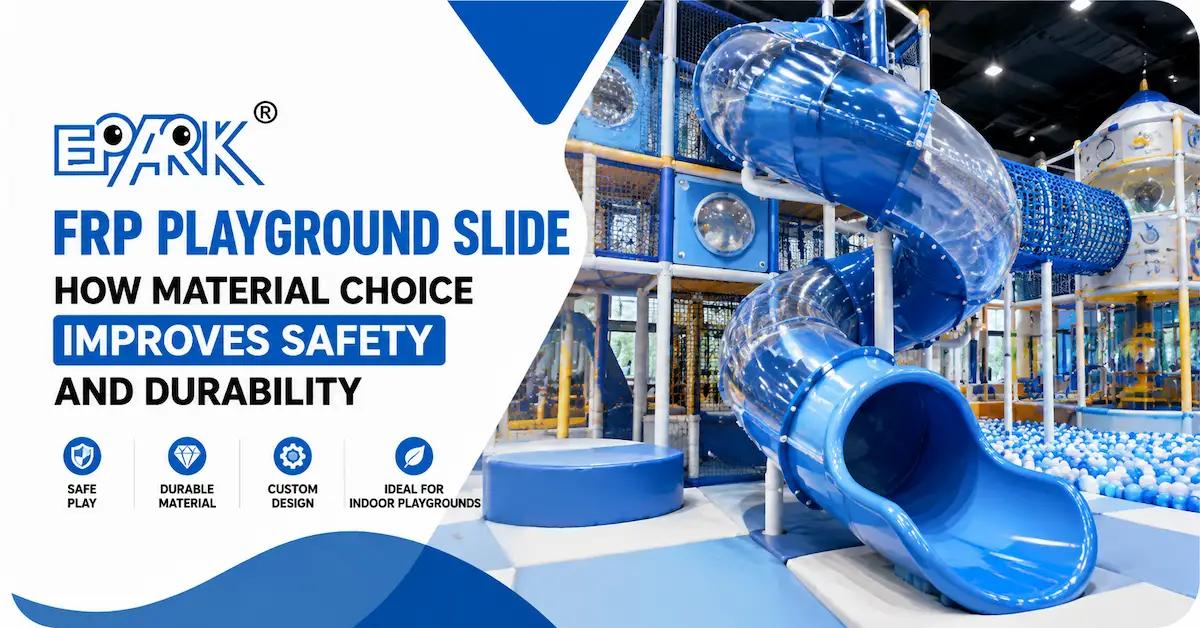
FRP or composite-resin slides require a continuous, cleanable surface and a secure connection to the platform and landing. Ask how the material is finished, how edges are checked, and whether the slide body can be removed without dismantling unrelated equipment. If the venue is humid, exposed to salt air or cleaned with strong chemicals, request environment-specific maintenance guidance.
Interactive and decorative parts
Plastic windows, mirrors, sensory panels and decorative shapes should be listed individually. Ask whether they are impact-resistant, how they are fixed and how staff identify a cracked or loose part. A decorative feature that blocks access to a frame or seam creates an inspection problem even when the visible surface is attractive.
Do not combine all plastics into one line. A slide body, a viewing window, a ball-pool ball and a decorative panel have different functions and replacement paths. Request a component-level description where the part affects safety, cleaning or service.
6. Safety Documents: Match the Paper to the Product
Material evidence and certification evidence are related but not identical. A certificate or test report may apply to a product family, a component, a material or a specific configuration. EPARK public pages reference standards and certificates such as EN1176, ASTM, CE and SGS in different contexts. A responsible buyer should ask which document covers the chosen equipment, destination market, installation arrangement and date.
Document questions for a supplier
- What product name, drawing number or model does the document identify?
- Which material or component was tested?
- Who issued the document and when?
- What standard or test method is named?
- Does the scope include custom artwork, altered dimensions or added modules?
- What installation assumptions must remain unchanged?
- Which documents will be included in the handover pack?
If the public certificate page shows an image without a full scope, treat it as an evidence entry point rather than a universal claim. Put “document to confirm” in the RFQ until the supplier returns the applicable file. This protects the buyer from using a material or certificate statement beyond the scope it actually supports.
7. Design for Replacement, Not Only for Opening Day
Commercial equipment is operated, cleaned and occasionally damaged. The material decision should therefore include a replacement route. Ask whether the supplier can identify a cover, foam block, net, floor tile, slide or connector by a drawing number or photograph. Clarify whether a replacement requires the entire module, only the outer layer or a local contractor.
Build a spare-parts map
- High-touch wear: entry edges, handholds, steps, slide landings and ball-pool boundaries.
- Cleaning exposure: floor tiles, basin surfaces, covers, seams and enclosed play elements.
- Loose inventory: balls, blocks, sensory pieces and removable panels.
- Structural protection: netting, rail caps, protective covers and visible fasteners.
- Theme layer: printed panels, sculpted foam, signs and replaceable graphics.
Do not assume that every spare should be purchased immediately. Instead, ask the supplier to mark recommended opening spares, normal reorder items and special-order items. The material schedule, handover photos and component codes should use the same names as the quotation. This simple consistency reduces delays when a venue changes managers or opens a second site.
8. How to Compare Two Soft Play Suppliers
Supplier comparison should be performed on a common matrix. One company may list materials in detail while another uses a short marketing phrase. The shorter phrase is not automatically cheaper or worse; it is simply less decision-ready until clarified.
| Comparison line | Supplier A answer | Supplier B answer | Buyer decision |
|---|---|---|---|
| Structural material and finish | Model, finish and drawing reference. | General “metal frame” wording. | Request component-level clarification. |
| Foam specification | Component list and replacement method. | “High-density foam” only. | Ask where the claim applies. |
| Cover and seam | Sample, seam detail and cleaner guidance. | Color chart only. | Request maintenance evidence. |
| Flooring scope | Zone plan and material code. | “Floor included.” | Define supplied area and edges. |
| Slide and plastic parts | FRP/composite description and fixing detail. | “Safe plastic.” | Request exact component evidence. |
| Certificates | Document linked to product scope. | Certificate image without scope. | Mark pending until verified. |
| Spare parts | Codes, photos and reorder route. | After-sales promise only. | Ask for a handover pack. |
Use EPARK’s soft play category as a product-family reference, then ask for the specific material schedule for your layout. The category page can show the design direction; it cannot replace a project drawing or product-level evidence.
Use samples without confusing them with final approval
A fabric swatch, foam sample or flooring tile can answer useful questions about touch, color and cleaning, but it does not prove that the final assembly will use the same construction. Label every sample with its material name, supplier, date and intended component. Then ask the manufacturer to confirm whether the sample represents the production batch, a substitute, or only a visual reference. Keep the approved sample with the drawing revision and photograph the installed component during handover. This simple chain of evidence helps the venue resolve later questions about a cover, floor or panel without relying on memory or a screenshot from a sales conversation.
9. The Material RFQ Checklist
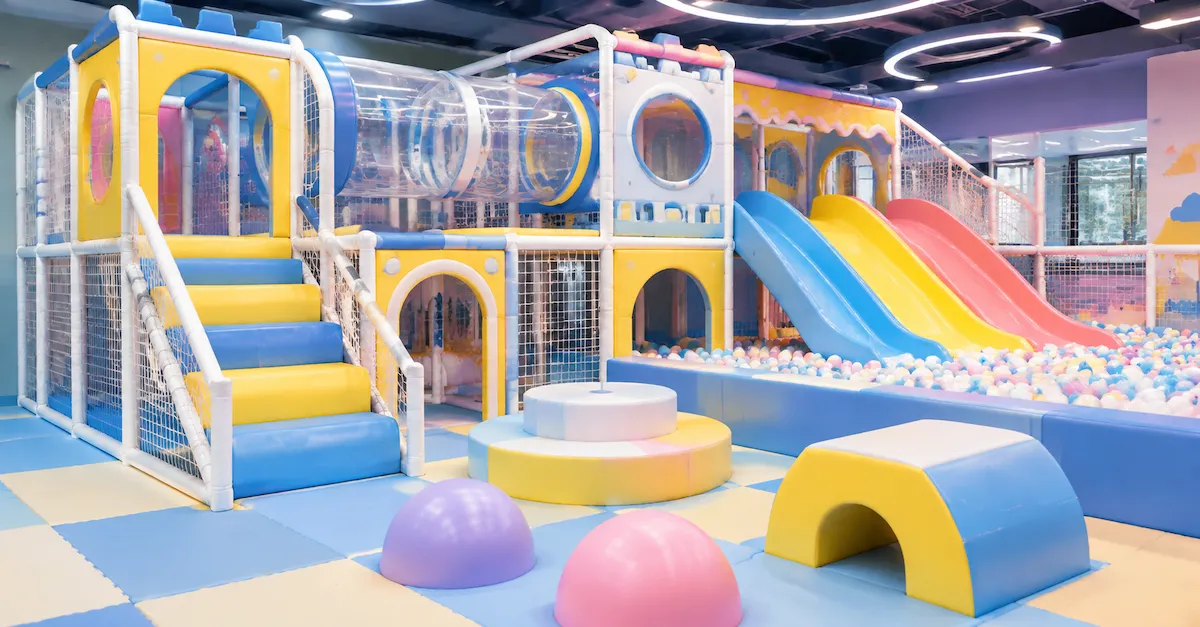
Send these fields with the measured plan and target age range. The list is designed to make a quote answerable without forcing the supplier to guess.
- Venue type, destination country and operating environment.
- Floor dimensions, clear height, columns, doors, exits and delivery access.
- Target ages, mixed-age rules and parent or staff supervision model.
- Activity list: climbing, crawling, sliding, ball pool, sensory panels, role play and quiet zones.
- Material schedule requested by component: frame, foam, cover, floor, slide, net, railing and loose parts.
- Cleaning products, sanitation frequency, drying method and housekeeping responsibility.
- Required drawings, samples, certificates, test reports and inspection records.
- Theme colors, artwork files, logo rules and approval owner.
- Replacement parts, recommended opening spares, packaging and reorder identification.
- Installation, handover, warranty wording and items that remain to be confirmed.
EPARK’s customization process provides a useful sequence for this RFQ: consultation, design, material selection, custom manufacturing, inspection, packaging, delivery, installation and support. Ask the project team to keep the material schedule synchronized with every drawing revision.
10. FAQ About Soft Play Materials
What materials are used in soft play equipment?
Common material families include structural steel pipes, high-density foam, EVA foam, soft PVC or PVC-coated covers, EVA or PU flooring, safety nets, railings, plastics and FRP or composite-resin slides. The exact combination depends on the layout and component. Ask the supplier to bind each material to the approved drawing.
Is high-density foam the same as EVA foam?
No. They can serve different roles. High-density foam may support padded structures or obstacles, while EVA foam is often used for flooring, blocks or protective parts. The supplier should state where each material is used and how it is maintained.
Is PVC safe for commercial soft play?
Safety depends on the specified product, manufacturing quality, use conditions, cleaning method and applicable market requirements. Request the cover specification, chemical compatibility and product-level documentation rather than relying on the word “PVC” alone.
What flooring is best for a soft play area?
There is no universal answer. EVA or PU may be proposed for different zones, but the correct choice depends on activity, impact, cleaning, moisture, transitions and local requirements. Ask for a flooring map and edge detail.
How should a supplier prove material quality?
Request a material schedule, samples where useful, component drawings, inspection records, applicable certificates or test reports and a handover maintenance guide. The evidence should identify the product scope and not only show a generic certificate image.
Can EPARK customize the materials and colors?
EPARK publicly describes customized indoor playground and soft play solutions. The permitted material, color, artwork and structural changes depend on the project and should be confirmed during the design and material-selection stages.
Are materials the only factor in soft play safety?
No. Layout, age zoning, supervision, clearances, installation, inspection, cleaning and operating rules also affect safety. Materials are one part of a complete system and should be reviewed with the drawing and handover process.
Conclusion
The answer to “what materials are used in soft play equipment” is useful only when it helps a buyer make a verifiable purchase. Start with the structure, then identify the foam, cover, floor, slide, net, railing and connector by component. Confirm cleaning compatibility, replacement access and the scope of every certificate. A professional soft play RFQ should show what is included, what remains to be confirmed and which document proves the statement. That approach produces a clearer quotation and a more maintainable venue than a generic materials list.
General Disclaimer
All data on https://www.eparki.com is for general guidance only. As a leading indoor playground manufacturer and trampoline supplier, EPARK strives for accuracy but gives no express or implied warranty regarding completeness, performance or project fitness. Product specs, designs and results may vary with use and customer requirements. Buyers must verify technical details, compliance and suitability before purchase. EPARK OEM/ODM is not liable for any direct, indirect or consequential damages arising from site use. For custom solutions, contact our manufacturer and supplier team via the Contact page.
Intellectual Property
Text, images, videos, CAD files and software are Guangzhou EPARK Electronic Technology Co., Ltd. All rights reserved. No part may be copied, republished or used commercially without prior written permission. We will pursue legal action for copyright or design-patent infringement.
Trademarks
"EPARK", the EPARK logo and related graphics are registered trademarks of Guangzhou EPARK Electronic Technology Co., Ltd. Unauthorized use in ads, domain names or packaging is prohibited.
Governing Law
These terms are governed by the laws of the People's Republic of China.
Contact
Questions? Email sales@nanyuetech.com or WhatsApp +86 139 0307 9263.