Start With the Venue Brief, Not the Machine Count
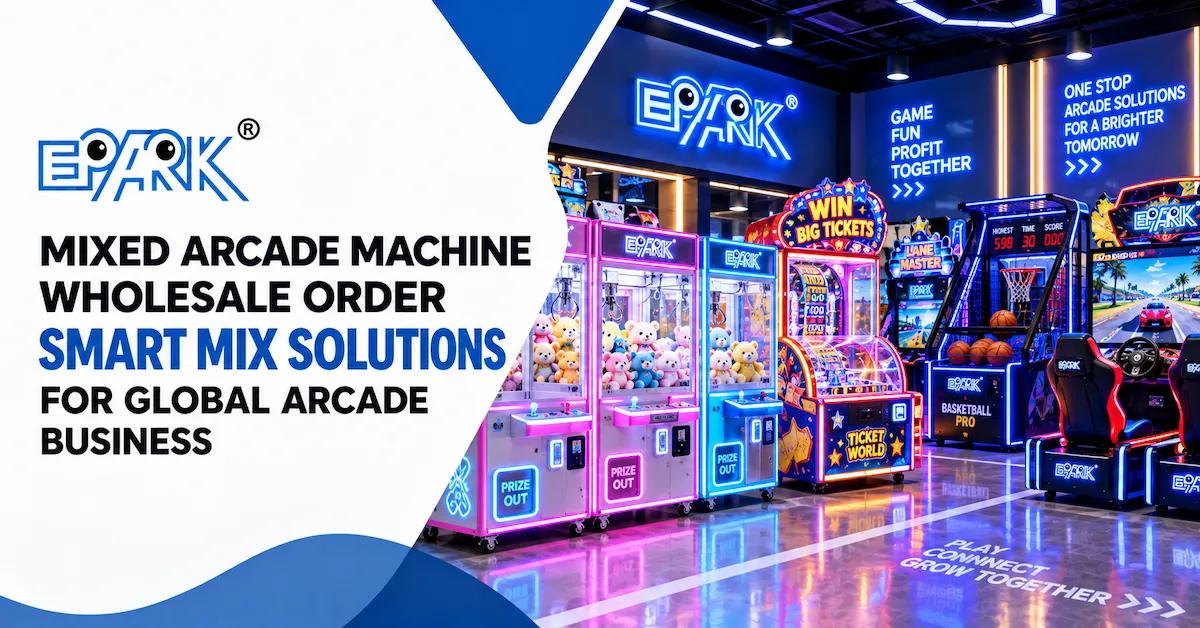
The first decision when purchasing wholesale commercial arcade equipment should be what the machines need to do for your business—not how many units will qualify for a discount. A family entertainment center, or FEC, needs an equipment mix suited to its visitors and layout; a distributor needs products that match customer demand and can be supported locally. Wholesale purchasing can involve repeated quantities of one model or a coordinated order containing several categories, but buying in volume is not automatically the right starting point for an untested location or unfamiliar product. EPARK’s wholesale arcade purchasing guide makes this distinction between bulk buying, mixed orders and initial product validation. Begin with a written brief covering the venue, intended users, available space, operating model and purchasing budget. Use that brief to decide which machines belong in the order.
Compare Machine Categories by Their Role in the Venue
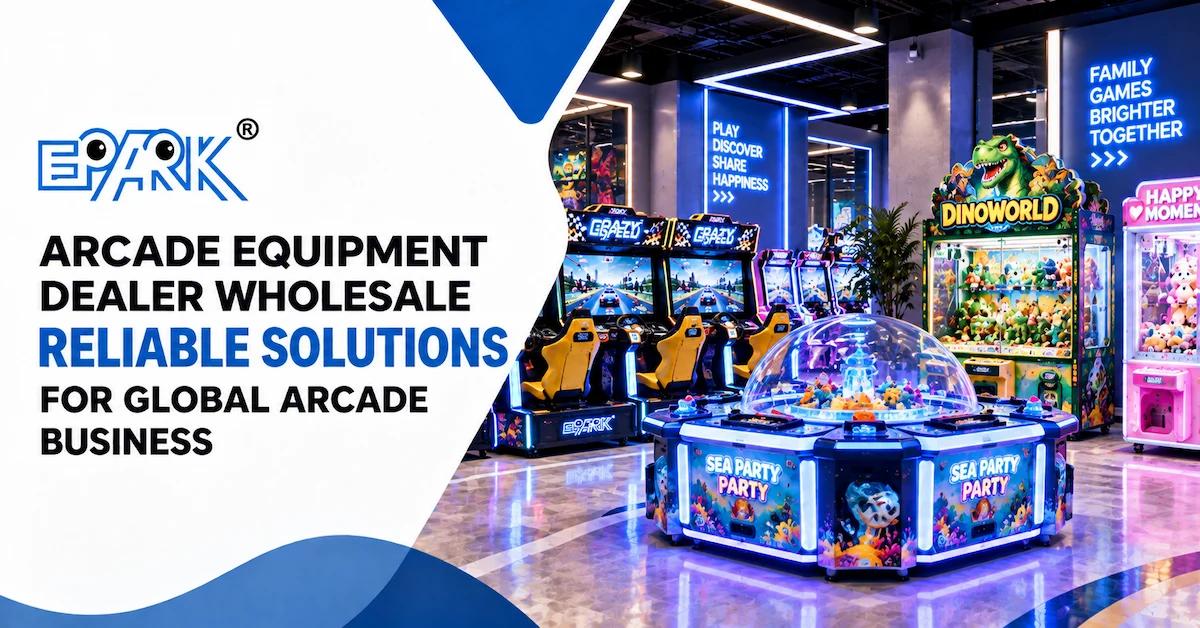
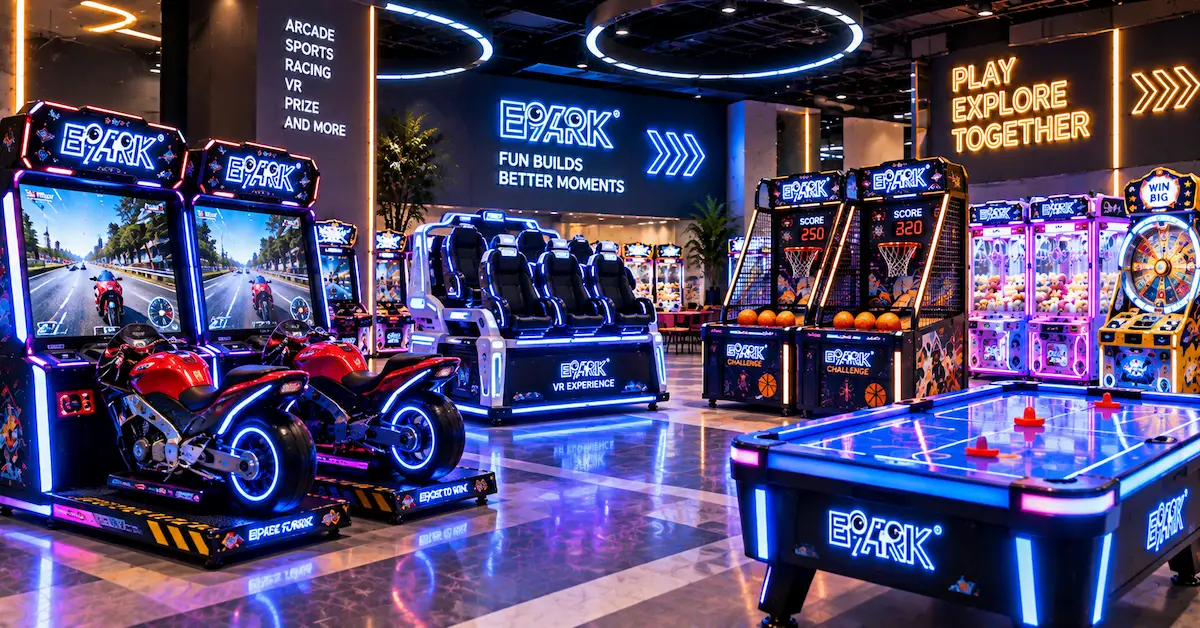
A useful wholesale commercial arcade equipment package should offer deliberate choices rather than several cabinets that look different but serve almost the same purpose. Commercial arcade categories include prize machines, redemption games, racing machines, sports games and other interactive equipment, with different controls, operating arrangements and service requirements. Use the following comparison to shortlist categories before requesting individual models. This is a category-selection framework, not a published specification or fixed EPARK package; dimensions, configurations, availability and prices require model-specific confirmation. For a broader starting point, review EPARK’s commercial arcade equipment selection guide.
| Equipment category | Venue role to consider | Features to evaluate | Main limitation or cost factor to check |
|---|---|---|---|
| Claw and prize machines | A dedicated prize-game section or compact attraction area | Crane operation, prize dimensions, operator access and payment settings | Prize replenishment, mechanism configuration and cabinet access |
| Ticket redemption games | Games connected to a venue’s reward program | Scoring, ticket or electronic reward output, settings and dispenser access | Integration with the selected reward system and prize-management process |
| Racing machines | Individual driving experiences or competitive multiplayer play | Steering, pedals, seats, displays and confirmed linking capability | Space per station, software configuration and control-system servicing |
| Basketball and sports machines | An active-play section | Scoring sensors, game timing, ball return and structural details | Operating space, surrounding circulation and mechanical maintenance |
| Video arcade cabinets | A screen-based game section | Display, controls, game package, language and payment configuration | Content scope, control replacement and cabinet service access |
| Interactive or VR equipment | A separately planned interactive attraction | Tracking hardware, software, operating instructions and support arrangements | Model-specific space, staffing, content and technical-support requirements |
Plan the Space Needed to Play, Wait and Maintain Equipment
Do not calculate the quantity of wholesale commercial arcade equipment by dividing the room area by cabinet footprints. For each shortlisted model, request the installed dimensions and the manufacturer’s operating and maintenance-space requirements, then review the arrangement with the project designer. A racing seat, service door, basketball play position or waiting group must be considered alongside the cabinet itself. EPARK’s shopping mall FEC planning guide discusses equipment selection in relation to floor area, visitors and circulation. A practical planning method is to assign every machine a proposed position and then trace three routes: the customer’s route between attractions, the operator’s route for collection or replenishment, and the technician’s route for service. Where these routes conflict, revise the arrangement before approving quantities. Equipment should fit the operating layout, not merely the drawing’s empty spaces.
Build a Specification Sheet for Every Selected Model
Treat the specification sheet as the connection between the quotation, approved sample and delivered machine. EPARK’s importer guidance identifies model numbers, dimensions, functions, components, accessories and electrical configuration as pre-order confirmation points. For wholesale commercial arcade equipment, record these details by model rather than attaching one general description to the whole shipment. The table below is a procurement template: it identifies information to obtain, not technical values that apply to every machine.
| Specification area | Information to record |
|---|---|
| Product identification | Model code, approved configuration revision, quantity and serial-number format |
| Installed size | Assembled length, width and height; operating positions; required service access |
| Shipping information | Packed dimensions, package count, net weight, gross weight and detachable sections |
| Electrical configuration | Rated input voltage, frequency, power requirements and supplied plug |
| Cabinet construction | Material specification, panel thickness, reinforcement, finish and removable panels |
| Player interface | Display configuration, controls, seats, sensors and multiplayer arrangements where applicable |
| Payment and rewards | Payment hardware, interface, credit settings and ticket or electronic reward configuration |
| Software | Supplied game package, version, language options, update arrangements and commercial-use documentation |
| Supporting documents | Manuals, wiring information, parts identification and relevant model-specific test documentation |
Inspect Materials and Assembly Beyond Cabinet Appearance
A polished cabinet photograph cannot establish how the equipment is assembled or maintained. During sample review, ask to see the actual construction specification and the internal arrangement, including major joints, reinforcement, fasteners, cable routing and access panels. EPARK’s arcade cabinet engineering guide emphasizes these details alongside display mounting, ventilation space and access to payment and power components. Make the review practical: ask a qualified technician to demonstrate how a designated replaceable component is identified and accessed using the supplier’s instructions. Record whether unrelated sections must be removed and whether the documentation matches the machine. This provides a more useful basis for comparing workmanship than descriptions such as “premium materials” or “commercial quality” without supporting details.
Test Payment and Rewards as a Complete Operating System
Specify the intended payment arrangement before production, particularly when several machine categories must work within one venue. Confirm the reader or acceptor, wiring interface, credit settings, installation responsibility and any separate integration work. EPARK’s coin-operated equipment guide distinguishes payment recognition, credit allocation, game activation and the next transaction; it also recommends testing the agreed payment setup rather than gameplay alone. For a proposed acceptance test, follow a transaction through the complete sequence, including the relevant score, ticket or reward output where fitted. Record the hardware and settings used during that test. A cabinet opening for a card reader is not equivalent to a verified cashless installation, and a game running in service mode does not establish that customers can purchase and complete a normal session.
Compare the Complete Order Cost Before Negotiating Unit Price
Compare wholesale commercial arcade equipment quotations only after aligning what they include. A machine price may leave payment configuration, branding, packaging, initial spares or installation support outside the quoted scope. EPARK’s game machine cost and maintenance guide also identifies subsequent expenses such as replacement components, technical labor, electricity and prize replenishment. Separate your purchasing worksheet into three sections: equipment and customization, delivery and commissioning, and operating support. Obtain destination charges from the relevant logistics or local service provider rather than assuming the factory quotation covers them. Then identify optional attractions that can be postponed without disrupting the core venue plan. This makes budget reductions deliberate: you can remove or defer a machine while preserving the payment system, installation work and support items needed for the remaining equipment.
Separate Branding Changes From Technical Customization
A request for matching cabinet graphics is different from a request to change controls, electronics or software behavior. EPARK’s arcade OEM development guide describes customization involving appearance, branding, hardware and software settings, with design and sample approval forming part of the development discussion. For your order, separate visual changes from functional changes and obtain confirmation of what each selected model can support. Approve artwork, labels and colors independently from the technical configuration so that a late graphic revision does not obscure an unrelated component substitution. Where a proposed change affects operation, request an updated review or test plan before bulk production. Also clarify the supplied game content, artwork permissions and update arrangements; private labeling should not leave these questions unanswered.
Confirm Capacity and Timing for the Actual Mixed Order
For a mixed order, request a schedule by model rather than one general factory lead-time statement. Ask which machines are manufactured in-house, assembled or sourced, and who is responsible for coordinating their completion. EPARK’s arcade manufacturer evaluation guide recommends checking the actual production environment and manufacturing scope rather than relying on a broad company presentation. In your purchasing plan, distinguish sample approval, artwork approval, component readiness, production, inspection and shipment preparation. Then ask what happens if one customized item finishes later than the rest: will the order wait, ship in stages or require a revised configuration? Treat these as project-specific decisions. A general factory-capacity figure does not establish that every machine in your proposed order can meet the same dispatch date.
Agree on Quality Checks and Model-Specific Documentation
Define how the wholesale commercial arcade equipment order will be accepted before production starts. Request the inspection scope, acceptance criteria and reporting method for controls, scoring, sensors, displays, sound, lighting, payment operation and relevant mechanical functions. These are among the inspection areas discussed in EPARK’s manufacturing guidance; the actual checks should match the selected machines. Separately, request documents that identify the model and electrical configuration being supplied, then have their relevance to the destination project reviewed by an appropriate technical adviser. Do not use a general certificate image as a substitute for that review. For an extended-operation test, ask for its duration, conditions and recorded result rather than treating the word “tested” as sufficient evidence. Keep unresolved documentation or inspection questions visible in the purchasing record.
Coordinate Packing, Installation and Opening-Day Readiness
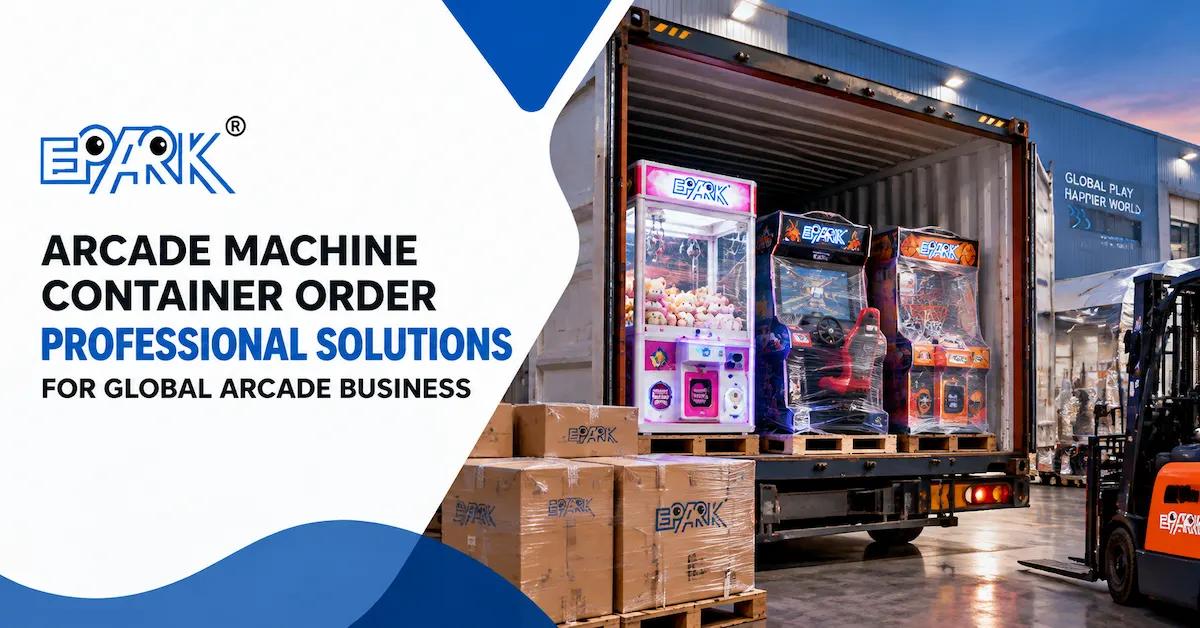
The shipment plan should reflect the approved equipment list, packed measurements and delivery conditions. EPARK’s arcade equipment export guide covers packaging protection, shipping preparation and the confirmation of accessories and product information. Extend that preparation to the receiving site: check unloading arrangements, access routes, doorways, elevators and any sections requiring reassembly. Ask for machine-specific unpacking and installation instructions, and identify who will complete positioning, connection, configuration and commissioning. A useful handover record should distinguish “received,” “assembled,” “tested” and “accepted for operation” rather than treating arrival as completion. Keep keys, manuals, cables and supplied accessories identifiable by machine so that a missing item can be traced without opening unrelated cartons.
Organize Spare Parts Around the Machines You Actually Buy
Prepare an initial spare-parts discussion around the approved equipment list, not a generic accessory bundle. Ask the supplier to identify serviceable components, model-specific items, replacement instructions and expected replenishment arrangements. EPARK’s maintenance guidance treats component availability and troubleshooting support as part of the ownership decision. For your internal records, associate each part with a model and configuration revision, and separate stocked spares from warranty replacements. The warranty discussion should cover what is included, how claims are assessed, who authorizes replacement and who pays the relevant freight or local work. For later purchases, attach the approved configuration to the reorder and request disclosure of substitutions before production.
Prepare a Wholesale Project Brief for EPARK
EPARK’s company profile identifies Guangzhou EPARK Electronic Technology Co., Ltd. as a Guangzhou-based company established in 2012, with arcade machines and game machines included in its wider indoor entertainment business. Its stated service scope includes product development, manufacturing, sales and after-sales support. For buyers sourcing wholesale commercial arcade equipment, the next step is a project-specific discussion rather than assuming a fixed package or identical terms across all products. Prepare your venue type, floor plan, target visitors, preferred categories, estimated quantities, destination, payment requirements, budget and opening schedule. Ask for a proposal separating standard machines, optional customization, delivery preparation and support arrangements. Confirm the current model list and responsibilities for each product line before placing an order.
Frequently Asked Questions About Wholesale Commercial Arcade Equipment
What should a first wholesale arcade order include?
Start with machines that satisfy identified customer or venue needs, together with the agreed accessories, documentation and support items. Keep experimental attractions separate from the essential opening list, and consider sample validation before committing heavily to unfamiliar models.
Is a mixed-machine order better than buying one model in bulk?
Choose according to the purchasing objective. A venue project may need different experiences, while a distributor fulfilling established demand may prioritize one configuration. Compare the proposed quantities, service requirements and inventory exposure before deciding.
How many arcade machines can fit in my venue?
Determine the quantity from a reviewed layout, not total floor area alone. Obtain each model’s installed dimensions and operating requirements, then account for circulation, waiting positions, maintenance access and the venue’s other functions. Confirm the final arrangement before ordering.
How should I request wholesale commercial arcade equipment prices?
Send a defined equipment list or venue brief and ask for an itemized quotation. Include quantities, configuration, payment requirements, customization, destination and support expectations. Request clarification wherever one price combines several items without showing their scope.
Can every machine use the same cashless payment system?
Do not assume so. Ask the machine supplier and payment-system provider to confirm compatibility for each model, including hardware, interface, settings and integration responsibilities. Arrange testing of the intended configuration before approving bulk production.
Do matching cabinet designs mean the machines share spare parts?
Do not use appearance as a compatibility check. Request part numbers and configuration records, then confirm any proposed shared components with the supplier. Keep purchasing and service records aligned so technicians can identify the equipment actually delivered.
Can equipment be customized with my venue or distributor brand?
Discuss artwork, colors, labels and technical requirements separately. EPARK’s OEM guidance covers several customization directions, but the available changes and approval process should be confirmed for each machine rather than assumed across the entire order.
Should I order a full container immediately?
Use confirmed demand, an approved equipment mix and a reviewed loading plan to make that decision. Avoid adding unvalidated machines solely to fill space. Compare a smaller initial shipment with a larger order using your actual logistics and inventory assumptions.
What should be checked when the equipment arrives?
Match the shipment against the packing list, record its condition and identify accessories before commissioning. Follow the supplier’s installation instructions, document outstanding issues and complete the agreed operating checks before signing off on the machines.
What information does EPARK need to discuss a project?
Provide your location, venue type, floor plan or usable area, target customers, machine categories, quantities, payment system, electrical requirements and intended schedule. Include branding and service expectations so the discussion can address the whole purchasing scope.
Conclusion
A well-planned wholesale commercial arcade equipment order connects the machine mix to the venue, the specification to the quotation, and the shipment to an agreed installation and support plan. Select equipment for clear operating roles, verify payment compatibility, inspect the proposed construction and compare complete costs before increasing quantities. Keep optional attractions separate from essential opening requirements, and resolve model-specific technical questions before production. To develop a purchasing proposal, contact EPARK with your floor plan and equipment requirements, including quantities, destination, payment preferences, budget and target opening date.
General Disclaimer
All data on https://www.eparki.com is for general guidance only. As a leading indoor playground manufacturer and trampoline supplier, EPARK strives for accuracy but gives no express or implied warranty regarding completeness, performance or project fitness. Product specs, designs and results may vary with use and customer requirements. Buyers must verify technical details, compliance and suitability before purchase. EPARK OEM/ODM is not liable for any direct, indirect or consequential damages arising from site use. For custom solutions, contact our manufacturer and supplier team via the Contact page.
Intellectual Property
Text, images, videos, CAD files and software are Guangzhou EPARK Electronic Technology Co., Ltd. All rights reserved. No part may be copied, republished or used commercially without prior written permission. We will pursue legal action for copyright or design-patent infringement.
Trademarks
"EPARK", the EPARK logo and related graphics are registered trademarks of Guangzhou EPARK Electronic Technology Co., Ltd. Unauthorized use in ads, domain names or packaging is prohibited.
Governing Law
These terms are governed by the laws of the People's Republic of China.
Contact
Questions? Email sales@nanyuetech.com or WhatsApp +86 139 0307 9263.