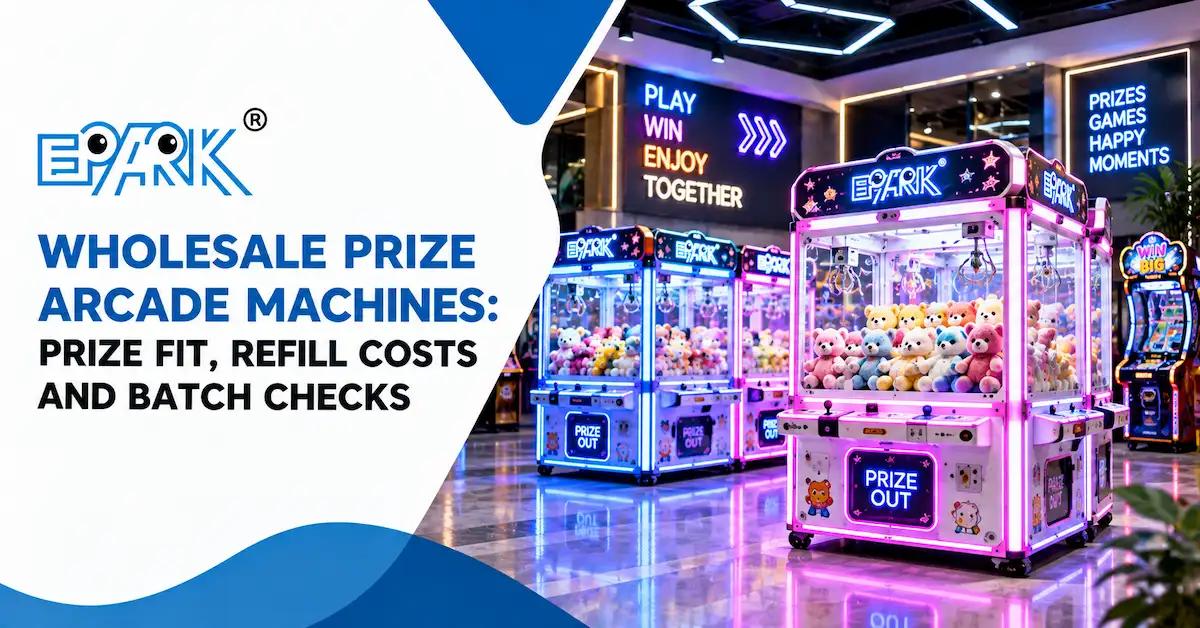
Start With the Prize Plan, Not Just the Cabinet
When purchasing wholesale prize arcade machines, approve the machine and its intended prize stock together. Begin by identifying what customers will receive, how the equipment delivers that reward and how your team will replenish it. A distributor needs a repeatable combination that local customers can operate and support; a family entertainment center, or FEC, needs equipment that fits its reward system and staffing arrangements. Neither requirement is answered by cabinet appearance alone. Treat the buying decision as three connected approvals: the machine configuration, the prize specification and the operating procedure. When any of these remains untested, use a sample or pilot order before extending the same arrangement across an entire venue or distributor portfolio.
Compare How Each Machine Delivers the Reward
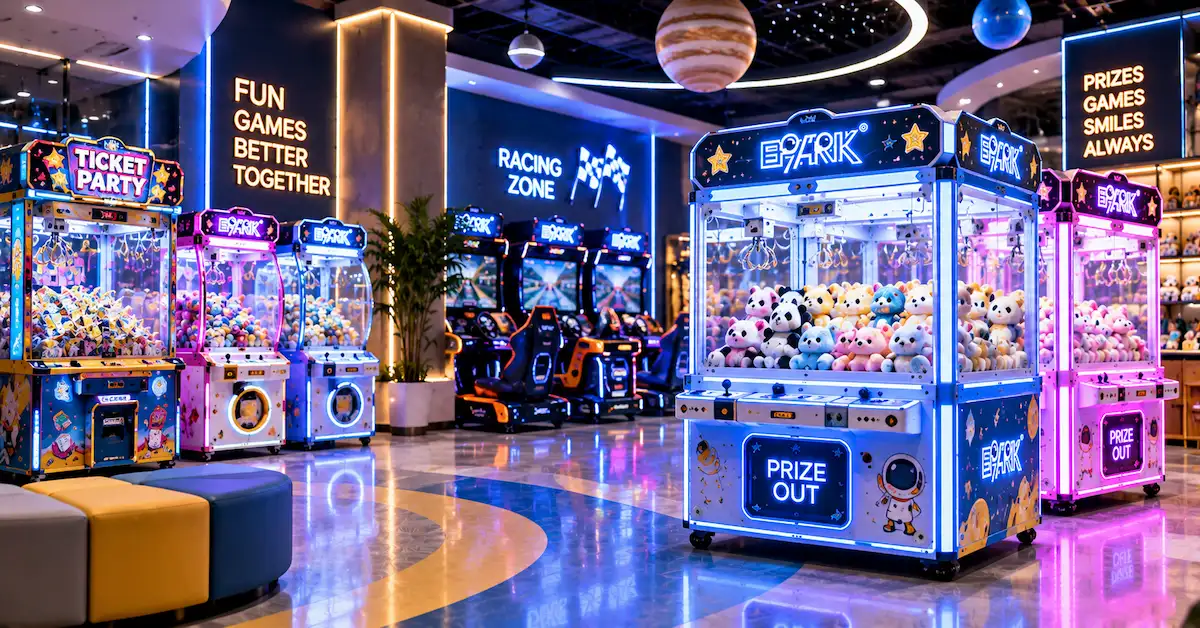
“Prize machine” describes several different equipment formats. EPARK’s prize machine overview discusses claw machines, ticket redemption equipment, capsule machines and interactive prize games. The distinction matters because a directly dispensed item and a reward collected later involve different operating arrangements. Use the following format comparison to shortlist models; it is not a list of confirmed EPARK configurations or published price levels. Obtain current model data before comparing dimensions, accepted prizes and costs.
| Equipment format | Reward arrangement to confirm | Potential fit to evaluate | Main purchasing trade-off |
|---|---|---|---|
| Claw prize machine | A claw handles a physical item inside the cabinet | A dedicated plush or merchandise prize area | Validate the actual prize against the mechanism and delivery opening |
| Ticket redemption machine | Tickets or electronic rewards are exchanged for prizes separately | A venue with an organized redemption process | Include reward-system integration and prize-counter operations in the comparison |
| Capsule-based machine | Confirm whether the item is dispensed through vending or a game outcome | A compact merchandise or capsule area | Verify capsule dimensions, release mechanism and replenishment method |
| Interactive prize game | Confirm whether the game awards a physical item, tickets or another supported reward | A differentiated attraction within an arcade | Establish the complete relationship between gameplay, sensors and reward delivery |
Send Actual Prize Samples Before Approving the Mechanism
For wholesale prize arcade machines that handle merchandise directly, make the proposed prize part of sample approval. Prepare a reference pack containing the actual item, its dimensions, weight, packaging, attached tags and photographs. For plush toys, include the complete toy rather than only its advertised height; for packaged items, submit the final retail pack. A useful validation exercise is to have the supplier demonstrate the item through loading, handling, release and customer collection under an agreed procedure. Record the machine version, settings and stock arrangement used. When comparing two similar-looking prizes, do not assume approval of one establishes compatibility with the other. Ask the engineering team to define acceptable variations and identify changes requiring another check. This is a recommended purchasing method, not a claim that every machine can accommodate every prize.
Create a Machine-and-Prize Specification Sheet
Your specification sheet should describe the equipment and the approved stock as one operating configuration. EPARK’s arcade factory evaluation guide recommends component identification and controlled sample references for bulk purchasing. Extend that approach by attaching the prize reference to each model. The table below is a procurement template—not published EPARK technical ratings—and its values should be completed from the selected machine’s documentation and agreed sample review.
| Specification area | Information to record |
|---|---|
| Machine identity | Model code, configuration revision, quantity and serial-number identification |
| Approved prize | Item reference, dimensions, weight, packaging and supplier-confirmed compatibility limits |
| Prize mechanism | Claw, release unit or other fitted mechanism; relevant component identification |
| Delivery and collection | Outlet dimensions, collection opening and the demonstrated prize-delivery procedure |
| Stock arrangement | Approved loading method, usable capacity and any stock-level restrictions |
| Cabinet construction | Material specification, panel details, finish, viewing panels, doors and locks |
| Electrical configuration | Rated input, frequency, power requirements and supplied plug |
| Payment and reward system | Reader or acceptor, interface, credit settings and reward-output configuration |
| Installation and shipping | Assembled dimensions, operating clearance, service access, packed size and gross weight |
| Documentation | Operating instructions, parts list, wiring information and applicable model-specific test records |
Check Refill Access as Carefully as Player Access
A prize cabinet has to work for the employee who replenishes it as well as the customer who plays it. Review the proposed materials, viewing panels, door alignment, hinges, locks, surface finish and internal component protection. EPARK’s arcade cabinet engineering guide emphasizes actual material specifications, accessible fasteners and practical service openings rather than broad construction claims. During sample review, ask an operator to demonstrate the documented refill procedure and a qualified technician to demonstrate access to an agreed service component. Record which doors open, what clearance is required and whether the instructions match the supplied arrangement. Use these observations when comparing cabinets with similar front-facing designs. A neat exterior should not replace a clear explanation of how stock, payment hardware and mechanical components are accessed.
Test the Transaction Through to Prize Collection
Payment acceptance is only one stage of a working prize machine. EPARK’s coin-operated equipment guide specifically connects payment, credit, crane activation, the play cycle and prize access for claw equipment. For your acceptance test, request the intended payment hardware and follow a transaction through the complete operating sequence. Where a reward is legitimately awarded, verify the corresponding delivery or ticket output. Also ask how the machine and operator should respond to an interrupted cycle, unavailable stock or a delivery fault; do not assume automatic detection or recovery is included. Distinguish a normal game outcome from a mechanical failure in the inspection record. Gameplay in service mode does not establish that the customer-facing payment and reward sequence has been verified.
Include Prize-Specific Checks in Batch Acceptance
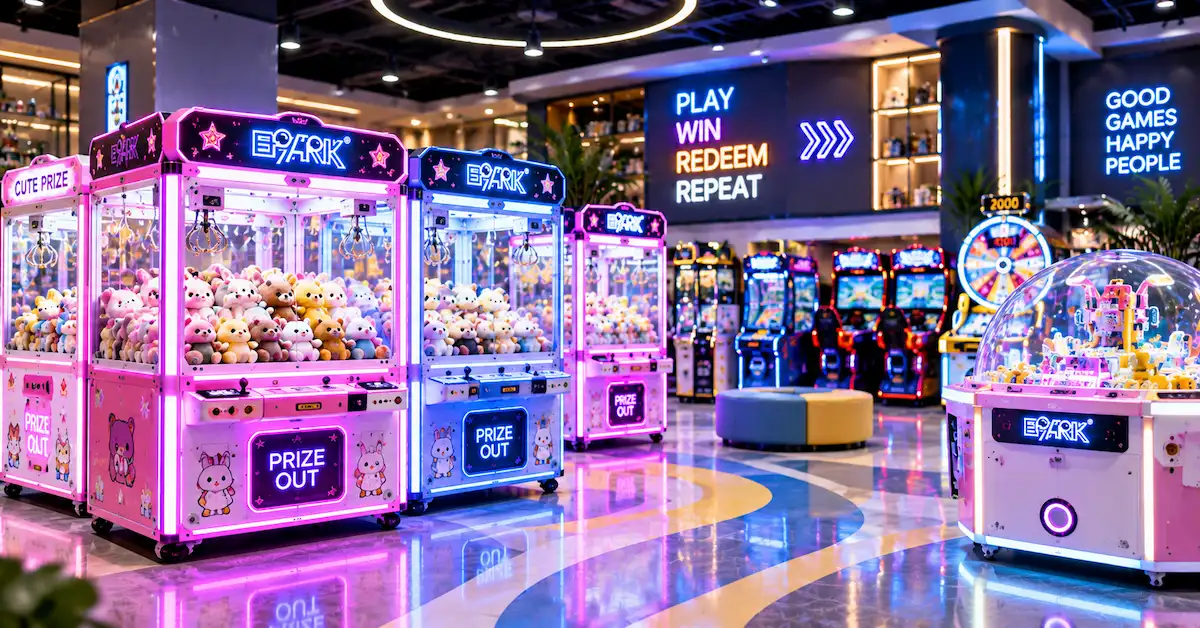
For wholesale prize arcade machines, an approved sample should become a documented production reference. Identify which prize-related checks will be repeated on production units, what acceptance criteria apply and how findings will be recorded. Alongside appearance and electrical checks, request the relevant mechanism, sensor, control and reward-output tests described in EPARK’s redemption equipment buying guide. Agree on test quantities and conditions rather than inventing a universal cycle count. Keep the machine revision and prize reference visible in the inspection report. Separately, request technical documents that identify the equipment or components they cover, and arrange qualified review of their relevance to the destination project. A general certificate image should not substitute for a connection between the ordered machine and its supporting evidence.
Budget for Prize Stock and Refill Labor
Compare wholesale prize arcade machines using both the equipment quotation and a replenishment budget. EPARK’s ownership-cost and maintenance guide includes prizes, staffing, payment fees and maintenance among operating expenses. Keep initial cabinet cost separate from the cost of prizes issued and the work required to replenish them. As an illustration only, 120 prizes at an assumed landed cost of $3 each represent $360 in prize stock. Thirty refill visits taking six minutes each equal three hours; at an assumed labor cost of $15 per hour, that adds $45. The combined $405 excludes electricity, payment charges, repairs, rent and other expenses. These figures are not EPARK prices, expected results or recommended reward settings. Use actual purchasing and operating records to replace the assumptions before making an investment decision.
Plan the Venue Around Playing, Waiting and Refilling
Choose locations for wholesale prize arcade machines by reviewing more than visibility. EPARK’s small arcade zone guide discusses compact equipment for shopping mall corners, family venues, restaurants and hotel spaces. For your layout, mark the player position, customer collection area, door-opening clearance and replenishment route for each proposed machine. In a restaurant or hotel, include a review of the actual sound and lighting configuration rather than assuming a compact cabinet is automatically suitable. For an FEC using ticket redemption, plan the exchange point and stock storage separately from the machines. Do not convert an unused corner into an equipment position until the operating and service requirements have been checked.
Separate Branding Changes From Prize-Handling Changes
Private-label artwork and a revised prize mechanism are different customization requests. EPARK’s arcade OEM guide discusses changes to appearance, branding, hardware and software, together with sample approval and production records. For a prize-machine project, maintain separate approvals for artwork, technical configuration and accepted prize stock. A new logo should not obscure a controller substitution, and a seasonal merchandise change should not be treated as automatically compatible because the cabinet is unchanged. Ask which modifications require engineering review, another sample or revised documentation. Record the impact on cost and delivery timing before authorizing the change. For branded prizes and cabinet graphics, obtain written clarification of the artwork and content permissions relevant to the proposed supply.
Confirm Bulk Quantities, Capacity and the Production Schedule
Request minimum quantities for the specific wholesale prize arcade machines being considered, separating standard configurations, private-label versions and newly developed equipment. EPARK’s wholesale purchasing guide explains that model mix, customization, components, packaging and shipment planning affect the order structure. Ask the supplier to confirm the production capacity available for your models and distinguish prize-sample approval, artwork approval, component preparation, assembly, testing and dispatch. For a mixed shipment, clarify what happens when one customized machine is delayed. Also confirm whether prizes are included, supplied separately or entirely buyer-sourced. The machine schedule and the prize-stock schedule should both support the planned opening; neither should remain an assumption hidden inside a single delivery estimate.
Prepare Packing and Arrival Checks for the Approved Configuration
Before shipment, obtain packing information for the actual machine version, including packed dimensions, gross weight, detachable items and the location of supplied accessories. EPARK’s export preparation guide identifies equipment protection, shipping stability, electrical configuration and documentation as confirmation points. For prize equipment, additionally ask the supplier to document any transport restraints, removable mechanism components and required reassembly steps; do not improvise these procedures. Confirm whether merchandise travels inside the cabinet or in separate cartons. At arrival, match the machine, accessories and prize reference to the approved records, then follow the supplier’s commissioning instructions before operation. Record transit condition and unresolved issues before treating delivery as completed acceptance.
Keep Prize Replenishment Separate From Spare-Parts Supply
Manage two distinct replacement requirements: merchandise consumed through operation and components needed for maintenance. EPARK’s maintenance guidance identifies claw assemblies, motors, cables, prize sensors and locks among claw-machine service areas, with different requirements for ticket equipment. Request a model-specific parts list, replacement instructions and written support terms. In parallel, maintain an approved prize list with supply availability and substitution rules. A proposed internal record can link each installed machine to its configuration, accepted prize items, service components and refill procedure. When either the prize source or machine configuration changes, review the affected approval rather than relying on a familiar product name. Confirm warranty coverage, claim evidence and freight or local-work responsibilities separately from purchased spares.
Send EPARK a Prize-and-Machine Purchasing Brief
EPARK’s company profile identifies Guangzhou EPARK Electronic Technology Co., Ltd. as a Guangzhou-based company established in 2012, with arcade machines and game machines included in its indoor entertainment business. Its stated activities cover product development, manufacturing, sales and after-sales support. To discuss wholesale prize arcade machines, provide more than a requested quantity: include venue type, destination, floor plan, target users, preferred reward format, payment requirements and representative prize samples. Ask for current model specifications, manufacturing responsibility, available customization and project-specific delivery and support terms. The published overview does not establish a universal prize-size limit, minimum quantity or fixed price, so these details need confirmation for the proposed order.
Frequently Asked Questions About Wholesale Prize Arcade Machines
Are all prize arcade machines claw machines?
No. EPARK’s prize-equipment overview includes claw machines, ticket redemption games, capsule machines and interactive prize equipment. Confirm how the specific model awards and delivers its reward rather than using “prize machine” as a complete product description.
How should I choose prizes for a claw machine?
Submit the actual proposed items and request compatibility review with the selected machine. Include dimensions, weight, packaging and tags. Keep the accepted samples identifiable so later replenishment can be compared against the same reference.
Can I change the prizes after installation?
Ask the supplier to define acceptable substitutions and the checks required for a new item. Do not assume similar appearance or height establishes compatibility. Keep a record of any approved changes to the prize, loading method or machine configuration.
What is the difference between direct-prize and ticket redemption equipment?
Direct-prize equipment delivers an item through the machine, while ticket redemption involves exchanging earned tickets for prizes separately. For an electronic reward arrangement, confirm the supported system and how balances connect to the venue’s redemption process.
What is the minimum order quantity for wholesale prize arcade machines?
Request it by model and configuration. Separate standard machines, artwork customization and development work, and ask whether a mixed-model order is possible. The wholesale guide does not establish one minimum quantity covering every arcade product.
Are the prizes included in the equipment quotation?
Have the quotation state this explicitly. When merchandise is included, request item references, quantities, sample approval and packing details. When it is excluded, confirm who supplies the test samples and who arranges initial operating stock.
Can the machines use my existing card-payment system?
Have the machine supplier and payment provider confirm the hardware, interface, settings and integration responsibilities for each model. Request testing of the intended transaction sequence before approving the configuration. A reader mounting position alone does not establish compatibility.
What should a prize-machine sample test demonstrate?
Agree on a test covering the approved prize, loading procedure, payment sequence, gameplay and relevant reward delivery. Record faults separately from normal game outcomes, and document any functions that remain untested before authorizing the next purchasing stage.
How much profit can a prize machine generate?
No reliable figure follows from the cabinet price or machine category alone. Build your own estimate using observed activity and actual prize, labor, payment, maintenance and venue costs. Keep projected results separate from verified operating records.
Which spare parts should accompany the first order?
Ask the supplier and your service team to identify model-specific replacement needs and lead times. Require part numbers, compatibility information and instructions. Order merchandise replenishment separately so prize stock is not confused with the maintenance package.
Conclusion
The strongest starting point for wholesale prize arcade machines is an approved combination of equipment, prize stock and operating procedure. Compare reward formats first, test actual merchandise, document the configuration and include replenishment work in the cost review. Before scaling the order, resolve payment compatibility, batch acceptance, delivery preparation and support responsibilities. A visually appealing cabinet is only part of the purchasing decision; your team also needs a clear way to stock, operate and service it. To discuss suitable options, contact EPARK with your machine requirements and prize samples, including quantities, destination, payment preferences, available space and planned opening date.
General Disclaimer
All data on https://www.eparki.com is for general guidance only. As a leading indoor playground manufacturer and trampoline supplier, EPARK strives for accuracy but gives no express or implied warranty regarding completeness, performance or project fitness. Product specs, designs and results may vary with use and customer requirements. Buyers must verify technical details, compliance and suitability before purchase. EPARK OEM/ODM is not liable for any direct, indirect or consequential damages arising from site use. For custom solutions, contact our manufacturer and supplier team via the Contact page.
Intellectual Property
Text, images, videos, CAD files and software are Guangzhou EPARK Electronic Technology Co., Ltd. All rights reserved. No part may be copied, republished or used commercially without prior written permission. We will pursue legal action for copyright or design-patent infringement.
Trademarks
"EPARK", the EPARK logo and related graphics are registered trademarks of Guangzhou EPARK Electronic Technology Co., Ltd. Unauthorized use in ads, domain names or packaging is prohibited.
Governing Law
These terms are governed by the laws of the People's Republic of China.
Contact
Questions? Email sales@nanyuetech.com or WhatsApp +86 139 0307 9263.