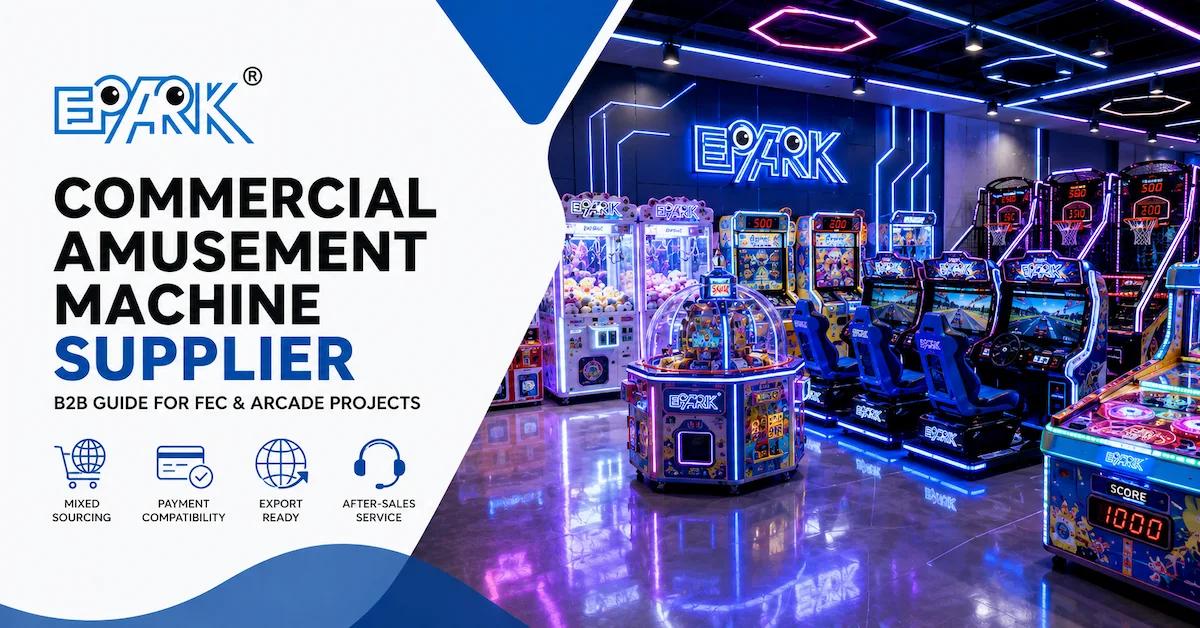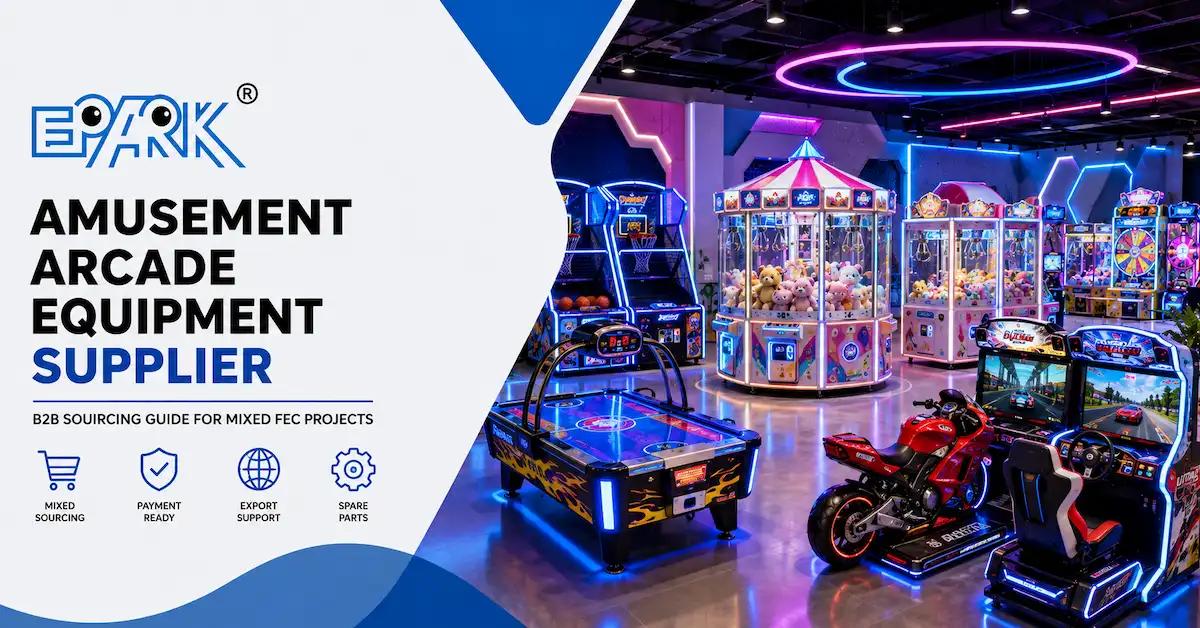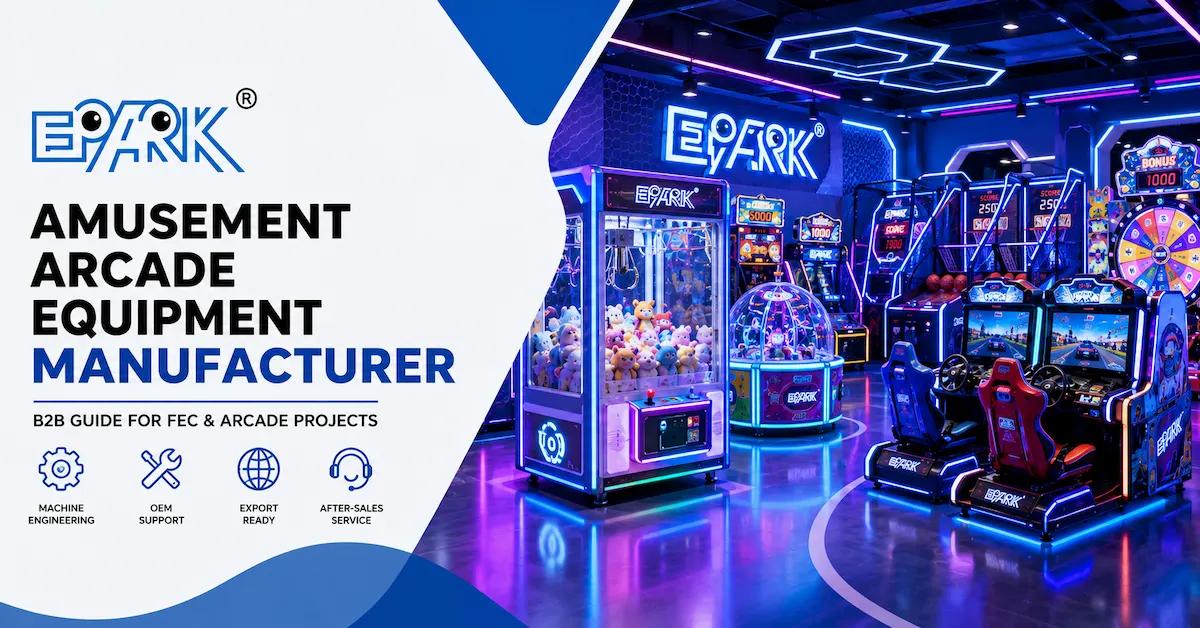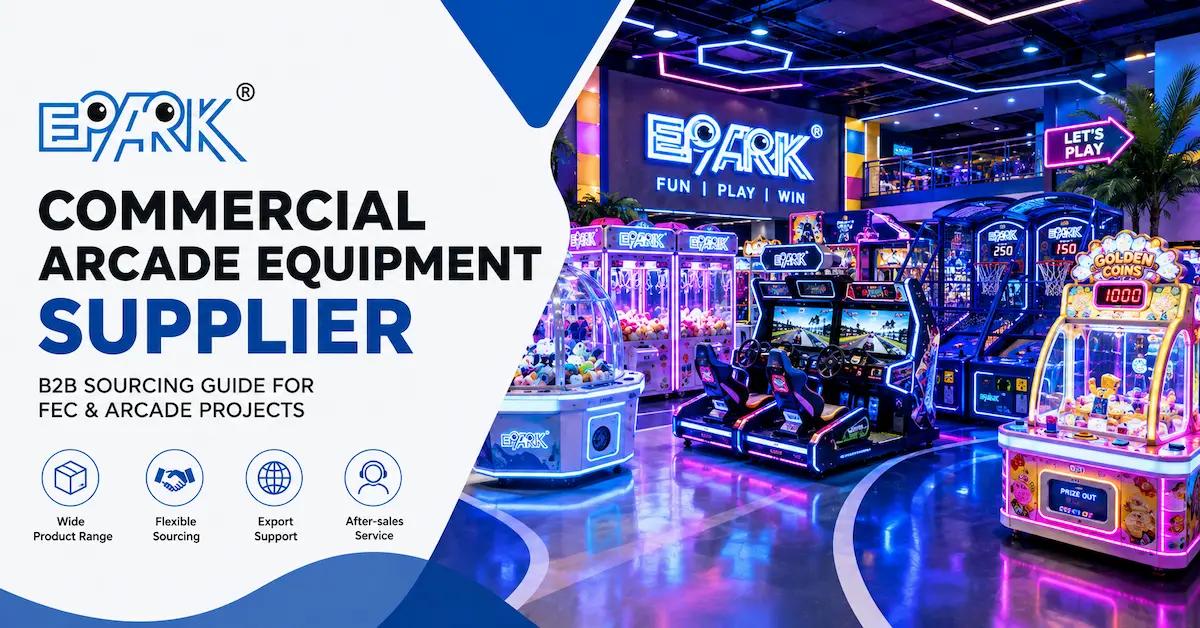
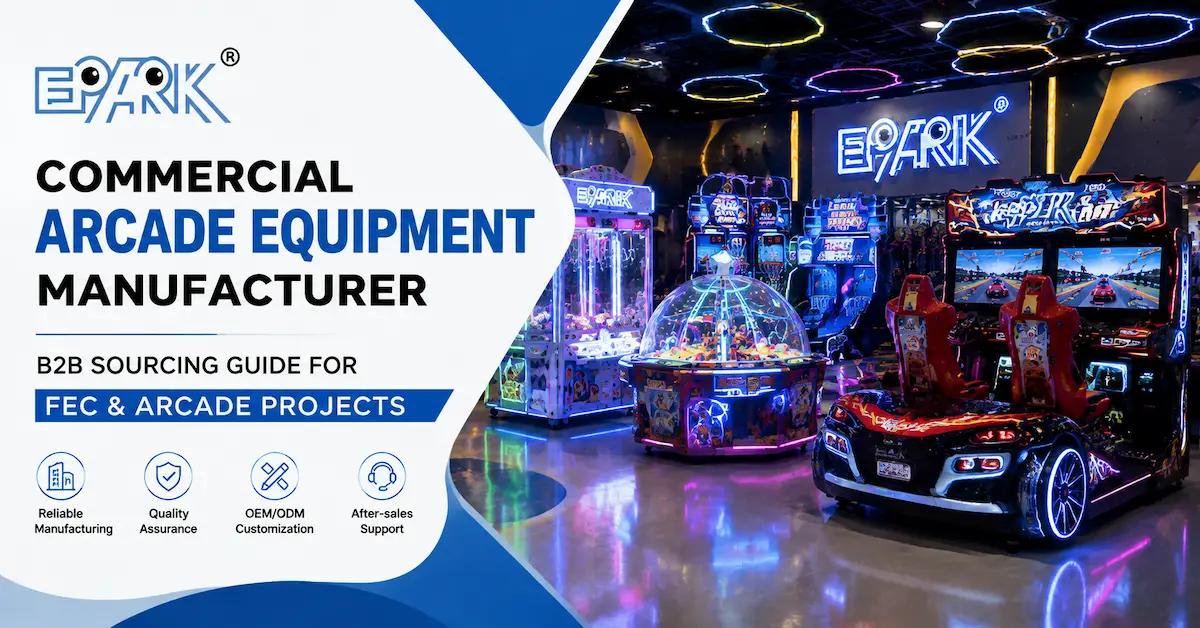
What Should Buyers Expect From a Commercial Arcade Equipment Manufacturer?
Choosing a commercial arcade equipment manufacturer is a supply-chain decision, not simply a search for attractive machines at the lowest unit price.
Commercial buyers need equipment that can operate repeatedly in family entertainment centers (FECs), arcade centers, shopping malls, indoor playgrounds, hotels, and other high-traffic entertainment venues. The supplier must therefore support product matching, technical specifications, quality control, customization, export preparation, spare parts, and after-sales service.
For distributors and multi-location operators, consistency becomes equally important. A machine that performs well in the first order should be reproducible when the buyer expands or reorders.
EPARK describes its business as integrating amusement equipment development, manufacturing, sales, and after-sales support, with arcade machines and game machines forming part of its wider indoor entertainment portfolio. Buyers can review the EPARK company background before starting a supplier evaluation.
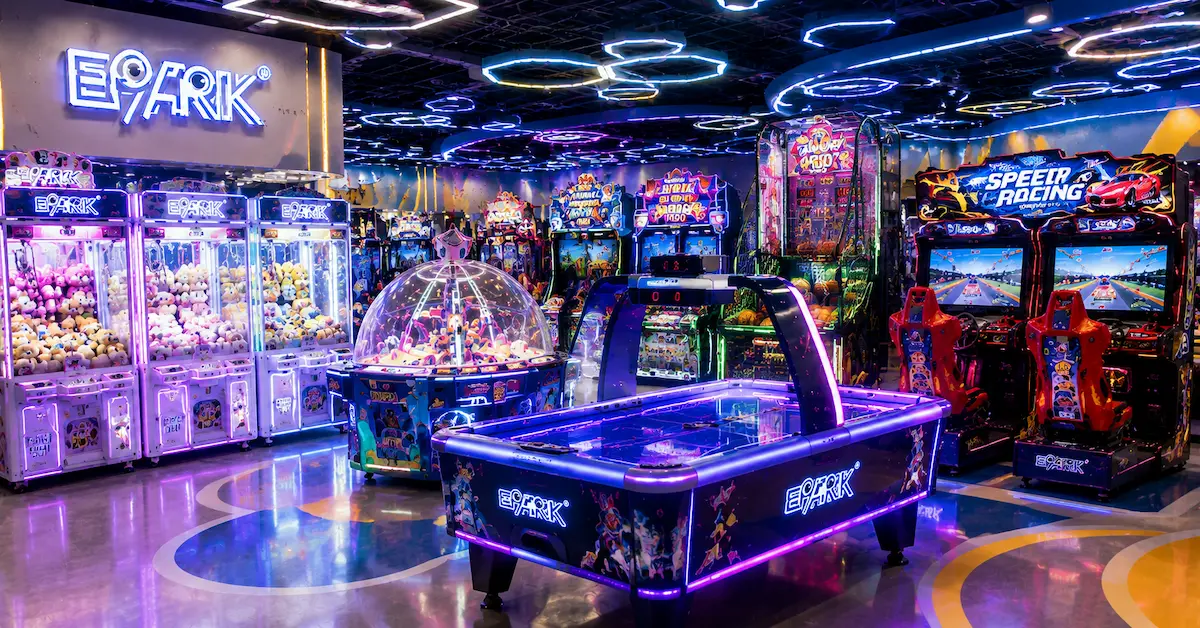
Which Commercial Arcade Machines Should a Manufacturer Supply?
A strong supplier does not need every machine on the market, but it should understand how different categories serve different venue goals.
| Arcade Equipment Type | Typical Commercial Use | Main Buyer Concern |
|---|---|---|
| Claw & prize machines | Entrances, waiting areas, prize zones | Prize settings, mechanism reliability |
| Redemption games | FECs and family arcades | Ticket system, repeat-play value |
| Racing simulators | Teen and family entertainment | Controls, screen, seat and software stability |
| Shooting games | Arcade and competitive zones | Controller accuracy and maintenance |
| Basketball/sports games | Group and active entertainment | Mechanical durability and footprint |
| Kiddie rides | Indoor playgrounds and family areas | Age suitability and easy operation |
| Interactive games | Modern FECs | Sensors, software and technical support |
| VR equipment | Immersive entertainment zones | Hardware, software and service requirements |
The correct mix depends on the venue rather than on which machine has the most lights or the largest cabinet.
For example, an indoor playground may need compact claw machines and kiddie rides near its exit, while a large FEC may require redemption games, racing simulators, sports machines, prize equipment, and a centralized payment system.
Operators planning a mixed venue can review EPARK's game machines for indoor playgrounds buying guide and its guide to game machines for shopping mall FEC projects.
How to Evaluate a Commercial Arcade Equipment Manufacturer
Verify Manufacturing Capability, Not Just a Product Catalog
A website containing hundreds of machine photos does not by itself prove manufacturing capability.
Before placing a bulk order, B2B buyers should verify how the supplier handles:
- Product development
- Cabinet production or assembly
- Electrical assembly
- Software configuration
- Component sourcing
- Functional testing
- Final inspection
- Export packaging
- Spare parts
- Warranty claims
For larger orders, request factory photos or video, machine testing records, specification sheets, and examples of completed commercial projects.
EPARK's existing game machine factory guide for B2B buyers provides additional supplier-screening questions around production, QC, customization, packaging, and after-sales support.
Confirm the Components Behind the Cabinet
Two arcade cabinets can look almost identical while using very different internal components.
A technical purchasing checklist may include:
- Mainboard or controller
- Display
- Power supply
- Wiring harness
- Joysticks and buttons
- Sensors
- Coin acceptor
- Bill acceptor
- Card reader
- Ticket dispenser
- Speakers
- Cooling system
- Locks and service panels
The buyer should identify which parts are standard, which are customized, and which replacement parts should be included with the order.
Ask About Spare-Part Interchangeability
For distributors and chain operators, interchangeable components can simplify inventory and maintenance.
Ask whether several models share common:
- Power supplies
- Buttons
- Coin mechanisms
- Locks
- Sensors
- Card readers
- Ticket dispensers
Standardizing frequently replaced components may reduce long-term maintenance complexity.
Electrical Specifications Should Be Confirmed Before Production
International B2B orders require more than confirming the machine model.
An RFQ should normally specify:
- Destination country
- Required voltage
- Frequency
- Plug type
- Payment method
- Language
- Installation environment
- Quantity
- Shipping destination
Do not assume a machine configured for one market can simply be shipped unchanged to another.
IEC currently publishes IEC 60335-2-82:2024, which addresses safety requirements for electric commercial amusement machines and personal service machines. Its scope includes commercial amusement equipment and specifies voltage limits of up to 250 V for single-phase equipment and 480 V for other equipment. Buyers can review the official IEC 60335-2-82 standard information when evaluating applicable electrical requirements.
Applicable standards and legal requirements still depend on the machine configuration and destination market, so buyers should confirm them for the actual order rather than relying on a generic statement such as "internationally certified."
Do Not Treat CE as a Generic Certificate
European importers should verify the documentation applicable to the specific arcade equipment being purchased.
The European Commission explains that CE marking is required only where applicable EU harmonisation legislation mandates it. The manufacturer is responsible for identifying applicable requirements, completing the required conformity assessment, preparing technical documentation, and issuing the relevant EU Declaration of Conformity where required.
Therefore, instead of asking only:
"Do you have CE?"
a professional buyer should ask:
- Which regulations apply to this model?
- Which test reports correspond to this machine?
- Is the documentation for the exact configuration ordered?
- Is an EU Declaration of Conformity available where required?
- Does changing electrical components affect the documentation?
This reduces the risk of receiving paperwork that does not actually correspond to the purchased machine.
Quality Control Should Simulate Commercial Operation
A commercial arcade machine may run many times during a busy operating day. Quality control should therefore focus on actual operating reliability rather than appearance alone.
Before Shipment, Buyers Should Check
- Machine powers on normally
- Display operates correctly
- Controls respond consistently
- Sensors trigger correctly
- Sound functions properly
- Lighting works as intended
- Coin/card/ticket systems operate correctly
- Doors and locks close securely
- Internal wiring is organized and protected
- Cabinet surfaces are free from major damage
- Accessories and spare parts match the packing list
For bulk orders, buyers can request inspection photos or operating videos before final shipment.
OEM and ODM Options Matter for Commercial Buyers
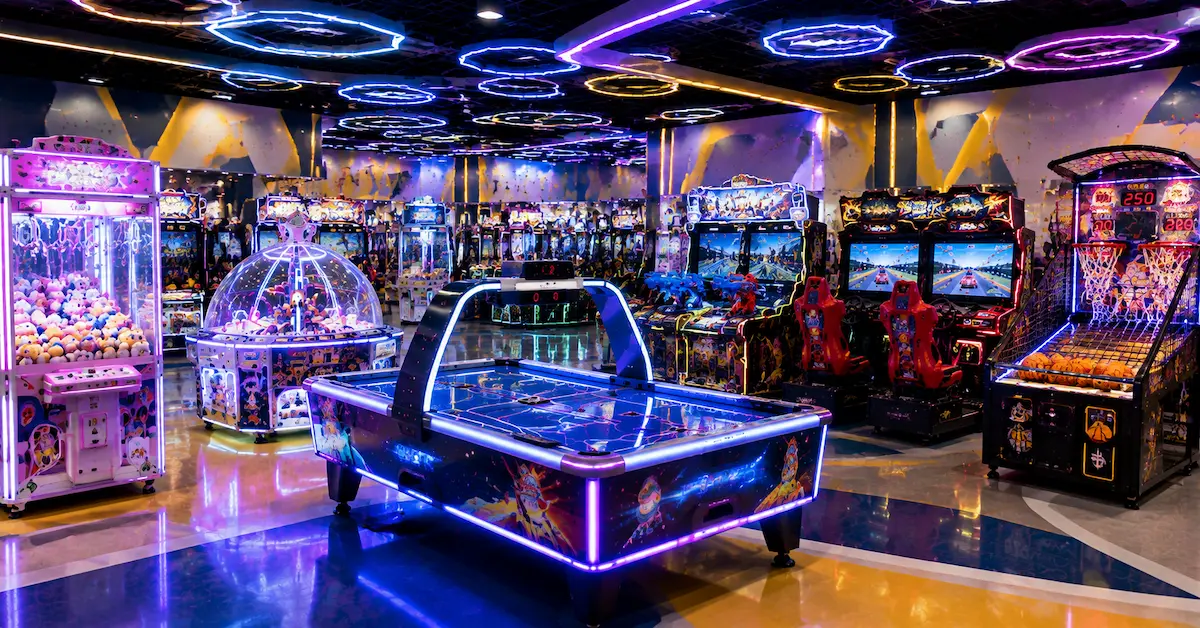
A capable commercial arcade equipment manufacturer should also understand customization requirements for distributors, branded venues, and chain operators.
Common OEM/ODM requests may include:
Visual Customization
- Logo
- Cabinet colors
- Exterior graphics
- Lighting style
- Brand signage
Operating Customization
- Language
- Game parameters
- Coin settings
- Credit settings
- Card payment configuration
- Prize settings
Export Customization
- Voltage and plug
- Labels
- Manuals
- Packaging
- Spare-parts kits
Customization should be confirmed before mass production. Buyers should approve artwork, technical specifications, software settings, and sample configurations before repeating the same specification across a bulk order.
Manufacturer vs Trading Supplier: Which Is Better?
Neither business model is automatically better in every situation.
| Requirement | Manufacturer Advantage | Trading Supplier Advantage |
|---|---|---|
| OEM customization | Usually stronger | Depends on partner factories |
| Large repeat orders | Better production consistency potential | Can source across factories |
| Mixed small orders | May have MOQ limitations | Often more flexible |
| Technical modifications | Direct engineering communication | Additional communication layer |
| Product variety | Limited to supported categories | Can consolidate more categories |
| Long-term spare parts | Strong if models remain supported | Depends on upstream suppliers |
For buyers building a standardized FEC, distributing machines under their own brand, or ordering repeated quantities, direct manufacturer cooperation is often easier to control.
Buyers seeking a very small mixed shipment from unrelated product categories may prioritize sourcing flexibility instead.
Compare Total Cost, Not Only Factory Price
A low quotation can become expensive if it creates problems after delivery.
When comparing manufacturers, include:
Total procurement cost = machine price + customization + spare parts + packaging + freight + import costs + installation + maintenance + downtime risk
A quotation should therefore clarify what is included.
Ask specifically about:
- MOQ
- Sample order policy
- Production lead time
- Incoterms
- Packaging method
- Spare parts
- Warranty scope
- Technical support
- Software updates where applicable
- After-sales response process
Avoid selecting a supplier solely because one quotation is several percent lower.
For international buyers, fewer failures and easier maintenance can matter more than a small difference in initial machine cost.
What Information Should You Send for an Accurate Quote?
A commercial buyer can receive a more useful proposal by sending a complete RFQ rather than only asking, "How much is this machine?"
Include:
- Venue type
- Floor area
- Target customers
- Preferred machine categories
- Estimated quantity
- Budget range
- Destination country
- Voltage and frequency
- Payment system
- OEM/branding requirements
- Target opening date
- Shipping destination
If the equipment is part of a larger FEC, attaching the floor plan allows the supplier to recommend a better machine mix.
EPARK's FAQ covers common project, shipping, customization, and cooperation questions, while buyers with a defined equipment list can use the EPARK contact page to submit project requirements directly.
When Is EPARK Relevant to a Commercial Arcade Project?
EPARK positions itself as a Guangzhou-based amusement equipment manufacturer and exporter serving indoor entertainment projects that can combine arcade machines, game machines, indoor playgrounds, trampoline parks, and customized amusement solutions.
This makes the company particularly relevant to buyers planning:
- Family entertainment centers
- Shopping mall entertainment zones
- Indoor playground plus arcade projects
- Arcade centers
- Distributor orders
- Branded entertainment venues
- Mixed amusement equipment projects
For buyers who need both game machines and other entertainment zones, this broader project capability can reduce the number of suppliers involved in planning.
FAQ
What is a commercial arcade equipment manufacturer?
A commercial arcade equipment manufacturer produces amusement machines intended for business venues such as FECs, arcades, shopping malls, and indoor entertainment centers.
What should I check before choosing an arcade manufacturer?
Check manufacturing capability, components, electrical specifications, quality control, OEM options, documentation, export packaging, spare parts, warranty, and after-sales support.
Which arcade machines are suitable for an FEC?
Common options include redemption games, claw machines, racing simulators, shooting games, basketball machines, interactive games, kiddie rides, and selected VR equipment.
Can arcade machines be customized?
Many commercial machines can support customization such as cabinet graphics, logo, colors, language, payment configuration, voltage, plug type, and packaging. Availability depends on the model and order quantity.
What payment systems can commercial arcade machines use?
Depending on the machine and project, options may include coins, tokens, bills, rechargeable cards, or digital payment integrations. Compatibility should be confirmed before production.
What spare parts should buyers order?
The correct kit depends on the machine, but buyers should discuss frequently serviced components such as buttons, sensors, power supplies, coin mechanisms, card readers, locks, and ticket-related parts.
How should I compare two manufacturer quotations?
Compare machine specification, components, customization, documentation, spare parts, packaging, warranty, freight terms, and after-sales support—not only unit price.
Should I request a sample before a bulk order?
For large customized orders, sample or pre-production approval can help verify appearance, configuration, controls, software settings, and branding before mass production.
What information does a manufacturer need for an OEM order?
Prepare quantity, machine model, logo files, artwork requirements, colors, language, electrical specifications, payment system, packaging requirements, and destination market.
How do I request a commercial arcade equipment quotation from EPARK?
Prepare your venue type, equipment list, quantity, destination, electrical requirements, customization needs, and project schedule, then send them through the EPARK contact page.
Conclusion
Selecting a commercial arcade equipment manufacturer should be based on long-term operating value rather than cabinet appearance or initial price alone.
For FEC operators, distributors, importers, shopping malls, and arcade owners, the strongest sourcing decision combines the right machine mix with verified specifications, appropriate compliance documentation, practical quality control, OEM flexibility, export support, spare parts, and reliable after-sales communication.
If your project combines commercial arcade machines with indoor playground or other amusement equipment, review the EPARK About Us and EPARK Blog, then send your machine list, floor plan, destination market, and technical requirements through Contact EPARK for a project-specific discussion.
General Disclaimer
All data on https://www.eparki.com is for general guidance only. As a leading indoor playground manufacturer and trampoline supplier, EPARK strives for accuracy but gives no express or implied warranty regarding completeness, performance or project fitness. Product specs, designs and results may vary with use and customer requirements. Buyers must verify technical details, compliance and suitability before purchase. EPARK OEM/ODM is not liable for any direct, indirect or consequential damages arising from site use. For custom solutions, contact our manufacturer and supplier team via the Contact page.
Intellectual Property
Text, images, videos, CAD files and software are Guangzhou EPARK Electronic Technology Co., Ltd. All rights reserved. No part may be copied, republished or used commercially without prior written permission. We will pursue legal action for copyright or design-patent infringement.
Trademarks
"EPARK", the EPARK logo and related graphics are registered trademarks of Guangzhou EPARK Electronic Technology Co., Ltd. Unauthorized use in ads, domain names or packaging is prohibited.
Governing Law
These terms are governed by the laws of the People's Republic of China.
Contact
Questions? Email sales@nanyuetech.com or WhatsApp +86 139 0307 9263.