Introduction
Trampoline parks have become one of the most profitable indoor playground attractions worldwide—providing high customer engagement, repeat visits, and strong ROI. However, trampoline park injuries remain a major concern for operators, investors, and distributors.
For B2B buyers choosing commercial trampoline equipment, understanding why injuries occur, how to prevent them, and how to select a qualified trampoline manufacturer is crucial. This guide provides a professional, data-driven breakdown of risks, safety standards, engineering considerations, and supplier selection tips to help you build a safer and more profitable trampoline park.
If you also operate an indoor playground, many of the same safety principles apply—especially regarding material durability, zone planning, and long-term maintenance.
Why Trampoline Park Injuries Happen (Technical & Operational Causes)
Trampoline parks involve dynamic motion, kinetic force, and rebound mechanics. When combined with high foot traffic, this creates several predictable risk factors.
Uncontrolled Landings and User Error
Many injuries occur because jumpers misjudge landing angles or lose balance. Even small variations in bounce height can create strong downward impacts.
Untrained users often attempt flips or wall running without proper technique, resulting in sprains, fractures, or shoulder injuries.
Multiple Users on the Same Jump Bed
Collision is one of the leading causes of trampoline park injuries.
When two users land at different times, the energy transfer becomes unpredictable, increasing the risk of:
-
Knee and ankle injuries
-
Wrist fractures
-
Head-to-head collisions
This issue becomes more serious in busy indoor playground environments where age groups mix.
Poor Equipment Quality or Material Failure
Low-cost trampolines often use:
-
Thin steel frames
-
Low-density padding
-
Weak springs
-
Non-reinforced jumping mats
These components degrade quickly in commercial environments, increasing the risk of:
-
Mat tears
-
Spring failure
-
Exposed frames
A certified trampoline manufacturer ensures material durability consistent with international standards.
Incorrect Installation
Improper assembly causes:
-
Uneven bounce levels
-
Gaps between trampolines
-
Misaligned frames
-
Unstable structures
Professional installation ensures structural load balance, safe tension levels, and proper anchoring of all equipment.
Insufficient Supervision and Overcrowding
Overcrowding contributes to over 20% of trampoline park injuries.
When staff cannot monitor every jump zone, unsafe behaviors go unnoticed. For example:
-
Running between trampolines
-
Performing stunts
-
Mixed age groups using the same area
Adequate staff training and zone separation are essential for safe operations.
Most Common Trampoline Park Injuries
The table below summarizes typical injury types found in commercial trampoline parks:
| Injury Type | Description | Main Causes |
|---|---|---|
| Sprains & Strains | Soft tissue injury to ankles/knees | Landings, uneven bounces |
| Fractures | Wrist or leg fractures | Falls, collisions |
| Head/Neck Injuries | Serious but less common | Unsupervised flips |
| Collision Injuries | Bruises or joint injuries | Overcrowding |
| Falls From Height | Occurs in wall running areas or platforms | Poor safety zoning |
These injuries are not inevitable—most can be prevented through engineering, layout planning, and proper operational policies.
High-Risk Zones Inside a Trampoline Park
Understanding the layout helps operators reduce injuries through smarter design.
Main Jump Zone
Highest incident rate due to constant activity and multiple users.
Foam Pit
Falls into insufficient foam depth or old foam blocks can cause leg injuries.
Dodgeball Court
High-speed collisions are common; rules and supervision are critical.
Ninja Courses
Upper-body injuries can occur if structures lack proper padding.
Wall Running Area
Improper angle landings increase risk of severe back or neck injuries.
For more insights on park layout, see our guide:
Trampoline Solutions
Preventing Injuries in Trampoline Parks: A Complete Safety Framework
Below are essential practices every operator must follow.
Invest in High-Quality, Commercial-Grade Materials
A professional trampoline manufacturer should provide equipment built for long-term commercial use.
| Component | Recommended Standard | Safety Benefit |
|---|---|---|
| Frame | Galvanized steel (Q235/Q345) | Strong stability, rust resistance |
| Springs | High-carbon steel | Consistent bounce, durability |
| Jump Mat | UV-resistant PP mesh | Smooth elasticity |
| Safety Padding | EPE foam + PVC cover | Impact absorption |
| Foam Blocks | ≥18 kg/m³ density | Safer cushion during jumps |
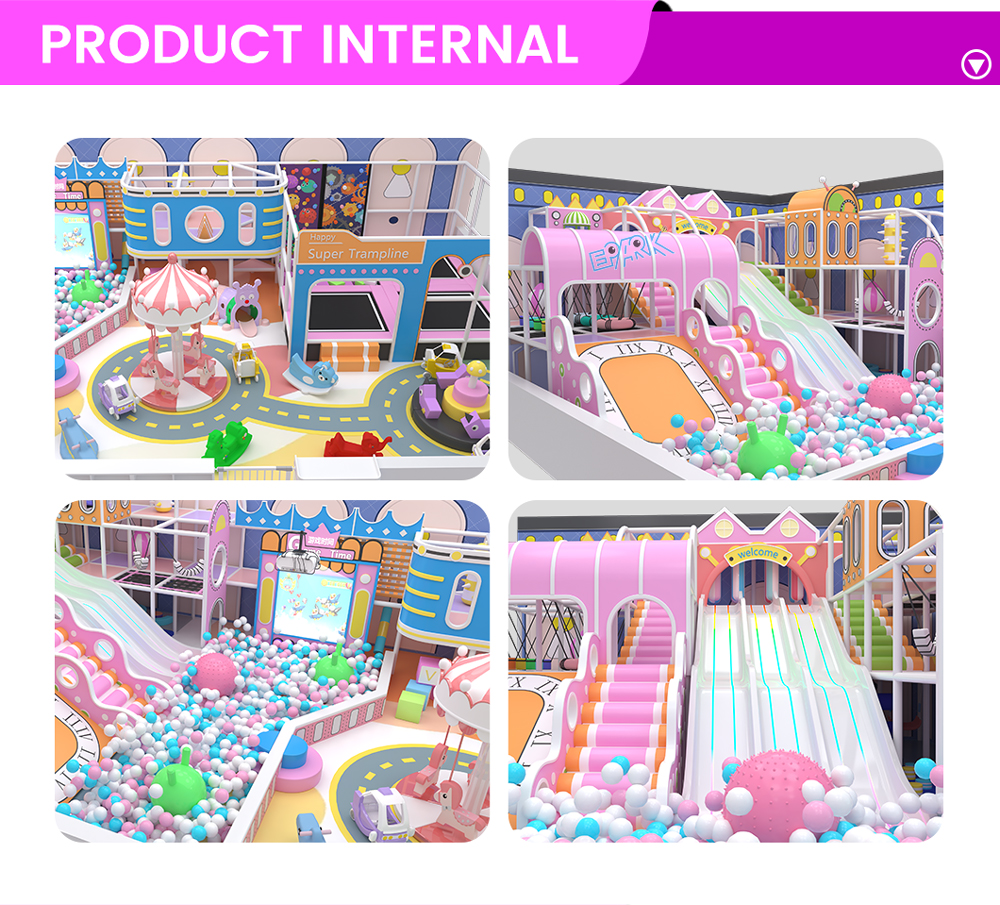
EPARK, for example, uses reinforced structures and high-density materials designed for heavy daily traffic in large-scale indoor playground and trampoline park facilities.
Follow International Safety Standards
Commercial trampoline parks should comply with:
-
ASTM F2970 – Safety spec for trampoline courts
-
EN 1176 / EN 1177 – Playground equipment safety
-
CE / TUV certifications – Product safety and quality assurance
Compliance reduces liability and ensures your park meets insurance requirements.
Smart Park Layout & Safety Zoning
Proper layout reduces more injuries than any other factor.
Key layout strategies:
-
Separate toddler, beginner, and advanced jump zones
-
Maintain one-way flow paths
-
Ensure clear staff visibility
-
Install high-density padding around all steel frames
-
Avoid overcrowded trampoline configurations
EPARK provides 3D safety-first designs that optimize both flow and profit.
Strict Operational Safety Rules
Clear rules dramatically reduce trampoline park injuries.
Recommended safety rules:
-
One jumper per trampoline
-
Grip socks required
-
No double flips unless supervised
-
No sharp objects or loose clothing
-
Age-restricted zones
Displaying visual signage and safety videos improves compliance.
Staff Training and On-Site Supervision
A well-trained team reduces 70–80% of risky behaviors.
Training should cover:
-
Monitoring high-risk jump zones
-
Crowd control procedures
-
Emergency first aid
-
Identifying worn-out materials
-
Communicating rules effectively
Routine Inspection & Maintenance
A structured maintenance plan prevents equipment failures.
| Frequency | Tasks |
|---|---|
| Daily | Check mats, springs, padding, foam pits |
| Weekly | Tighten bolts, inspect seams |
| Monthly | Replace worn foam, deep-clean surfaces |
| Quarterly | Full safety audit |
| Yearly | Replace high-wear parts |
EPARK provides operators with a full maintenance manual and optional after-sales support.
How to Choose a Reliable Trampoline Manufacturer
This is one of the most important decisions for long-term safety and profitability.
Safety Certifications
Choose manufacturers compliant with:
-
ASTM F2970
-
EN 1176
-
EN 1177
-
CE / TUV
Engineering Strength
A professional manufacturer should offer:
-
Load-bearing analysis
-
Structural design drawings
-
Detailed material specifications
-
Certified welding and assembly techniques
Custom Design Capability
Every indoor playground or trampoline park requires:
-
Space planning
-
Budget optimization
-
Attraction mix customization
EPARK provides custom 3D layouts tailored to commercial sites of all sizes.
Professional Installation
Improper installation is one of the biggest hidden hazards.
Choose suppliers who provide:
-
On-site installation teams
-
Remote installation guidance
-
Safety testing after installation
After-Sales Support
Reliable service includes:
-
Spare parts
-
Warranty
-
Maintenance training
-
Product upgrades
For more details, see:
EPARK Trampoline Park Equipment
 Conclusion
Trampoline parks offer excellent business opportunities, but safety must be prioritized from the very beginning. Most trampoline park injuries can be prevented through:
-
High-quality materials
-
Compliance with international safety standards
-
Intelligent layout design
-
Strong staff supervision
-
Consistent maintenance
Working with an experienced trampoline manufacturer like EPARK helps ensure that your indoor playground or trampoline park remains safe, durable, and profitable for years to come.
Ready to build a safer trampoline park?
EPARK offers certified trampoline equipment, custom 3D design, professional installation, and long-term maintenance support.
Contact us today to request a quotation or consultation!
General Disclaimer
All data on https://www.eparki.com is for general guidance only. As a leading indoor playground manufacturer and trampoline supplier, EPARK strives for accuracy but gives no express or implied warranty regarding completeness, performance or project fitness. Product specs, designs and results may vary with use and customer requirements. Buyers must verify technical details, compliance and suitability before purchase. EPARK OEM/ODM is not liable for any direct, indirect or consequential damages arising from site use. For custom solutions, contact our manufacturer and supplier team via the Contact page.
Intellectual Property
Text, images, videos, CAD files and software are Guangzhou EPARK Electronic Technology Co., Ltd. All rights reserved. No part may be copied, republished or used commercially without prior written permission. We will pursue legal action for copyright or design-patent infringement.
Trademarks
"EPARK", the EPARK logo and related graphics are registered trademarks of Guangzhou EPARK Electronic Technology Co., Ltd. Unauthorized use in ads, domain names or packaging is prohibited.
Governing Law
These terms are governed by the laws of the People's Republic of China.
Contact
Questions? Email sales@nanyuetech.com or WhatsApp +86 139 0307 9263.