Introduction
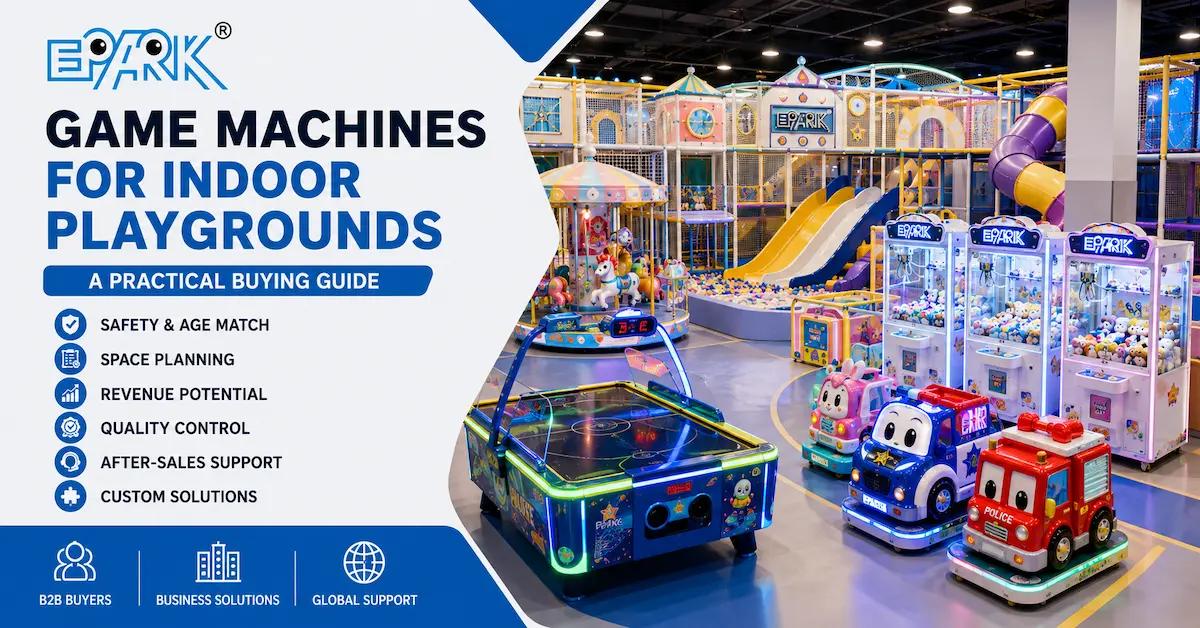
The global demand for indoor playground projects continues to grow rapidly as shopping malls, entertainment centers, and investors look for stable, experience-driven business models. A modern indoor playground is no longer just a simple play area—it is a full commercial system combining entertainment, safety design, and revenue optimization.
For B2B buyers, especially those investing in commercial indoor play area equipment, choosing the right layout and size is more important than selecting individual products. A well-planned structure directly impacts visitor flow, operational efficiency, and long-term ROI.
In this guide, we will analyze how to design a profitable indoor playground layout, from compact 100㎡ spaces to large 1000㎡+ entertainment centers, and explain how professional planning improves business performance.
Why Layout Design Is Critical for Indoor Playground Projects
Revenue Depends on Space Efficiency
In any indoor playground, every square meter must generate value. A well-optimized layout increases hourly capacity, improves customer flow, and enhances overall profitability. Poor design, on the other hand, leads to wasted space and reduced visitor satisfaction.
For example, a poorly arranged 400㎡ indoor playground may only support 25–30 children, while a well-structured design can safely accommodate over 50 users at peak time.
Safety Compliance Drives Long-Term Success
All commercial indoor play area equipment must follow international safety standards such as EN1176 and ASTM. Proper layout design ensures correct spacing, fall protection zones, and safe circulation paths.
Good planning also improves parental supervision. Open sightlines allow adults to monitor children easily, which significantly increases trust and return visits in any indoor playground business.
Equipment Performance Relies on Placement Strategy
Different attractions perform differently depending on location. High-traffic equipment such as trampolines and slides should be placed centrally, while seating and café areas should be positioned on the perimeter.
Strategic placement improves engagement rates and ensures maximum utilization of indoor playground equipment across all zones.
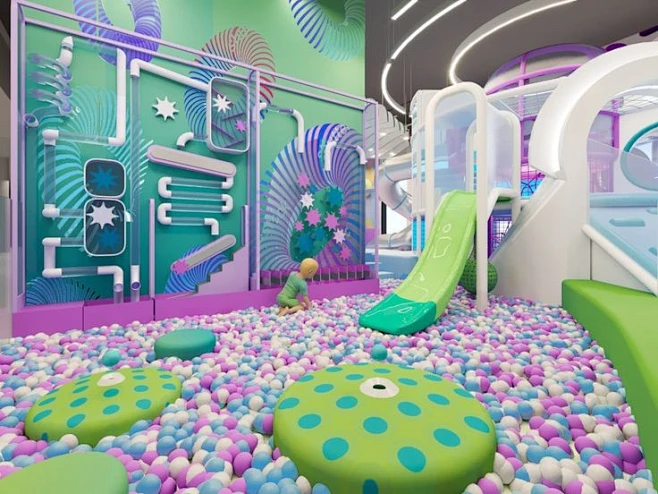 100㎡ Indoor Playground Layout – Compact Entry Model
Ideal Business Scenario
A 100㎡ indoor playground is commonly used in small malls, supermarkets, or community spaces. It is ideal for first-time investors testing the market with low financial risk.
Recommended Layout Structure
| Zone | Percentage | Function |
|---|---|---|
| Soft Play Area | 60% | Main activity zone |
| Ball Pit & Slides | 20% | Secondary attraction |
| Interactive Wall | 10% | Engagement features |
| Seating Area | 10% | Parent supervision |
This compact layout ensures high visibility and safe circulation.
Key Characteristics
A small indoor playgroun d focuses on simplicity and efficiency. It typically accommodates 15–30 children at a time with minimal staffing requirements.
Related solution:
Indoor Playground Profitability Guide
However, revenue potential is limited due to space constraints and fewer monetization opportunities.
300–500㎡ Indoor Playground Layout – Standard Commercial Model
Market Positioning
The 300–500㎡ range is the most widely used size in the indoor playground industry. It provides a balance between investment cost and revenue scalability.
Optimized Layout Structure
| Zone | Percentage | Equipment Type |
|---|---|---|
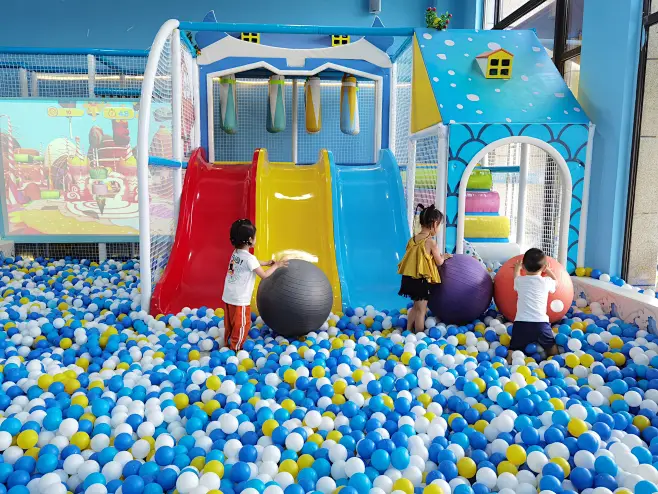
| Soft Play System | 40% | Multi-level structures |
| Trampoline Zone | 25% | Jumping & foam pits |
| Interactive Games | 15% | VR / projection systems |
| Party Rooms | 10% | Birthday events |
| Café Area | 10% | Parent seating |
This configuration improves engagement across multiple age groups.
Design Strategy: Flow + Zoning
A successful indoor playground layout must use loop-based circulation to avoid congestion. Separating toddler and high-energy zones improves both safety and user experience.
Clear zoning also helps operators manage commercial indoor play area equipment more efficiently during peak hours.
Business Advantages
A 500㎡ indoor playground supports 40–70 children simultaneously and enables multiple revenue channels such as ticket sales, memberships, and party bookings.
Learn more:
How to Evaluate a Reliable Indoor Playground Supplier in China
 1000㎡+ Indoor Playground Layout – Large-Scale Entertainment Center
Strategic Positioning
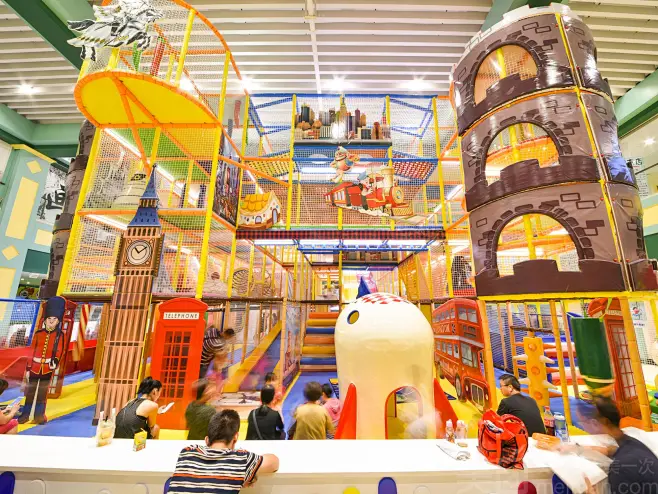
A 1000㎡+ indoor playground is designed for large shopping malls and family entertainment centers (FECs). It targets children, teenagers, and adults simultaneously, creating a full-scale entertainment ecosystem.
Zoned Layout System
Toddler Zone
Designed for ages 0–6 with soft play equipment and sensory activities to ensure maximum safety.
Kids Adventure Zone
Includes climbing structures, rope courses, and obstacle systems to enhance physical engagement.
Teen & Adult Zone
Features trampoline parks, ninja courses, and climbing walls, expanding the target market beyond children.
Family Entertainment Zone
Includes arcade machines and VR attractions, increasing dwell time and group participation.
Commercial Revenue Zone
Cafés, party rooms, and retail areas significantly increase secondary income.
Café Integration Strategy
Modern indoor playground design increasingly integrates cafés as a core revenue source. Parents typically spend 30–60 minutes in seating areas, making this zone highly profitable.
Placing cafés near central viewing areas increases both comfort and spending behavior, especially in large-scale commercial indoor play area equipment projects.
Capacity & Revenue Potential
A 1000㎡ facility can support 100–200 visitors simultaneously depending on layout optimization. It generates higher per-capita spending due to extended stay time and diversified attractions.
Indoor Playground Layout Optimization Principles
Smart Zoning Design
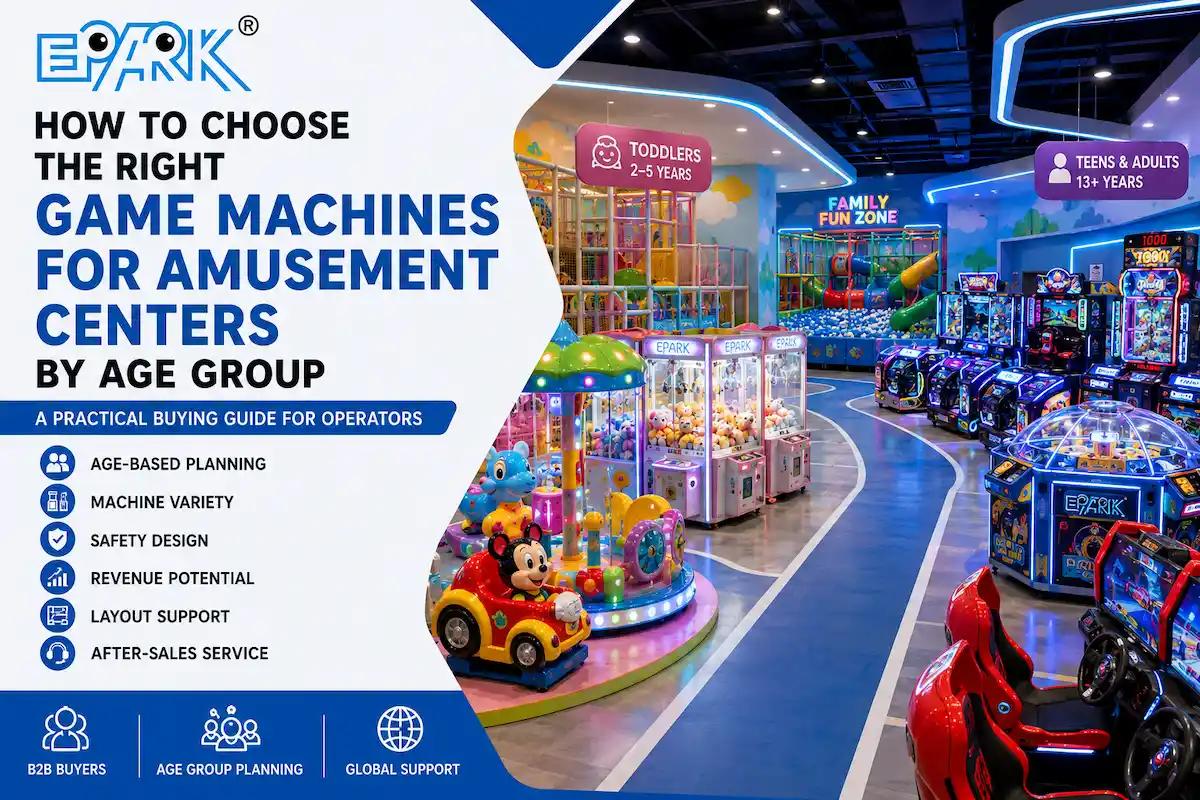
Each age group must have clearly separated zones. This improves safety and ensures smoother traffic flow across the indoor playground.
Visibility Engineering
Open sightlines allow parents to supervise children easily. This is a critical factor in customer satisfaction and repeat visits.
Traffic Flow Optimization
Loop-based movement systems are widely used in modern indoor playground layout design. They prevent congestion and improve visitor circulation.
Equipment Density Planning
| Size | Recommended Density |
|---|---|
| 100㎡ | 70–80% |
| 500㎡ | 60–70% |
| 1000㎡+ | 50–65% |
Balanced density ensures both engagement and safety compliance for indoor playground equipment.
Safety Standards Compliance
All commercial indoor play area equipment must meet:
- EN1176 (EU standard)
- ASTM F1918 (US standard)
- Fire-retardant materials
- Anti-collision protection systems
Compliance is essential for insurance approval and long-term operation.
 Common Indoor Playground Layout Mistakes
Many investors fail due to poor planning rather than equipment quality. Common mistakes include:
- Overcrowding equipment in small spaces
- Ignoring café and seating areas
- Poor visibility design
- Mixing toddler and high-energy zones
- Lack of revenue diversification
Avoiding these mistakes significantly improves the success rate of indoor playground projects.
 Conclusion
A successful indoor playground layout is not simply about placing equipment—it is about building a structured commercial ecosystem that balances safety, experience, and profitability.
Small spaces focus on fast ROI, mid-sized projects focus on balanced growth, and large-scale indoor playground centers aim for brand dominance and long-term revenue expansion. Regardless of size, proper layout planning is the key to maximizing the value of commercial indoor play area equipment.
Call to Action
Want a professional indoor playground layout design for your project?
Need help planning your commercial indoor play area equipment investment?
We provide free customized layout design, equipment configuration, and turnkey indoor playground solutions tailored to your space and budget.
Contact us today to get your exclusive indoor playground proposal and maximize your business ROI.
General Disclaimer
All data on https://www.eparki.com is for general guidance only. As a leading indoor playground manufacturer and trampoline supplier, EPARK strives for accuracy but gives no express or implied warranty regarding completeness, performance or project fitness. Product specs, designs and results may vary with use and customer requirements. Buyers must verify technical details, compliance and suitability before purchase. EPARK OEM/ODM is not liable for any direct, indirect or consequential damages arising from site use. For custom solutions, contact our manufacturer and supplier team via the Contact page.
Intellectual Property
Text, images, videos, CAD files and software are Guangzhou EPARK Electronic Technology Co., Ltd. All rights reserved. No part may be copied, republished or used commercially without prior written permission. We will pursue legal action for copyright or design-patent infringement.
Trademarks
"EPARK", the EPARK logo and related graphics are registered trademarks of Guangzhou EPARK Electronic Technology Co., Ltd. Unauthorized use in ads, domain names or packaging is prohibited.
Governing Law
These terms are governed by the laws of the People's Republic of China.
Contact
Questions? Email sales@nanyuetech.com or WhatsApp +86 139 0307 9263.