How to Set Up a Kids Play Zone: A Complete Guide for Business Owners
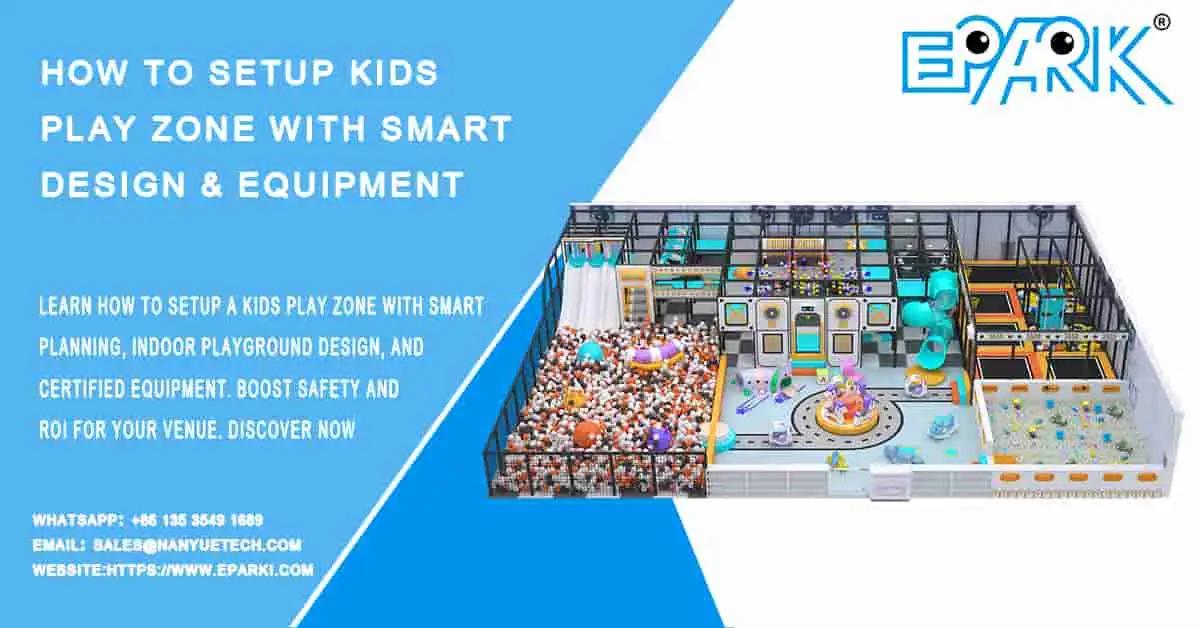
Setting up a kids play zone is one of the most effective ways for commercial venues to increase dwell time, attract families, and boost long-term revenue. From shopping malls to FECs, restaurants, hotels, and entertainment centers, a well-designed play area can drastically improve customer satisfaction. This guide explains how to set up a kids play zone professionally, while meeting safety standards, optimizing layout, and partnering with a reliable supplier like EPARK.
Related reading:
Indoor Playground Equipment Guide
Introduction
For B2B buyers, understanding how to set up a kids play zone is crucial because the investment affects safety, customer experience, and ROI. A play area is more than a simple attraction—it is a strategic asset that increases repeat visits and encourages families to stay longer. Proper planning ensures compliance with ASTM and EN standards, reduces long-term maintenance costs, and maximizes revenue potential.
Businesses that integrate a professionally designed kids play area or indoor playground consistently outperform competitors that do not offer dedicated family zones. This guide explains every step so you can make a confident purchasing decision.
What Is a Kids Play Zone?
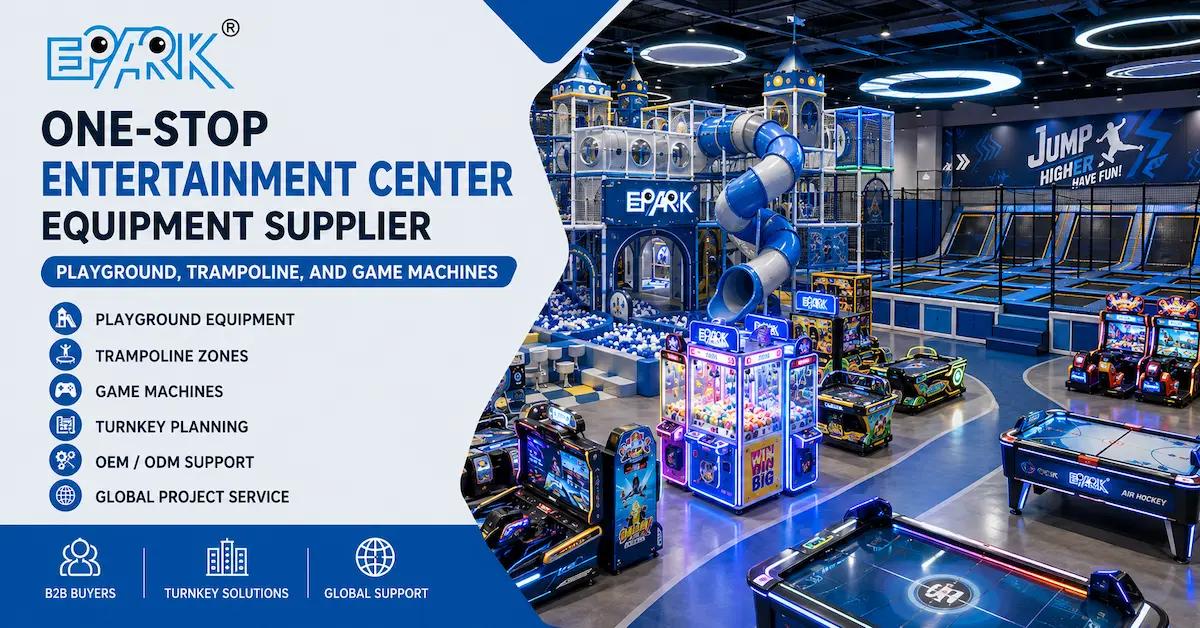
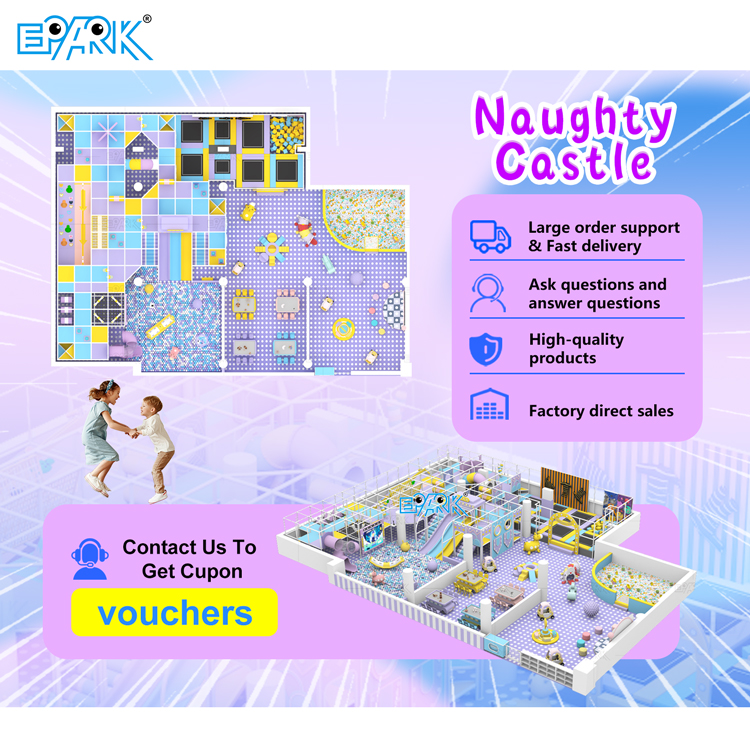
A kids play zone is a dedicated indoor or semi-indoor play area equipped with soft play structures, slides, ball pits, and interactive games. Compared with casual playgrounds, a commercial play zone focuses on safety, durability, and operational efficiency.
Core Components
-
Multi-level soft play structures
-
Slides, tunnels, ball pits, and climbing frames
-
Toddler-friendly mini play blocks
-
Seating zones for parents
-
Optional arcade and redemption machines
Business Benefits
-
Increases dwell time by 30–70%
-
Boosts food and retail purchases
-
Enhances brand image
-
Improves customer loyalty and repeat visits
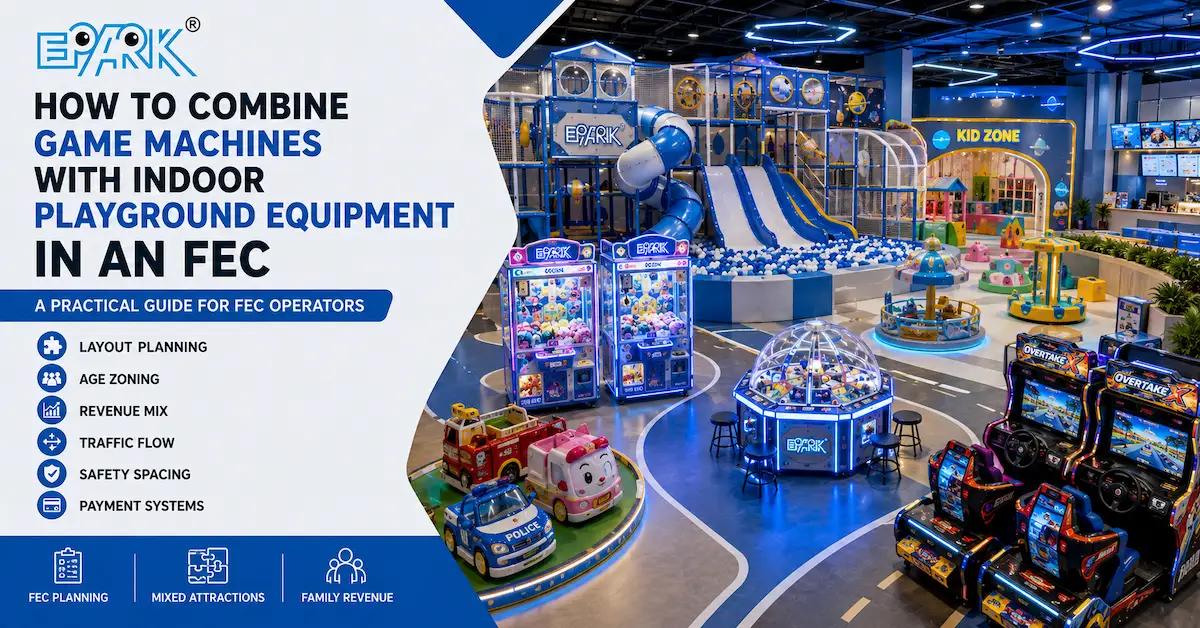
If paired with arcade games or themed soft play equipment, the zone becomes a strong revenue generator.
Planning Your Kids Play Zone
Setting up a kids play zone requires careful planning of age groups, space requirements, and layout logic.
Identify Your Target Users
Kids of different ages require different levels of challenge and safety.
| Age Group | Recommended Activities | Equipment Type |
|---|---|---|
| 1–3 yrs | Sensory, balance | Soft blocks, mini slides |
| 3–6 yrs | Exploration, climbing | Small soft play, tunnels |
| 6–12 yrs | Active, adventurous | Rope course, ninja course |
Understanding your audience allows you to select suitable indoor playground equipment with optimal safety and engagement.
Space Requirements & Layout Planning
A smart layout makes your play area safer, more engaging, and easier to supervise.
Key Layout Principles
-
Clear zoning for toddlers, older kids, and arcade areas
-
Open visibility so parents can supervise from seating zones
-
Smooth traffic flow at entry and exit points
-
Safety distance of 1–2 meters around structures
Space Guidelines
-
30–60 m²: Mini soft play + toddler zone
-
100–150 m²: Mid-size soft play + slides + ball pit
-
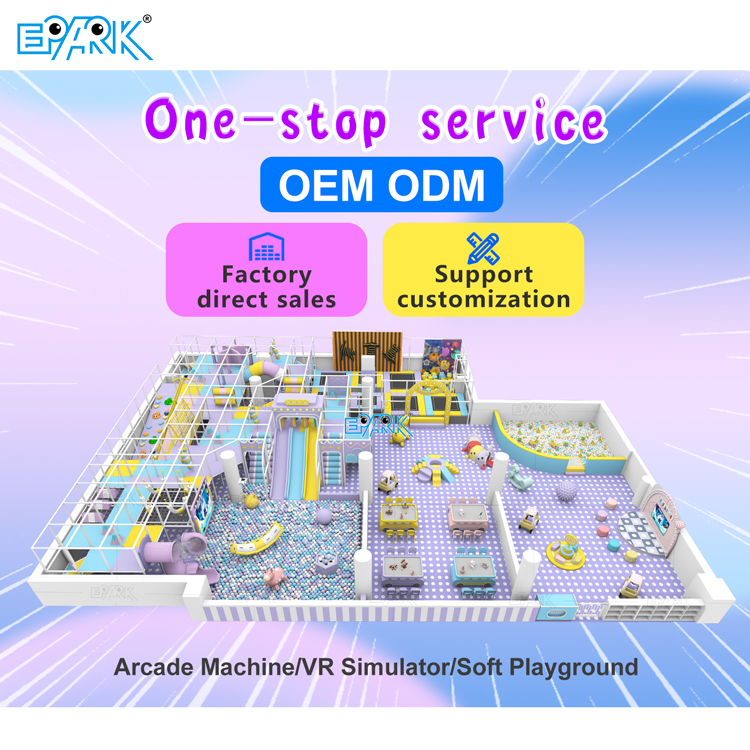
300 m²+: Multi-level indoor playground + arcade machines
Safety Standards You Must Follow
Safety is the foundation of every kids play zone and directly affects liability and customer trust.
International Safety Standards
| Standard | Region | Focus |
|---|---|---|
| ASTM F1918 | USA | Soft play safety |
| EN 1176 / 1177 | Europe | Play equipment & flooring |
| ISO 9001 / 8124 | Global | Quality & toy safety |
Key Technical Requirements
-
Fall protection flooring: 35–45 kg/m³ foam density
-
Padding thickness: 30–50 mm
-
Fire-resistant materials meeting EN or NFPA standards
-
Rounded edges & zero pinch points
-
Daily safety inspection checklist
Following these standards ensures your indoor playground remains safe, profitable, and compliant.
Choosing the Right Kids Play Equipment
Selecting equipment is one of the most important steps in learning how to set up a kids play zone.
Common Equipment Types
-
Soft play structures
-
Rope courses & ninja tracks
-
Ball pits & trampolines
-
Educational play panels
-
Arcade machines & redemption games
How to Select the Best Equipment
-
Match equipment to age groups
-
Use durable PVC (≥ 0.5 mm) and steel tubes (≥ 2.0 mm)
-
Choose easy-maintenance materials
-
Evaluate long-term ROI
-
Ensure compatibility with your floor layout
Customization Options
-
Themed designs: jungle, ocean, candy, space
-
Brand colors & logo integration
-
Custom soft play modules
-
Space-optimized layouts
How to Work With a Reliable Supplier
A strong supplier ensures safety, customization, installation, and long-term support.
What to Look For
-
Factory capability and certified production
-
ASTM / EN compliance documents
-
Free 2D/3D design support
-
Professional installation guidance
-
Quick after-sales response
Why Choose EPARK
EPARK is a trusted global manufacturer offering:
-
12+ years production experience
-
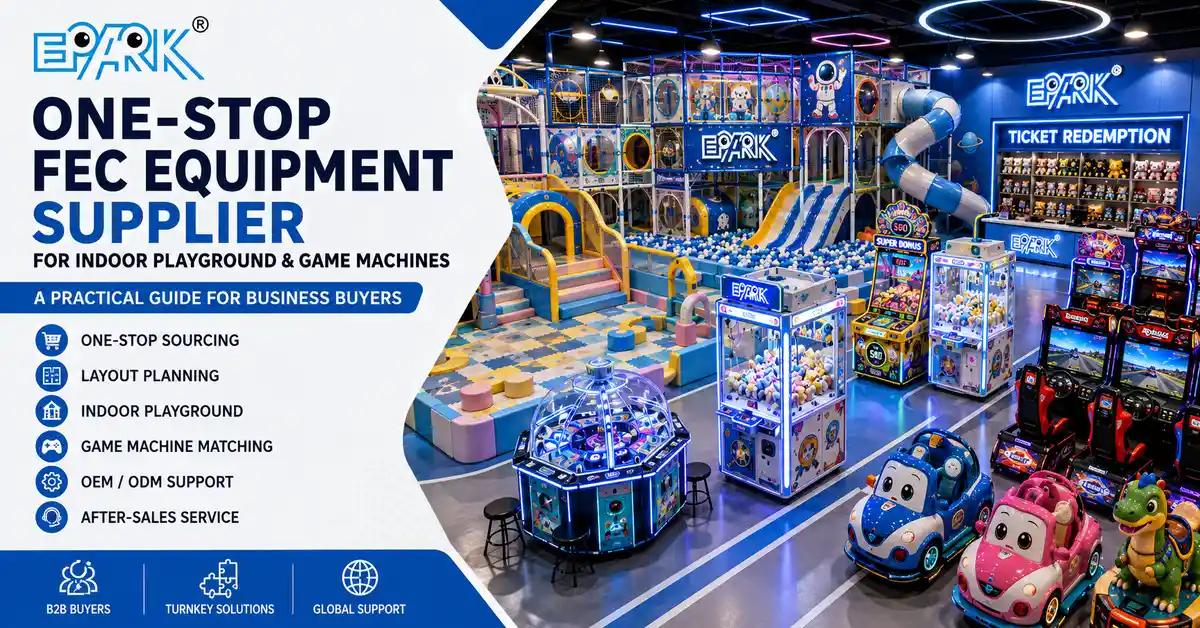
One-stop solutions: soft play + arcade machines + trampolines
-
OEM/ODM service
-
Free professional 3D layout
-
Certified materials meeting global standards
-
Installation support & long-term after-sales service
EPARK’s products are widely used in malls, FECs, indoor playground centers, and children’s theme parks.
Installation & Setup Process
Understanding the installation sequence is essential for completing your kids play zone efficiently.
Pre-Installation
-
Confirm final layout
-
Prepare power supply, flooring, and wall padding
-
Measure ceiling height (≥ 2.8 m recommended)
Installation Steps
-
Build the steel frame
-
Apply padding, PVC, and safety nets
-
Install slides, tunnels, and soft modules
-
Configure electrical components
-
Perform safety inspection
-
Final cleaning and opening preparation
Post-Installation
-
Daily inspection
-
Weekly deep cleaning
-
Monthly maintenance reports
-
Staff supervision training
Budgeting & ROI
A well-planned kids play zone offers fast payback and long-term profitability.
Cost Breakdown
| Category | % of Total |
|---|---|
| Equipment | 55–65% |
| Flooring & padding | 10–15% |
| Shipping | 5–12% |
| Installation | 10–15% |
| Decoration | 5–10% |
 ROI Insights
-
Increases foot traffic by 25–40%
-
Boosts family spending by 20–60%
-
Enables party packages, memberships, and ticket sales
-
Typical payback period: 6–18 months
Learning how to set up a kids play zone requires understanding layout planning, equipment selection, safety standards, and supplier reliability. With proper preparation and a trusted partner like EPARK, you can create a safe, profitable, and engaging indoor playground that keeps families returning.
A well-designed kids play area not only improves customer satisfaction—it also becomes a sustainable, high-ROI asset for your business.
Build Your Kids Play Zone with EPARK
Ready to create your kids play zone?
Request a FREE 3D design and customized quotation from EPARK.
Let us help you build a safe, high-quality indoor playground that attracts families and increases revenue.
General Disclaimer
All data on https://www.eparki.com is for general guidance only. As a leading indoor playground manufacturer and trampoline supplier, EPARK strives for accuracy but gives no express or implied warranty regarding completeness, performance or project fitness. Product specs, designs and results may vary with use and customer requirements. Buyers must verify technical details, compliance and suitability before purchase. EPARK OEM/ODM is not liable for any direct, indirect or consequential damages arising from site use. For custom solutions, contact our manufacturer and supplier team via the Contact page.
Intellectual Property
Text, images, videos, CAD files and software are Guangzhou EPARK Electronic Technology Co., Ltd. All rights reserved. No part may be copied, republished or used commercially without prior written permission. We will pursue legal action for copyright or design-patent infringement.
Trademarks
"EPARK", the EPARK logo and related graphics are registered trademarks of Guangzhou EPARK Electronic Technology Co., Ltd. Unauthorized use in ads, domain names or packaging is prohibited.
Governing Law
These terms are governed by the laws of the People's Republic of China.
Contact
Questions? Email sales@nanyuetech.com or WhatsApp +86 139 0307 9263.