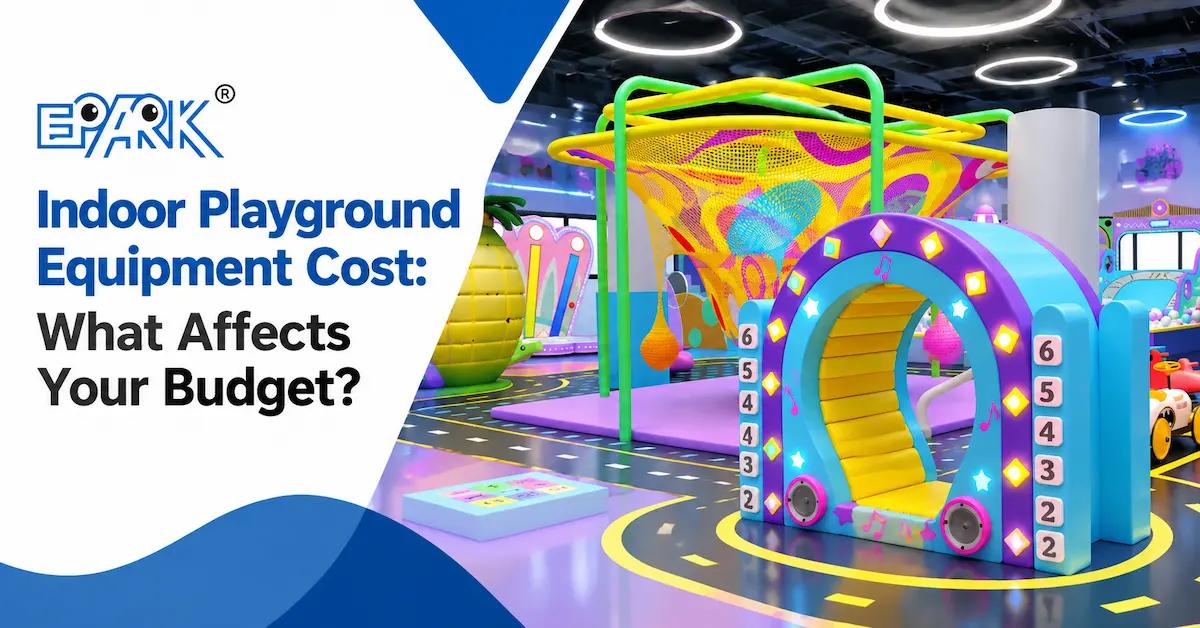
There is no responsible universal price for indoor playground equipment cost because the quote is a bundle of different scopes. A comparable budget must separate the play system itself from design, theme customization, materials, loose parts, packaging, freight, installation, site preparation, documentation, local compliance and future spares. The fastest way to get a useful number is to send a measured RFQ and require each supplier to label what is included, excluded, provisional or still to be confirmed.
This article is written for FEC owners, mall developers, kids-cafe operators, schools, hotels, distributors and procurement teams who are comparing commercial indoor playground proposals. It does not publish invented price ranges, payback periods or guaranteed returns. Instead, it explains the variables that move the quotation and gives you a worksheet for asking the same question of every supplier.
Guangzhou EPARK Electronic Technology Co., Ltd., based in Panyu District, Guangzhou, China, publicly positions itself as an indoor playground and children’s amusement equipment manufacturer. Its public company information describes a 25,000 m² factory, more than 100 workers and 400-plus machines. Those figures identify the manufacturing context; they are not a price list or a promise that every project includes the same service. EPARK’s public process covers consultation, design, material selection, custom manufacturing, inspection, secure packaging, delivery, installation and after-sales support. Each line must be confirmed in the project quotation.
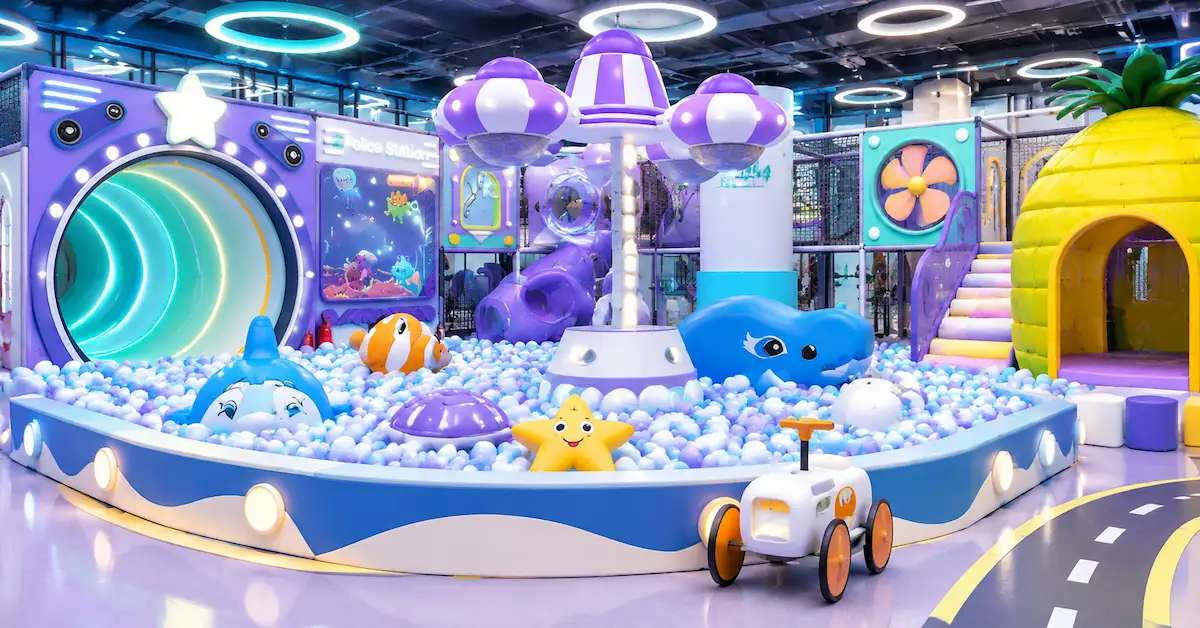
1. Define the Cost Question Before You Ask for a Price
Buyers often ask, “How much does an indoor playground cost?” A supplier hears several possible scopes: equipment only, equipment plus design, a turnkey installation, or a complete venue fit-out. These are not interchangeable. Rewrite the question as: “What is the delivered cost of this specified equipment package at this address, with these drawings, materials, documentation and installation assumptions?” That wording turns a vague budget conversation into a procurement task.
Equipment cost versus project cost
Equipment cost is the physical system described on the drawing: structural frames, platforms, soft play modules, slides, nets, flooring supplied by the manufacturer, ball pools, panels, stairs and loose parts. Project cost adds the work required to make that system usable at your site: design revisions, production, export packing, freight, customs, unloading, installation, local permits, building modifications, power or HVAC changes and post-handover stock.
Some suppliers combine several scopes into one number for convenience. That is acceptable only when the inclusions and exclusions are written clearly. A low headline number can become expensive when the buyer later discovers that the floor, delivery to site, assembly, local tax, fire review or replacement parts were never included.
Cost rule: Never compare a factory equipment total with a turnkey local installation total as if they were competing products. Normalize the scope first, then compare the commercial terms.
2. The Ten Cost Buckets in a Quote-Ready Model
Build a worksheet with one row per cost bucket. Ask the supplier to mark every row as included, excluded, provisional or pending confirmation. This method helps a buyer preserve the design intent when the quotation is revised.
| Cost bucket | What can change it | What the buyer should request |
|---|---|---|
| 1. Core equipment | Area, height, number of levels, activities, slides, ball pools and structural density. | Dimensioned drawing and component schedule. |
| 2. Design and engineering | New layout, CAD revisions, 3D views, structural review, local comments and redesign cycles. | Revision allowance, deliverables and approval stages. |
| 3. Theme customization | Custom shapes, printed graphics, color matching, branded panels, sculpted foam and special signage. | Theme brief, artwork ownership and sample approval method. |
| 4. Materials and finishes | Structural pipe, foam, PVC, flooring, nets, slide material, upholstery and selected surface finish. | Material schedule tied to each component. |
| 5. Loose parts | Ball quantity, sensory pieces, tables, seating, replacement stock and packaging volume. | Itemized loose-part list and spares recommendation. |
| 6. Packing and export preparation | Crate type, protection, labeling, container utilization and destination handling requirements. | Packing method, dimensions, weights and marks. |
| 7. Freight and import | Origin, destination, Incoterm, mode, season, port, insurance, duty and inland delivery. | Named Incoterm and freight assumptions, not “shipping included.” |
| 8. Installation | Site access, local labor, tools, travel, assembly complexity and supervision requirements. | Installation scope, crew, duration estimate and exclusions. |
| 9. Site preparation | Floor leveling, walls, ceiling, electrical, lighting, HVAC, fire systems and permits. | Responsibility matrix between buyer, builder and supplier. |
| 10. Operations and future cost | Cleaning, inspections, spare covers, balls, nets, replacement panels and training. | Handover pack, spare-parts pricing basis and maintenance checklist. |
3. Area Is Important, but It Is Not the Whole Budget
Square meters are useful for an initial conversation, but two layouts with the same floor area can have very different equipment totals. A low open toddler zone may use fewer structural levels than a dense multi-level route. A themed project with sculpted landmarks and custom artwork may require more design and production work than a neutral modular layout. A room with columns, low beams or difficult access can add engineering and installation effort even if its measured area is modest.
Record at least these spatial inputs: usable length and width, clear ceiling height at the lowest point, structural columns, doors and delivery path, emergency exits, fire equipment, fixed furniture, HVAC, floor condition, wall finish, parent seating and any landlord restrictions. Provide both a dimensioned plan and photographs. A supplier that quotes from area alone is missing information that can later become a change order.
Density, levels and activity mix
More activities per square meter can increase the number of components, connections, protective surfaces and inspection points. Multiple levels may require additional stairs, barriers, nets and access planning. Slides and tunnels change the circulation logic. Ball pools add loose-part quantity and a cleaning workflow. Ask the designer to show how every activity connects to the route and which parts are structural, decorative or removable.
RFQ field: “Please quote the same footprint in two configurations: a lower-density toddler route and a higher-density mixed-age route. Identify the component, design and installation differences separately.” This produces a useful comparison without inventing a per-square-meter benchmark.
4. Materials, Safety Evidence and Why the Specification Changes the Number
Material selection affects fabrication, finishing, cleaning, replacement and documentation. EPARK public materials refer to hot-dip galvanized cold-rolled steel pipes, high-density foam, soft PVC sleeves, EVA or PU flooring, safety nets, railings and FRP or composite-resin slides in its product information. Treat those as evidence entry points, not a universal bill of materials. Ask which material applies to which component in your design.
Questions that make material cost comparable
- What structural elements are galvanized, painted or otherwise finished, and where?
- What foam and covering specification is used for each soft element?
- Which flooring zones are supplied by the manufacturer and which are by the site contractor?
- Are slide bodies, guardrails, nets and connectors listed separately?
- Are custom colors, printed artwork or sculpted features included in the standard finish?
- Which cleaning products and replacement parts are compatible with the selected surfaces?
Safety documentation can also change the procurement workload. EPARK pages mention standards and evidence such as EN1176, ASTM, CE and SGS in different contexts. A buyer should name the destination market and request documents applicable to the exact product scope. Do not assume that a certificate image on a general page covers every component, configuration or destination.
5. Customization: Where a “Standard” Quote Becomes a Project
Customization is not one switch. It can mean resizing a standard module to fit a column, changing a color palette, replacing a theme landmark, creating a branded entrance, modifying the route for a target age, adding a ball pool, or designing a completely new structure. Each request changes the drawing, approval cycle, production method or documentation burden to a different degree.
Classify every requested change
- Configuration change: select from an existing component family and place it in a new layout.
- Finish change: adjust colors, upholstery or graphics without changing the structure.
- Dimensional change: modify width, height, access or clearance to suit the building.
- New design element: create a special shape, branded landmark or activity not in the standard library.
- Compliance or site change: adapt the design to local rules, fire review, accessibility or landlord requirements.
Ask the supplier to show which classification applies to each line. This prevents a late conversation in which a “small artwork change” is treated as a structural redesign or a “same slide, different position” is discovered to change the entire circulation route. EPARK’s customization process can be used as the approval sequence: needs assessment, design, material selection, manufacturing, inspection, packing, delivery, installation and support.
Separate one-time design work from repeatable production
For a single venue, design development may be a one-time project cost. For a distributor, franchise or multi-site operator, the same drawing may become a repeatable product reference. Ask which files, color codes, component names and revision records will be retained for a future order. Clarify whether a later reorder uses the same approved specification or requires a new engineering review. This distinction does not create a guaranteed discount; it simply makes the commercial relationship easier to govern.
Ask for a change-control threshold. A new logo position, a different foam color and a new structural landmark should not be treated as the same type of change. Put the approval owner, artwork format, sample method and expected review time into the quotation. When a buyer approves a design without these boundaries, the cost model can drift while everyone still believes they are working from the same concept.
6. Packing, Freight and Installation: The Landed-Cost Blind Spot
Equipment cost is often quoted at the factory while the buyer is planning a venue at the final address. The difference is the landed-cost layer. Ask for the packing method, number of packages or containers, approximate dimensions and weights, shipping origin, destination, Incoterm, insurance assumption, customs responsibility and inland delivery point. “Shipping included” is not precise enough for a purchase order.
Installation should be separated from site preparation. A supplier may provide professional installation or installation guidance, but the building may still need a level floor, finished walls, adequate access, lighting, power, HVAC, fire systems or local inspection. Put these responsibilities into a matrix with columns for buyer, landlord, general contractor and equipment supplier.
| Question | Why it changes cost | RFQ wording |
|---|---|---|
| Where is delivery complete? | Port, curbside, warehouse or inside the venue require different handling. | “State the exact delivery point and unloading responsibility.” |
| Who provides installation? | Labor, travel, tools and supervision may be separate. | “List installation crew, duration assumption and exclusions.” |
| Who prepares the room? | Floor, walls, ceiling and services can require local contractors. | “Return a pre-installation readiness checklist.” |
| What happens after damage? | Replacement packaging and spare components affect downtime and future cost. | “Provide recommended opening spares and reorder process.” |
Use a readiness gate before the shipment is released
Agree on a readiness gate that covers approved drawings, final colors, packaging marks, delivery address, access dimensions, floor completion, storage, power and the installation date window. The gate should identify a person on each side who can stop dispatch when a critical input is missing. This is not administrative overhead: it protects the equipment from arriving before the room can receive it and reduces the risk of storage damage, rushed unloading or a second mobilization.
For imported projects, add a document gate. Confirm commercial invoice data, packing list, country-of-origin wording, product descriptions and any destination-market documents requested by the broker or authority. The equipment supplier can provide its export documents, while the buyer remains responsible for local customs advice and building approvals. Write that boundary into the RFQ so it is not mistaken for a hidden service.
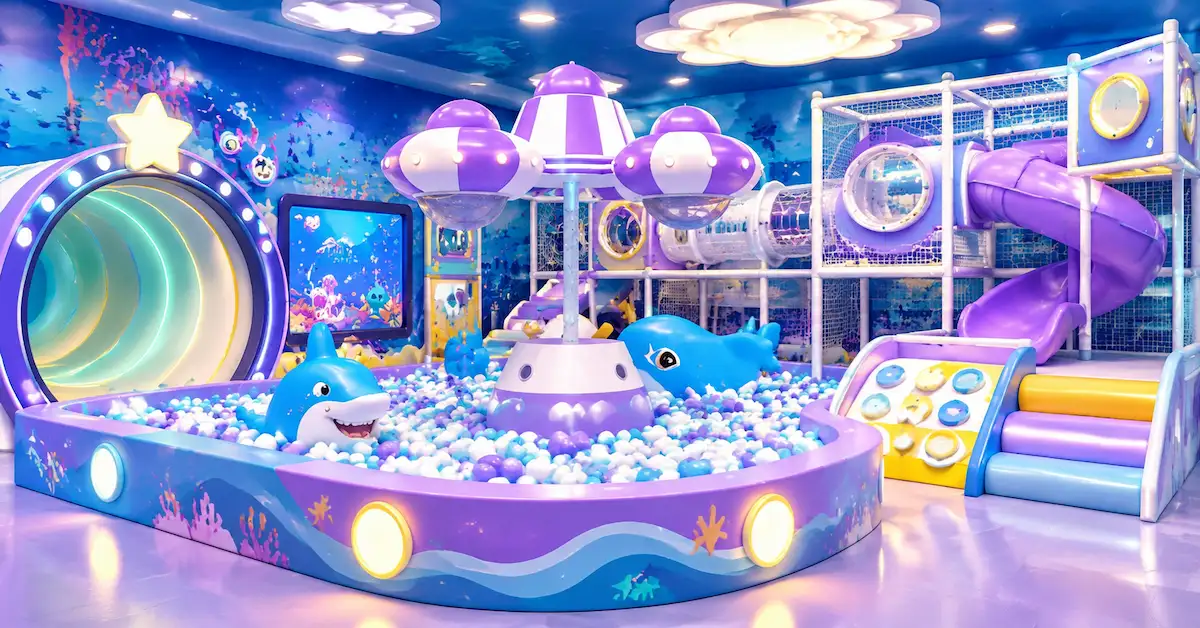
7. How to Compare Three Supplier Quotes on the Same Basis
Create a comparison sheet with one row for every scope and one column per supplier. Do not copy only the grand total. Normalize currency, tax treatment, Incoterm, design revision count, delivery point, installation, warranty language, certificate package and payment milestones. Mark unknown items in amber rather than treating them as zero.
Quote normalization checklist
- Same measured footprint, clear height and target age profile.
- Same activity list, number of slides, ball pool inclusion and flooring scope.
- Same theme level: standard colors, custom artwork or sculpted landmarks.
- Same material and documentation assumptions.
- Same packing, freight, insurance and delivery point.
- Same installation and site-readiness responsibilities.
- Same spare parts, training, inspection and after-sales expectations.
- Same validity date and change-order rules.
If a supplier cannot answer one row yet, keep the quote provisional. A transparent provisional item is safer than a falsely precise total. Record the person responsible for confirmation and the date needed. This is especially important when building approval, fire review or destination-market documentation is still pending.
8. A Practical RFQ Template You Can Send to an Indoor Playground Manufacturer
Include the following fields in one document. It reduces back-and-forth and gives the manufacturer enough context to identify genuine cost drivers.
- Venue: country, city, venue type, opening target and operating hours.
- Room: usable dimensions, clear height, columns, exits, doors, floor condition and delivery access.
- Users: target age bands, mixed-age policy, parent supervision and expected peak pattern.
- Play brief: activity priorities, theme, quiet zone, active zone, ball pool, slides and accessibility needs.
- Commercial scope: equipment only, design support, installation, packing, freight and documentation.
- Evidence: required standards, certificates, material schedule, inspection records and manuals.
- Operations: cleaning products, inspection frequency, spare parts, staff handover and storage.
- Brand: colors, logo rules, artwork files, signage language and approval owner.
- Quote format: currency, Incoterm, delivery point, validity, payment milestones and exclusions.
EPARK’s indoor playground category can help a buyer identify the equipment family before writing the brief. The products overview is useful when the project combines playground equipment with other entertainment categories. Link the selected category to the actual RFQ rather than asking the supplier to infer the scope from a generic inspiration image.
9. Factory Evidence, Trust and Change-Order Control
A high-quality cost article must distinguish supplier evidence from assumptions. EPARK publishes its Guangzhou location, company background, product categories, materials and customization process on official pages. During procurement, ask for project-specific evidence: factory or production photos for the selected component family, material samples, drawing revision history, packing photos, inspection records and a clear list of what the installation team will receive.
Use a change-order log from the first design review. Record the request, drawing version, cost effect, schedule effect, responsible approver and whether the change is mandatory or optional. Theme changes, room measurements, local compliance comments and landlord requests are common sources of revision. A clear log protects both buyer and supplier because the final quotation remains tied to an approved version.
Trust check: If a quote uses words such as “premium,” “safe,” “fast” or “turnkey,” ask what document, scope or responsibility those words represent. Replace adjectives with a drawing, a material line, a checklist or a named deliverable.
Build an evidence register with the quote
Keep a simple register with four columns: statement, source, scope and confirmation owner. “High-density foam” should point to the product or material document that uses that term. “Installation included” should point to the quotation line that names the crew and responsibility. “Certificate available” should point to the document identifier and applicable product scope. This register helps marketing, procurement, engineering and operations use the same language after the contract is signed.
It also protects future content. A product photograph, production image, material sample, packaging image or completed project reference can become original evidence in a later case study only when the company knows what it depicts and what may be published. Treat the evidence register as part of the project file, not as a separate marketing exercise.
10. FAQ About Indoor Playground Equipment Cost
Can I calculate indoor playground equipment cost only from square meters?
No. Area is an early sizing input, not a complete pricing model. Levels, activity density, slides, ball pools, theme customization, materials, site access and installation can change the quotation significantly. Request a dimensioned configuration and a line-item bill of materials.
Why are two quotes for the same room so different?
They may not contain the same scope. One may include design, packing and installation while another is equipment-only. They may also use different activity density, material schedules, theme work, delivery points or certificate requirements. Normalize the ten cost buckets before comparing totals.
Does EPARK publish fixed prices?
Public product pages are not a universal price list for every venue configuration. The final price needs the project dimensions, selected components, customization, destination and delivery scope. Send an RFQ with those inputs for a project-specific quotation.
What should be included in the equipment line?
Ask for structural frames, platforms, soft play elements, slides, nets, flooring supplied by the manufacturer, ball pools, panels, stairs and loose parts to be listed separately. The exact list should match the approved drawing.
How should I treat freight and customs in my budget?
Keep them as separate landed-cost lines until the supplier confirms the Incoterm, delivery point, packing dimensions, freight basis, insurance, duty, tax and inland handling. “Shipping included” without these details is not comparable.
What production time should I use for planning?
Use the supplier’s project-specific schedule after design confirmation. EPARK public FAQ material references preliminary design and production windows, but timing varies with configuration, approval, materials, packing and destination. Treat any public timing as guidance, not a guaranteed opening date.
Should I budget for spare parts at the start?
Yes, ask the manufacturer to recommend opening spares based on the actual system: covers, balls, nets, trim, fasteners or replaceable panels as applicable. Put the reorder process and identification method in the handover pack.
Conclusion
Indoor playground equipment cost becomes manageable when it is treated as a documented scope rather than a single headline number. Define the room and users, separate equipment from design and site work, identify materials and evidence, normalize freight and installation, and record every provisional item. A quote-ready RFQ protects the budget because it gives the supplier a fair technical brief and gives the buyer a defensible comparison. The most useful next step is to submit the measured plan and the ten cost buckets together, then approve a drawing version before comparing totals.
General Disclaimer
All data on https://www.eparki.com is for general guidance only. As a leading indoor playground manufacturer and trampoline supplier, EPARK strives for accuracy but gives no express or implied warranty regarding completeness, performance or project fitness. Product specs, designs and results may vary with use and customer requirements. Buyers must verify technical details, compliance and suitability before purchase. EPARK OEM/ODM is not liable for any direct, indirect or consequential damages arising from site use. For custom solutions, contact our manufacturer and supplier team via the Contact page.
Intellectual Property
Text, images, videos, CAD files and software are Guangzhou EPARK Electronic Technology Co., Ltd. All rights reserved. No part may be copied, republished or used commercially without prior written permission. We will pursue legal action for copyright or design-patent infringement.
Trademarks
"EPARK", the EPARK logo and related graphics are registered trademarks of Guangzhou EPARK Electronic Technology Co., Ltd. Unauthorized use in ads, domain names or packaging is prohibited.
Governing Law
These terms are governed by the laws of the People's Republic of China.
Contact
Questions? Email sales@nanyuetech.com or WhatsApp +86 139 0307 9263.