Why Choosing the Right Soft Play Equipment Supplier Matters
Commercial soft play equipment is not a single product.
A complete project may combine steel structures, padded platforms, slides, ball pools, climbing elements, tunnels, safety nets, flooring, toddler zones, interactive components, and themed decoration. All of these elements need to fit a specific venue, target age group, operating model, and destination market.
That makes choosing a soft play equipment supplier a project-risk decision rather than a simple product purchase.
A visually attractive playground can still create problems if the materials are unclear, the layout does not fit the building, the installation process is poorly planned, or replacement parts are difficult to obtain.
Before placing an order, commercial buyers should be able to answer:
- Can the supplier design around my actual floor plan?
- Are materials clearly specified?
- How are different age groups separated?
- Who manufactures the equipment?
- What quality checks are performed?
- Which safety documents apply to my project?
- How will the equipment be installed?
- What happens if a part needs replacement?
- Can the supplier support future modifications?
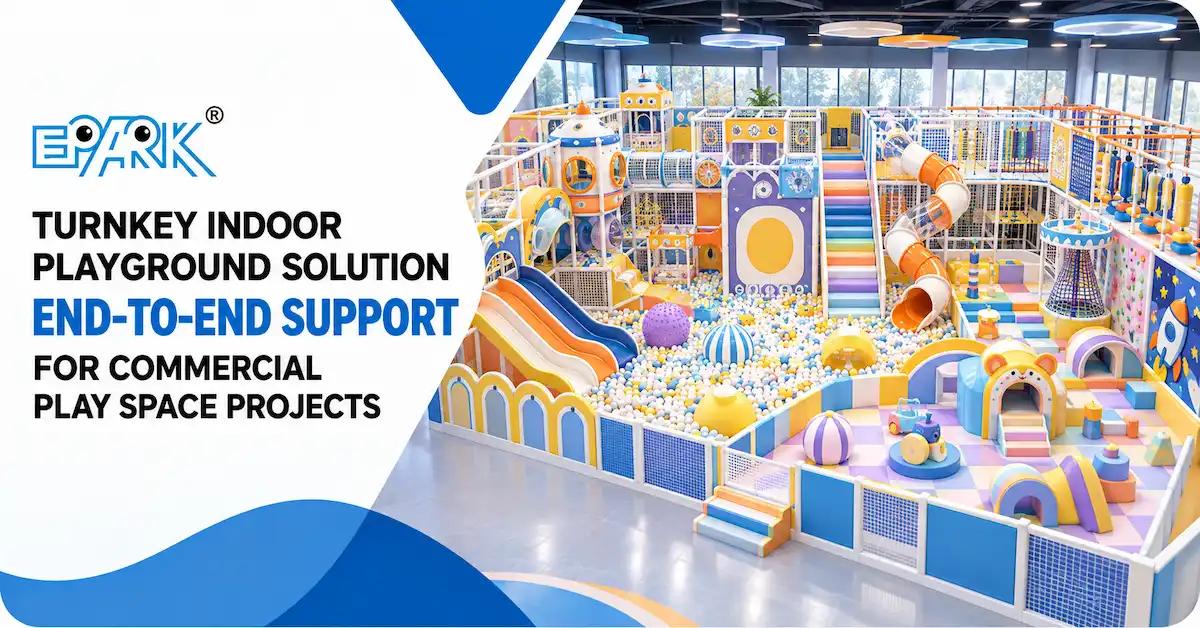
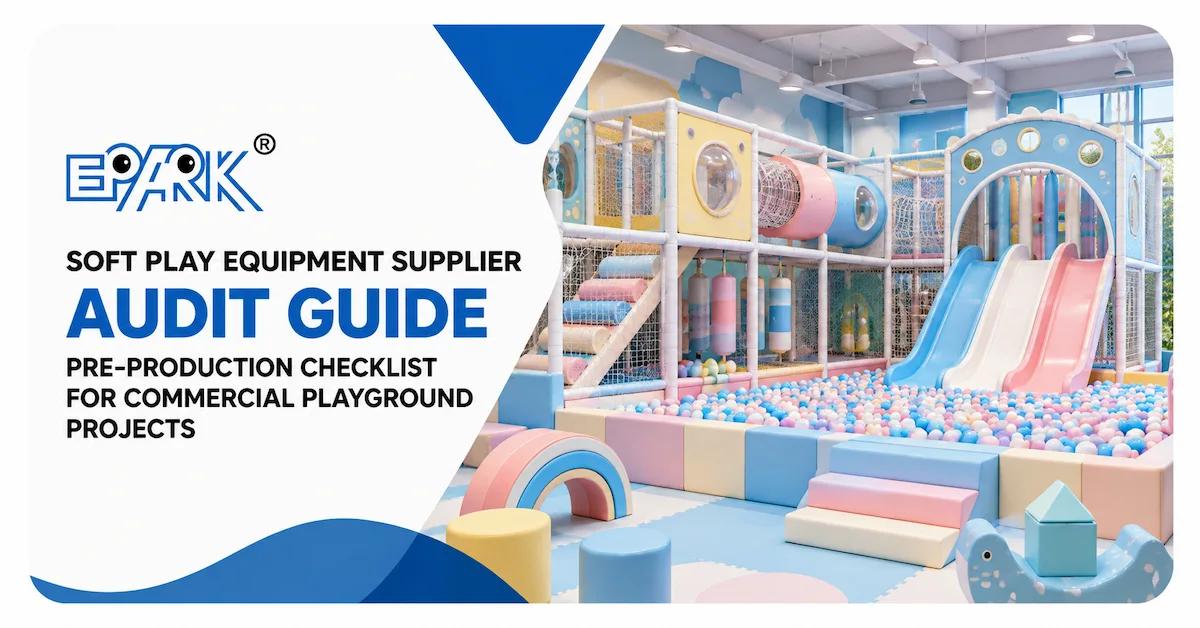
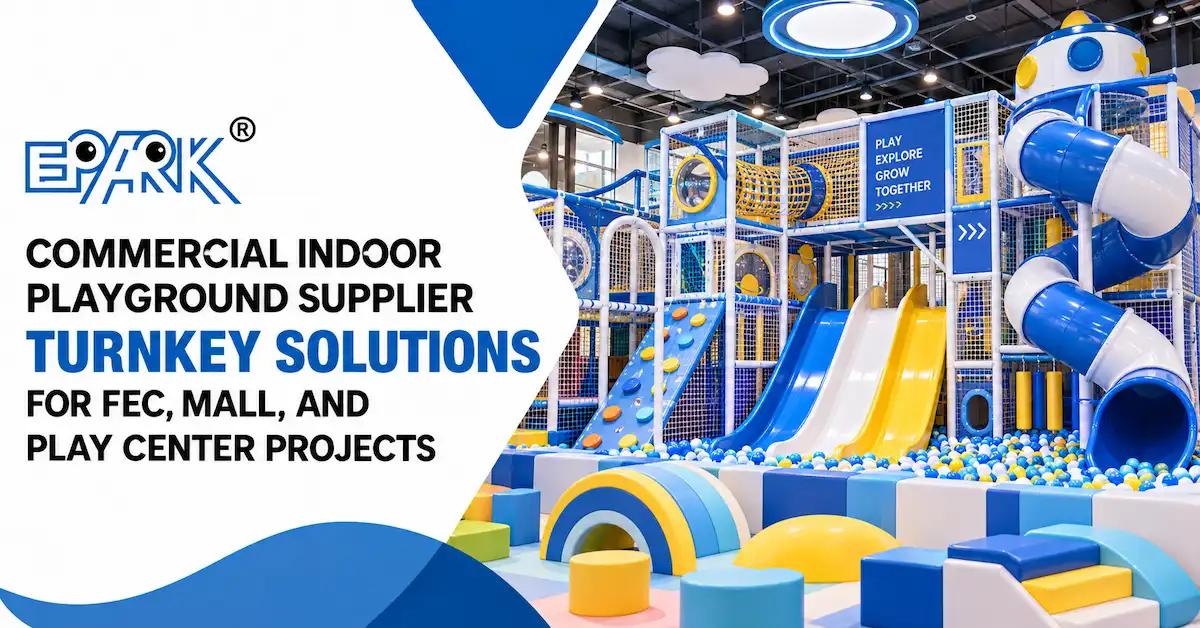
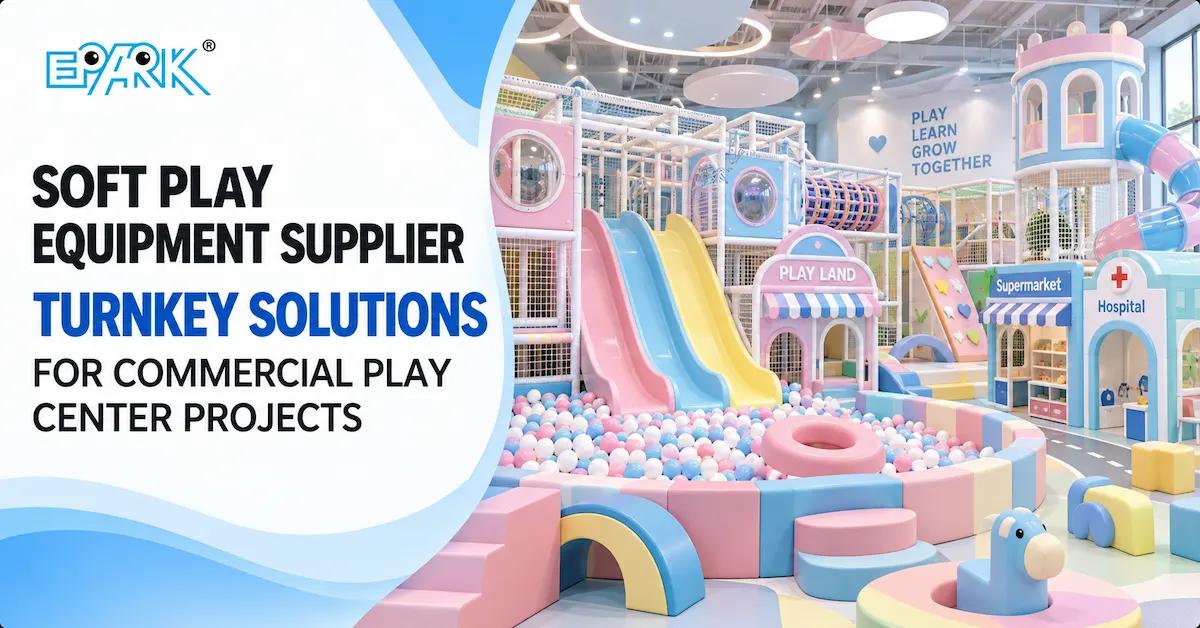
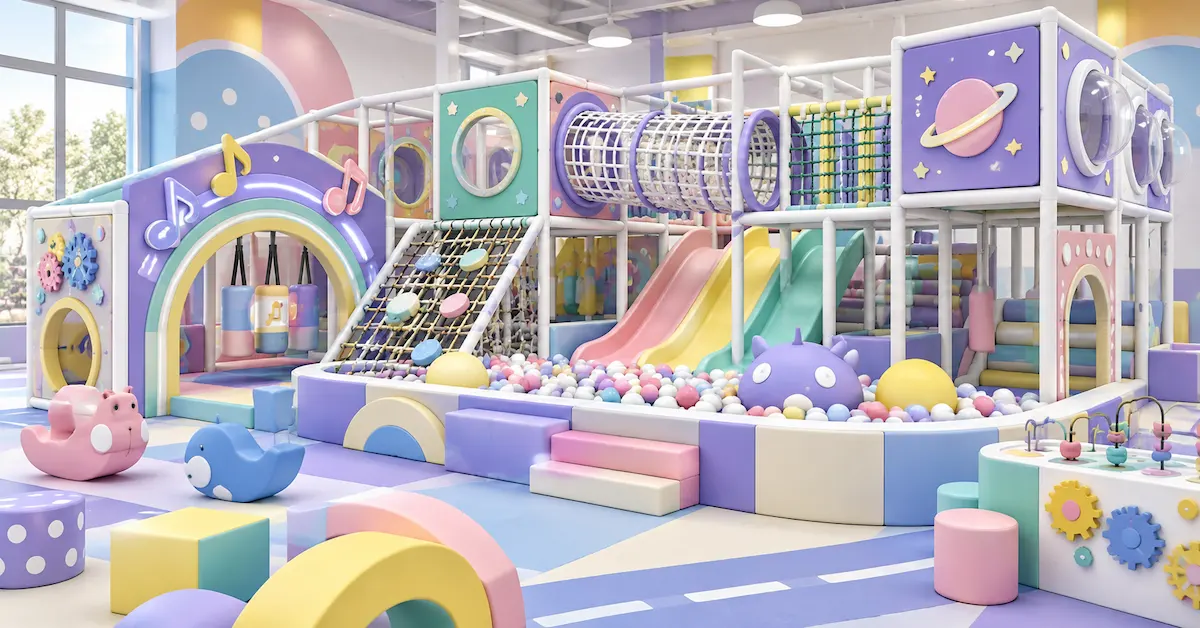
EPARK’s current indoor playground product range shows different commercial layouts, themes, slides, soft play areas, climbing features, and multi-level play structures that can be used as references during early project planning.
What Does a Soft Play Equipment Supplier Actually Provide?
The word “supplier” can describe very different levels of service.
Some companies mainly sell finished products. Others provide design and manufacturing. A more complete commercial supplier can coordinate the project from initial site information through production, shipping, installation, and after-sales support.
For B2B buyers, the difference matters.
| Supplier Capability | Why It Matters |
|---|---|
| Site analysis | Identifies floor-plan and building constraints |
| Space planning | Organizes circulation, age zones, and activities |
| 3D design | Helps buyers review the concept before production |
| Material specification | Clarifies what is used in frames, padding, flooring, slides, and nets |
| Custom manufacturing | Adapts equipment to site and brand requirements |
| Quality control | Helps reduce production and shipment errors |
| Packaging | Protects parts during international transport |
| Installation support | Helps ensure correct on-site assembly |
| Spare parts | Supports later maintenance |
| After-sales service | Reduces long-term operating risk |
EPARK’s Customization Process follows a project workflow covering consultation, space planning, design, material selection, manufacturing, inspection, delivery, installation, and after-sales support.
For buyers, this type of defined process makes it easier to understand what the supplier is actually responsible for.
1. Start With Project Fit, Not Catalogue Size
A large catalogue does not automatically make a company the right soft play equipment supplier for your project.
The supplier first needs to understand the venue.
Prepare your site information
Useful inputs include:
- Floor plan
- Usable floor area
- Ceiling height
- Building columns
- Entrances and exits
- Fixed walls
- Installation access
- Destination country
Without these details, even an attractive proposal may be difficult to build accurately.
Define the target age group
Soft play for toddlers is not designed in the same way as equipment for older children.
A toddler-oriented project may prioritize:
- Low play heights
- Soft obstacles
- Sensory elements
- Smaller slides
- Open supervision
- Cushioned flooring
A project serving older children may need:
- Multi-level climbing
- Tunnels
- Larger slides
- Obstacle activities
- More physical challenges
- Interactive elements
Age zoning should be discussed before the final equipment mix is approved.
Define the business model
A shopping mall, FEC, preschool, hotel, kids café, and independent play center can have very different operating goals.
The supplier should understand whether the project is designed to improve:
- Ticket revenue
- Customer dwell time
- Family traffic
- Birthday-party business
- Repeat visits
- Parent-child interaction
- Physical activity
- Mixed FEC revenue
The more clearly the business model is defined, the easier it becomes to evaluate whether the proposed playground really fits the project.
2. Check the Materials Behind the Soft Play Equipment
Materials are one of the most important areas to review before choosing a supplier.
Commercial playgrounds experience repeated use, cleaning, contact, and wear. Buyers should therefore understand the material system rather than accept vague descriptions such as “premium materials.”
EPARK’s Safety and Quality information identifies materials including:
- Cold-rolled steel pipe with hot-dip galvanization
- High-density foam
- Soft PVC protective coverings
- EVA or PU flooring
- FRP or composite resin components
- Safety nets
Different materials perform different functions.
Structural frame
The frame supports platforms, tunnels, slides, bridges, netting, and other modules.
Ask:
- What steel is used?
- How is it protected against corrosion?
- How are connections designed?
- Which areas remain accessible for inspection?
Foam and protective covering
Padding helps protect user-contact areas.
Buyers should look at:
- Foam placement
- Surface covering
- Seams
- Corners
- High-wear areas
- Replacement access
Flooring
Flooring should be evaluated according to:
- User age
- Activity type
- Traffic
- Cleaning
- Cushioning
- Replacement method
Slides and rigid components
For FRP or composite elements, buyers should inspect:
- Surface finish
- Joints
- Edges
- Mounting
- Cleaning accessibility
A professional soft play equipment supplier should be able to explain where each material is used and why.
3. Evaluate Space Planning and Design Capability
Good playground design is not simply about creating an impressive rendering.
The layout has to work operationally.
A commercial design should consider:
- Visitor circulation
- Age zoning
- Parent visibility
- Entrance and exit points
- Equipment density
- High-energy zones
- Low-energy zones
- Maintenance access
- Visual impact
Ask how the supplier handles building constraints
Real venues contain:
- Columns
- Low ceilings
- Irregular walls
- Entrances
- Emergency routes
- Fixed utilities
The design should respond to these conditions instead of forcing a standard layout into the room.
Ask whether the 3D design follows a real floor plan
A strong 3D rendering is valuable only when the underlying dimensions are accurate.
EPARK’s Customization Process includes space planning and professional design before manufacturing.
That sequence is important because production should follow an approved layout rather than the other way around.
4. Verify Manufacturing Capability
A supplier’s sales presentation does not prove how well the equipment is manufactured.
Commercial buyers should determine who actually controls production.
Ask:
- Which components are produced in-house?
- Which processes are outsourced?
- How are approved drawings transferred to production?
- How are parts identified?
- How are dimensions checked?
- How are production issues corrected?
- Who performs final inspection?
EPARK describes its business on the About Us page as combining R&D, manufacturing, global trade, and amusement-project services.
For buyers, the main issue is traceability.
You should know who is responsible when a drawing, dimension, material, or finished component does not match the approved specification.
5. Review Quality Control Before Shipment
“Strict quality control” is a common marketing phrase.
A more useful question is:
What is actually checked?
Before production
Confirm:
- Layout
- Dimensions
- Theme
- Colors
- Materials
- Equipment list
- Technical requirements
During production
The supplier may need to check:
- Structural fabrication
- Component size
- Protective coverings
- Surface finish
- Connections
- Part identification
Before shipment
Confirm:
- Equipment completeness
- Packing list
- Component labels
- Inspection results
- Spare parts
- Installation information
- Packaging protection
A reliable soft play equipment supplier should be able to explain its QC process in practical terms rather than relying only on general quality claims.
6. Evaluate Customization Beyond Colors and Logos
Commercial customization should involve more than changing the visual appearance.
Depending on the project, customization may include:
- Floor-plan adaptation
- Theme
- Brand colors
- Mascot
- Logo elements
- Equipment combination
- Toddler zones
- Older-child zones
- Activity intensity
- Platform layout
- Interactive elements
- Future expansion
Different buyers need different solutions.
Shopping malls
May prioritize:
- Strong visual attraction
- Family traffic
- High capacity
- Easy supervision
FEC operators
May prioritize:
- Activity variety
- Repeat play
- Mixed-age appeal
- Revenue per square meter
Hotels and resorts
May prioritize:
- Premium appearance
- Lower visual clutter
- Easy cleaning
- Controlled activity levels
Preschools and daycare centers
May prioritize:
- Younger users
- Low-height equipment
- Soft activities
- Visibility
- Sensory play
A capable supplier should customize around the venue and operating model, not simply apply a different color palette to the same structure.
7. Check Safety Documentation Carefully
Safety is one of the areas where B2B buyers should avoid assumptions.
A website may display several standards, certificates, or test reports, but that does not automatically mean every document applies to every product or destination.
EPARK’s customization information references EN1176, ASTM, and ISO-related requirements, while its Certificates page displays available testing and certification documentation.
Before ordering, ask:
- Which requirements apply to my destination?
- Which product is covered?
- Which material is covered?
- Is the document a certificate or test report?
- Does it apply to the exact equipment?
- Are local inspections also required?
The relevant question is not:
Does the supplier have certificates?
It is:
Which documentation applies to the equipment I am purchasing?
This distinction helps reduce compliance risk.
8. Evaluate Installation Before Ordering
Installation should be discussed before the contract is finalized.
A soft play project may involve:
- Structural assembly
- Platforms
- Slides
- Netting
- Foam protection
- Flooring
- Decorative elements
- Interactive equipment
Ask the soft play equipment supplier:
- Do you provide installation drawings?
- Are parts numbered?
- Is remote guidance available?
- Can technicians travel to site?
- What tools are required?
- What site preparation is required?
- Who checks the completed installation?
Poor installation can affect even well-manufactured equipment.
For this reason, installation support should be part of supplier evaluation rather than an issue discovered after delivery.
9. Check Maintenance and Spare-Parts Support
Commercial playground equipment will experience wear.
Operators may eventually need replacement:
- PVC covers
- Foam padding
- Nets
- Small activity parts
- Hardware
- Decorative elements
- High-contact components
A supplier should explain how replacement parts are identified and reordered.
EPARK’s FAQ covers common questions relating to customization, installation, maintenance, shipping, and after-sales service.
Ask these maintenance questions
- Which components require routine inspection?
- Which parts normally wear first?
- Can individual sections be replaced?
- How do I identify the correct spare part?
- Are project records retained?
- Can the original supplier support future modifications?
A supplier relationship can last much longer than the initial manufacturing period.
10. Compare Total Project Value, Not Only Price
Price is important, but quotes cannot be compared fairly until the included scope is clear.
| Cost Area | What to Check |
|---|---|
| Design | Is space planning included? |
| 3D rendering | Is it included in the project scope? |
| Equipment | Is the final list defined? |
| Materials | Are specifications stated? |
| Packaging | Is export packing included? |
| Shipping | What logistics support is provided? |
| Installation | Included, optional, or buyer-managed? |
| Spare parts | Are initial spares included? |
| Documentation | What is supplied? |
| After-sales | What support is available? |
One supplier may appear more expensive because it includes services that another supplier has excluded.
Always compare scope before comparing price.
Which Buyers Need a Full-Service Soft Play Equipment Supplier?
A full-service supplier is especially relevant for buyers managing complete projects.
Typical customers include:
- FEC investors
- Indoor playground operators
- Shopping malls
- Commercial real estate developers
- Entertainment chains
- Distributors
- Importers
- Project contractors
- Hotels and resorts
- Preschools
- Kids cafés
- Family entertainment businesses
A distributor ordering replacement parts does not need the same support as an investor developing a complete venue.
Supplier capability should match project complexity.
Soft Play Equipment Supplier Evaluation Checklist
Use this checklist before final supplier selection.
| Evaluation Area | What to Verify |
|---|---|
| Company | Manufacturing and project capabilities |
| Site planning | Floor dimensions, ceiling, columns, circulation |
| Design | 2D/3D and equipment planning |
| Materials | Steel, foam, PVC, flooring, FRP, netting |
| Customization | Theme, age zones, activities, branding |
| Manufacturing | Process ownership and traceability |
| Quality control | Checks before and during shipment |
| Documentation | Relevant testing and certifications |
| Packaging | Component protection and identification |
| Installation | Drawings, guidance, or on-site support |
| Maintenance | Inspection and replacement instructions |
| Spare parts | Long-term component availability |
| Communication | Technical and commercial responsiveness |
| After-sales | Support after opening |
This checklist helps buyers compare suppliers on project capability rather than promotional claims.
Common Mistakes When Choosing a Soft Play Equipment Supplier
Choosing by catalogue photos
Photos show the finished appearance.
They do not prove:
- Material specification
- Production quality
- Accurate dimensions
- Installation capability
- Documentation
- Spare-parts support
Comparing only price per square meter
A low price does not tell you what is included.
Check materials, equipment scope, design, packing, installation, and service.
Ignoring age zoning
A playground serving toddlers and older children needs appropriate separation and activity planning.
Do not select equipment first and decide age groups later.
Treating certificates as marketing icons
Always confirm the scope and relevance of project documentation.
Ignoring maintenance until opening day
Replacement strategy and inspection access should be considered during design.
What Information Should You Send Before Requesting a Quote?
A soft play equipment supplier can prepare a better proposal when the buyer provides complete project information.
Prepare:
- Floor plan
- Usable area
- Ceiling height
- Column locations
- Entrances and exits
- Target ages
- Expected traffic
- Preferred theme
- Required activities
- Destination country
- Installation preference
- Opening schedule
- Future expansion plans
- Budget range, if available
If you are preparing a commercial project, these details can be submitted through EPARK’s Contact Us page.
Frequently Asked Questions
How do I choose a soft play equipment supplier?
Evaluate project planning, material transparency, customization, manufacturing, QC, safety documentation, installation, maintenance, spare parts, and after-sales support. Do not select a supplier from price or product images alone.
What materials should a commercial soft play supplier specify?
Buyers should review structural steel, corrosion protection, foam, PVC coverings, flooring, FRP components, safety nets, and other materials used in the specific project.
Should the supplier provide a 3D playground design?
For customized commercial projects, 3D visualization is useful, but it should be based on accurate floor dimensions, ceiling height, columns, and equipment planning.
Can soft play equipment be customized for a brand?
Yes. Depending on supplier capability, customization can include theme, colors, branding, mascot elements, layout, activity mix, age zoning, and other project-specific requirements.
What should I ask about playground safety documentation?
Ask which standard, report, or certificate applies to your destination market and exact equipment. Avoid assuming that every document displayed by a supplier applies to your project.
How important is factory capability?
Manufacturing control can affect dimensions, material consistency, assembly, QC, and delivery accuracy. Buyers should understand who actually manufactures and inspects the equipment.
Who installs commercial soft play equipment?
Installation methods vary by supplier and project. Confirm whether the supplier offers drawings, remote guidance, component identification, or on-site technicians.
What spare parts should be available?
Typical future replacement needs can include protective coverings, foam sections, nets, hardware, decorative parts, and high-wear activity components.
Is the cheapest soft play supplier the best choice?
Not necessarily. Compare total project scope, material specification, installation support, documentation, maintenance, and after-sales service before comparing final cost.
What information is needed for an accurate quotation?
Provide floor dimensions, ceiling height, columns, target ages, preferred theme, activities, destination country, installation requirements, and relevant site information.
Conclusion
Choosing a soft play equipment supplier should focus on the complete project capability behind the quotation.
Prioritize site planning, materials, customization, manufacturing control, safety documentation, installation, spare parts, and after-sales support. For a more accurate proposal, prepare your floor plan, ceiling height, target ages, preferred theme, destination market, and activity requirements, then submit them through EPARK’s Contact Us page.
General Disclaimer
All data on https://www.eparki.com is for general guidance only. As a leading indoor playground manufacturer and trampoline supplier, EPARK strives for accuracy but gives no express or implied warranty regarding completeness, performance or project fitness. Product specs, designs and results may vary with use and customer requirements. Buyers must verify technical details, compliance and suitability before purchase. EPARK OEM/ODM is not liable for any direct, indirect or consequential damages arising from site use. For custom solutions, contact our manufacturer and supplier team via the Contact page.
Intellectual Property
Text, images, videos, CAD files and software are Guangzhou EPARK Electronic Technology Co., Ltd. All rights reserved. No part may be copied, republished or used commercially without prior written permission. We will pursue legal action for copyright or design-patent infringement.
Trademarks
"EPARK", the EPARK logo and related graphics are registered trademarks of Guangzhou EPARK Electronic Technology Co., Ltd. Unauthorized use in ads, domain names or packaging is prohibited.
Governing Law
These terms are governed by the laws of the People's Republic of China.
Contact
Questions? Email sales@nanyuetech.com or WhatsApp +86 139 0307 9263.