Why Choosing the Right Commercial Indoor Playground Supplier Matters
A commercial indoor playground is not a standard product that can be evaluated only by appearance or unit price.
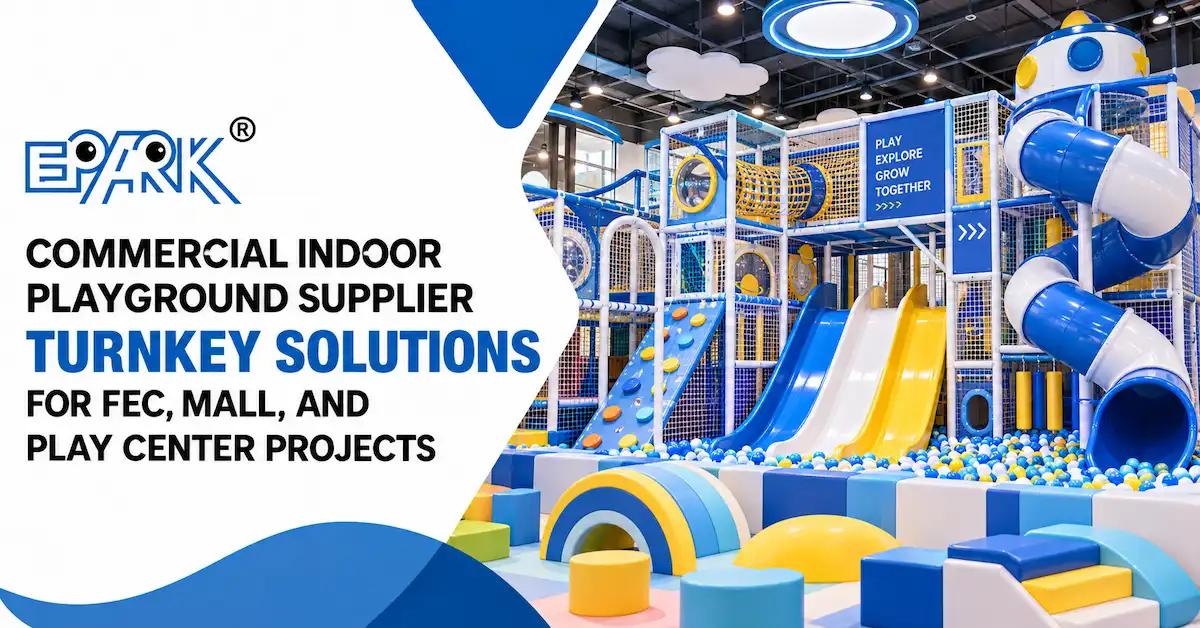
A complete project may involve multi-level play structures, slides, ball pits, climbing modules, tunnels, safety nets, soft play areas, interactive equipment, flooring, themed decoration, installation, and future maintenance. These components must work together inside a specific building, for a specific age group, traffic level, and business model.
That is why choosing a commercial indoor playground supplier is fundamentally a project-risk decision.
A supplier may produce an attractive 3D rendering, but commercial buyers still need to know:
- Can the design fit the actual floor plan?
- Are materials appropriate for commercial use?
- Can different age groups be separated correctly?
- How are structural components manufactured?
- What safety documentation is available?
- How is installation handled?
- Can spare parts be supplied later?
- Can the project be expanded or modified?
- Who supports the buyer after shipment?
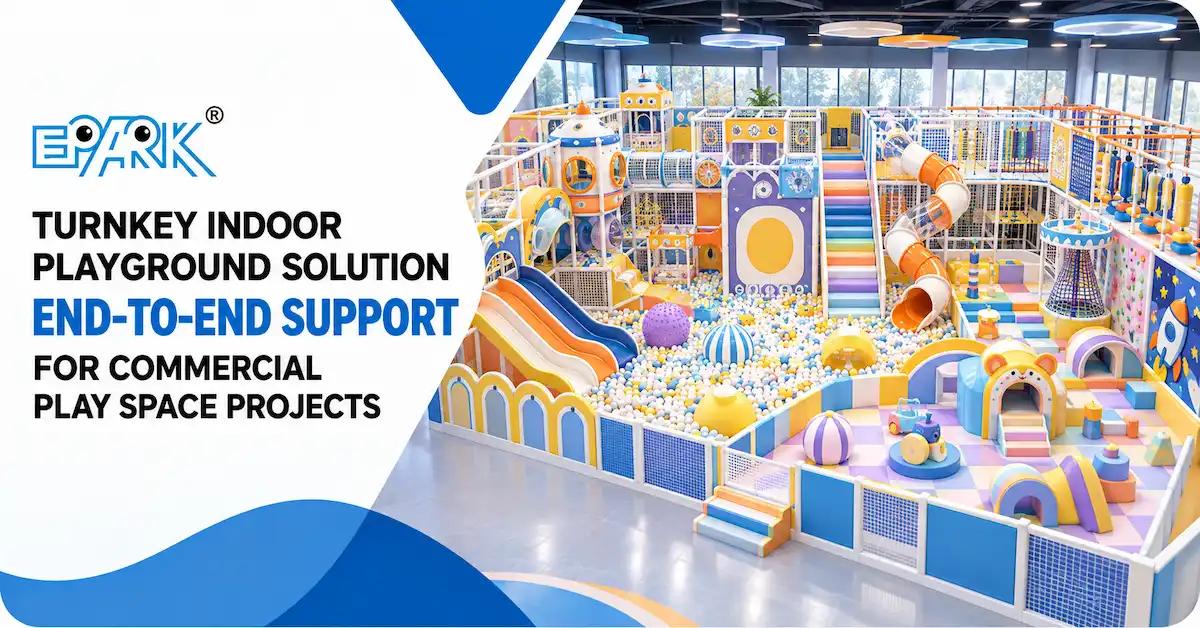
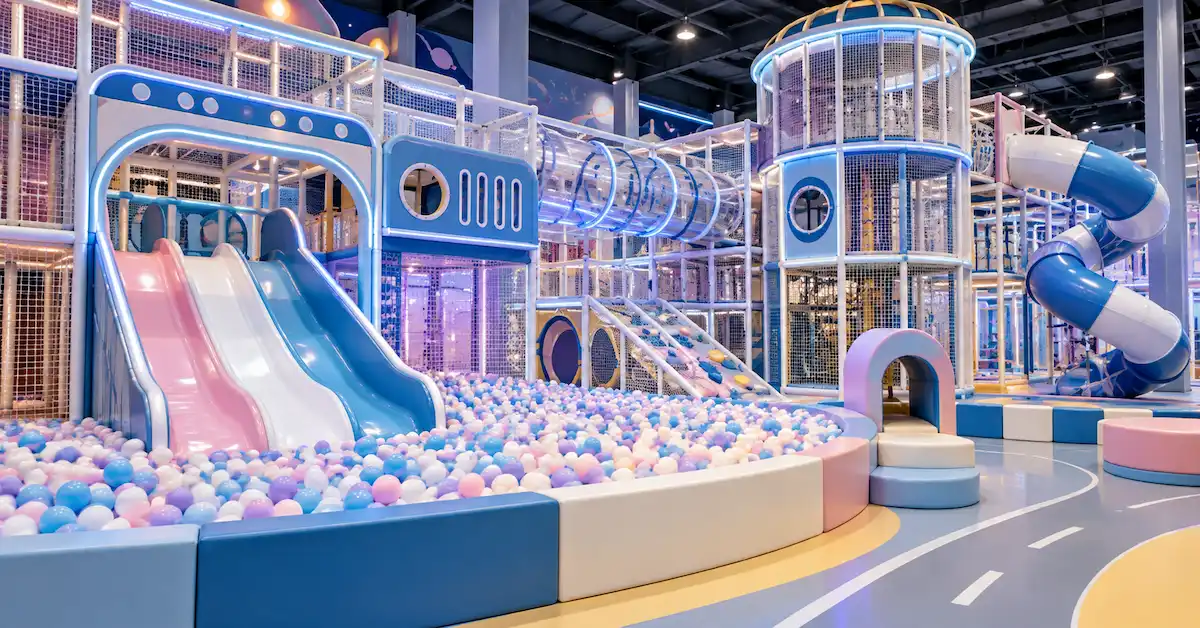
For buyers planning a new venue, EPARK’s indoor playground product range provides examples of different playground themes, layouts, and equipment combinations that can be used as an initial project reference.
What Does a Commercial Indoor Playground Supplier Actually Provide?
The term “supplier” can describe very different businesses.
Some companies mainly sell individual equipment. Others provide design and manufacturing. A more complete project supplier may support the buyer from site analysis through installation and after-sales service.
For a commercial project, the ideal scope usually extends beyond equipment supply.
| Supplier Capability | Why It Matters |
|---|---|
| Site assessment | Helps identify space and layout constraints |
| Floor planning | Organizes circulation, age zones, and equipment |
| 3D design | Allows buyers to review the concept before production |
| Material specification | Clarifies structure, padding, flooring, slides, and nets |
| Custom manufacturing | Adapts equipment to site and brand requirements |
| Quality control | Helps reduce manufacturing and shipment problems |
| Packaging and shipping | Protects equipment during international delivery |
| Installation support | Helps ensure correct on-site assembly |
| Spare parts | Supports future maintenance |
| After-sales service | Reduces operating risk after opening |
EPARK’s Customization Process follows a project sequence covering consultation, space planning, design, material selection, manufacturing, inspection, delivery, installation, and after-sales support.
For B2B buyers, this type of workflow makes it easier to understand where responsibilities begin and end.
Start With Your Project Requirements, Not a Supplier Catalogue
Before comparing suppliers, define what you are actually building.
A commercial indoor playground supplier cannot develop a meaningful proposal from a statement such as:
“I need a 500 m² playground.”
Floor area is important, but it is only one variable.
Prepare your site information
Provide:
- Floor plan
- Total available area
- Ceiling height
- Building columns
- Entrances and exits
- Fire or emergency access requirements
- Fixed walls or utilities
- Installation access
- Destination country
Define your target users
Different age groups require different equipment strategies.
A toddler-focused play center may prioritize:
- Low-height soft play
- Gentle slides
- Sensory activities
- Easy parent visibility
- Cushioned surfaces
A venue targeting older children may require:
- Multi-level climbing
- Ninja obstacles
- More challenging slides
- Tunnels
- Interactive games
- Competitive activities
Define the commercial model
The equipment mix for a shopping mall playground may differ from an FEC, hotel kids club, preschool, or independent play center.
A supplier needs to understand whether the project is intended to maximize:
- Family dwell time
- Ticket revenue
- Repeat visits
- Birthday parties
- Parent-child interaction
- Physical activity
- Retail traffic
- Mixed entertainment revenue
Providing these details before quotation makes supplier comparisons much more meaningful.
1. Evaluate Design and Space-Planning Capability
One of the strongest indicators of a professional supplier is the ability to turn a building plan into a workable play environment.
Commercial playground design needs to balance:
- Equipment density
- Visitor circulation
- Age zoning
- Visibility
- Entry and exit points
- Parent supervision
- Play value
- Safety
- Maintenance access
- Visual impact
A supplier should not simply fill every available square meter with equipment.
Ask what happens before the 3D rendering
A good project process should begin with practical layout decisions.
Ask:
- How is usable floor area calculated?
- How are columns incorporated into the design?
- How are toddler and older-child zones separated?
- How is circulation planned?
- Where are high-energy activities positioned?
- Can staff inspect major structural areas?
- How are future expansion plans considered?
The 3D rendering should visualize a workable solution, not replace technical planning.
EPARK outlines its site planning and custom design approach on its Customization Process page.
2. Review the Supplier’s Product and Application Range
A supplier’s product range can indicate whether it can support the equipment mix required by the project.
Commercial indoor playground projects may include:
- Soft play
- Ball pools
- Multi-level play structures
- Slides
- Climbing activities
- Ninja obstacles
- Tunnels
- Interactive modules
- Toddler zones
- Trampoline activities
- Themed decoration
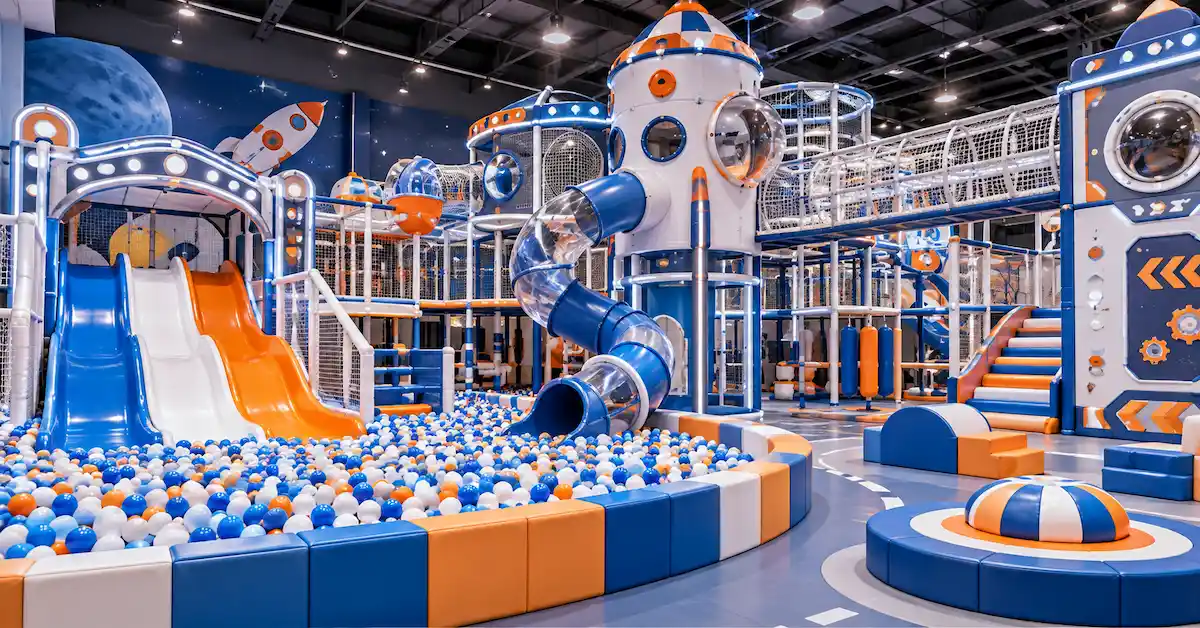
EPARK currently presents categories including Indoor Playground, Space Theme, Jungle Theme, Ocean Theme, Candy Theme, Castle Theme, and Trampoline Park solutions.
The purpose of reviewing the product range is not to choose the supplier with the largest catalogue.
Instead, determine whether the supplier has enough relevant experience to combine the right equipment for your business model.
3. Examine the Materials Behind the Finished Playground
A polished playground can hide significant differences in material specification.
Commercial buyers should understand what is used beneath the decorative surface.
EPARK’s Safety and Quality information identifies materials including:
- Cold-rolled steel pipe with hot-dip galvanization
- High-density foam
- Soft PVC protective coverings
- EVA or PU flooring
- FRP or composite resin components
- Safety netting
Each material serves a different purpose.
Structural materials
The steel frame supports platforms, tunnels, slides, bridges, and other modules.
Buyers should confirm:
- Structural material
- Surface treatment
- Corrosion protection
- Connection method
- Inspection access
Protective materials
Foam and PVC coverings protect contact areas around harder components.
Check:
- Padding coverage
- Surface finish
- Seams
- High-wear areas
- Replaceability
Flooring
Flooring decisions should consider:
- Activity type
- User age
- Cleaning
- Traffic
- Maintenance
- Installation method
Slides and formed components
For FRP or composite components, inspect:
- Surface finish
- Edges
- Joints
- Mounting
- Cleaning access
A professional commercial indoor playground supplier should be able to explain not only what material is used, but where and why it is used.
4. Check Manufacturing Capability, Not Just Sales Capability
A strong sales presentation does not automatically demonstrate manufacturing capability.
Commercial buyers should investigate who is responsible for:
- Structural fabrication
- Foam preparation
- Surface covering
- FRP components
- Assembly
- Quality inspection
- Packaging
EPARK describes itself on its About Us page as integrating R&D, manufacturing, global trade, and project service for amusement equipment.
For procurement teams, the important point is traceability.
Ask:
- Is production handled internally or outsourced?
- Which components are manufactured in-house?
- How are drawings transferred to production?
- How are components labeled for installation?
- What checks happen before packaging?
- How are production problems recorded and corrected?
The goal is not simply to find a “factory.”
The goal is to understand whether manufacturing is controlled well enough to reproduce the approved design accurately.
5. Review Quality Control Before Production Starts
Quality control should not begin only after everything has been manufactured.
Important checkpoints can include:
Before production
Confirm:
- Final layout
- Dimensions
- Theme
- Equipment list
- Materials
- Colors
- Technical requirements
During manufacturing
Check:
- Structural components
- Protective coverings
- Surface finish
- Equipment dimensions
- Connection parts
- Component labeling
Before shipment
Confirm:
- Final inspection
- Packing list
- Installation identification
- Replacement components
- Documentation
- Packaging protection
A commercial buyer should ask the supplier what its inspection process covers rather than accepting the phrase “strict QC” without further explanation.
6. Understand Safety Standards and Documentation
Safety claims should always be evaluated in context.
Different countries, products, and project types may involve different standards or documentation requirements.
EPARK’s customization information references EN1176, ASTM, and ISO-related requirements, while its Certificates section displays available company and product-related documentation.
However, buyers should verify exactly what applies to the equipment being purchased.
Ask these questions
- Which standard applies to my destination market?
- Which products or materials are covered?
- Is the document a certificate, test report, or declaration?
- Does it apply to the exact project configuration?
- Are additional local inspections required after installation?
Do not select a commercial indoor playground supplier only because its website displays several certification logos.
The relevant issue is whether appropriate documentation supports your actual project.
7. Compare Customization Capability
Customization should mean more than changing colors.
For a commercial project, customization may involve:
- Theme
- Brand colors
- Mascot
- Logo integration
- Equipment mix
- Floor plan
- Age zones
- Platform height
- Interactive modules
- Activity level
- Visual storytelling
- Future expansion
A mall operator may want a strong visual landmark.
A hotel may require a quieter premium kids club.
A chain entertainment brand may prioritize repeatable layouts and standardized materials.
A preschool may focus more heavily on younger children and supervision.
The supplier should therefore customize according to the operating model, not simply decorate a standard playground differently.
EPARK’s Customization Process provides an overview of how theme, layout, materials, activities, and project requirements can be incorporated into the design process.
8. Evaluate Installation Before You Place the Order
Installation is one of the most underestimated parts of international playground procurement.
The project may involve:
- Structural assembly
- Platform positioning
- Slides
- Safety netting
- Padding
- Flooring
- Electrical or interactive components
- Themed decoration
Before ordering, clarify:
- Who installs the playground?
- Is on-site installation available?
- Is remote guidance available?
- Are installation drawings supplied?
- Are components numbered?
- What tools are required?
- What site preparation must be completed first?
- Who verifies installation after completion?
A well-manufactured system can still create problems if it is installed incorrectly.
For this reason, installation capability should be evaluated while comparing suppliers, not after the equipment reaches the destination.
9. Ask About Maintenance and Spare Parts
Opening day is not the end of a playground project.
Commercial venues experience wear.
Operators may eventually need to replace:
- PVC coverings
- Foam protection
- Netting
- Small activity parts
- Hardware
- Decorative elements
- High-contact components
A reliable supplier should explain how spare parts can be identified and reordered.
Buyers can review common project, maintenance, shipping, customization, and installation questions on EPARK’s FAQ page.
Maintenance questions to ask
- Which parts require regular inspection?
- Which components are considered wear items?
- Can individual parts be replaced?
- How are replacement parts identified?
- How long are project records retained?
- Can the supplier support future modifications?
A commercial playground can operate for years, so after-sales capability deserves more attention than it often receives during initial price negotiations.
10. Compare Total Project Value, Not Only Equipment Price
Price matters, but the lowest quotation may not represent the lowest project cost.
Consider what is included.
| Cost Area | Questions to Ask |
|---|---|
| Design | Is layout and 3D design included? |
| Equipment | Is the full equipment list defined? |
| Materials | Are specifications clear? |
| Packaging | Is export packaging included? |
| Shipping | What logistics support is available? |
| Installation | Is installation included or separate? |
| Spare parts | Are initial spares included? |
| Documentation | What project documents are supplied? |
| After-sales | What support is available after opening? |
Two quotations may differ significantly because their scopes are different.
Before comparing price, normalize what each supplier has included.
11. Identify the Supplier’s Best-Fit Buyer Type
Not every supplier is suitable for every buyer.
A full-service commercial indoor playground supplier is particularly relevant for:
- FEC investors
- Shopping mall operators
- Entertainment chains
- Commercial real estate developers
- Hotels and resorts
- Project contractors
- Distributors and importers
- Independent indoor playground operators
These buyers often need more than a catalogue product.
They need coordination across design, materials, manufacturing, logistics, installation, and future service.
A buyer who only needs one replacement component may not require the same supplier capabilities as an investor developing a complete 1,000 m² entertainment center.
Commercial Indoor Playground Supplier Evaluation Checklist
Use this checklist before comparing final quotations.
| Evaluation Area | What to Verify |
|---|---|
| Company capability | Manufacturer, project experience, service scope |
| Site planning | Floor plan, columns, height, circulation |
| Design | 2D/3D layout and customization |
| Product range | Suitable equipment for target market |
| Materials | Steel, foam, PVC, flooring, FRP, netting |
| Safety | Applicable standards and documentation |
| Manufacturing | Production control and traceability |
| QC | Inspection during and after production |
| Packaging | Export protection and component identification |
| Installation | On-site or remote technical support |
| Maintenance | Inspection and replacement guidance |
| Spare parts | Availability after installation |
| Communication | Technical and commercial response quality |
| After-sales | Support after venue opening |
A supplier that cannot clearly answer these questions creates additional uncertainty for the buyer.
Common Mistakes When Choosing an Indoor Playground Supplier
Choosing from 3D renderings alone
A rendering shows appearance.
It does not prove:
- Material quality
- Manufacturing accuracy
- Safety documentation
- Installation capability
- Maintenance support
Comparing quotations without matching scope
One supplier may include design, installation guidance, and spare parts while another quotes only equipment.
Compare like with like.
Selecting by the lowest price
A lower price can become expensive if it results in:
- Rework
- Missing components
- Installation delays
- Poor maintenance access
- Frequent replacement
Ignoring the destination market
The supplier should understand where the equipment will be installed.
Applicable safety, documentation, logistics, and project expectations can vary by market.
Forgetting after-sales service
The supplier relationship does not end when the container leaves the factory.
Commercial operators need ongoing technical and replacement support.
What Information Should You Send a Supplier for an Accurate Proposal?
Before requesting a quotation, prepare a structured project brief.
Include:
- Floor plan or dimensions
- Total usable area
- Ceiling height
- Column positions
- Target age groups
- Expected visitor capacity
- Preferred theme
- Required attractions
- Business model
- Destination country
- Estimated opening schedule
- Installation preference
- Budget range, if available
The more accurate the input, the easier it is for a commercial indoor playground supplier to develop a proposal that can actually be compared.
If you are preparing a new project, these details can be submitted through EPARK’s Contact Us page.
Frequently Asked Questions
How do I choose a commercial indoor playground supplier?
Evaluate design capability, material specifications, manufacturing control, safety documentation, customization, QC, installation, maintenance, spare parts, and after-sales support. Compare the complete project scope rather than equipment price alone.
What should an indoor playground quotation include?
A useful quotation should clearly define the equipment scope, layout, materials, customization, pricing, production responsibilities, packaging, installation arrangements, and other relevant project terms.
Should I choose a factory or a trading company?
The business label alone is not enough to judge capability. Buyers should verify who controls design, manufacturing, QC, technical communication, installation, and after-sales service.
What materials should I check?
Commercial buyers should review the steel structure, corrosion protection, foam, PVC protection, flooring, slides, nets, hardware, and project-specific decorative materials.
Can a commercial indoor playground be customized?
Yes. Depending on supplier capability, customization can involve layout, theme, colors, branding, equipment mix, age zoning, activity level, and future expansion.
How important is 3D design?
3D design helps buyers visualize the project, but it should follow proper space planning. Floor dimensions, ceiling height, columns, circulation, age groups, and equipment requirements need to be resolved first.
Should I ask for safety certificates before ordering?
Yes, but confirm which documents apply to your destination, equipment type, and project. A supplier’s general certificate list does not necessarily apply to every playground configuration.
Who installs commercial indoor playground equipment?
Installation arrangements vary by supplier and project. Confirm whether the supplier provides on-site technicians, remote guidance, drawings, component labeling, or other installation support before ordering.
What after-sales support should I expect?
Ask about maintenance instructions, replacement parts, technical support, project records, and assistance with future repairs or modifications.
What information does a supplier need for a quotation?
At minimum, provide the floor plan, dimensions, ceiling height, target ages, preferred theme, activity requirements, destination market, and installation expectations.
Conclusion
Choosing a commercial indoor playground supplier should be based on the complete project capability behind the quotation—not only price or visual design.
Prioritize space planning, material specifications, manufacturing control, safety documentation, installation, maintenance, and after-sales support. For an accurate project proposal, prepare your floor plan, ceiling height, target ages, preferred theme, destination market, and equipment requirements, then submit them through EPARK’s Contact Us page.
General Disclaimer
All data on https://www.eparki.com is for general guidance only. As a leading indoor playground manufacturer and trampoline supplier, EPARK strives for accuracy but gives no express or implied warranty regarding completeness, performance or project fitness. Product specs, designs and results may vary with use and customer requirements. Buyers must verify technical details, compliance and suitability before purchase. EPARK OEM/ODM is not liable for any direct, indirect or consequential damages arising from site use. For custom solutions, contact our manufacturer and supplier team via the Contact page.
Intellectual Property
Text, images, videos, CAD files and software are Guangzhou EPARK Electronic Technology Co., Ltd. All rights reserved. No part may be copied, republished or used commercially without prior written permission. We will pursue legal action for copyright or design-patent infringement.
Trademarks
"EPARK", the EPARK logo and related graphics are registered trademarks of Guangzhou EPARK Electronic Technology Co., Ltd. Unauthorized use in ads, domain names or packaging is prohibited.
Governing Law
These terms are governed by the laws of the People's Republic of China.
Contact
Questions? Email sales@nanyuetech.com or WhatsApp +86 139 0307 9263.