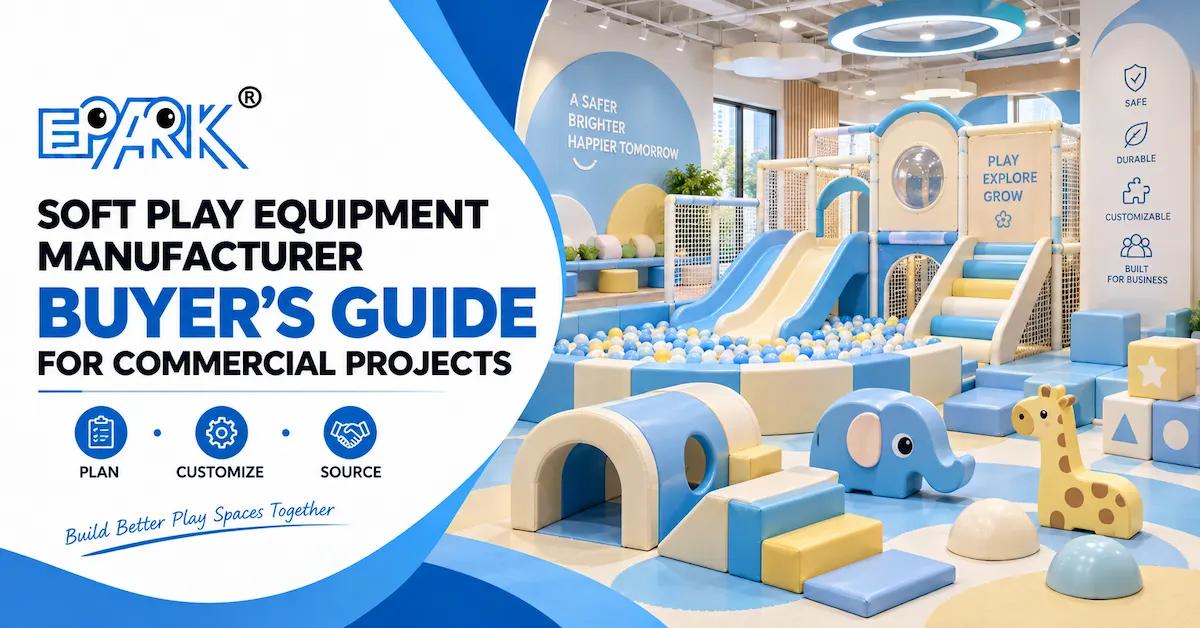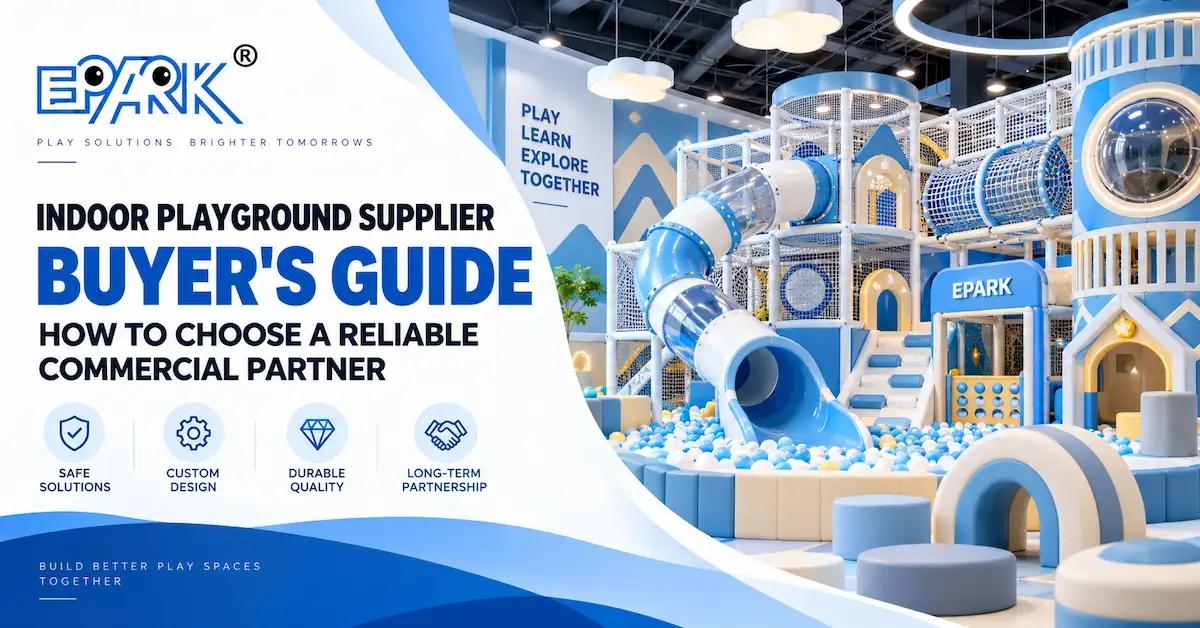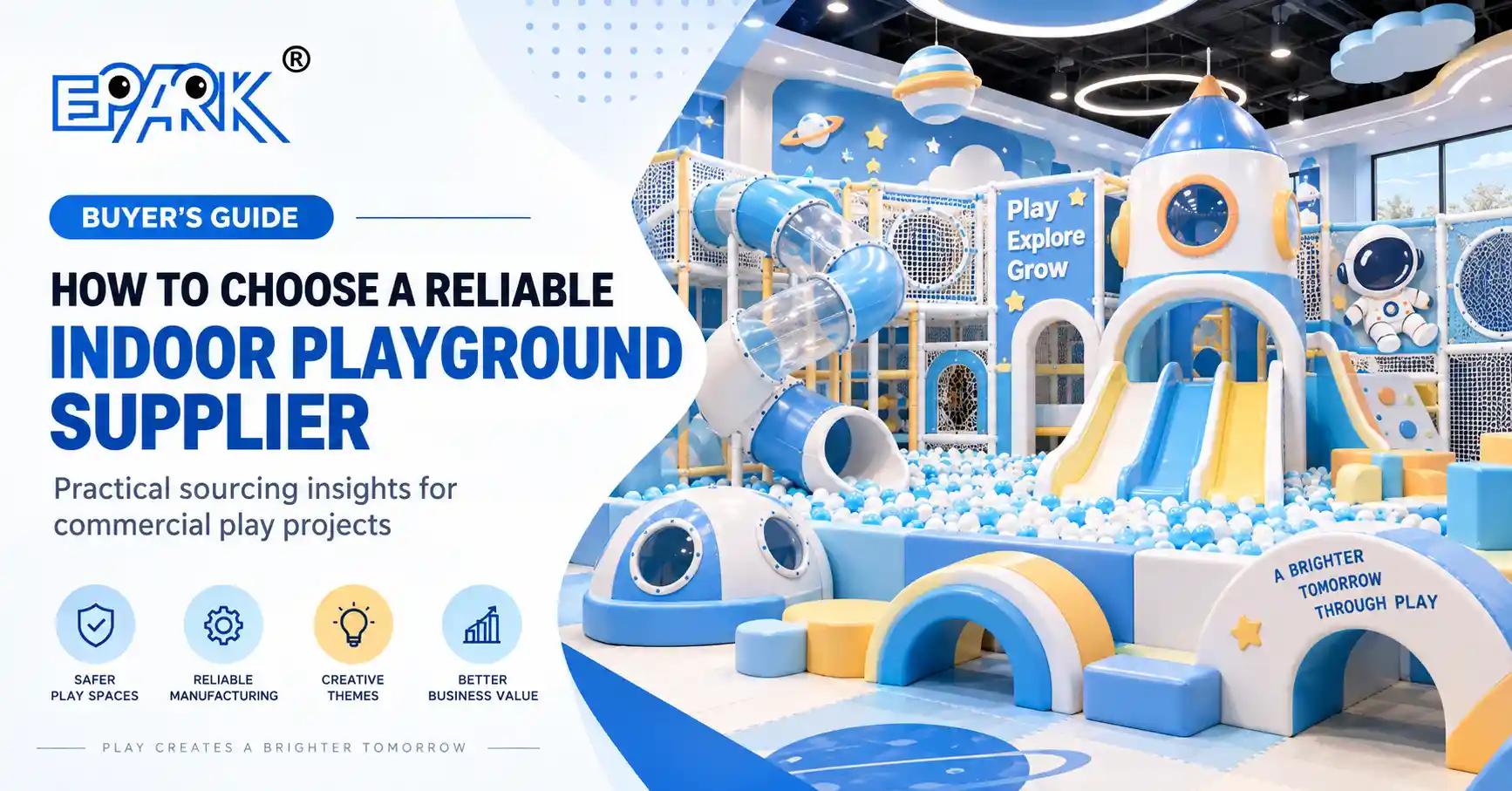
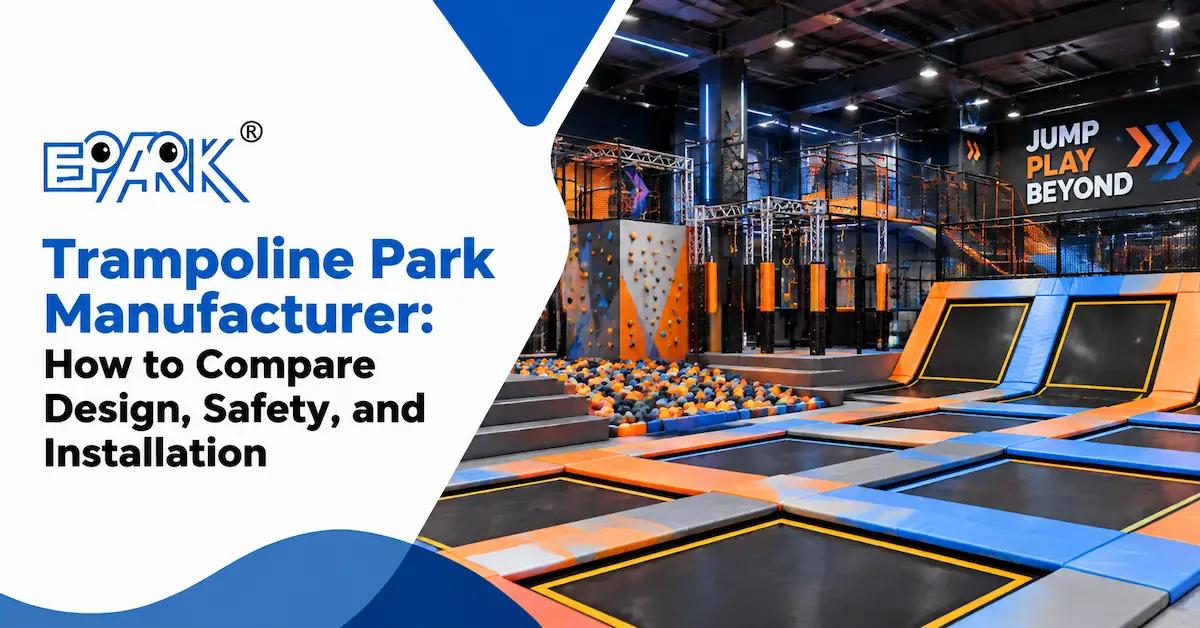
Why Choosing the Right Trampoline Park Manufacturer Matters
A commercial trampoline park is not simply a collection of connected trampolines. For investors, FEC operators, indoor entertainment businesses and property developers, it is a complete attraction system that combines layout planning, activity design, safety considerations, customer flow, installation requirements and long-term operation.
Choosing the right trampoline park manufacturer directly affects the project quality. A supplier with strong design and manufacturing capability can help transform an empty space into an engaging entertainment environment, while a supplier focused only on equipment delivery may overlook important factors such as circulation, maintenance access and operational efficiency.
Before selecting a supplier, buyers should understand how trampoline park projects are designed, what safety factors need attention, how installation is managed and which supplier capabilities influence long-term success.
Who Usually Works With a Trampoline Park Manufacturer?
Different commercial buyers have different goals when developing trampoline park projects.
| Buyer Type | Typical Application | Main Requirement |
|---|---|---|
| FEC investor | Standalone family entertainment center | High engagement and diverse activities |
| Shopping mall operator | Family attraction zone | Space utilization and visual impact |
| Indoor amusement operator | Commercial trampoline venue | Durability and operational efficiency |
| Property developer | Entertainment facility project | Complete project solution |
| Resort/hotel | Family recreation area | Premium experience |
| Distributor | Regional equipment supply | Stable production and repeat orders |
A supplier experienced in large entertainment projects may approach the design differently from one producing smaller recreational equipment. Buyers should match supplier experience with project scale.
Start With the Business Model Before Designing the Park
A successful trampoline park begins with understanding the commercial objective.
Define the Target Users
The target customer influences:
- trampoline area design;
- activity difficulty;
- supporting attractions;
- supervision requirements;
- customer flow.
A family-oriented FEC may require multiple activity zones, while a professional sports-oriented venue may require different layouts.
Define the Venue Role
A trampoline park may be:
- the main attraction of an FEC;
- part of a shopping mall entertainment zone;
- a standalone paid venue;
- a supporting activity inside a larger family entertainment project.
The business model determines the required equipment density and investment level.
What Should a Commercial Trampoline Park Include?
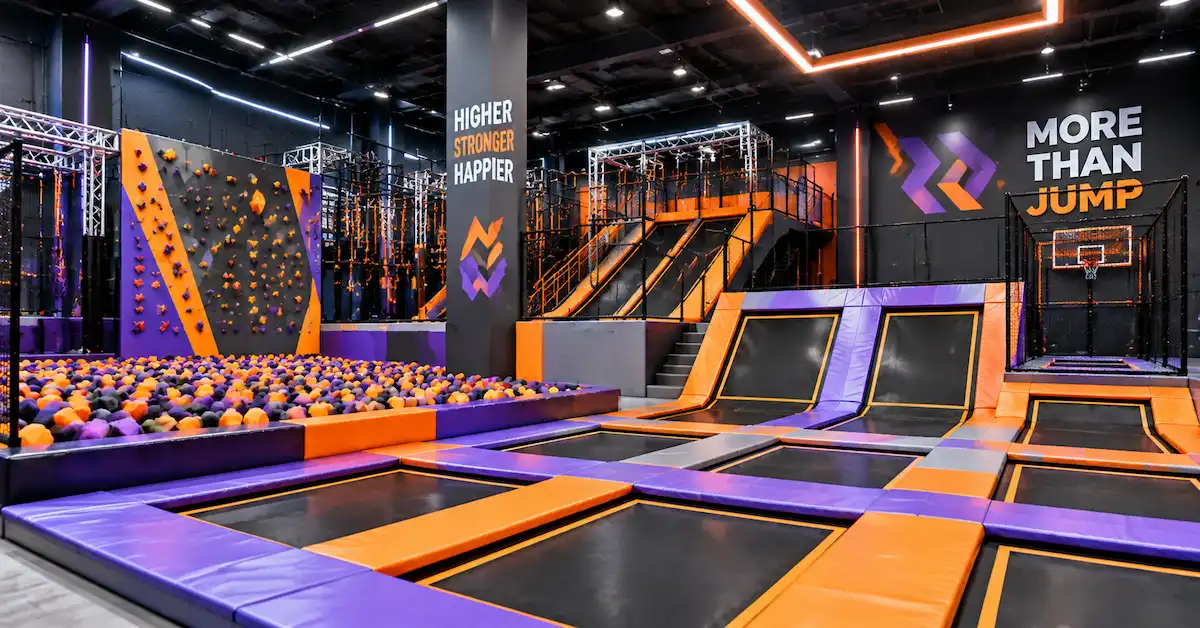
A professional trampoline park manufacturer should help buyers create a balanced activity mix.
| Area | Function | Typical Features |
|---|---|---|
| Main trampoline court | Core attraction | Connected trampoline surfaces |
| Dodgeball area | Competitive activity | Team-based trampoline games |
| Foam pit zone | Skill development | Landing and jumping activities |
| Climbing area | Physical challenge | Vertical movement |
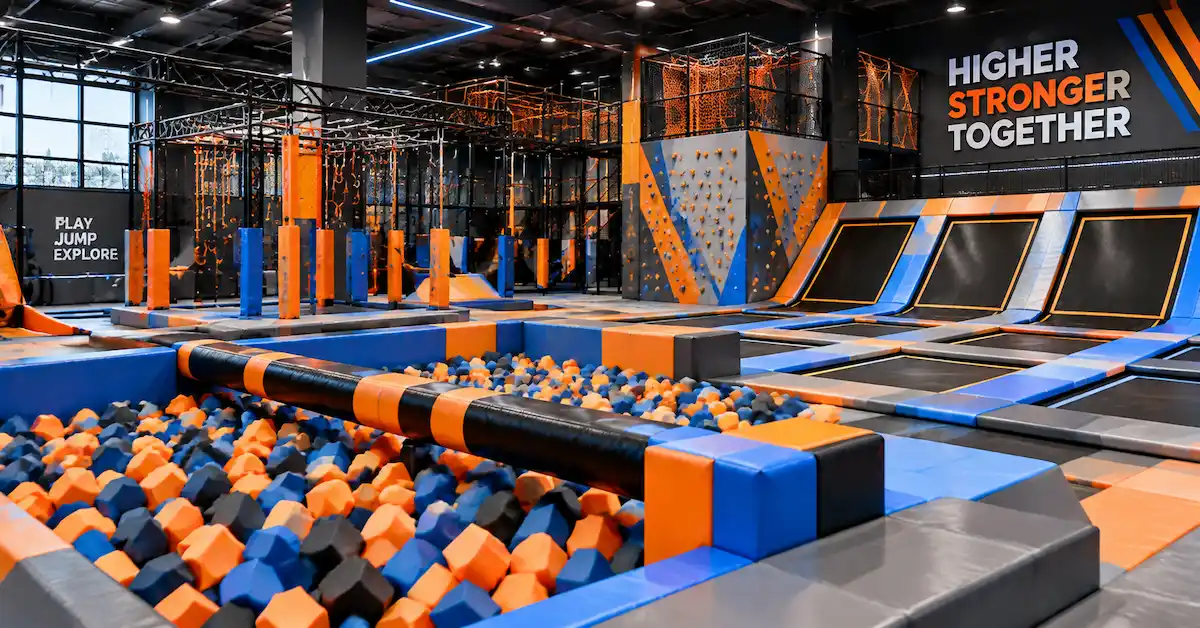
| Ninja-style obstacles | Adventure experience | Balance and obstacle elements |
| Interactive zones | Additional engagement | Digital or sensory activities |
| Rest/support areas | Operation support | Seating and customer management |
The best layout depends on available space, customer profile and operating strategy.
How Should Buyers Evaluate Trampoline Park Design Capability?
Design is one of the most important differences between suppliers.
A reliable supplier should consider:
Space Planning
The layout should include:
- equipment arrangement;
- customer circulation;
- staff supervision areas;
- entrance and exit paths;
- maintenance access.
A design that maximizes equipment quantity but creates congestion may reduce the customer experience.
Activity Flow
Visitors should naturally move between different activities. A good design encourages longer engagement instead of concentrating everyone in one area.
Visibility and Management
Operators need clear visibility to monitor activity areas. Blind spots can create operational challenges.
Safety Should Be Considered During Design, Not After Production
Safety is one of the most important factors when selecting a trampoline park manufacturer.
Commercial trampoline parks involve repeated high-energy movement, so buyers should evaluate the complete safety approach.
Important considerations include:
- equipment layout;
- protective padding;
- impact zones;
- user separation;
- access routes;
- inspection procedures.
Safety is not created by one component alone. It depends on how equipment, layout and operation work together.
What Materials and Components Should Buyers Review?
A trampoline park contains multiple components with different functions.
| Component | Buyer Consideration |
|---|---|
| Trampoline surface | Durability and repeated use |
| Frame structure | Stability and construction quality |
| Padding system | Protection around activity areas |
| Springs or connection systems | Performance and maintenance |
| Foam protection | Impact reduction |
| Safety barriers | User separation |
| Flooring | Surrounding area protection |
Buyers should request project-specific material information instead of relying only on general product descriptions.
How Should Buyers Compare Trampoline Park Manufacturers?
Not all suppliers provide the same level of project support.
| Evaluation Area | What Buyers Should Check |
|---|---|
| Design capability | Can the supplier create site-based layouts? |
| Product range | Can different activity zones be combined? |
| Safety planning | Are protective details considered? |
| Manufacturing | Is production controlled directly? |
| QC | Are finished products inspected? |
| Installation | Is setup support available? |
| Customization | Can themes and layouts be adapted? |
| Communication | Are revisions managed clearly? |
The lowest quotation may not represent the lowest project risk.
Trampoline Park Manufacturer vs Equipment Supplier
| Comparison | Manufacturer | General Supplier |
|---|---|---|
| Design involvement | Usually stronger | Depends on supplier |
| Production control | More direct | May involve third parties |
| Custom solutions | Often more flexible | Depends on sourcing ability |
| Project communication | Direct technical discussion | Additional coordination |
| Repeat orders | Easier consistency control | Depends on supply chain |
For customized commercial projects, direct manufacturing capability can simplify communication and revision management.
How Does Customization Affect Trampoline Park Projects?
Many buyers choose a trampoline park manufacturer because standard layouts may not match their venue.
Customization may include:
- layout adjustment;
- theme design;
- color selection;
- branding elements;
- combined activity zones;
- project-specific dimensions.
However, customization should solve a business requirement rather than add unnecessary complexity.
Useful customization:
- improves space utilization;
- strengthens brand identity;
- matches customer expectations.
Unnecessary customization:
- increases approval time;
- complicates maintenance;
- raises project costs.
How Should Installation Be Planned?
Installation is an important part of trampoline park sourcing.
Before production, buyers should confirm:
- site conditions;
- installation responsibility;
- required tools;
- assembly sequence;
- delivery access;
- local preparation requirements.
A successful installation depends on cooperation between supplier and project team.
A typical project process includes:
Requirement confirmation → Layout design → Approval → Production → Quality inspection → Packing → Shipment → Installation
What Quality Control Should a Trampoline Park Manufacturer Provide?
A professional QC process should verify that production matches the approved project.
| QC Stage | Inspection Focus |
|---|---|
| Design review | Approved layout confirmation |
| Material check | Correct components used |
| Production inspection | Manufacturing consistency |
| Safety review | Protective elements included |
| Appearance check | Finish and theme consistency |
| Packaging check | Components identified |
| Final review | Shipment readiness |
Buyers should define acceptance requirements before production begins.
How Should Buyers Think About Delivery Time?
Project timelines depend on:
- customization level;
- project size;
- design approval speed;
- production complexity;
- shipping conditions.
A clear milestone plan is better than a simple delivery promise.
Example:
| Stage | Buyer Action |
|---|---|
| Requirement | Provide project information |
| Design | Review layout |
| Approval | Confirm final solution |
| Production | Monitor progress |
| Inspection | Confirm quality |
| Shipment | Prepare receiving site |
| Installation | Complete setup |
What Determines Trampoline Park Project Cost?
There is no universal price because every trampoline park project has different requirements.
Main cost factors include:
- project size;
- equipment quantity;
- activity types;
- customization;
- materials;
- packaging;
- shipping;
- installation.
A practical planning formula is:
Total Investment = Equipment + Customization + Logistics + Installation + Opening Preparation
Buyers should compare complete project scope rather than only equipment prices.
Common Mistakes When Choosing a Trampoline Park Manufacturer
Choosing Only Based on Price
Lower prices may exclude important services such as design support, installation preparation or customization.
Ignoring Layout Planning
A poor layout can reduce customer flow and operational efficiency.
Not Asking About Maintenance
Commercial equipment requires long-term management.
Skipping Safety Discussion
Safety planning should be part of supplier evaluation from the beginning.
Comparing Different Project Scopes
Two quotations may look different because they include different equipment and services.
What Questions Should Buyers Ask a Trampoline Park Manufacturer?
Before selecting a supplier, ask:
- Do you provide complete layout design?
- What types of trampoline projects have you completed?
- How do you manage safety considerations?
- What materials are used?
- How is quality inspected?
- What installation support is included?
- Can the project be customized?
- How are future replacement parts handled?
These questions help buyers evaluate supplier capability more accurately.
What Information Should You Send Before Requesting a Proposal?
A complete project inquiry should include:
- project location;
- venue type;
- floor dimensions;
- ceiling height;
- target users;
- required activities;
- theme preferences;
- expected opening date;
- installation requirements.
Buyers can review EPARK’s Indoor Playground solutions, products, Safety and Quality information and Contact Us before submitting project requirements.
Frequently Asked Questions About Trampoline Park Manufacturers
1. What does a trampoline park manufacturer provide?
A trampoline park manufacturer can provide trampoline equipment, project design support, customization, production and installation coordination depending on the project scope.
2. How do I choose a reliable trampoline park manufacturer?
Evaluate design capability, safety planning, manufacturing control, customization options, QC procedures and project support.
3. Can trampoline parks be customized?
Yes. Customization may include layouts, colors, themes, branding and combined activity zones.
4. What information is needed before requesting a quotation?
Provide venue dimensions, project type, target users, required activities, location and expected timeline.
5. Why is trampoline park design important?
Good design improves customer flow, supervision, activity balance and operational efficiency.
6. How should trampoline park safety be evaluated?
Review equipment layout, protective systems, materials, user separation and inspection procedures.
7. What affects trampoline park cost?
Project size, activity selection, customization, materials, shipping and installation influence the total investment.
8. Does a manufacturer provide installation support?
Support varies by supplier. Buyers should confirm installation responsibility before ordering.
9. Can a trampoline park be expanded later?
Future expansion is possible for some projects, but it should be considered during initial planning.
10. How can I request a trampoline park proposal from EPARK?
Prepare your site information and project requirements, then submit them through EPARK Contact Us.
Conclusion
Choosing the right trampoline park manufacturer requires evaluating more than equipment appearance or initial pricing. Commercial buyers should compare design capability, safety planning, materials, manufacturing control, quality inspection, installation support and customization options before selecting a supplier. A reliable manufacturer should help transform a venue into a practical entertainment solution that supports customer experience and long-term operation. Buyers can review EPARK’s Indoor Playground solutions, Safety and Quality, customization process and FAQs, then contact EPARK with project details for a customized trampoline park evaluation.
General Disclaimer
All data on https://www.eparki.com is for general guidance only. As a leading indoor playground manufacturer and trampoline supplier, EPARK strives for accuracy but gives no express or implied warranty regarding completeness, performance or project fitness. Product specs, designs and results may vary with use and customer requirements. Buyers must verify technical details, compliance and suitability before purchase. EPARK OEM/ODM is not liable for any direct, indirect or consequential damages arising from site use. For custom solutions, contact our manufacturer and supplier team via the Contact page.
Intellectual Property
Text, images, videos, CAD files and software are Guangzhou EPARK Electronic Technology Co., Ltd. All rights reserved. No part may be copied, republished or used commercially without prior written permission. We will pursue legal action for copyright or design-patent infringement.
Trademarks
"EPARK", the EPARK logo and related graphics are registered trademarks of Guangzhou EPARK Electronic Technology Co., Ltd. Unauthorized use in ads, domain names or packaging is prohibited.
Governing Law
These terms are governed by the laws of the People's Republic of China.
Contact
Questions? Email sales@nanyuetech.com or WhatsApp +86 139 0307 9263.