Why Choosing the Right Indoor Playground Manufacturer Matters
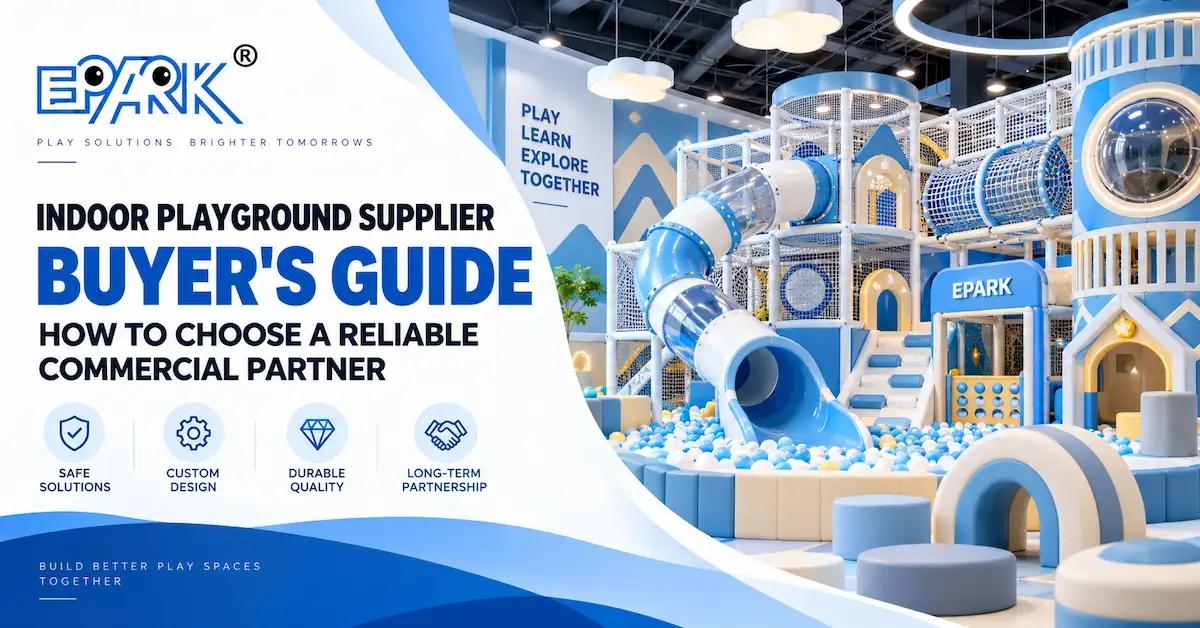
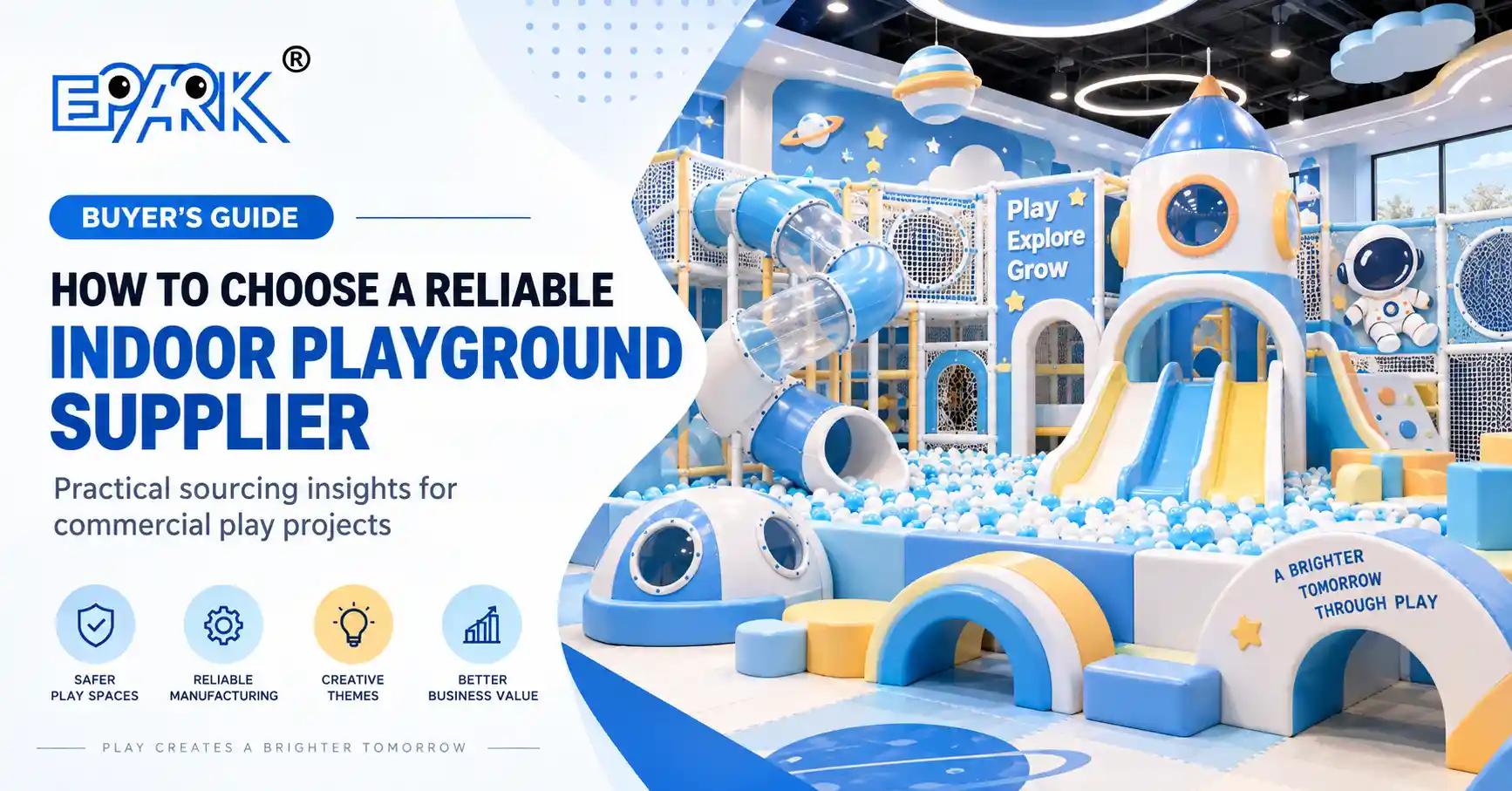
Selecting the right indoor playground manufacturer is one of the most important decisions for commercial playground projects. A supplier does not only provide slides, climbing structures or soft play components; the manufacturer influences the complete project process, including design planning, equipment selection, customization, production quality, packing, installation preparation and future replacement support.
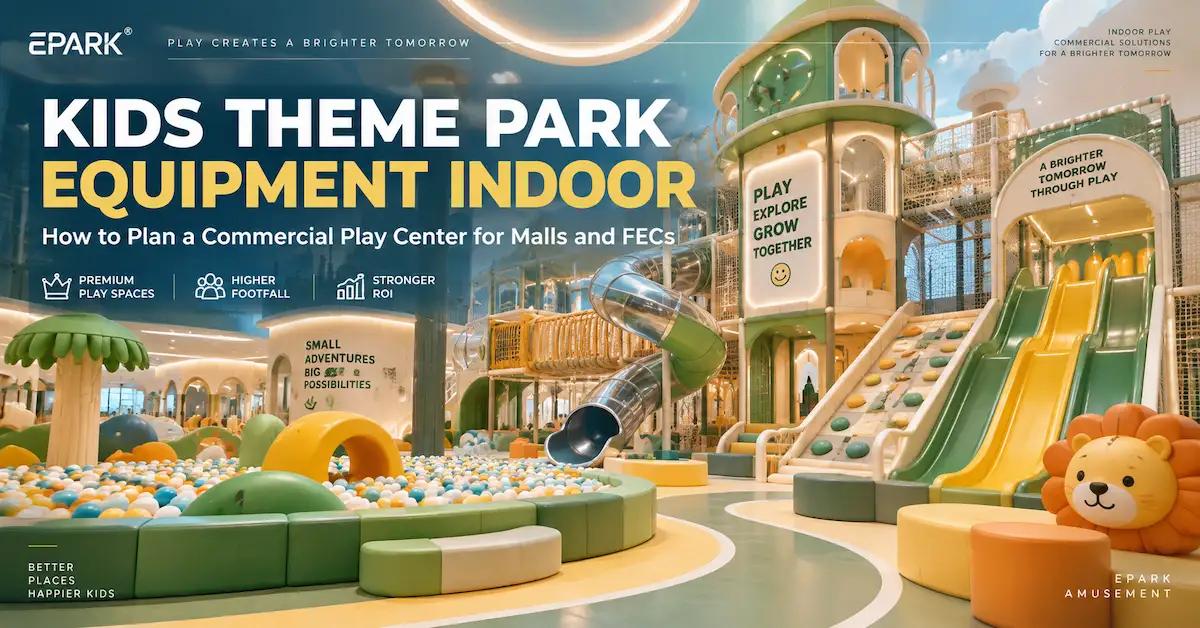
For shopping malls, family entertainment centers (FECs), indoor playground operators and commercial developers, the wrong supplier choice can create problems such as unsuitable layouts, difficult maintenance, inconsistent production quality, delayed delivery or limited support after installation.
A reliable manufacturer should understand both children’s play requirements and commercial operation needs. The best supplier is not necessarily the one offering the lowest quotation, but the one that can transform a project requirement into a safe, functional and repeatable indoor play solution.
Before evaluating suppliers, buyers can review EPARK’s Indoor Playground Equipment, overall products and customization process to understand different solution approaches.
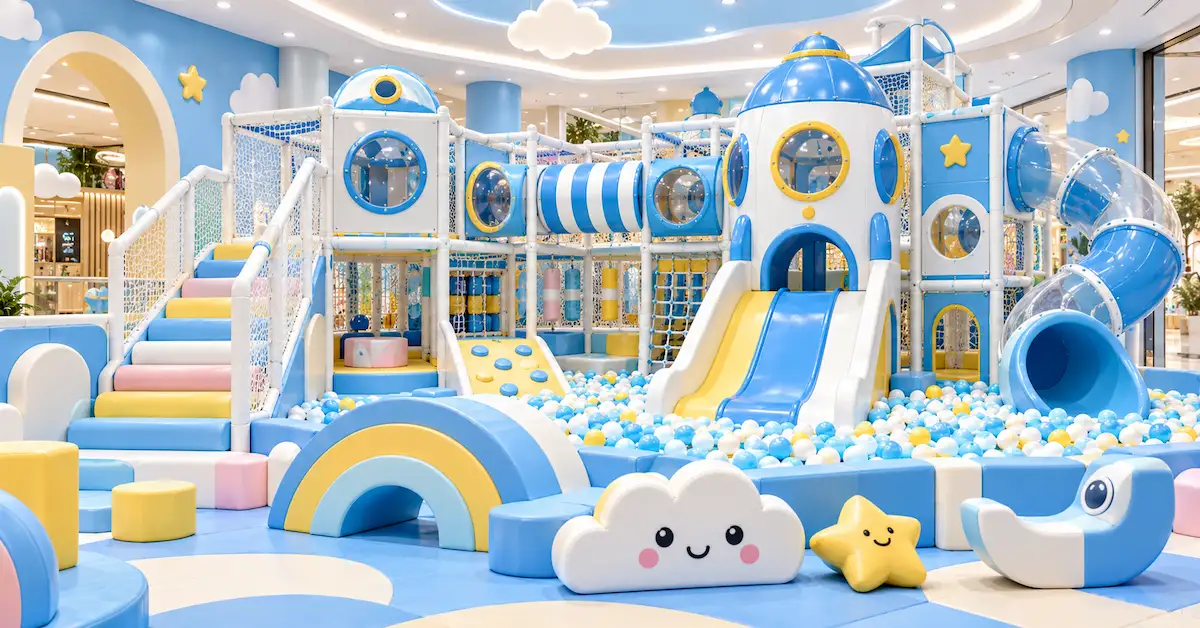
Who Should Work With an Indoor Playground Manufacturer?
An indoor playground manufacturer usually works with different commercial buyers, and each buyer has different expectations.
| Buyer Type | Typical Project | Main Supplier Requirement |
|---|---|---|
| Indoor playground operator | Independent children’s play center | Complete equipment solution and durability |
| Shopping mall operator | Family attraction area | Attractive design and efficient space use |
| FEC investor | Large entertainment venue | Multi-zone equipment planning |
| Hotel/resort operator | Kids club | Premium appearance and reliable operation |
| Daycare/preschool | Early-childhood activity space | Safe and age-appropriate design |
| Distributor | Regional equipment sales | Stable production and repeat orders |
| Project contractor | Turnkey playground projects | Drawings, delivery and coordination |
A supplier suitable for a small daycare project may not be suitable for a large FEC project. Buyers should first define the project type before comparing manufacturers.
Define Your Project Requirements Before Choosing a Supplier
One of the most common purchasing mistakes is contacting an indoor playground manufacturer before defining the actual project requirements.
A professional inquiry should start with:
- venue type;
- available space;
- ceiling height;
- target age groups;
- expected customer capacity;
- preferred theme;
- equipment requirements;
- customization needs;
- installation conditions;
- delivery timeline.
A supplier can only provide a meaningful proposal when the project objective is clear.
How to Evaluate an Indoor Playground Manufacturer’s Design Capability
Design capability is one of the first indicators of supplier strength. Commercial playground projects are rarely simple equipment combinations. They require space planning, customer flow consideration, age zoning and theme integration.
Site-Based Layout Design
A reliable supplier should be able to design according to the actual building conditions instead of providing only standard layouts.
Important factors include:
- entrance location;
- available floor area;
- ceiling restrictions;
- columns and obstacles;
- parent seating;
- supervision visibility;
- emergency paths.
Theme Development Capability
Many commercial buyers need themed environments rather than standard equipment.
Common themes include:
- ocean;
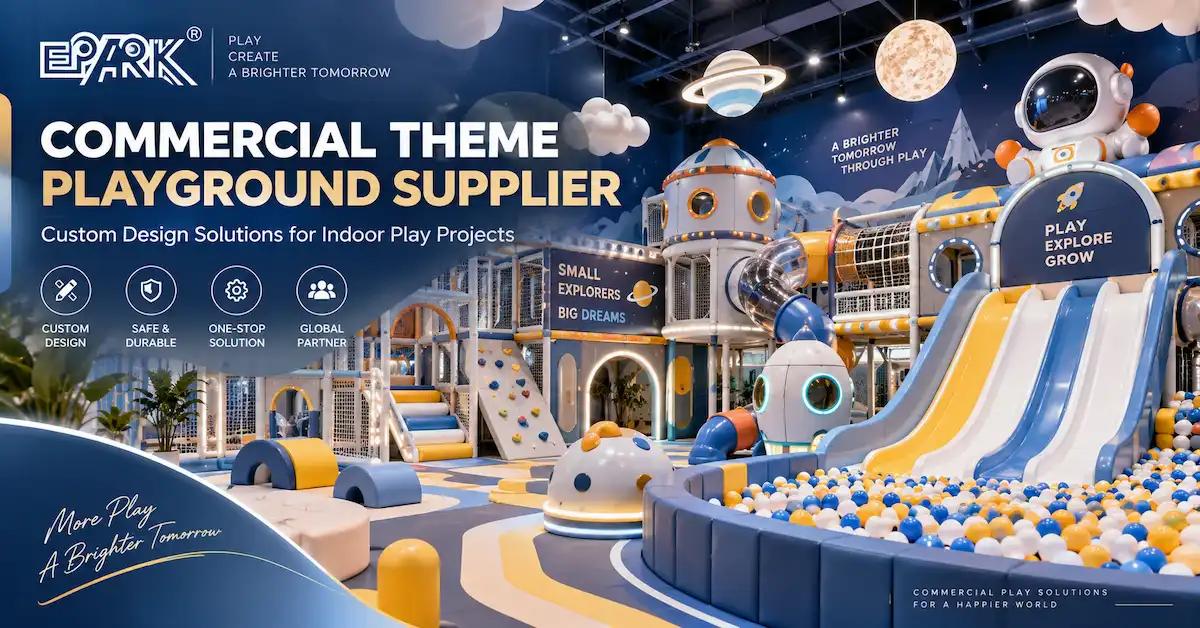
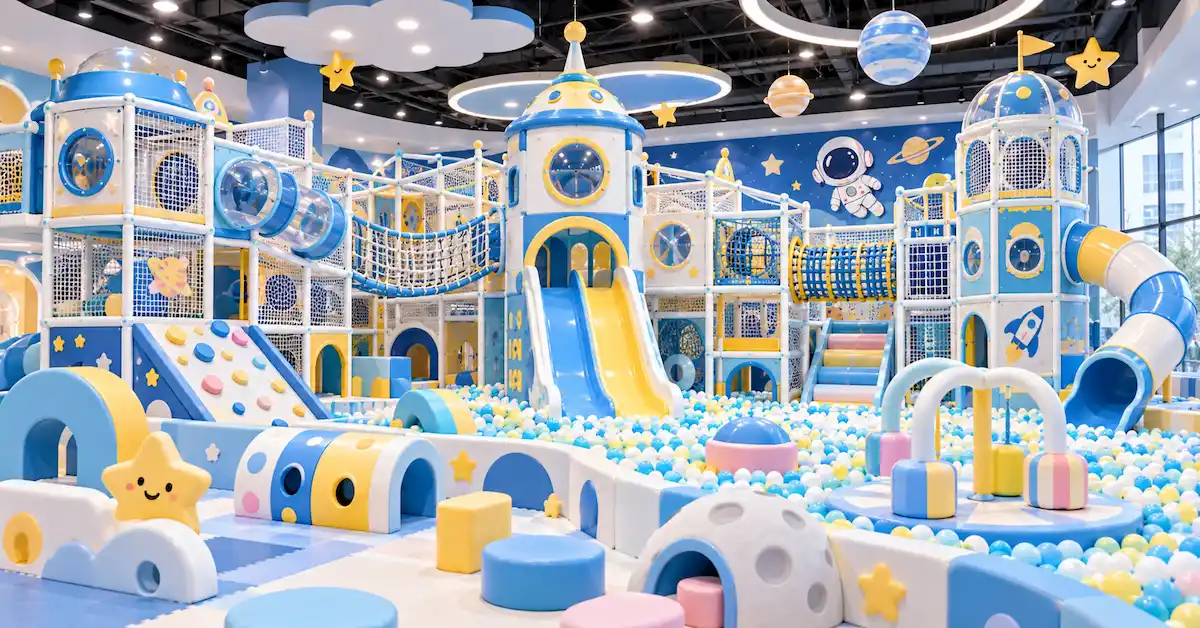
- space;
- jungle;
- forest;
- castle;
- custom brand themes.
A capable supplier should connect the theme with the equipment rather than simply adding decorative graphics.
Buyers can review EPARK’s Playground Design Solutions for project-based customization approaches.
Check the Product Range and Application Experience
A reliable indoor playground manufacturer should have experience across different application scenarios.
| Application | Typical Equipment Requirements |
|---|---|
| Mall playground | Attractive design, efficient layout, family-friendly zones |
| FEC | Multiple activities and high engagement |
| Toddler center | Soft play and lower-height equipment |
| Preschool | Safe educational play elements |
| Hotel kids club | Premium themed environment |
| Indoor entertainment venue | Mixed-age solutions |
A supplier with broader application experience can usually provide better recommendations because it understands how equipment performs in different commercial environments.
Review Indoor Playground Equipment Specifications
Before purchasing, buyers should confirm the key specifications of the proposed solution.
| Specification Area | Buyer Should Confirm |
|---|---|
| Equipment type | Soft play, climbing, slides, tunnels, interactive elements |
| Age range | Toddler, preschool, older children or mixed |
| Layout | Equipment arrangement and traffic flow |
| Materials | Structural and surface materials |
| Theme | Colors, graphics and custom elements |
| Safety features | Protective design and user considerations |
| Installation | Assembly requirements and support |
| Packaging | Shipping protection and identification |
| Maintenance | Replacement and service considerations |
The specification should become the reference document for quotation comparison, production approval and future repeat orders.
Evaluate Materials and Manufacturing Quality
A professional indoor playground manufacturer should clearly explain the function of different materials used in the project.
Indoor playground systems may include:
- structural frames;
- soft padding;
- foam components;
- plastic slides;
- mesh barriers;
- flooring systems;
- interactive components;
- decorative elements.
Buyers should avoid evaluating quality only through appearance.
Structural Components
Ask how multi-level structures are supported and how connection points are managed.
Soft Play Components
Review surface durability, cleaning requirements and replacement options.
Decorative Elements
Theme decorations should enhance the experience without making cleaning and maintenance difficult.
EPARK provides general information through its Safety and Quality resources, while buyers should still confirm the exact materials and construction of their selected project.
Understand the Manufacturing and Approval Process
A reliable manufacturer should have a clear project workflow.
A typical process includes:
| Stage | Buyer Approval Point |
|---|---|
| Requirement discussion | Confirm venue and project goals |
| Layout design | Review space planning |
| Theme design | Confirm visual direction |
| Technical review | Confirm equipment details |
| Production | Manufacture approved solution |
| Quality inspection | Verify finished equipment |
| Packing | Prepare shipment |
| Installation | Complete project setup |
The buyer should understand which decisions require approval and when production officially begins.
How Should Buyers Evaluate Quality Control?
Quality control is one of the most important differences between suppliers.
A reliable indoor playground manufacturer should have clear inspection procedures.
| QC Area | Inspection Focus |
|---|---|
| Layout | Matches approved design |
| Equipment quantity | All components included |
| Structure | Correct assembly and connections |
| Soft parts | Correct materials and appearance |
| Theme elements | Matches approved graphics |
| Accessories | Complete hardware and parts |
| Packaging | Correct identification |
| Documentation | Installation references provided |
The buyer should define acceptance criteria before production instead of waiting until shipment inspection.
Compare Different Indoor Playground Supplier Options
| Supplier Type | Advantage | Limitation |
|---|---|---|
| Standard equipment supplier | Faster purchasing | Limited customization |
| Indoor playground manufacturer | Better project control | Requires more planning |
| Custom playground supplier | Strong differentiation | More design coordination |
| Full project solution provider | Complete support | Higher project complexity |
The best choice depends on the buyer’s project size, customization requirements and operational goals.
Indoor Playground Manufacturer vs Trading Supplier
| Comparison | Manufacturer | Trading Supplier |
|---|---|---|
| Design communication | Direct technical discussion | May require coordination |
| Customization | Usually stronger | Depends on supplier network |
| Production control | More direct | May involve third parties |
| Revision management | Easier tracking | More communication layers |
| Repeat orders | Better consistency potential | Depends on sourcing ability |
For customized commercial playground projects, direct communication with the manufacturing side can reduce misunderstanding.
How OEM and Customization Capability Affects Supplier Selection
Many buyers search for an indoor playground manufacturer because they need more than standard products.
Customization may include:
- custom themes;
- colors;
- layouts;
- branded elements;
- special shapes;
- project-specific equipment combinations.
EPARK’s OEM & Customization resources can help buyers understand how custom project discussions are structured.
However, buyers should define which changes are commercially necessary. Excessive customization can increase cost, development time and future maintenance complexity.
How to Evaluate Production Capacity and Delivery Ability
Delivery capability is not only about factory size. Buyers should understand whether the supplier can manage their specific project.
Important questions include:
- How many projects are produced simultaneously?
- How are different customer projects separated?
- How are approved designs stored?
- How are production changes controlled?
- How are packages identified?
For repeat buyers, production consistency is often more valuable than one-time delivery speed.
Consider Cost Beyond the Initial Quotation
The lowest quotation is not always the lowest project cost.
A commercial buyer should consider:
Total Project Cost = Equipment + Customization + Packaging + Shipping + Installation + Maintenance Planning
Additional factors include:
- replacement parts;
- installation difficulty;
- future expansion;
- operational downtime.
A reliable supplier should help buyers understand the complete project scope rather than only provide a unit price.
Common Risks When Choosing an Indoor Playground Manufacturer
Risk 1: Comparing Different Scope Quotations
One supplier may quote only equipment while another includes design, packing or installation support.
Risk 2: Choosing Based Only on Renderings
A beautiful concept image does not prove manufacturing capability.
Risk 3: Ignoring Maintenance
Commercial playgrounds require long-term operation, not only opening-day appearance.
Risk 4: No Revision Control
Without approved drawings and records, repeat orders may differ.
Risk 5: Unclear Responsibility
Buyers should confirm who manages design, production, installation and after-sales support.
Questions to Ask Before Selecting a Supplier
Before signing with an indoor playground manufacturer, ask:
- Can you design according to my floor plan?
- What projects have similar requirements?
- How do you control production revisions?
- What QC checks are performed?
- How are spare parts handled?
- What customization options are available?
- How is installation prepared?
- How are repeat orders reproduced?
These questions help buyers evaluate supplier capability instead of comparing only marketing materials.
What Should You Send an Indoor Playground Manufacturer?
A complete inquiry should include:
- project location;
- venue type;
- floor plan;
- dimensions;
- ceiling height;
- target age groups;
- theme preference;
- equipment requirements;
- branding needs;
- delivery schedule.
Buyers can review EPARK’s Indoor Playground Equipment, FAQs, About Us and Contact Us before submitting project details.
A detailed requirement brief helps the supplier provide a more accurate commercial proposal.
Frequently Asked Questions About Indoor Playground Manufacturers
1. What does an indoor playground manufacturer provide?
An indoor playground manufacturer can provide playground equipment, customized layouts, themed solutions, production, quality inspection and project support depending on the agreed scope.
2. How do I choose a reliable indoor playground manufacturer?
Evaluate design capability, equipment range, manufacturing control, QC process, customization ability, communication and after-sales support.
3. Should I choose a manufacturer or trading company?
For customized commercial projects, direct communication with a manufacturer may provide better control over design, production and revisions.
4. Can an indoor playground manufacturer customize designs?
Yes. Customization may include themes, colors, layouts, branding and project-specific equipment combinations.
5. What information should I prepare before requesting a quotation?
Prepare your venue type, floor dimensions, ceiling height, target users, theme direction, equipment requirements and project timeline.
6. How much does an indoor playground project cost?
Cost depends on project size, equipment mix, customization level, materials, shipping and installation requirements.
7. How long does an indoor playground project take?
The timeline depends on design complexity, customization, production schedule, shipping and installation requirements.
8. How can I verify playground quality before shipment?
Review approved drawings, equipment lists, QC procedures, finished-product inspection and packing information.
9. Can the playground be expanded later?
Many projects can be designed with modular thinking, but future expansion should be considered during the initial planning stage.
10. How can I request a proposal from EPARK?
Prepare your project information and submit it through EPARK Contact Us for evaluation.
Conclusion
Choosing a reliable indoor playground manufacturer requires evaluating the complete project capability, not only the equipment appearance or initial quotation. Commercial buyers should review design ability, application experience, material quality, production control, customization capability, QC procedures, delivery planning and long-term support before making a decision. A strong supplier should help transform a business idea into a practical indoor playground solution that fits the venue, target users and operational goals. Buyers can review EPARK’s Indoor Playground Equipment, customization process, Safety and Quality and FAQs, then contact EPARK with the project requirements for a customized evaluation.
General Disclaimer
All data on https://www.eparki.com is for general guidance only. As a leading indoor playground manufacturer and trampoline supplier, EPARK strives for accuracy but gives no express or implied warranty regarding completeness, performance or project fitness. Product specs, designs and results may vary with use and customer requirements. Buyers must verify technical details, compliance and suitability before purchase. EPARK OEM/ODM is not liable for any direct, indirect or consequential damages arising from site use. For custom solutions, contact our manufacturer and supplier team via the Contact page.
Intellectual Property
Text, images, videos, CAD files and software are Guangzhou EPARK Electronic Technology Co., Ltd. All rights reserved. No part may be copied, republished or used commercially without prior written permission. We will pursue legal action for copyright or design-patent infringement.
Trademarks
"EPARK", the EPARK logo and related graphics are registered trademarks of Guangzhou EPARK Electronic Technology Co., Ltd. Unauthorized use in ads, domain names or packaging is prohibited.
Governing Law
These terms are governed by the laws of the People's Republic of China.
Contact
Questions? Email sales@nanyuetech.com or WhatsApp +86 139 0307 9263.