Why “Turnkey” Must Be Defined Before the Contract Is Signed
The word turnkey sounds simple: one supplier manages the project and the buyer receives a completed indoor playground ready for operation.
In practice, this word can mean very different things.
One proposal may include design, manufacturing, export packing, shipping support, and installation guidance. Another may include on-site technicians but exclude local labor, electrical work, flooring preparation, unloading, permits, fire-system changes, or local inspection.
Both suppliers may still describe their offer as a turnkey indoor playground solution.
That is where project risk begins.
For a commercial buyer, the most important question is not:
“Do you provide turnkey service?”
It is:
“Exactly what is included, what is excluded, who is responsible at each stage, and what conditions must be met before final handover?”
EPARK’s Customization Process already breaks the project into consultation, space planning, design, material selection, manufacturing, inspection, delivery, installation, and after-sales support. Buyers should use this type of workflow as the starting point, then define responsibility for each stage in the actual quotation and contract.
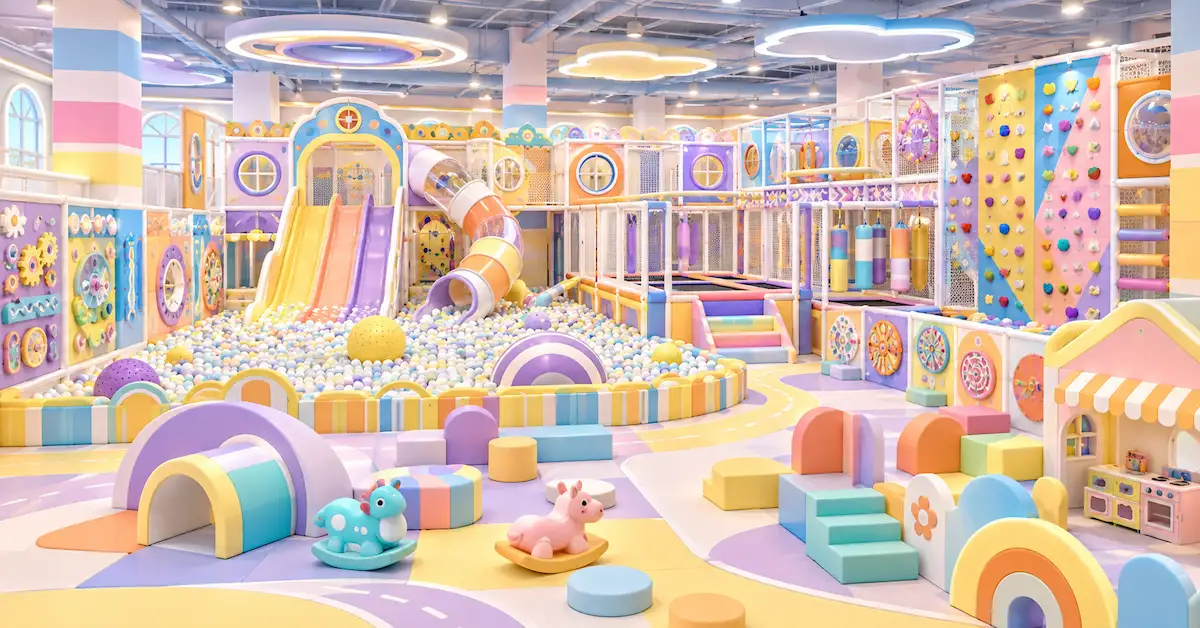
What Should a Turnkey Indoor Playground Solution Include?
A commercial turnkey project may involve several separate work packages.
| Project Package | Typical Scope |
|---|---|
| Project briefing | Venue, users, commercial goals, budget direction |
| Site planning | Floor dimensions, columns, ceiling height, circulation |
| Concept design | Theme, equipment mix, zoning |
| Technical design | Final layout, equipment details, production drawings |
| Manufacturing | Structural, soft-play, slide, netting and themed components |
| QC | Production and pre-shipment checks |
| Packing | Identification and export protection |
| Logistics | Shipment coordination and destination information |
| Site preparation | Building readiness before installation |
| Installation | Assembly and equipment positioning |
| Inspection | Installed-condition checks |
| Handover | Documents, spare parts, maintenance and project closure |
| After-sales | Replacement parts and technical support |
The problem is that buyers often assume all twelve areas are included because the supplier uses the word “turnkey.”
They may not be.
A reliable project agreement should separate supplier scope, buyer scope, and third-party scope.
Define the Project Boundary First
Before reviewing equipment, decide where the turnkey supplier’s responsibility begins and ends.
Supplier-side responsibilities may include
- playground layout;
- 3D design;
- equipment engineering;
- customization;
- manufacturing;
- quality inspection;
- packaging;
- export documentation support;
- installation drawings;
- technician support;
- spare parts;
- after-sales assistance.
Buyer-side responsibilities may include
- accurate building drawings;
- site measurements;
- local permits;
- floor preparation;
- electricity;
- lighting;
- fire-safety systems;
- air-conditioning;
- unloading;
- storage;
- local labor;
- local inspection.
Third-party responsibilities may include
- architect;
- landlord;
- mall engineering team;
- local contractor;
- customs broker;
- freight forwarder;
- electrical contractor;
- fire consultant;
- local inspector.
A turnkey indoor playground solution becomes much easier to manage once these boundaries are written down rather than assumed.
Build a Responsibility Matrix Before Production
A simple responsibility matrix can prevent many disputes later.
| Task | Supplier | Buyer | Third Party |
|---|---|---|---|
| Floor plan provided | ✓ | Architect if required | |
| Site dimensions confirmed | ✓ | ✓ | Contractor |
| Playground layout | ✓ | Review | |
| Theme design | ✓ | Approve | |
| Equipment manufacturing | ✓ | ||
| Factory QC | ✓ | Optional review | |
| Export packing | ✓ | ||
| International freight | Confirm scope | Confirm scope | Forwarder |
| Customs clearance | Usually ✓ | Broker | |
| Site unloading | Confirm scope | Confirm scope | Local team |
| Building preparation | ✓ | Contractor | |
| Equipment installation | Confirm scope | Confirm scope | Local installers |
| Electrical connection | Confirm scope | Confirm scope | Electrician |
| Final inspection | ✓ | ✓ | Local authority if required |
| Spare parts handover | ✓ | Verify | |
| Staff training | Confirm scope | Attend |
The exact matrix will vary by project.
The important point is that every major task has an identified owner.
Start the Turnkey Project With a Site Readiness File
An indoor playground supplier can design around the information it receives.
If the site information is wrong, the project can be wrong even if manufacturing follows the approved drawings perfectly.
Before design begins, prepare a site file containing:
- floor plan;
- usable dimensions;
- ceiling height;
- column sizes and positions;
- doors;
- emergency exits;
- stairs;
- lifts;
- fixed utilities;
- loading access;
- delivery route;
- installation access;
- destination market.
Why delivery access matters early
Large playground components may need to pass through:
- loading docks;
- service corridors;
- elevators;
- door openings;
- stairwells.
A design that fits the final room may still create an installation problem if large components cannot physically reach that room.
Turnkey planning should therefore connect design to logistics from the beginning.
Separate the Design Approval Into Three Gates
One approval point is usually not enough.
A stronger turnkey indoor playground solution uses several design gates.
Gate 1: Functional layout
Approve:
- age zones;
- circulation;
- equipment types;
- entry and exit positions;
- parent visibility;
- activity distribution.
Gate 2: Visual concept
Approve:
- theme;
- color system;
- decorative panels;
- brand integration;
- mascot or graphic elements.
Gate 3: Production release
Approve:
- final dimensions;
- equipment list;
- materials;
- drawing revision;
- customization files;
- major installation information.
This prevents a common problem: the buyer approves an attractive rendering and later discovers that technical details were never formally locked.
Different equipment and theme options can be reviewed through EPARK’s Indoor Playground Products before the final configuration is released for production.
Define What “Site Ready for Installation” Means
Installation delays are often blamed on the playground supplier even when the actual problem is an unfinished site.
The agreement should define site readiness.
Typical readiness items include
- floor construction completed;
- walls finished where required;
- ceiling work completed;
- lighting installed;
- fire systems completed;
- electrical points available;
- HVAC completed;
- site clean and accessible;
- equipment delivery route clear;
- storage area available;
- working hours confirmed.
If the playground installation begins before heavy building work is completed, equipment may be exposed to:
- dust;
- impact damage;
- construction traffic;
- paint;
- welding;
- moisture.
The most efficient installation schedule therefore depends on coordination between the playground supplier and the wider building project.
Clarify What Is Included in Installation
“Installation included” is not specific enough.
Ask whether the quotation includes:
- international technicians;
- domestic technicians;
- local labor;
- travel;
- accommodation;
- tools;
- lifting equipment;
- scaffolding;
- site transport;
- electrical connection;
- floor installation;
- waste removal;
- final cleaning.
Technician support is not always full installation labor
Some international projects use manufacturer technicians to supervise local workers.
This can be effective, but the buyer should know in advance:
- how many technicians are planned;
- what local labor is required;
- who provides tools;
- who manages working hours;
- who is responsible for site safety;
- what information local installers receive.
EPARK’s FAQ provides general information about installation and project support, but the exact scope should always be confirmed for the individual order.
Connect Packing to the Installation Plan
A turnkey project can contain hundreds or thousands of separate components.
Poor packing identification can slow installation even when nothing is missing.
Before shipment, confirm that the packing approach supports on-site assembly.
Useful controls include:
- package numbering;
- zone identification;
- component labels;
- hardware separation;
- drawing references;
- spare-parts identification;
- packing list.
For example, if a large project contains Toddler Zone A, Main Playground B, and Role-Play Zone C, packaging that identifies these areas can make unloading and installation more efficient.
Create an Acceptance Gate Before Shipment
Shipment should not automatically occur just because manufacturing is complete.
The buyer and supplier should define a shipping release gate.
Before equipment leaves the factory, verify:
- final quantities;
- approved revision;
- colors;
- customized graphics;
- major structural parts;
- soft-play components;
- slides;
- nets;
- accessories;
- hardware;
- spare parts;
- package identification;
- required documents.
EPARK describes its playground material and quality approach on the Safety and Quality page. For a turnkey project, these general controls should still be converted into order-specific acceptance points.
Plan Logistics as Part of the Turnkey Scope
International playground projects can involve more than factory-to-port shipment.
Define:
- Incoterm or agreed delivery boundary;
- origin handling;
- sea or land freight;
- destination charges;
- customs clearance;
- taxes and duties;
- container delivery;
- unloading;
- local transport;
- temporary storage.
Why this matters
A buyer may interpret “delivery included” as delivery to the final site.
The supplier may mean shipment only to the destination port.
This single misunderstanding can create significant unexpected cost.
The transport boundary should therefore be written clearly into the commercial agreement.
Define the Installation Completion Standard
Installation completion should not mean:
“The installers have left the site.”
The project should have an agreed acceptance process.
A useful completion review can include:
- equipment installed according to layout;
- visible protective components complete;
- slides and activity modules positioned;
- nets and barriers installed;
- entrances and access points complete;
- floor surfaces completed within supplier scope;
- missing components recorded;
- damaged components recorded;
- agreed corrections listed.
Any remaining issues can be placed on a punch list.
What Is a Playground Project Punch List?
A punch list is a record of incomplete, damaged, incorrect, or unresolved items identified near project completion.
Typical examples may include:
- missing decorative panel;
- damaged PVC covering;
- incorrect color component;
- missing hardware;
- adjustment required;
- replacement accessory needed.
Each item should ideally include:
- description;
- location;
- responsibility;
- required action;
- target closure status.
A punch list separates real outstanding work from general comments such as “please check everything again.”
Define the Final Handover Package
The handover package is one of the most overlooked parts of a turnkey indoor playground solution.
The buyer should finish the project with more than installed equipment.
Depending on project scope, useful handover information can include:
- final equipment reference;
- final layout;
- spare-parts list;
- maintenance guidance;
- cleaning guidance;
- inspection recommendations;
- installation records;
- relevant documentation;
- supplier contact details;
- replacement-part procedure.
EPARK publishes available certification and testing information through its Certificates page. Buyers should confirm which documents apply to the exact project rather than assuming that every displayed document forms part of the handover package.
Add Staff Training to the Handover Discussion
Operational readiness is different from equipment installation.
Before opening, venue staff may need to understand:
- daily visual checks;
- cleaning routines;
- equipment access;
- high-wear locations;
- damaged-component reporting;
- spare-parts identification;
- basic maintenance escalation.
For larger venues, management should also establish who is responsible for inspections.
The turnkey supplier can support the equipment side, but the operator needs an internal routine after opening.
Define Spare Parts Before the Project Is Closed
A finished playground will eventually need replacement components.
Turnkey buyers should ask:
- Which parts are wear items?
- Which spare parts are included?
- Which should be ordered with the project?
- How are replacements identified?
- Are final project drawings retained?
- Can custom colors or graphics be reproduced later?
This is particularly important for:
- FEC chains;
- franchise operators;
- distributors;
- multi-location brands.
The value of a turnkey project does not end on opening day.
Use a Handover Scorecard
Before final project closure, buyers can use a simple acceptance scorecard.
| Handover Item | Status |
|---|---|
| Installation complete | Confirm |
| Punch list created | Confirm |
| Missing parts recorded | Confirm |
| Replacement items agreed | Confirm |
| Spare parts delivered | Confirm |
| Maintenance guidance received | Confirm |
| Applicable documents received | Confirm |
| Staff briefing completed | Confirm |
| Supplier support contact confirmed | Confirm |
| Final project reference archived | Confirm |
The project should only move from “installation” to “closed” when the unresolved items are clearly documented.
Turnkey vs Equipment-Only Supply: Which Is Better?
Neither approach is automatically better.
It depends on the buyer’s internal project capability.
| Buyer Situation | Better Fit |
|---|---|
| First-time playground investor | Turnkey support often reduces coordination burden |
| International mall project | Turnkey/project coordination can simplify delivery |
| Experienced contractor | Equipment-only or partial turnkey may be sufficient |
| Playground chain with own installation team | Supplier manufacturing + technical support may be enough |
| Distributor | Standardized equipment and repeat supply may matter more |
| Hotel or resort | Design and project coordination may be especially valuable |
The correct question is therefore not:
“Is turnkey always better?”
It is:
“Which project responsibilities do we need the supplier to manage?”
When a Turnkey Indoor Playground Solution Is Most Valuable
Turnkey support becomes particularly useful when:
- the buyer has limited playground engineering experience;
- multiple equipment types must work together;
- the project involves custom themes;
- overseas production is involved;
- installation needs specialist guidance;
- the opening date depends on multiple teams;
- the buyer wants one main point of coordination.
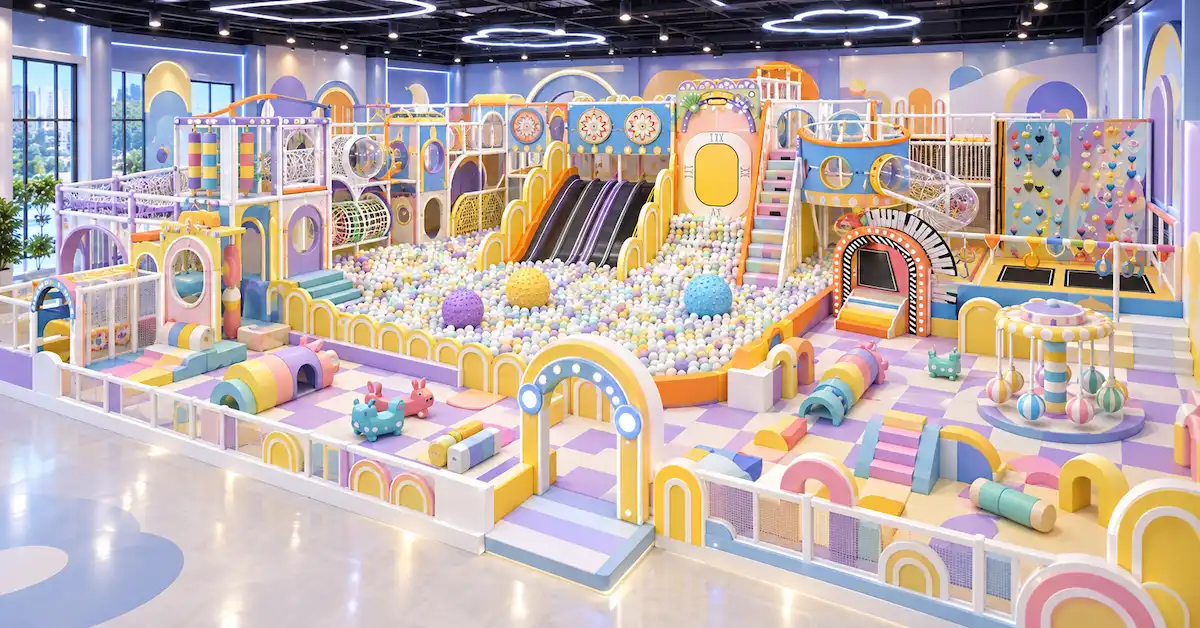
For a large multi-activity reference, EPARK’s 630㎡ Commercial Soft Play Park shows how ball pits, climbing, trampoline activities, role play, obstacle elements, toddler areas, and other attractions can be combined within one customized commercial project.
Common Turnkey Project Scope Gaps
“Installation included”
But local labor is excluded.
“Shipping included”
But destination customs and site delivery are excluded.
“Custom design included”
But branding artwork revisions are limited.
“Certificates available”
But the required document does not apply to the specific product.
“After-sales service included”
But spare parts are not defined.
“Project completed”
But there is no punch-list or acceptance process.
These problems usually come from undefined scope rather than one technical failure.
The best time to fix them is before the contract is signed.
What Should You Send Before Requesting a Turnkey Proposal?
To receive a meaningful quotation, prepare:
- project location;
- venue type;
- floor plan;
- usable dimensions;
- ceiling height;
- target age groups;
- preferred theme;
- desired equipment mix;
- destination market;
- branding requirements;
- expected opening date;
- installation preference;
- expected supplier responsibility.
You can submit these details through EPARK’s Contact Us page.
Frequently Asked Questions
What does a turnkey indoor playground solution include?
The exact scope varies by project. It may include site planning, design, customization, manufacturing, QC, packing, shipping coordination, installation support, handover, spare parts, and after-sales service. Buyers should confirm every included and excluded item in writing.
Is shipping always included in a turnkey playground project?
No. “Turnkey” does not automatically define the freight boundary. Confirm whether the quotation covers factory pickup, international freight, destination port, customs clearance, local transport, or final-site delivery.
Does turnkey mean the supplier prepares the building?
Not necessarily. Civil work, electrical supply, lighting, HVAC, fire systems, flooring preparation, and permits may remain the buyer’s or contractor’s responsibility.
Who provides labor for indoor playground installation?
This depends on the agreement. Some projects use supplier technicians plus local labor; others use a full supplier installation team or trained local installers.
When should the installation plan be confirmed?
Before production is completed. Installation requirements can affect component numbering, packing, site preparation, labor planning, and delivery timing.
What is included in a playground handover?
A useful handover may include final project references, spare parts, maintenance and cleaning guidance, relevant documents, unresolved-item records, and supplier support information.
What is a punch list?
A punch list records incomplete, incorrect, damaged, or missing items found during final installation review and identifies what action is required before project closure.
Should spare parts be included in a turnkey project?
The exact spare-parts package should be agreed by project. Buyers should at least identify likely wear components and define how future replacement parts will be ordered.
Can a turnkey playground be customized?
Yes. Customization may cover layout, theme, color, branding, equipment mix, age zoning, and project-specific dimensions. The final approved design should be locked before manufacturing.
How do I request an accurate turnkey quotation?
Provide the supplier with the floor plan, ceiling height, site conditions, target users, theme, equipment needs, destination, project schedule, installation expectations, and the responsibilities you expect the supplier to manage.
Conclusion
A turnkey indoor playground solution is only truly turnkey when the project scope, responsibilities, installation boundary, logistics, acceptance process, handover documents, and after-sales support are clearly defined.
Before signing, create a responsibility matrix and confirm what is included, excluded, and required from your local team. Review EPARK’s Customization Process and submit your site plan and project requirements through Contact Us for a project-specific proposal.
General Disclaimer
All data on https://www.eparki.com is for general guidance only. As a leading indoor playground manufacturer and trampoline supplier, EPARK strives for accuracy but gives no express or implied warranty regarding completeness, performance or project fitness. Product specs, designs and results may vary with use and customer requirements. Buyers must verify technical details, compliance and suitability before purchase. EPARK OEM/ODM is not liable for any direct, indirect or consequential damages arising from site use. For custom solutions, contact our manufacturer and supplier team via the Contact page.
Intellectual Property
Text, images, videos, CAD files and software are Guangzhou EPARK Electronic Technology Co., Ltd. All rights reserved. No part may be copied, republished or used commercially without prior written permission. We will pursue legal action for copyright or design-patent infringement.
Trademarks
"EPARK", the EPARK logo and related graphics are registered trademarks of Guangzhou EPARK Electronic Technology Co., Ltd. Unauthorized use in ads, domain names or packaging is prohibited.
Governing Law
These terms are governed by the laws of the People's Republic of China.
Contact
Questions? Email sales@nanyuetech.com or WhatsApp +86 139 0307 9263.