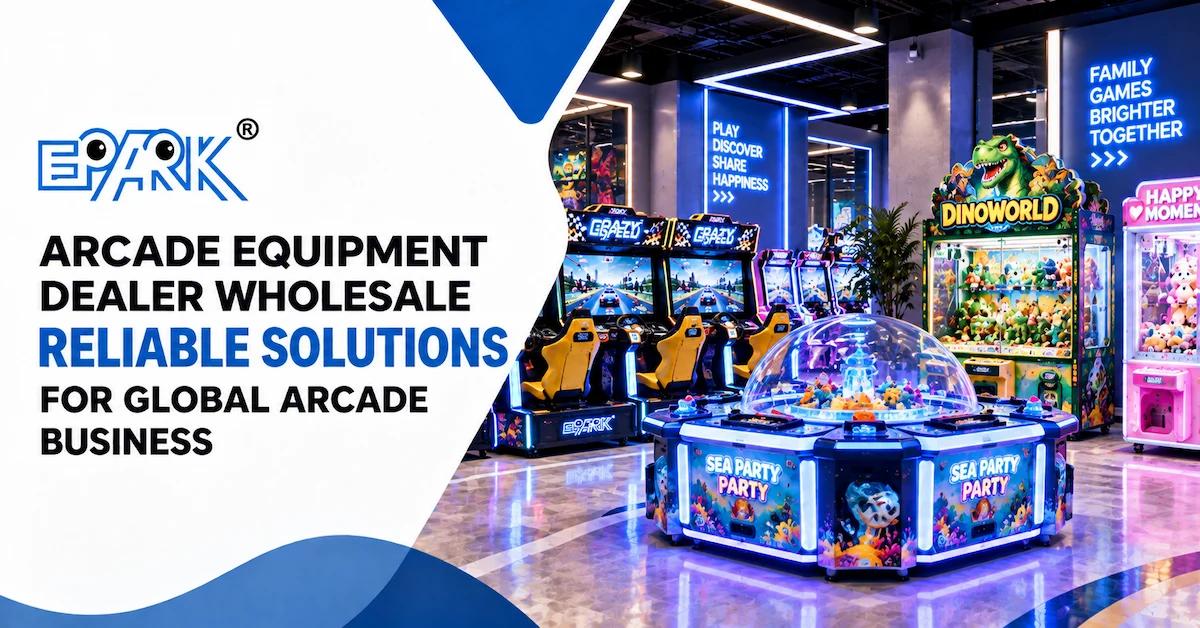
Build a Dealer Range You Can Sell, Demonstrate and Support
Start an arcade equipment dealer wholesale program with three decisions: which configurations deserve local stock, which need demonstration before wider purchasing, and which should be ordered against a specific customer requirement. Buying every available category is not the objective. EPARK’s commercial arcade wholesale guide distinguishes dealer purchasing from single-venue buying through its emphasis on resale demand, repeat supply and local support. This article focuses on regional dealers, importers and private-label resellers serving family entertainment centers (FECs) and other commercial venues, rather than home-use buyers. Before increasing quantities, establish what your sales team can explain accurately, what your technicians can maintain and what customers have actually requested.
Separate Core Stock, Demonstration Units and Special Orders
For planning, divide the shortlist into three groups. Core stock contains approved configurations supported by evidence of repeat customer demand. Demonstration units let customers and technicians evaluate a proposed product before you commit to broader inventory. Special orders cover equipment that depends on a particular venue layout, branding package, payment integration or other customer-specific requirement. These are suggested inventory categories, not published EPARK dealer packages. Review the classification after demonstrations, completed installations and service feedback; do not promote a model into core stock simply because it has arrived. A broad sales catalog can still be supported by a selective warehouse inventory, provided availability and delivery expectations are communicated clearly.
Compare Machine Formats Against Your Customer Base
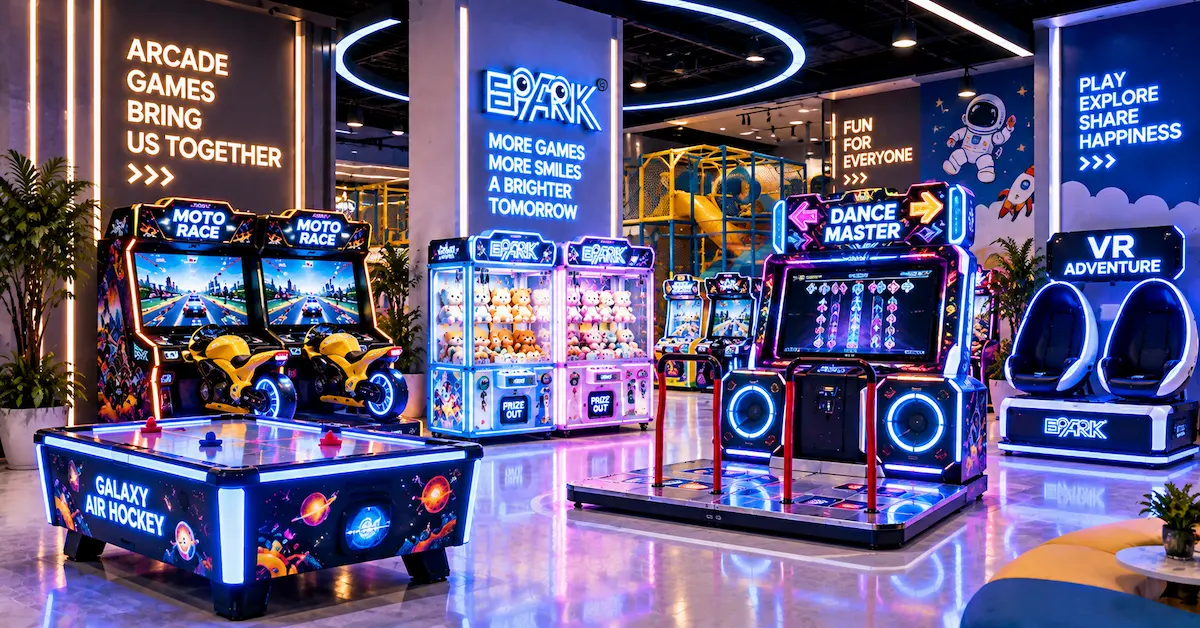
EPARK’s commercial equipment supplier guide discusses prize, redemption, racing, sports and immersive equipment for different commercial applications. Use the comparison below to evaluate candidate models; it compares formats because the cited overview does not provide named dealer stock packages or model-level prices. Confirm the exact product and configuration before assigning an inventory role.
| Machine format | Customer requirement to investigate | Evidence to request | Stock and cost decision |
|---|---|---|---|
| Claw or prize cabinet | A prize-focused arcade area | Approved prize compatibility, mechanism and refill access | Consider core stock only for validated configurations; budget replenishment support |
| Ticket redemption game | An existing or planned reward system | Scoring, ticket or electronic output, payment integration | Match customer systems before stocking; separate integration costs |
| Linked racing stations | Competitive play in an FEC or arcade | Demonstrated linking, controls, software and installed dimensions | Evaluate a demo arrangement; price complete stations and packing |
| Basketball or sports game | An active-play section | Scoring, ball return and operating/service space | Check fit across customer venues; include delivery and setup scope |
| Motion or VR attraction | A dedicated immersive installation | Exact hardware, content, clearances and maintenance requirements | Evaluate as a project order until installation and support are established |
Give Every Sellable Configuration a Dealer Product Record
An arcade equipment dealer wholesale catalog should distinguish a product name from the configuration available for sale. Create one record that purchasing, sales, warehouse staff and technicians can all reference. EPARK’s importer purchasing guide identifies model specifications, components, electrical requirements and packing information as confirmation points. Add your dealer reference and approval status to those details. The following specification template contains information to obtain, not universal machine ratings.
| Specification area | Record for the approved configuration |
|---|---|
| Identity | Supplier model, dealer reference, revision and machine serial number |
| Intended application | Venue type, operating environment and documented user restrictions |
| Size and access | Installed dimensions, operating space and maintenance clearance |
| Construction | Cabinet materials, finish, panel details and mounting arrangements |
| Electrical setup | Rated input, frequency, power requirements and plug |
| Gameplay | Controls, display, software version, language and supported player modes |
| Payment and rewards | Hardware, interface, credit settings and reward output where fitted |
| Documentation | Manuals, relevant test documents and component references |
| Packing and accessories | Packed size, gross weight, package count, keys and included items |
| Dealer status | Demonstration, reserved, awaiting inspection or available for sale |
Inspect Materials and Replacement Access Before Approving Stock
Look beyond cabinet graphics when evaluating a machine for repeated resale. Request the actual material and construction specification, then review joints, panel alignment, fasteners, control mounting, wiring routes and access doors. EPARK’s cabinet engineering guide connects these details with assembly and servicing. During sample review, ask a qualified technician to access an agreed replaceable component using the supplied instructions. Check whether the part reference matches the documentation and whether unrelated assemblies must be removed. Include the cabinet finish and artwork reference in approval, but do not let appearance replace the construction review. Avoid specifying an arbitrary material thickness simply because another machine uses it.
Use the Demonstration Machine to Rehearse Customer Handover
Treat the demo as more than a sales display. As an internal acceptance exercise, have your sales representative explain the confirmed functions, your installer follow the setup instructions and your technician prepare a support request for an identified component. Record what each person cannot complete with the information provided. This tests your proposed dealer workflow rather than claiming a measured reliability result. Also compare the demonstration unit with the version you intend to sell: an optional display, linked-play function or special controller must not appear in promotional material as a standard feature unless it is included. Request permission to use supplier images and videos, and keep your own demonstrations tied to the documented configuration.
Keep Payment Variants Separate in Dealer Inventory
Payment compatibility belongs in the arcade equipment dealer wholesale specification, not in a last-minute modification request. EPARK’s coin-operated equipment guide calls for verification of payment recognition, credit allocation and normal game activation. Test the requested hardware and record the integration responsibility. Consider an illustrative stock example: six identical-looking cabinets comprise four approved token machines and two approved card-system versions. Treat them as two configuration lines, not six interchangeable units. Reserve each customer order against the correct line and identify any conversion still requiring technical approval. A reader mounting position alone does not establish a working cashless installation; the delivered operating sequence must match what the dealer promises.
Check Batch Quality and Documentation Before Resale

Agree on inspection criteria before releasing repeat quantities. EPARK’s factory evaluation guide discusses incoming components, assembly, gameplay, payment, scoring, appearance and packing checks. Select the relevant tests by model and establish which apply to every unit versus an agreed sample. Record defects, corrective action and the configuration tested; a successful demo does not identify the condition of every production machine. Review technical documents separately, checking the model and configuration they cover and obtaining qualified assessment for the destination project. Do not extend a report for one component or another product category to the whole machine. At your warehouse, keep received equipment awaiting verification separate from stock released for customer delivery.
Price the Service You Will Actually Provide
Compare arcade equipment dealer wholesale quotations only after aligning the machine, payment setup, accessories, packing and support scope. EPARK’s factory quote comparison guide treats those items as part of the purchasing decision rather than additions to consider after payment. Then define your own customer offer: machine supply only, delivery and commissioning, or a separately agreed support package. Obtain costs for local transport, setup, storage and service work instead of applying a resale percentage directly to the factory price. Identify costs already included upstream to avoid counting them twice. Unpriced installation or support should remain an open costing item, not be recorded as zero. This is a quotation method, not a recommended dealer margin.
Confirm Arcade Equipment Dealer Wholesale Terms
Put the commercial questions into the inquiry: opening-order minimums, reorder conditions, quotation validity, demonstration arrangements, access to approved sales material, use of branding and the process for technical support. Ask separately about any proposed territory or customer-account arrangement. Do not present a wholesale purchase as authorization to claim exclusive or authorized-dealer status. For an EPARK discussion, request written confirmation of the specific arrangement rather than treating general website information as a dealer appointment. State what you expect to provide locally and what you need from the supplier. Keep returns, stock rotation and demonstration discounts as questions unless they have been expressly agreed; none should be built into your inventory plan as an assumed benefit.
Separate Private Labeling From Product Development
EPARK’s arcade OEM guide discusses branding, cabinet appearance, hardware and software settings as distinct customization areas. For a dealer range, approve artwork separately from technical configuration. A logo update should not obscure a changed controller, payment interface or control layout. Where the project requires deeper ODM development, identify engineering responsibilities, prototype deliverables and validation before treating the model as replenishable stock. Request separate pricing for development work and recurring production changes. Keep customer-specific branding attached to its order rather than automatically applying it to general dealer inventory, and retain approved artwork files for later production. Available changes still require model-specific confirmation.
Plan Replenishment Around Stock Ready for Sale
A practical arcade equipment dealer wholesale replenishment plan should distinguish equipment on order, equipment received and equipment cleared for sale. For each approved configuration, review uncommitted stock alongside confirmed customer orders and supplier-confirmed incoming quantities. Do not count a reserved machine or a unit awaiting repair as immediately available. Request current production allocation for the relevant models, plus the dependencies between approvals, component preparation, testing, packing and dispatch. Separate first-order development time from repeat-production time. EPARK’s distributor sourcing guide emphasizes reorder consistency and advance communication of substitutions. Use the approved revision in each replenishment request, and reassess availability when a proposed replacement changes payment, software or spare-part compatibility.
Establish a Support Path Before Expanding the Catalog
For every model, agree how a customer issue moves from local diagnosis to supplier review and replacement authorization. Request component references, applicable revisions, service instructions and replacement lead times. EPARK’s maintenance-cost guide includes parts, technician labor, software troubleshooting and replacement shipping in the ownership-cost discussion. Build your initial spare-parts proposal with your service team, separating locally obtainable items from supplier-specific components. Confirm when warranty coverage starts, what evidence a claim requires and who handles freight and local work. Purchased spares are not the same as warranty replacements. A model should not enter the dealer range with a customer service promise that neither party has accepted responsibility for delivering.
Plan Packing for the Import Journey and Onward Delivery
Dealer stock may be unpacked for checking or demonstration before it is shipped to the final customer. Ask how that second handling stage should be managed, including whether the original packaging is suitable for reuse and what replacement protection is required. EPARK’s export equipment guide identifies packed dimensions, weights, package counts, component protection and accessory labeling as planning inputs. Obtain those details for each configuration and keep detachable assemblies associated with their machine. Before promising local delivery, confirm the destination access route and the agreed reassembly requirements. Do not add unwanted stock merely to occupy unused freight space; compare the shipment plan with the customer demand supporting each proposed unit.
Prepare an EPARK Dealer Wholesale Inquiry
EPARK’s company profile identifies Guangzhou EPARK Electronic Technology Co., Ltd. as a Guangzhou-based integrated industrial and trading company established in 2012. It lists arcade and game machines within its wider entertainment-equipment business and describes product development, manufacturing, sales and after-sales activities. Those statements provide company background, not confirmation of a particular dealer package. For an arcade equipment dealer wholesale proposal, submit your market, customer types, candidate models, core-stock and demonstration quantities, special-order requirements, payment systems, electrical versions and service capability. Ask who manufactures, assembles or sources each selected product and who owns final inspection and support. Request current model data and order-specific commercial terms before publishing availability to customers.
Frequently Asked Questions About Arcade Equipment Dealer Wholesale
1. What should an arcade equipment dealer wholesale order contain?
Start with configurations linked to identified customer demand, plus selected demonstration units where evaluation is still needed. Keep unfamiliar or highly customized products separate from the core-stock decision, and include the documentation and support items required for each machine.
2. Should a dealer stock every machine category?
Not as a default policy. Offer a broader project range only when you can confirm specifications, availability and support. Use core stock for approved repeat demand and special-order quotations for requirements that still depend on a specific customer.
3. Does a supplier provide demonstration machines free of charge?
Ask for the actual demonstration terms. Confirm price, freight, included configuration, support and any later resale conditions. Do not assume a sample discount, credit against future orders or free machine is part of the proposed arrangement.
4. Is there one minimum order quantity for all dealer equipment?
Request minimums by model, customization and order type. Separate the opening purchase from regular replenishment and ask about mixed-model feasibility. EPARK’s wholesale guidance advises confirming quantities for the actual products and project.
5. Can a dealer combine stock machines and customer orders in one shipment?
Request a coordinated proposal, then maintain separate allocations and configuration records. Confirm whether one delayed customer-specific item would hold the shipment, and obtain a packing list that identifies which machines belong to each order.
6. Can every stocked machine use the same payment system?
Do not assume interchangeability. Confirm hardware, interfaces, credit settings and integration responsibilities by model, then test the intended setup. Identify different approved payment versions separately in inventory and customer quotations.
7. Does private labeling make the dealer the product designer?
Clarify the work performed rather than relying on a label. Artwork changes and engineering development are different scopes. Identify who supplies the design, approves technical changes, validates the product and maintains the production documents.
8. When should the dealer confirm warranty arrangements?
Before committing to customer-facing service terms. Request coverage, start conditions, claim evidence, diagnosis procedure and responsibility for replacement freight and local work. Treat any proposed extended dealer support as a separately costed obligation.
9. How should repeat orders be specified?
Attach the approved machine revision, payment configuration, software, artwork, accessories and parts references. Ask the supplier to identify proposed deviations before production. Review those changes before promising compatibility with already installed equipment.
10. What information helps EPARK prepare a dealer proposal?
Provide your target market, customer types, machine shortlist, quantities, electrical and payment requirements, branding, local service arrangements and intended delivery schedule. Distinguish stock, demonstration and customer-specific purchases so the proposal reflects the actual buying plan.
Conclusion
An arcade equipment dealer wholesale program should connect the range you offer with the equipment you can demonstrate, deliver and support. Separate core stock from demo units and special orders, give each approved configuration a usable product record, and align customer promises with verified payment functions, inspection evidence and service responsibilities. Review replenishment against stock ready for sale rather than warehouse quantities alone. To develop a model-specific proposal, contact EPARK with your dealer purchasing brief, including target customers, selected categories, quantities, payment requirements, branding, support expectations and the delivery plan.
General Disclaimer
All data on https://www.eparki.com is for general guidance only. As a leading indoor playground manufacturer and trampoline supplier, EPARK strives for accuracy but gives no express or implied warranty regarding completeness, performance or project fitness. Product specs, designs and results may vary with use and customer requirements. Buyers must verify technical details, compliance and suitability before purchase. EPARK OEM/ODM is not liable for any direct, indirect or consequential damages arising from site use. For custom solutions, contact our manufacturer and supplier team via the Contact page.
Intellectual Property
Text, images, videos, CAD files and software are Guangzhou EPARK Electronic Technology Co., Ltd. All rights reserved. No part may be copied, republished or used commercially without prior written permission. We will pursue legal action for copyright or design-patent infringement.
Trademarks
"EPARK", the EPARK logo and related graphics are registered trademarks of Guangzhou EPARK Electronic Technology Co., Ltd. Unauthorized use in ads, domain names or packaging is prohibited.
Governing Law
These terms are governed by the laws of the People's Republic of China.
Contact
Questions? Email sales@nanyuetech.com or WhatsApp +86 139 0307 9263.