Why Buyers Should Verify an Arcade Equipment Factory Before Ordering
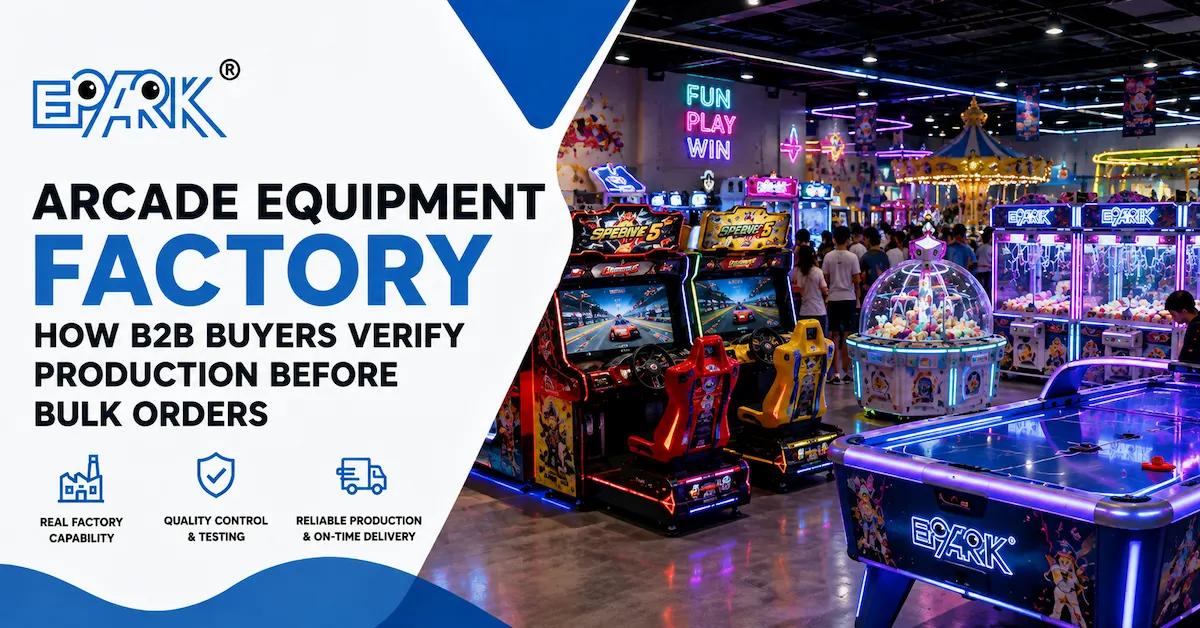
Finding an arcade equipment factory is relatively easy. Determining whether that factory can reliably produce, test, customize, pack, and reproduce commercial equipment for a bulk order is much harder.
For importers, distributors, FEC operators, shopping mall projects, and entertainment contractors, factory selection affects far more than initial machine price.
A poor factory decision can result in:
- Inconsistent machine specifications
- Component substitutions
- Electrical configuration errors
- Delayed production
- Weak quality control
- Packaging damage
- Missing spare parts
- Difficult warranty claims
- Problems with repeat orders
For this reason, B2B buyers should evaluate a factory as a production system, not simply as a place where arcade machines are displayed.
EPARK's product scope can be reviewed through the products page, while buyers evaluating cooperation can learn more through About EPARK.
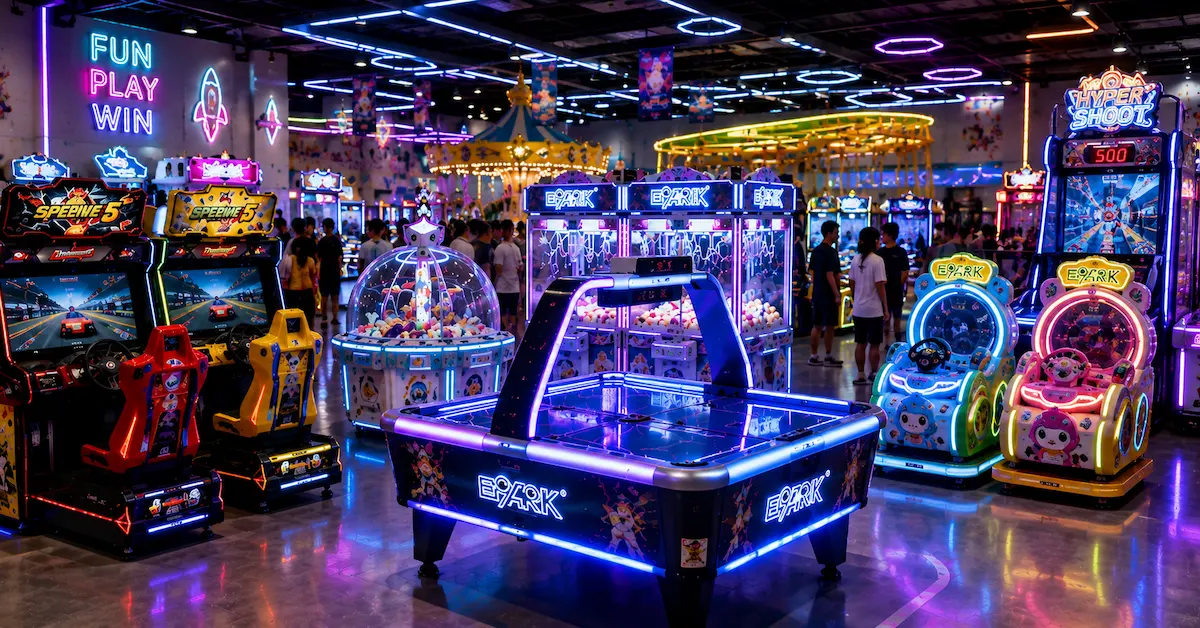
Factory, Manufacturer, or Supplier: What Is the Difference?
These terms often overlap, but their search intent is different.
| Search Term | Main Buyer Question | Main Evaluation Focus |
|---|---|---|
| Arcade equipment factory | Can this facility really produce my bulk order? | Production, QC, capacity, testing |
| Arcade equipment manufacturer | Can this company engineer and manufacture the equipment? | Engineering, product development, consistency |
| Arcade equipment supplier | Can this company source and deliver the equipment I need? | Product mix, sourcing, logistics |
| Arcade cabinet supplier | Can it supply suitable cabinet configurations? | Cabinet sourcing, OEM, bulk supply |
A buyer searching for an arcade equipment factory is usually closer to supplier qualification and purchase approval.
That makes factory verification, production control, testing, and delivery risk more important than a general introduction to arcade machine categories.
What Should You Verify During an Arcade Factory Audit?
A professional factory audit should answer several practical questions.
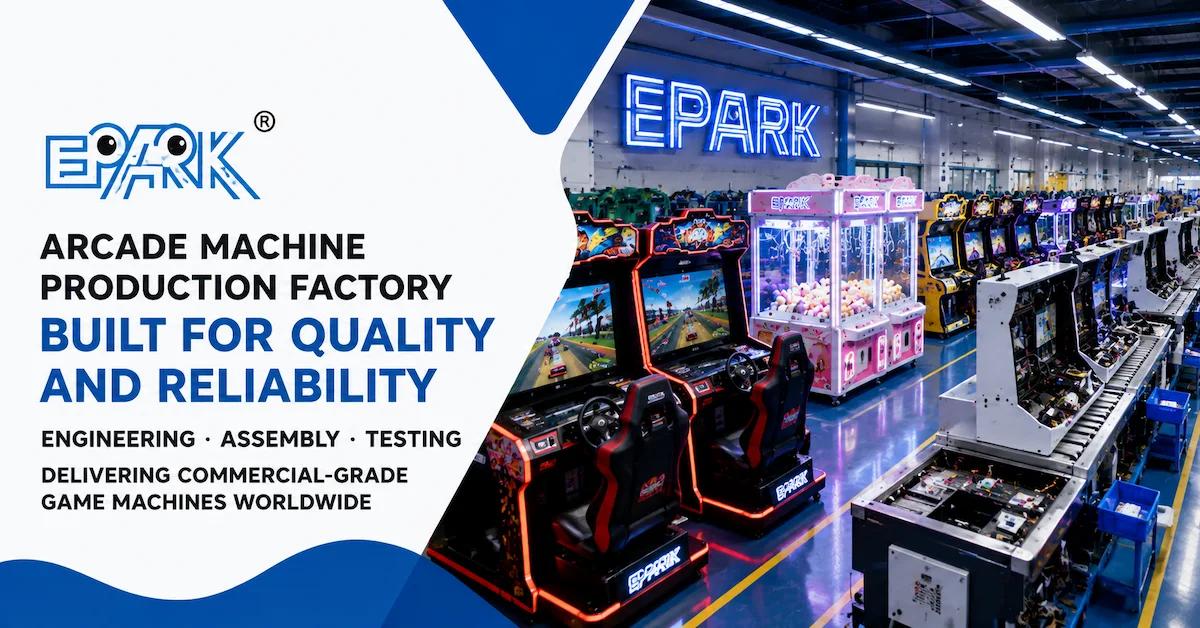
Does the Factory Have Real Production Capability?
Buyers should identify which processes are actually handled by the factory.
Ask whether the facility performs:
- Cabinet assembly
- Electrical assembly
- Wiring
- Hardware installation
- Software configuration
- Artwork installation
- Functional testing
- Final inspection
- Packaging
Do not assume every process shown in a product catalog is completed in-house.
Some components may reasonably come from specialized suppliers. The important point is understanding which production stages the arcade factory controls directly and how outsourced components are inspected.
Is the Production Area Organized?
Factory organization can reveal how mature the production process is.
During a visit or video audit, look for:
- Clearly separated assembly areas
- Component storage
- Work-in-process identification
- Finished machine areas
- Testing stations
- Packaging areas
- Spare-parts storage
An organized production flow can reduce confusion between models and customer configurations.
Check Whether Production Matches the Machines You Want to Buy
A factory may be capable of assembling one type of machine but have limited experience with another.
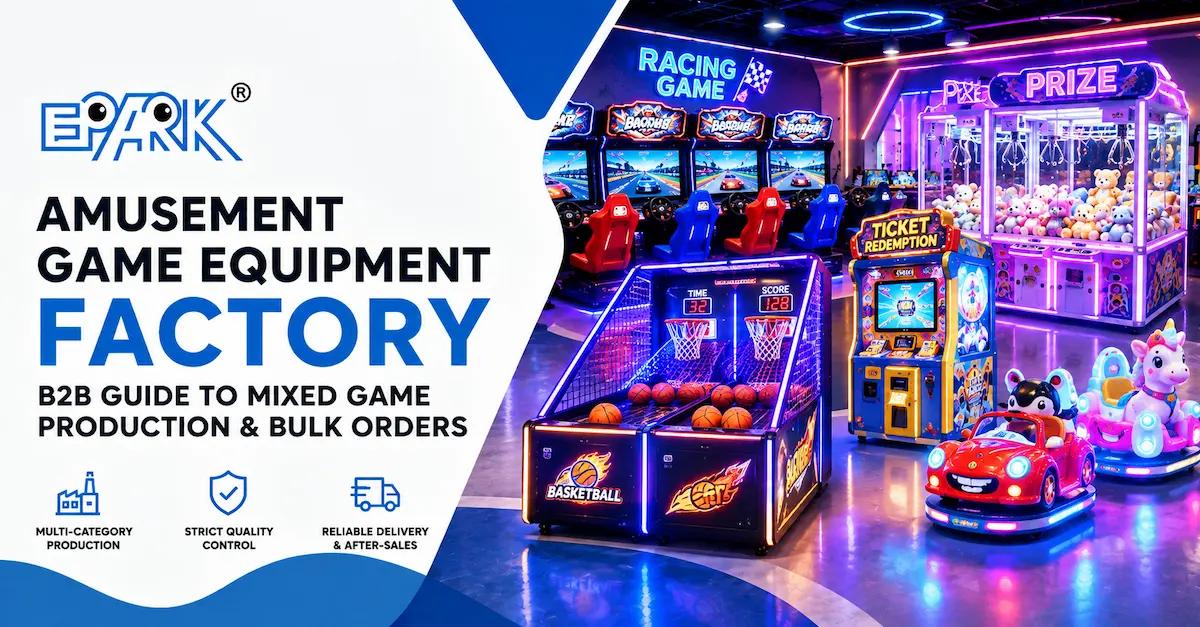
For example, production requirements differ among:
- Racing machines
- Basketball games
- Shooting machines
- Claw machines
- Redemption equipment
- Air hockey
- Kiddie rides
- Interactive arcade machines
Before ordering, request evidence of experience with machines similar to your project.
Useful evidence can include:
- Existing production samples
- Finished products
- Assembly records
- Testing videos
- Previous project photos
- Specification sheets
If your project involves several categories, confirm that the factory can manage different configurations within the same order.
Evaluate the Components Behind the Machine
Two arcade machines may look similar from the outside while using very different internal components.
For commercial buyers, important components can include:
- Power supplies
- Main controllers
- Displays
- Wiring harnesses
- Buttons
- Joysticks
- Steering wheels
- Pedals
- Sensors
- Speakers
- Coin acceptors
- Card-reader interfaces
- Ticket dispensers
- Cooling components
Ask for a Component Specification List
For larger orders, request a specification sheet that identifies critical components.
This allows buyers to compare:
- Approved sample
- Production units
- Future repeat orders
Without component control, a supplier may change internal hardware while keeping the exterior appearance unchanged.
Ask How Component Substitutions Are Managed
Electronic parts can become unavailable.
A mature arcade equipment factory should have a process for handling substitutions.
Ask:
- Will the buyer be notified?
- Is an equivalent component tested first?
- Does the change affect wiring?
- Does software require modification?
- Does the replacement affect spare-parts compatibility?
This matters particularly for distributors and multi-site operators.
Quality Control Should Follow the Production Process
Quality control should not happen only when the machine is already packed.
A better system includes inspection at several stages.
Incoming Component Inspection
Check important incoming items such as:
- Displays
- Controllers
- Power supplies
- Sensors
- Payment modules
- Structural parts
Assembly Inspection
During assembly, workers should verify:
- Wiring
- Fasteners
- Component installation
- Mechanical movement
- Cabinet alignment
Functional Testing
Finished equipment should be operated before packing.
Testing can include:
- Power-on operation
- Screen performance
- Controls
- Sensors
- Sound
- Lighting
- Scoring
- Payment functions
- Ticket output
- Game settings
Final Appearance Inspection
Check:
- Cabinet surfaces
- Artwork
- Scratches
- Glass
- Doors
- Locks
- Labels
Your uploaded EPARK content plan specifically identifies factory audits, quality inspection, samples, and pre-shipment checks as important buyer-risk topics for arcade procurement.
Ask About Burn-In and Repeated Operation Testing
A machine that works for five minutes may still develop problems during commercial operation.
For machines containing displays, controllers, lighting, power systems, and sensors, buyers should ask whether the factory performs extended operational testing.
Questions include:
- How long is each machine tested?
- Is the complete machine powered during testing?
- Are controls repeatedly operated?
- Are payment functions tested?
- Are abnormal temperatures checked?
- Are faults recorded and corrected before shipment?
The exact test method will depend on machine type, but buyers should understand what “tested” actually means.
Verify Production Capacity and Lead Time
A factory may produce a good sample but still struggle with a large order.
Before bulk purchasing, confirm:
- Monthly production capability
- Current production workload
- Expected order quantity
- Material preparation time
- Assembly schedule
- Testing schedule
- Packaging schedule
Ask for a Production Timeline
A useful order schedule can include:
| Stage | Buyer Should Confirm |
| Specification approval | Final configuration locked |
| Material preparation | Major components available |
| Cabinet/structure production | Production started |
| Assembly | Machine integration underway |
| Functional testing | QC completed |
| Packing | Accessories checked |
| Shipment | Booking and loading arranged |
Avoid treating the quoted lead time as a single unexplained number.
Understanding the stages makes delays easier to identify and manage.
Sample Orders Can Reduce Bulk Purchase Risk
For a new factory relationship, a sample or pilot order can provide valuable information.
A sample helps buyers verify:
- Build quality
- Machine appearance
- Gameplay
- Controls
- Internal wiring
- Payment configuration
- Maintenance access
- Packaging
However, the sample should become the approved production reference.
Before bulk manufacturing, document:
- Photos
- Specifications
- Components
- Artwork
- Electrical settings
- Software configuration
This reduces the risk that bulk units differ significantly from the approved machine.
OEM and ODM Capability Should Be Verified Practically
Many factories claim to support OEM/ODM.
Buyers should determine what that actually means.
Basic OEM
May include:
- Logo
- Colors
- Artwork
- Packaging
Configuration Customization
May include:
- Language
- Voltage
- Plug
- Payment interface
- Credit settings
- Ticket configuration
Deeper Product Development
May involve:
- Cabinet structure
- Control layout
- Hardware integration
- Special functionality
- Prototype development
The deeper the customization, the more important engineering communication, prototype approval, and change control become.
If you are planning custom entertainment equipment, you can review EPARK's broader product solutions before submitting project requirements.
Check Electrical Configuration Before Production
International buyers should confirm:
- Destination country
- Voltage
- Frequency
- Plug type
- Payment configuration
These details should be included in the order specification rather than discussed only before shipment.
For mixed orders, create one configuration table listing every machine model.
This prevents different machines in the same container from arriving with inconsistent electrical or payment settings.
Do Not Treat Certification as a Yes-or-No Question
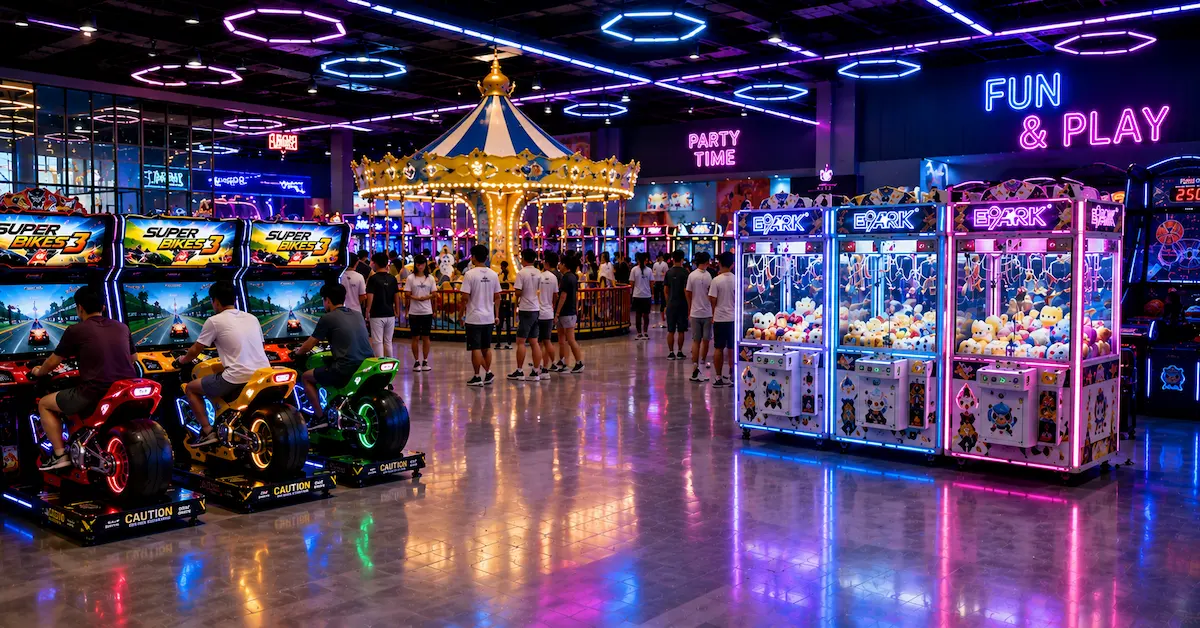
Instead of asking:
“Does your factory have CE?”
buyers should ask which documents apply to the exact equipment and destination market.
Confirm:
- Machine model
- Configuration
- Relevant documentation
- Test reports where applicable
- Labels
- Manuals
Requirements can vary by product configuration and destination, so B2B procurement should rely on model-specific verification rather than generic certificate images.
Packaging Is Part of Factory Quality
Even a perfectly tested machine can arrive damaged if it is packed poorly.
Arcade machines can contain:
- Screens
- Glass
- Electronics
- Large cabinets
- Moving parts
- Decorative panels
Buyers should inspect packaging requirements before shipment.
Packaging Checklist
Confirm:
- Surface protection
- Corner protection
- Screen protection
- Moisture protection
- Internal component securing
- Accessory boxes
- Spare-parts labeling
- External machine identification
For expensive or fragile configurations, ask for packing photos before container loading.
Conduct a Pre-Shipment Inspection
Before paying the final balance or releasing the shipment, buyers should perform a final inspection.
For a large order, the inspection can verify:
- Quantity
- Model
- Appearance
- Electrical configuration
- Functional performance
- OEM branding
- Accessories
- Spare parts
- Packaging
A Practical Pre-Shipment Checklist
| Inspection Area | What to Verify |
| Product | Correct model and quantity |
| Function | Controls, screens, sensors, scoring |
| Payment | Coin/card/ticket configuration |
| Electrical | Voltage, frequency, plug |
| OEM | Logo, artwork, language |
| Spare parts | Correct type and quantity |
| Packaging | Protection and identification |
| Documents | Packing list and required files |
This is one of the most effective ways to reduce problems after international delivery.
What Should Importers Ask an Arcade Equipment Factory?
Before a bulk order, prepare a structured question list.
Ask:
- Which production processes do you control directly?
- Which components are outsourced?
- How are incoming components inspected?
- How do you control component substitutions?
- What QC checks are performed during assembly?
- How long are finished machines tested?
- Can you provide a sample before bulk production?
- How do you control repeat-order specifications?
- What spare parts do you recommend?
- How is export packaging handled?
- What is the realistic production lead time?
- How are after-sales technical issues handled?
EPARK's FAQ page can also be used by buyers to review common project and cooperation questions.
Red Flags When Evaluating an Arcade Factory
Be cautious when a potential factory:
- Refuses to show its production area
- Cannot explain its QC process
- Provides only showroom videos
- Frequently changes specifications
- Cannot identify major components
- Gives unrealistically short lead times
- Has no clear spare-parts policy
- Cannot provide testing evidence
- Avoids discussing packaging
- Cannot explain how warranty issues are handled
One red flag does not always mean the supplier is unsuitable, but multiple unresolved issues should increase the level of due diligence.
FAQ
What is an arcade equipment factory?
An arcade equipment factory is a production facility involved in assembling, configuring, testing, and preparing commercial arcade or amusement machines for customers.
How can I verify whether an arcade factory is real?
Request a live factory video, production-area photos, manufacturing records, samples, quality-control information, and evidence of machines being assembled and tested.
What should I inspect during a factory audit?
Inspect production flow, component storage, assembly areas, QC stations, testing, finished goods, packaging, and how different customer orders are identified.
Should I order a sample before a bulk arcade machine order?
For a new factory relationship or customized product, a sample or pilot order can help verify specifications, quality, operation, payment configuration, and packaging.
How do I check arcade machine quality before shipment?
Use a pre-shipment inspection covering appearance, controls, displays, sensors, sound, lighting, payment functions, electrical settings, accessories, spare parts, and packaging.
What should an arcade factory test before shipping?
Testing should match the equipment type and may include power-on operation, controls, sensors, scoring, payment systems, ticket output, lighting, sound, and repeated functional operation.
Can an arcade equipment factory provide OEM products?
Many factories support OEM customization, but buyers should verify exactly whether the factory can handle branding, electrical configuration, payment systems, cabinet changes, prototypes, or deeper ODM development.
How do I verify production capacity?
Ask about current workload, normal production output, your expected quantity, component lead times, assembly schedules, testing capacity, and realistic delivery dates.
Why is spare-parts planning important?
Commercial machines experience continuous use. Preparing critical and model-specific spare parts can reduce downtime and avoid expensive international emergency shipments.
How can I request an arcade equipment project quotation?
Prepare your machine categories, quantities, destination country, electrical requirements, payment system, customization needs, and target delivery schedule, then submit them through the EPARK contact page.
Conclusion
Choosing an arcade equipment factory should be treated as a supplier-verification and production-risk decision, not simply a price comparison.
For importers, distributors, FEC operators, and project buyers, the most important questions are whether the factory controls the necessary production stages, uses consistent components, operates a practical QC system, can handle bulk production, tests machines before shipment, protects equipment during export, and supports future spare parts and repeat orders.
A strong factory relationship gives buyers greater visibility from approved sample to mass production and final shipment.
Before placing a bulk order, review EPARK products, learn more through About EPARK, review common questions in the EPARK FAQ, or submit your machine list and project requirements through Contact EPARK.
General Disclaimer
All data on https://www.eparki.com is for general guidance only. As a leading indoor playground manufacturer and trampoline supplier, EPARK strives for accuracy but gives no express or implied warranty regarding completeness, performance or project fitness. Product specs, designs and results may vary with use and customer requirements. Buyers must verify technical details, compliance and suitability before purchase. EPARK OEM/ODM is not liable for any direct, indirect or consequential damages arising from site use. For custom solutions, contact our manufacturer and supplier team via the Contact page.
Intellectual Property
Text, images, videos, CAD files and software are Guangzhou EPARK Electronic Technology Co., Ltd. All rights reserved. No part may be copied, republished or used commercially without prior written permission. We will pursue legal action for copyright or design-patent infringement.
Trademarks
"EPARK", the EPARK logo and related graphics are registered trademarks of Guangzhou EPARK Electronic Technology Co., Ltd. Unauthorized use in ads, domain names or packaging is prohibited.
Governing Law
These terms are governed by the laws of the People's Republic of China.
Contact
Questions? Email sales@nanyuetech.com or WhatsApp +86 139 0307 9263.