What Does an Arcade Cabinet OEM Factory Actually Manufacture?
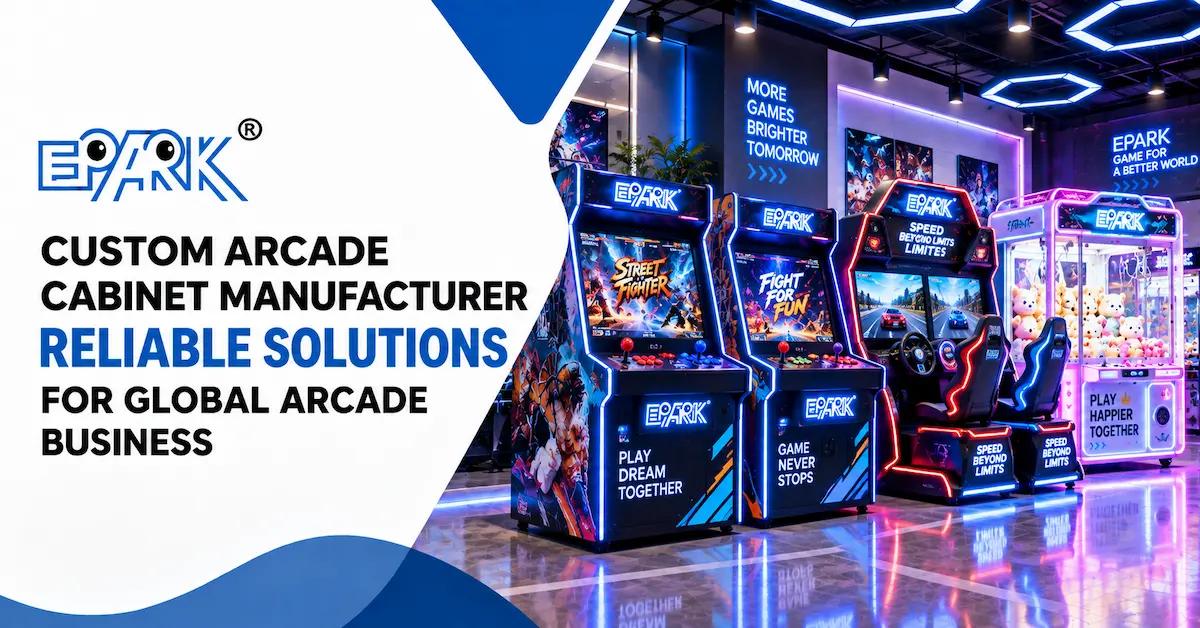
An arcade cabinet OEM factory does more than produce an attractive outer shell. The cabinet is the structural platform that must accommodate displays, player controls, game electronics, payment hardware, speakers, lighting, wiring, service doors and the exterior design seen by customers. EPARK’s arcade cabinet manufacturing guide describes cabinet manufacturing around structural design, material selection, surface finishing, artwork and component integration, while its China arcade cabinet guide explains that the cabinet affects assembly, transportation, installation, maintenance and later reproduction. For B2B buyers, that means the cabinet should be treated as an engineered commercial product rather than a decorated enclosure.
Who Needs an OEM Arcade Cabinet Instead of a Standard Cabinet?
OEM cabinet manufacturing is most relevant to distributors building private-label products, arcade brands creating a recognizable cabinet family, game developers integrating their own electronics, chain entertainment operators seeking consistent equipment across multiple venues and FEC buyers whose space or payment system cannot be served by an unchanged standard cabinet. A buyer that only needs a different logo may not need structural customization at all. EPARK’s OEM & Customization category and its existing custom-arcade content distinguish branding from deeper changes involving hardware, cabinet design and production control. The practical sourcing question is therefore not “Can the factory customize?” but “Which standard features already work, which features must change, and what engineering work is actually justified?”
Separate Cabinet OEM Supply From Complete Arcade Machine Supply
One important RFQ decision is whether you are purchasing the cabinet itself, an integration-ready enclosure or a complete arcade machine. EPARK’s arcade cabinet factory guide explicitly distinguishes cabinet-focused manufacturing from complete equipment manufacturing. A cabinet-only quotation may cover structure and surface finish but leave displays, game boards, controls or payment hardware to the buyer; a more integrated OEM project may include mounting brackets, harnesses, controls, lighting or complete electronics. If buyers compare these quotations only by cabinet appearance, the lower price may simply reflect a smaller supply boundary. Define the boundary before asking for a final price.
| OEM supply scope | Typical included work | Buyer responsibility to clarify | Main sourcing risk |
|---|---|---|---|
| Cabinet shell | Structure, panels and agreed finish | Electronics, controls, display and payment hardware | Assuming a low cabinet quote includes integration |
| Integration-ready cabinet | Cabinet plus approved mounts, openings and interface provisions | Final electronics and system integration | Hardware does not fit the prepared interfaces |
| Private-label cabinet | Existing platform plus approved branding and selected modifications | Final artwork approval and configuration control | Visual changes hide technical differences |
| Complete OEM arcade machine | Cabinet plus agreed hardware, controls, electronics and game system | Final acceptance and local installation requirements | Comparing its price with an empty enclosure |
Create a Controlled Cabinet Specification Before Design Starts
A serious arcade cabinet OEM factory project should begin with a written specification shared by purchasing, design and engineering. EPARK’s cabinet guides emphasize actual dimensions, material specifications, control positions, hardware interfaces and maintenance access rather than generic descriptions such as “commercial quality.” The specification should distinguish buyer requirements, supplier proposals, approved values and unresolved items so an early rendering or informal message does not accidentally become the production definition.
| Specification area | What the buyer should define or confirm |
|---|---|
| Application | Racing, shooting, prize, redemption, upright or another cabinet type |
| Cabinet dimensions | Overall size and critical internal dimensions |
| Materials | Structural material and relevant specifications |
| Reinforcement | High-load, control and mounting areas |
| Display | Screen size, mounting pattern and viewing position |
| Controls | Buttons, joystick, steering, pedals, guns or sensors |
| Electronics | Game board, controller and power-system space |
| Payment hardware | Reader, acceptor, mounting and service requirements |
| Audio/lighting | Speaker and illumination configuration |
| Internal wiring | Cable routes, connectors and harness access |
| Service access | Doors, removable panels and replaceable-component access |
| Branding | Color, artwork, logo, header and labels |
| Electrical setup | Voltage, frequency, plug and applicable requirements |
| Packing | Detachable sections, package size and reassembly needs |
| Production control | Model code, drawing revision and sample reference |
Choose the Cabinet Architecture for the Actual Game
Different arcade categories impose different structural requirements, so copying one cabinet architecture across every OEM project creates unnecessary risk. A racing machine must integrate a seat, steering, pedals and display around a usable player position; shooting equipment may require gun storage, sensor placement and viewing distance; a prize cabinet needs transparent viewing areas, refill access and mechanism maintenance; redemption equipment may add ticket or reward-system hardware. EPARK’s existing cabinet content covers racing, shooting, upright and redemption cabinet requirements separately, reinforcing the need to design around the machine function rather than one visual template.
| Cabinet type | Key structural requirement | Hardware interface to verify | Service concern |
|---|---|---|---|
| Racing | Cockpit, seat and control integration | Steering, pedals, display and linked hardware | Access to controls and electronics |
| Shooting | Player position and controller storage | Guns, sensors and screen | Cable and sensor access |
| Upright | Compact enclosure and control panel | Display, buttons, joystick and payment | Front/rear component access |
| Prize | Transparent cabinet and product storage | Crane/reward mechanism and payment | Refilling and mechanism maintenance |
| Redemption | Score/reward equipment integration | Sensors, ticket or electronic reward interface | Dispenser and controller access |
Evaluate Materials by Function Instead of One “Best” Thickness
Commercial buyers often ask which sheet thickness or cabinet material is “best,” but that question cannot be answered responsibly without the machine structure. A compact upright cabinet and a large racing cockpit place different loads on panels, mounting brackets and joints. Request the actual material specification for the proposed design, identify which panels are structural and check where reinforcement is required. EPARK’s arcade cabinet wholesale guide similarly advises buyers to evaluate material and reinforcement according to cabinet function rather than accepting broad terms such as “premium” or copying one thickness across unrelated products.
Check Hardware Fit Before Finalizing Exterior Artwork
The cabinet design should be validated around actual components before artwork dominates the project. Confirm the screen mounting pattern, control-panel openings, steering or gun mounting points, speaker positions, reader/acceptor dimensions and internal controller space against the intended hardware. If a display or control system changes after structural approval, review whether mounting points and internal clearances still work. This is especially important for distributors supplying repeat products because a small hole-position or bracket change can prevent parts stocked from an earlier batch from fitting the next one. EPARK’s cabinet content repeatedly connects cabinet structure with component integration and maintenance rather than treating enclosure and hardware as separate purchasing decisions.
Control Player Position and Control Layout
Hardware can physically fit and still create a poor commercial cabinet. For racing cabinets, check seat location, screen angle, steering position and pedal placement; for upright cabinets, review control height and screen visibility; for shooting cabinets, verify controller position and the intended player distance. EPARK’s arcade cabinet factory guide specifically identifies seat structure, steering-system position, screen angle, player comfort and internal maintenance access as important racing-cabinet considerations. A prototype should therefore be reviewed in the intended player configuration rather than only from drawings or exterior photographs.
Design Internal Layout for Maintenance Before Mass Production

The inside of the cabinet influences technician time for years after the exterior graphics have been approved. Ask where the controller, power components, payment hardware, speakers, wiring and lighting hardware will be located and how each commonly serviced component can be reached. Important connectors should remain identifiable, payment components should be serviceable without unnecessary dismantling and cable routes should not interfere with moving parts or doors. EPARK’s China arcade cabinet guide emphasizes accessible fasteners, removable panels and internal organization as part of commercial cabinet design. A useful OEM sample review is to have a technician actually access one or two expected replacement components using the proposed instructions.
Use Drawings and a Physical Prototype Together
A drawing and prototype solve different problems. The drawing controls dimensions, hole positions, mounting points and intended construction, while the physical sample reveals whether the approved hardware, player position, finish and maintenance access work in reality. EPARK’s factory-audit guidance recommends documenting the approved sample with specifications, components, artwork, electrical settings and software where relevant so it can become the reference for mass production. For an OEM cabinet, give the drawing and prototype their own revision numbers; if P1 is changed, create P2 rather than continuing to refer to both as “the approved sample.”
Keep Branding Approval Separate From Engineering Approval
OEM cabinet branding may involve logos, color references, side artwork, marquees, illuminated elements, control-panel graphics and packaging. EPARK’s arcade cabinet wholesale supplier guide specifically recommends keeping artwork approval separate from engineering approval so a graphic revision does not hide a structural modification. Save the original production artwork and placement references for future orders. When the buyer supplies trademarks, game characters or third-party creative material, clarify the right to use those assets rather than assuming private labeling automatically resolves intellectual-property questions.
Confirm Payment and Electrical Interfaces in the Cabinet Design
A custom cabinet may require openings and mounting arrangements for coin acceptors, token systems or card readers, but physical space is only one part of the requirement. If the project includes an integrated machine rather than an empty shell, verify the intended payment workflow and electrical version before sample approval. EPARK’s current OEM content lists payment interfaces, credit settings, voltage, plug types and language among the configuration areas commercial buyers may need to confirm. These should be recorded by model and destination market rather than left as general factory defaults.
Use the Customization Process as a Controlled Workflow
A cabinet project should move through requirement confirmation, design, review, sample approval, production and inspection rather than progress through isolated chat messages. EPARK provides a dedicated customization process for project discussions and a separate OEM & Customization content hub. Buyers can use those resources as the commercial entry point, but the cabinet project itself should maintain model-specific drawings, artwork, hardware records and approval status. The deeper the structural customization, the more important formal revision control becomes.
Build QC Around Critical-to-Fit Features
Quality inspection for an OEM cabinet should not focus only on scratches, graphics and color.The highest-cost problems can occur when critical dimensions, mounting holes, control openings or service panels differ from the approved sample. Establish which structural features must be checked on every cabinet and which can follow an agreed sampling method. The inspection should also review door alignment, fasteners, finish, artwork, hardware fit and relevant electrical or functional systems when the factory supplies a complete machine. EPARK’s arcade equipment factory audit guide describes assembly, wiring, hardware, software configuration, functional testing, final inspection and packaging as parts of commercial arcade production.
Review Quality Documents by Their Actual Scope
EPARK maintains a Safety and Quality page and broader company quality information, but buyers should connect every document to what it actually covers. A material document for one component or a test report from a different product category should not automatically be treated as evidence for a custom arcade cabinet. For destination-market requirements, ask which documentation applies to the selected materials, electrical parts or complete machine configuration and have it reviewed as required. This is particularly important after significant OEM modifications because an approved standard product and a revised custom cabinet may not have an identical documentation scope.
Compare Arcade Cabinet OEM Factory Quotes on Equal Scope
Custom cabinet quotations can differ because suppliers are not always quoting the same thing. Cabinet dimensions, materials, reinforcement, surface finish, lighting, control panels, hardware brackets, artwork, sample work, quantity and packing all influence cost. EPARK’s cabinet wholesale guide notes these variables and recommends comparing complete scope rather than unit price alone. Align the specification before deciding which factory is lower-cost. A quotation for a painted enclosure should not be compared directly with one that includes screens, controls, harnesses, payment interfaces and assembly work.
A useful commercial comparison is:
OEM Project Cost = Prototype/Development Cost + Production Cabinet Cost + Custom Hardware + Artwork/Finish + Packing + Shipping + Local Integration
The exact cost structure depends on the project, but separating one-time and recurring expenses makes future repeat-order pricing much easier to understand.
Evaluate Lead Time by Stage, Not One Number
A quotation saying “30 days” provides less useful information than a production schedule explaining what must happen before manufacturing starts. EPARK’s factory audit content suggests separating specification approval, material preparation, structure production, assembly, functional testing, packing and shipment. For an OEM cabinet project, add drawing approval and artwork approval ahead of production. If the cabinet structure changes after sample approval, the schedule should be updated rather than leaving the original lead time untouched.
| Project stage | Buyer control point |
|---|---|
| Requirement confirmation | Supply scope and intended hardware defined |
| Drawing approval | Critical dimensions and mounting points locked |
| Artwork approval | Branding revision finalized |
| Prototype | Physical fit and service access validated |
| Change closure | Open technical issues resolved |
| Production release | Approved revision formally identified |
| Batch manufacturing | Materials and configuration controlled |
| QC | Critical-to-fit features and appearance verified |
| Packing | Accessories and detachable sections identified |
| Shipment | Final quantity and package information confirmed |
Protect Repeat Orders With Revision Control
The value of an arcade cabinet OEM factory becomes clearer on the second and third orders. Save the cabinet model code, drawing revision, materials, mounting layout, control-panel design, artwork and packing specification from the approved batch. Ask the factory to disclose proposed changes before a repeat order enters production. EPARK’s arcade cabinet wholesale supplier guide emphasizes repeatability, drawing control and spare-part compatibility for distributor programs because silent structural changes can undermine the buyer’s existing components and after-sales system.
A useful reorder instruction is: “Quote and manufacture against the attached approved cabinet revision, and identify every proposed deviation before production.”
Know When a Cabinet Change Becomes a New Product Revision
Not every modification deserves a new cabinet model, but significant structural changes should not be hidden under the old reference. A new graphic file can remain a branding revision; changing the display mount may be an engineering revision; changing dimensions, control layout and internal structure together may justify a new cabinet version. This approach makes quotations, QC and service records much clearer. It also allows distributors to explain differences to downstream customers without pretending technically different cabinets are identical products.
Arcade Cabinet Factory vs Complete Arcade Equipment Manufacturer
EPARK’s existing cabinet content highlights a useful sourcing distinction: some buyers primarily need cabinet structure and appearance, while others need complete arcade equipment. A cabinet-focused project gives game developers more control over their own electronics and systems, while complete equipment supply can simplify integration for distributors and operators. Neither approach is inherently better. Choose according to who will own the display, controls, electronics, software, payment system, final testing and after-sales support.
| Buyer requirement | Cabinet-focused OEM | Complete machine OEM |
|---|---|---|
| Buyer owns game electronics | Strong fit | May include unnecessary scope |
| Buyer needs ready-to-operate equipment | Requires local integration | Stronger fit |
| Custom cabinet geometry | Core capability | Needs integrated engineering |
| Own payment/control system | Buyer controls integration | Supplier coordination required |
| Local assembly capability | More feasible | May be unnecessary |
| One supplier for final functional testing | Limited if shell-only | Better aligned |
What Should You Send an Arcade Cabinet OEM Factory for Evaluation?
Prepare a useful RFQ before asking for “best price.” Include the game category, required cabinet type, target dimensions, display and controls, electronics to be fitted, payment hardware, service access, electrical requirements, branding files, expected quantity, destination, sample requirement and delivery schedule. If you already have a drawing, send the current revision and explain which dimensions are fixed and which can be optimized. Buyers can review EPARK’s arcade cabinet factory guide, OEM & Customization category, FAQ and About Us before submitting project-specific requirements through Contact Us. EPARK’s FAQ confirms that OEM/ODM customization is part of its current offering and includes questions about custom manufacturing from buyer drawings.
Frequently Asked Questions About Arcade Cabinet OEM Factories
1. What is an arcade cabinet OEM factory?
An arcade cabinet OEM factory designs or manufactures arcade cabinets according to an agreed buyer specification. Depending on project scope, this can include structural design, materials, control-panel layout, screen integration, branding, hardware mounting and production preparation.
2. Is an OEM arcade cabinet the same as a complete arcade machine?
No. A cabinet is the structural enclosure and integration platform, while a complete arcade machine may additionally include displays, controls, electronics, payment systems, game hardware and software. Buyers should define the supply boundary before comparing prices.
3. Can the cabinet dimensions be customized?
Structural dimensions may be customized when technically feasible, but changing them can affect display position, controls, internal layout, service access and packing. A revised drawing and prototype review may therefore be required.
4. Can I customize the control-panel layout?
Potentially, depending on the cabinet and hardware. Provide the intended buttons, joystick, steering system or other controls before the panel is finalized so openings and mounting points can be designed around actual components.
5. Which materials are best for an arcade cabinet?
There is no single best material specification for every arcade product. Evaluate cabinet size, load, reinforcement, hardware mounting, surface finish and commercial-use requirements, then request the actual proposed material specification.
6. Should I approve a prototype before mass production?
For a meaningful structural customization, an identifiable prototype can help validate component fit, player position, service access, finish and branding before the factory reproduces the cabinet in quantity.
7. Can an arcade cabinet be private labeled?
Yes, OEM projects can include logo, cabinet artwork, colors, labels and packaging where supported by the selected product and project. Keep artwork revisions separate from technical cabinet revisions.
8. How should an OEM cabinet batch be inspected?
Compare critical dimensions, mounting points, panel alignment, doors, hardware fit, finish and artwork against the approved revision. If the project includes electronics or complete-machine assembly, add the relevant functional checks.
9. What affects arcade cabinet OEM pricing?
Cabinet dimensions, structural complexity, materials, finish, lighting, hardware integration, artwork, prototype work, quantity and export packing can all affect pricing. Compare equivalent specifications rather than only the quoted unit price.
10. How can I request an OEM arcade cabinet quotation from EPARK?
Prepare the game category, cabinet concept or drawing, dimensions, controls, display, hardware, payment requirements, branding, quantity, destination and target schedule, then submit the project through EPARK Contact Us.
Conclusion
Choosing an arcade cabinet OEM factory is fundamentally a structural engineering, integration and repeat-production decision rather than an artwork purchasing exercise. Buyers should define whether they need a cabinet shell or complete machine, control dimensions and hardware interfaces through approved drawings, test real components in a physical prototype and make service access part of the design before mass production. QC should focus on critical-to-fit features as well as finish and branding, while revision records should protect later orders from silent structural changes. EPARK’s arcade cabinet manufacturing guide, China arcade cabinet guide and OEM & Customization resources provide additional information for commercial buyers. Brands, distributors, game developers and FEC operators with a defined cabinet requirement can contact EPARK with drawings, hardware interfaces, quantity, destination and customization requirements for project-specific evaluation.
General Disclaimer
All data on https://www.eparki.com is for general guidance only. As a leading indoor playground manufacturer and trampoline supplier, EPARK strives for accuracy but gives no express or implied warranty regarding completeness, performance or project fitness. Product specs, designs and results may vary with use and customer requirements. Buyers must verify technical details, compliance and suitability before purchase. EPARK OEM/ODM is not liable for any direct, indirect or consequential damages arising from site use. For custom solutions, contact our manufacturer and supplier team via the Contact page.
Intellectual Property
Text, images, videos, CAD files and software are Guangzhou EPARK Electronic Technology Co., Ltd. All rights reserved. No part may be copied, republished or used commercially without prior written permission. We will pursue legal action for copyright or design-patent infringement.
Trademarks
"EPARK", the EPARK logo and related graphics are registered trademarks of Guangzhou EPARK Electronic Technology Co., Ltd. Unauthorized use in ads, domain names or packaging is prohibited.
Governing Law
These terms are governed by the laws of the People's Republic of China.
Contact
Questions? Email sales@nanyuetech.com or WhatsApp +86 139 0307 9263.