Treat the Container as Part of the Purchasing Plan
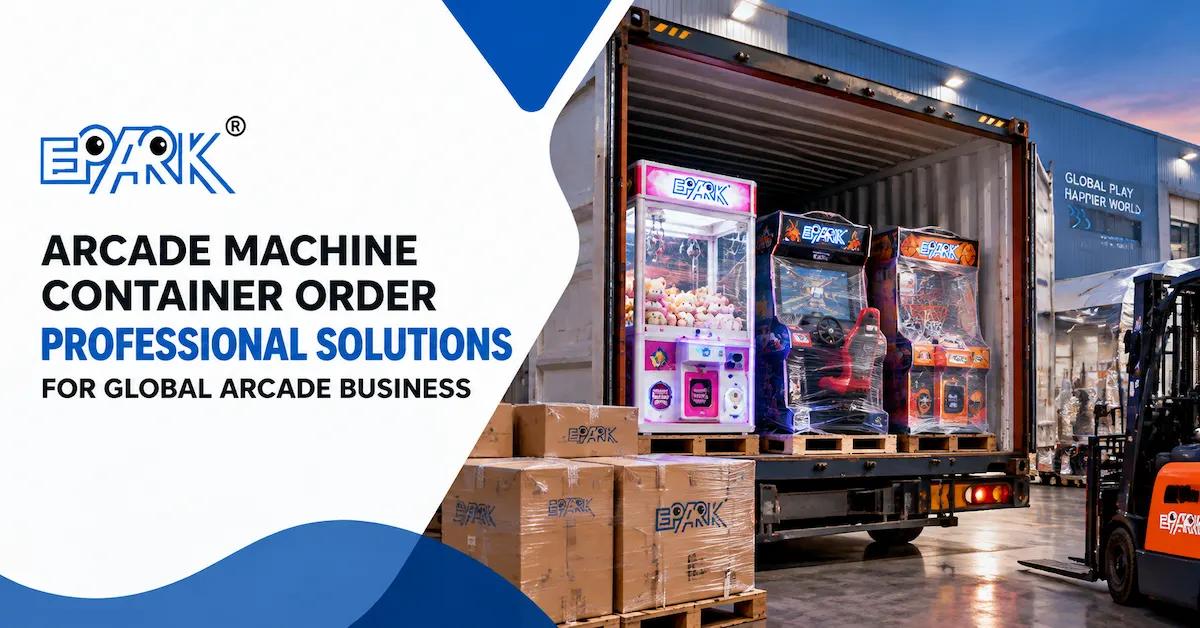
An arcade machine container order should be designed around the approved equipment and packing data, not around a last-minute question such as “How many machines fit in a container?” A racing simulator, claw machine, basketball game and compact arcade cabinet can have very different packed dimensions, weights and detachable structures even when each counts as one machine on the purchase order. For an importer, those differences affect freight planning; for an FEC operator, they also affect receiving and installation; for a distributor, they affect how efficiently different products can be replenished. EPARK’s commercial arcade wholesale guide identifies packed CBM, mixed orders, spare parts, container planning and repeat supply as connected wholesale decisions rather than separate logistics tasks.

Define the Machine List Before Trying to Fill the Container
Container utilization should follow the commercial equipment plan. Start with the machines needed for the venue, distribution range or confirmed customer orders, then calculate how those products use shipment space. EPARK’s arcade equipment sourcing guide describes professional purchasing as a sequence from project definition and RFQ through specification approval, QC, packing and shipment. This matters because adding an unfamiliar game only to occupy unused space can create inventory, spare-parts and service costs after arrival. A new FEC may need several complementary categories, while an established distributor may prefer more units of a proven configuration. Container efficiency is valuable, but it should optimize a valid machine list rather than create one.
Use Packed Dimensions, Not Installed Dimensions
The installed dimensions of an arcade machine describe the equipment after assembly. Container planning requires the dimensions of the export package. Some products may ship as one complete package, while larger simulators or sports machines may use several cartons, crates or detachable assemblies. Request packed length, width, height, gross weight and package count for every model before calculating the shipment. EPARK’s arcade equipment exporter guide specifically identifies export packing and shipping data as items that need confirmation for overseas orders.
A simple planning formula is:
CBM per package = packed length × packed width × packed height
When measurements are in meters, the result is cubic meters. For example, a hypothetical package measuring 1.20 × 0.90 × 1.80 m occupies 1.944 m³. Ten identical packages would therefore represent 19.44 m³ before considering the actual loading arrangement, clearances or container constraints. This example is for explaining the calculation only and is not an EPARK machine specification.
Build a Container Planning Sheet by Model
Before locking an arcade machine container order, create one shipment sheet connecting the commercial order to the physical packages. Do not rely on a total CBM figure without understanding which models produce it. The following table can be used as an RFQ and loading-planning template; the values should come from the selected products rather than estimates from photographs.
| Container planning item | Information to record |
|---|---|
| Machine identity | Model code, configuration revision and quantity |
| Machine category | Racing, claw, redemption, sports, simulator or other |
| Assembled dimensions | Installed length, width and height |
| Package count | Number of cartons/crates for each machine |
| Packed dimensions | Length × width × height for each package |
| Gross weight | Weight of each package and model total |
| CBM | Calculated volume by package and model |
| Detachable sections | Seats, headers, control sections or other separated parts |
| Accessories | Keys, cables, manuals and supplied hardware |
| Spare parts | Dedicated package or machine-linked parts |
| Loading priority | Early load, late load or destination-specific sequence |
| Shipping mark | Model, machine number and package number |
| Receiving note | Reassembly or special handling information |
Compare Same-Model and Mixed-Model Container Orders
A full container of one repeated cabinet is easier to plan than a mixed shipment containing several machine formats, but that does not mean the same-model approach is always commercially better. EPARK’s wholesale content confirms that commercial buyers may purchase both repeated quantities and mixed orders. The appropriate structure depends on demand, the venue plan and the buyer’s ability to service the resulting range.
| Container order type | Main advantage | Main limitation | Better suited to |
|---|---|---|---|
| Same-model order | Easier packing, configuration control and spare planning | Concentrates inventory in one product | Proven distributor bestseller |
| Mixed machine order | Broader game variety | More complex packing and support | New FEC or diversified distributor |
| Core models + trial units | Balances proven products with new attractions | Requires clear inventory priorities | Established buyer testing new categories |
| Customer-specific project order | Matches one venue or confirmed project | Less flexible as general dealer stock | FEC project, chain rollout or contractor |
Standardize Electrical and Payment Requirements Where Practical
Mixed arcade equipment can become difficult to install if similar-looking machines arrive with inconsistent electrical or payment configurations. EPARK’s sourcing guidance recommends standardizing voltage, frequency, plug type and payment logic where practical for mixed-container projects.
For one destination market, document the required voltage, frequency and plug by model. If the venue uses a common coin, token or cashless system, identify the intended payment hardware and credit rules before production. This does not mean every arcade product must use identical components; technical compatibility must still be confirmed separately. The goal is to prevent avoidable configuration differences from becoming installation work after the container has arrived.
Plan Detachable Parts Before the Loading Diagram
Large arcade machines may ship more efficiently when seats, decorative headers or other manufacturer-approved sections are detached. This should be defined by the equipment supplier rather than improvised purely to reduce CBM. Ask which assemblies are designed for shipping separation, how each part is protected, how packages are numbered and what reassembly procedure applies after delivery.
For example, a racing simulator may have a separate seat or cockpit section, while a sports machine may have a large upper structure. If the product is shipped in several packages, those packages should remain traceable to the same machine. Saving container space has little value if the receiving team cannot identify the matching assemblies.
Do Not Mix Accessories Randomly Across the Shipment
A container may contain dozens of keys, power cables, manuals, spare controls and machine-specific accessories. If these items are packed together without clear references, receiving teams can lose significant time identifying which equipment they belong to. EPARK’s sourcing guidance recommends identifying machines and accessories by model, machine number and package number in mixed orders.
For each arcade machine, prepare an accessory record and decide whether the items travel inside the machine, in its main package or in a separately labeled accessory carton. The packing list should make that relationship clear. A distributor should be able to receive five different models without opening every carton simply to find the keys or cables for one customer order.
Pack Spare Parts as a Controlled Inventory
Spare parts should not become miscellaneous empty-space fillers. Build the spare-parts list from the approved machine configurations and identify which items are shared, model-specific or revenue-critical. Payment components, sensors, control hardware and specialized mechanisms can have different service priorities depending on the machines purchased.
For an arcade machine container order, consider assigning a dedicated spare-parts package with a clear internal list and model references. This makes warehouse receiving easier and reduces the risk of a small but important component remaining hidden inside a machine carton. EPARK’s wholesale guide recommends developing the spare-parts plan before shipment rather than discussing replacements only after a failure occurs.
Complete QC Before Loading Begins
Container efficiency should never become an excuse to pack unverified equipment. Complete model-specific inspection before the machine is closed into its final export package. EPARK’s commercial arcade equipment bulk-order guide emphasizes locking specifications, QC and shipping before production and release.
Common inspection items may include model identity, electrical configuration, payment operation, controls, appearance and accessories, while machine-specific testing should reflect the product category. Racing machines may require steering, pedals and linked functions; claw machines require mechanism checks; redemption games may require scoring and reward-output verification. Record unresolved issues before loading rather than treating container closure as the end of quality control.
Create a Shipping Release Gate
Before authorizing loading, review the shipment against one consolidated release record. Confirm the model and quantity, approved configuration, electrical version, artwork, accessories, spare parts, QC status, package count and required shipping documents. An item marked “still under review” should not silently become “approved” because the container booking date is approaching.
A practical release status can use four categories:
Approved: ready for loading.
Conditional: a documented issue has an agreed resolution.
Hold: do not load until the issue is closed.
Cancelled/replaced: remove from the shipment plan.
This makes the loading team’s instructions clearer and prevents commercial scheduling from overriding unresolved product questions.
Plan the Loading Sequence Around Receiving, Not Only Cube
Efficient loading is important, but unloading sequence can be equally important. Discuss the actual load plan with the logistics provider and equipment supplier after final package dimensions are available. Equipment required first during installation may benefit from a loading position that supports the receiving plan where practical, although physical weight distribution and transport requirements take priority.
For a multi-machine project, identify which packages belong to each zone or installation stage. If the receiving warehouse will redistribute products to different customers, group and label them accordingly. A container that uses space efficiently but forces the buyer to unload and reorganize every package before identifying one order may create unnecessary handling work.
Separate Container Utilization From Product Quality Decisions
Buyers sometimes discover unused shipment capacity and begin looking for additional machines to fill it. That can be commercially reasonable when the extra products are already validated and needed. It becomes risky when container utilization drives product selection.
Consider three questions before adding another machine:
- Is there a confirmed venue or resale use?
- Is the configuration understood and supportable?
- Does the landed cost still make sense after inventory and service requirements?
If the answer is unclear, unused container capacity may be cheaper than unwanted arcade inventory. EPARK’s wholesale guidance emphasizes that freight efficiency is one factor within the larger wholesale purchasing model, not the sole objective.
Understand Why Quoted CBM Can Change
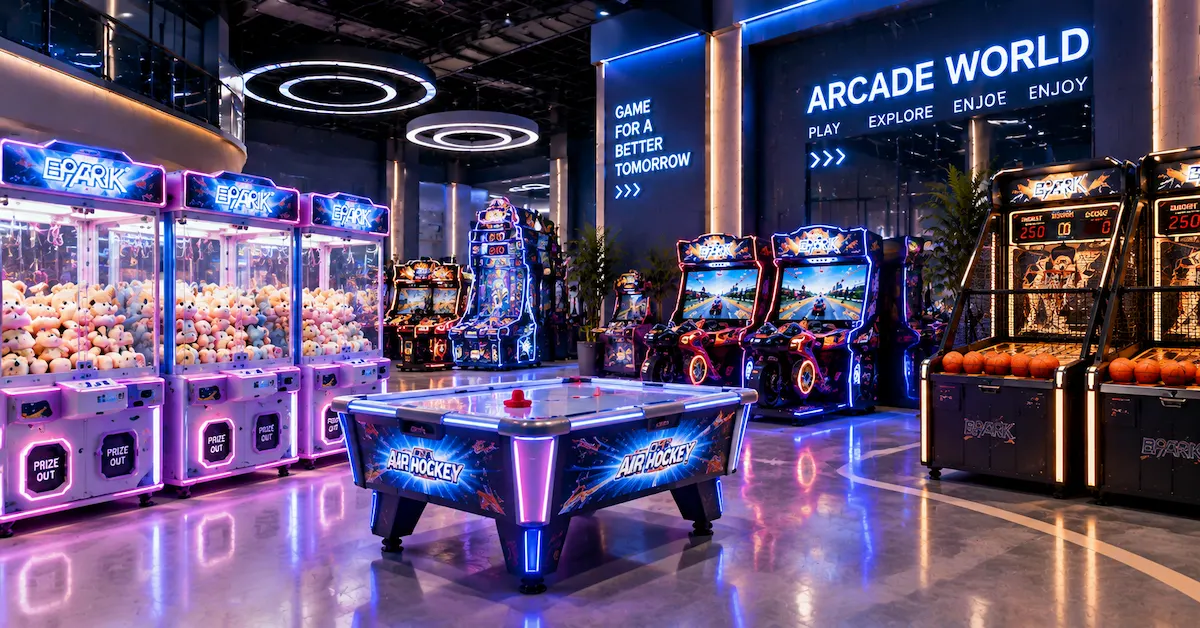
Early quotations sometimes use preliminary packing data. Final packed volume can change after OEM artwork, cabinet revisions, added accessories or packing reinforcement is approved. For this reason, distinguish preliminary logistics estimates from shipment-ready packing data.
Ask the supplier to update packed dimensions when a technical change affects the cabinet or package. A larger display, different header, additional seat assembly or upgraded protective structure may change CBM even when the machine name stays the same. Do not finalize freight assumptions using dimensions from an earlier revision without reconfirming them.
Use OEM Customization Without Losing Package Control
EPARK supports customization discussions for entertainment projects through its customization process. For container orders, keep branding changes connected to the exact machine and package revision. Different cabinet graphics usually do not alter loading dimensions, but structural or hardware customization may.
Create separate approval records for artwork and technical changes. If a modification changes the physical cabinet, detachable parts or supplied accessories, update the packing record before container planning is finalized. This prevents the logistics team from working with an obsolete package layout.
Compare Container Economics With Landed Cost
A container can be highly utilized and still produce a poor purchasing result. Compare the shipment based on the complete commercial scope rather than freight efficiency alone. Equipment cost, customization, initial spares, export packing, transport and destination expenses all contribute to landed cost.
One useful planning metric is:
Estimated freight allocation per model = shipment logistics cost × model CBM ÷ total shipment CBM
This is only one internal allocation method and does not account for every logistics factor, but it can help buyers understand why a physically large simulator may carry a different freight burden from a compact cabinet. Use the freight forwarder’s actual charges and your company’s preferred costing method for commercial decisions.
Decide Whether to Wait or Split the Shipment
Mixed orders can create a scheduling problem when most machines are complete but one customized product is delayed. There is no universal correct answer.
Waiting may preserve one consolidated shipment but delay installation or inventory. Splitting may move finished equipment sooner but create additional freight, handling and documentation work.
Evaluate:
- project opening date;
- importance of the delayed model;
- additional logistics cost;
- receiving capacity;
- installation schedule;
- customer commitments.
Ask the supplier to identify which model is responsible for the delay and whether its shipment can technically be separated before changing the transport plan.
Keep Packing Records for Repeat Orders
An arcade machine container order should create useful data for the next shipment. Save final packed dimensions, actual package counts, loading records and configuration revisions by model. For distributors, this information improves future freight estimates and helps purchasing teams decide whether the same product mix should be repeated.
EPARK’s wholesale guidance treats repeatability as part of long-term supplier performance. If the next order uses the same machine but the package dimensions change significantly, ask whether the equipment, packing method or supplied components have changed.
A reliable repeat-order record should include both technical configuration and logistics configuration.
What Should You Send EPARK for a Container Order Quote?
Prepare the machine list before requesting container planning. Include the destination country and port, buyer type, model or machine category, quantity by model, voltage, frequency, plug, payment system, OEM requirements, spare-parts requirements and target shipment date. EPARK’s importer buying guide highlights equipment selection, bulk purchasing, export preparation, shipping coordination and after-sales communication as important parts of international arcade sourcing.
Ask for packed dimensions, gross weights and package counts after configurations are confirmed. If you are still building the machine list, review EPARK’s commercial arcade equipment wholesale guide first, then submit the final shortlist through EPARK Contact Us.
Frequently Asked Questions About Arcade Machine Container Orders
1. What is an arcade machine container order?
An arcade machine container order is a commercial arcade equipment shipment planned around one container or consolidated container load. It may contain repeated units of one model or several machine categories for an FEC, distributor or other commercial project.
2. How do I calculate CBM for an arcade machine?
Use the export package dimensions rather than assembled machine dimensions. Multiply packed length × packed width × packed height in meters, then multiply by the package quantity. Confirm final figures with the supplier before freight booking.
3. Can different arcade machines be loaded in one container?
Mixed loading may be possible and is common in commercial arcade sourcing. Confirm the final machine mix, packed dimensions, weight, packaging and loading plan before booking.
4. Should I add more machines just to fill the container?
Only when the additional equipment has a genuine business use and an approved configuration. Do not create unnecessary inventory or service complexity solely to eliminate unused shipment space.
5. Why are packed dimensions different from machine dimensions?
Export packaging adds protective material, cartons, crates or detachable sections. A machine may also ship in more than one package, so its shipping volume cannot be estimated reliably from installed dimensions alone.
6. Should spare parts be placed inside the machines?
Follow the agreed packing plan. Whether parts travel inside a machine or in a dedicated package, they should be clearly identified by model and quantity so receiving teams can locate them quickly.
7. When should container loading be booked?
Coordinate booking with the supplier and logistics provider based on the actual production and QC schedule. Avoid treating an estimated factory-completion date as final shipment readiness when configuration or inspection issues remain open.
8. What should be checked before machines are loaded?
Verify model, quantity, approved configuration, electrical version, payment setup, QC result, accessories, spare parts, package information and required documentation before authorizing shipment.
9. Can OEM arcade machines be included in a mixed container?
Potentially, subject to the approved order and packing plan. Confirm OEM artwork and technical revisions early enough that customized machines do not create unexpected packing or schedule changes.
10. What information does EPARK need for container planning?
Provide machine categories or models, quantities, destination, electrical and payment requirements, branding, spare parts and target shipment date. After configuration confirmation, request model-specific packing data through EPARK Contact Us.
Conclusion
An arcade machine container order should be planned from the approved machine list outward: specification first, packed dimensions second, QC and packing third, and loading only after those items are controlled. Use actual CBM and package data rather than showroom dimensions, keep accessories and spare parts traceable, and treat mixed-model shipments as a set of model-specific configurations rather than one generic bulk order. Container utilization is valuable when it supports the project, but unused space is usually less damaging than unnecessary inventory or an unverified machine. Importers, distributors and FEC buyers preparing an overseas shipment can review EPARK’s wholesale purchasing guide, arcade sourcing guide and export equipment guide, then contact EPARK with the machine list, quantities, destination and shipment requirements for order-specific packing and container planning.
General Disclaimer
All data on https://www.eparki.com is for general guidance only. As a leading indoor playground manufacturer and trampoline supplier, EPARK strives for accuracy but gives no express or implied warranty regarding completeness, performance or project fitness. Product specs, designs and results may vary with use and customer requirements. Buyers must verify technical details, compliance and suitability before purchase. EPARK OEM/ODM is not liable for any direct, indirect or consequential damages arising from site use. For custom solutions, contact our manufacturer and supplier team via the Contact page.
Intellectual Property
Text, images, videos, CAD files and software are Guangzhou EPARK Electronic Technology Co., Ltd. All rights reserved. No part may be copied, republished or used commercially without prior written permission. We will pursue legal action for copyright or design-patent infringement.
Trademarks
"EPARK", the EPARK logo and related graphics are registered trademarks of Guangzhou EPARK Electronic Technology Co., Ltd. Unauthorized use in ads, domain names or packaging is prohibited.
Governing Law
These terms are governed by the laws of the People's Republic of China.
Contact
Questions? Email sales@nanyuetech.com or WhatsApp +86 139 0307 9263.