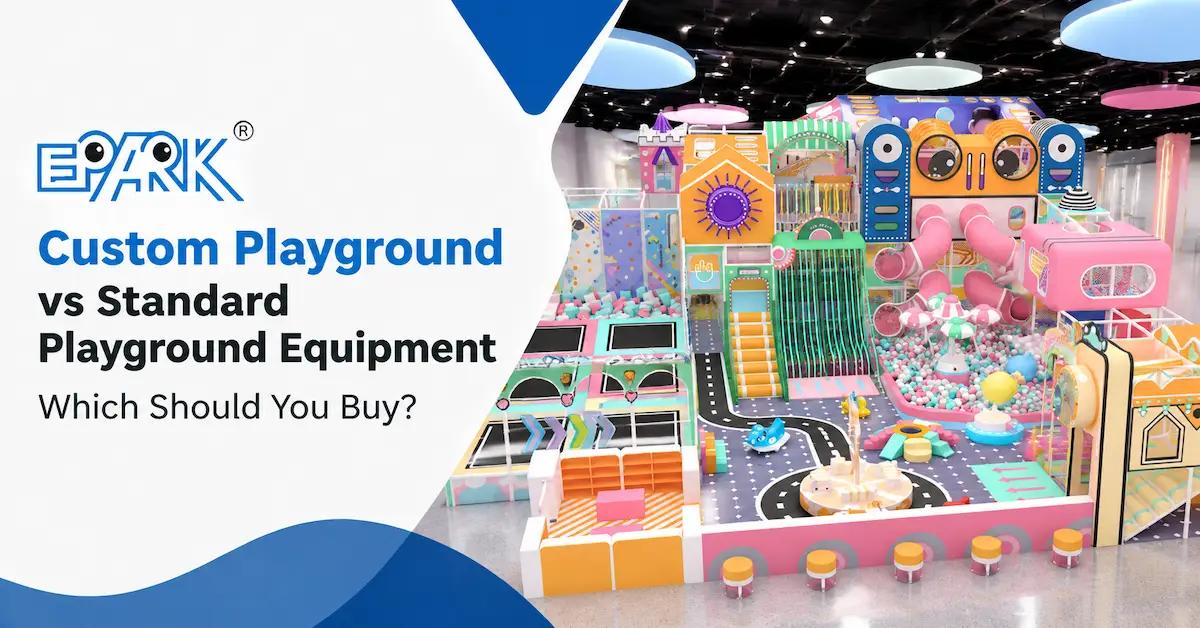
Buy standard playground equipment when your site, age profile, brand, and operating model fit a proven configuration with only minor changes. Buy custom equipment from a custom indoor playground manufacturer when the building envelope, circulation, theme, activity mix, brand controls, or local requirements make a catalogue layout an expensive compromise. The decision is not simply custom equals premium and standard equals cheap. It is a question of how much design control is needed to reduce site risk, protect the guest experience, and support future orders.
Commercial buyers usually reach this decision before requesting a quotation. A shopping mall may have columns, low beams, unusual fire exits, and a narrow loading route. A family entertainment center may need a signature attraction that cannot be copied from a generic catalogue. A hotel or school may need a compact, parent-visible zone with a clear age boundary. A distributor may need repeatable modules, fixed packaging, and a stable bill of materials across several customers.
This guide treats custom playground equipment and standard playground equipment as procurement options with different responsibilities. It compares site fit, design effort, documents, materials, MOQ, lead time, maintenance, repeat orders, and total project risk. It does not invent a universal price or capacity. Public EPARK pages show project examples and a customization process, but the final configuration must be confirmed against the measured site and signed quotation.
Guangzhou EPARK Electronic Technology Co., Ltd. states that it was established in 2012 in Panyu District, Guangzhou, China. The company presents itself as an indoor playground and children's amusement equipment supplier and manufacturer covering indoor playgrounds, themed play spaces, soft play, trampoline parks, and customized entertainment projects. Its About EPARK page describes a 25,000 m2 manufacturing facility, more than 400 machines, and over 100 workers. These are manufacturer-published company facts; they do not mean every order has the same production line, capacity, lead time, or document package.
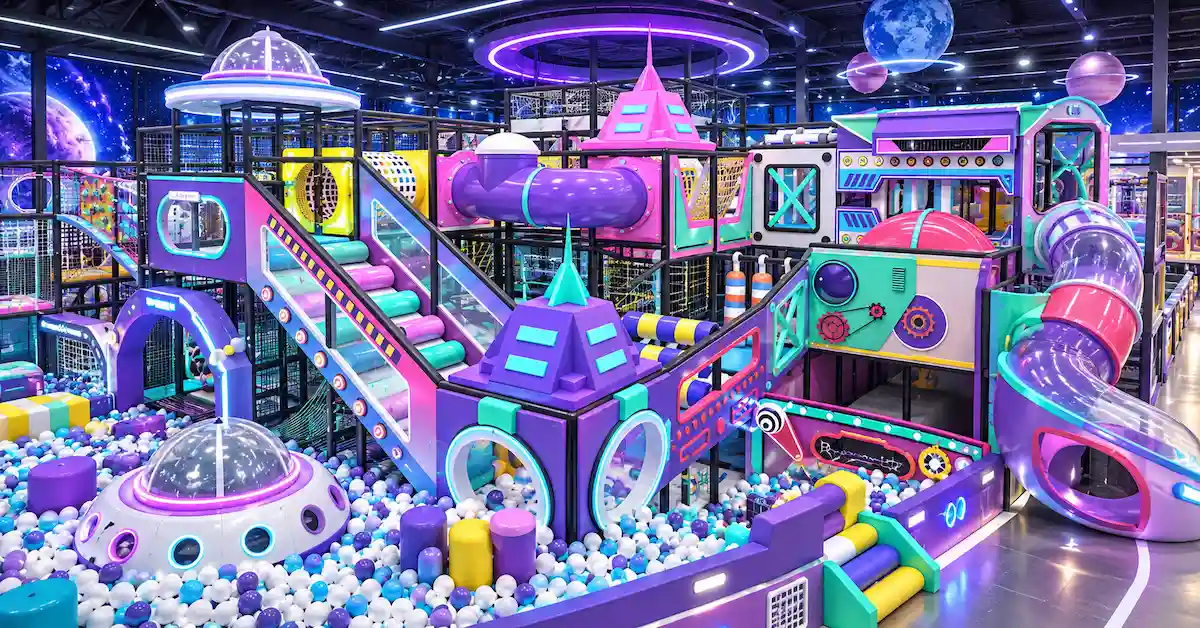
Not sure which route fits your project? Send the usable area, clear height, CAD plan, target ages, preferred activities, and destination market. A clear brief lets a manufacturer show a standard baseline and the custom changes side by side.
Request a Custom vs Standard ReviewWhat Standard Playground Equipment Usually Means
Standard is a repeatable starting point, not a fixed universal product
In commercial playground procurement, standard equipment normally means a supplier has a repeatable design, component family, or configuration that can be quoted with limited engineering changes. It may be a compact soft play set, a standard slide combination, a repeatable climbing module, or a project layout that has already been manufactured in similar form. A standard starting point can still include color selection, logo panels, minor size adjustments, or a different component mix.
Ask the supplier to define what “standard” means in the quotation. Does it refer to a fixed drawing, a known bill of materials, a stocked component, an existing mould, or only a visual reference? A standard-looking rendering can still require substantial custom engineering if the site is different from the reference.
Where a standard system creates value
A repeatable system can reduce design time and make procurement easier for a buyer with a clear venue model. The supplier may already know the component interfaces, fixing points, artwork positions, packing logic, inspection sequence, and replacement parts. This can help a distributor or multi-site operator compare like with like. It can also make future reorders more predictable when the revision, color codes, and bill of materials are controlled.
Standard is often a sensible route for a hotel play corner, daycare room, mall activation, or small cafe when the main requirement is a safe, visible, easy-to-operate play zone rather than a signature destination. It may also be useful as the first phase of a venue that plans to add custom branding later.
Where standard equipment becomes a false economy
A catalogue configuration can look inexpensive until the buyer adds site modifications, extra flooring, relocation of exits, custom graphics, non-standard packaging, local inspection, and installation changes. If the standard structure blocks a column or creates a blind corner, the buyer may pay for redesign without receiving the benefit of a truly repeatable product.
Standard equipment is also a weak choice when the brand depends on a distinctive guest journey. A generic structure may fit the floor but fail to create a recognizable entrance, a party-photo location, a toddler separation, or a clear relationship between play and food service. The right comparison is delivered scope and operating fit, not the first equipment price.
What Custom Playground Equipment Adds
Custom starts with constraints and a design basis
Custom playground equipment is designed around a particular site, audience, brand, activity schedule, or operating requirement. It can change the overall footprint, vertical levels, circulation, theme language, component arrangement, artwork, entrance, party interface, parent seating relationship, or service access. Custom does not mean every part is invented from zero. A manufacturer may combine proven components in a new layout and then engineer the interfaces for the project.
The first custom deliverable should be a design basis, not only a 3D image. It should record the measured site, clear height, columns, doors, exits, building services, target ages, activities, non-play functions, theme, brand files, destination, and responsibilities. Without that record, custom design becomes a series of attractive but untraceable revisions.
Custom can solve a real commercial problem
Custom design is justified when it solves a problem that a repeatable layout cannot solve efficiently:
- Irregular building: Columns, angled walls, low beams, glazing, or multiple entrances require a coordinated envelope.
- Mixed ages: Toddlers, preschoolers, juniors, and accompanying adults need separate routes, sightlines, and activity intensity.
- Distinctive brand: A chain, licensed concept, or local attraction needs a controlled palette, mascot, signage, and photo moment.
- Complex FEC: Soft play, trampoline, arcade, party rooms, food, and seating need shared queues, power, supervision, and emergency access.
- Phased growth: The operator needs reserved interfaces for future modules, a second site, or a repeatable franchise platform.
- Destination requirements: The attraction must stand out in a mall or tourist venue where a generic set would not justify the visit.
Custom does not automatically mean better
A custom design can introduce more revisions, more artwork approvals, more unique spare parts, and more opportunities for scope confusion. It can also create a one-off maintenance problem if the buyer does not request component codes and replacement logic. The value comes from controlled customization, not from adding complexity for its own sake.
Custom vs Standard Playground Equipment: Buyer Comparison
The table is a procurement framework for buyers comparing a custom indoor playground manufacturer with a standard equipment route. Actual scope depends on the equipment, site, destination, and contract.
| Decision factor | Standard equipment | Custom equipment | Evidence to request |
|---|---|---|---|
| Best starting point | Clear room, known activity mix, limited brand changes | Irregular building, distinct brand, mixed use, or special operating needs | Design basis and site assumptions |
| Design effort | Lower when the reference configuration is genuinely repeatable | More concept, technical, artwork, revision, and interface review | Drawing list, revision count, approval gates |
| Lead time | May be shorter, but production starts only after defined approvals | Includes design and custom production dependencies | Schedule tied to CAD, design, material, and artwork approval |
| Site fit | Good only if the room matches the reference envelope | Designed around actual dimensions, access, exits, and services | Measured plan, clear height, columns, obstruction register |
| Brand control | Usually limited to colors, signs, or logo panels | Can coordinate theme, mascot, artwork, entrance, and guest journey | Approved artwork, IP permission, finish schedule |
| Maintenance | More familiar parts if the system is truly repeatable | Needs a project-specific part list and replacement plan | Component codes, manuals, spare-parts route, cleaning access |
| Repeat orders | Easier when revision and materials are frozen | Scalable when the supplier controls a platform and site adaptations | Approved BOM, version control, substitution rules |
| Commercial risk | Risk of poor fit, weak differentiation, or hidden modification cost | Risk of scope creep, unique parts, and longer approval chain | Inclusions, exclusions, assumptions, change control |
How Site Conditions Decide the Purchase
Before asking a custom indoor playground manufacturer for a final quotation, convert the building into a measurable design basis. This prevents a visual reference from being mistaken for an approved manufacturing scope.
Measure usable area, not the headline floor area
Send the supplier a dimensioned CAD file when possible. Mark the finished floor-to-ceiling height, lowest obstruction, columns, beams, doors, emergency exits, windows, sprinklers, HVAC, lights, cameras, floor changes, and installation access. Then separate reception, shoe storage, parent seating, party rooms, food service, toilets, storage, staff areas, and circulation from the play envelope.
Two venues with the same floor area can require completely different equipment. A standard layout may fit one and fail in the other. EPARK’s customization process states that the design team develops 3D renderings and detailed floor plans tailored to spatial constraints and target demographics. The buyer should confirm who validates the building dimensions and which drawing revision becomes the manufacturing baseline.
Check age and supervision before choosing height
A toddler zone, school activity room, hotel kids club, and FEC main attraction have different supervision and circulation needs. Standard equipment may be appropriate if the age group and activity intensity are narrow. Custom design is more defensible when the operator needs a toddler area beside higher-energy play or needs parents to see several zones from a fixed seating area.
Check the business model before choosing visual scale
A cafe may need a compact soft play area that supports food sales. A mall FEC may need a destination structure that supports admission, parties, memberships, group bookings, and cross-selling. A hotel may need an amenity that is easy to reset between guests. The equipment should serve the business model, not force the operator to invent a revenue plan after purchase.
Cost, MOQ, Lead Time, and Documentation
Cost is a scope question
Neither “custom” nor “standard” has a universal price. Cost changes with usable area, structure height, activity mix, theme, materials, flooring, interactive components, artwork, packaging, shipping, installation, local labor, permits, and destination requirements. A standard layout can become expensive after modifications; a custom platform can reduce rework when it prevents site errors.
Ask suppliers to separate equipment, design, materials, packaging, freight, customs, unloading, installation, travel, local labor, building work, documents, training, and spare parts. EPARK’s public process includes consultation, space planning, material selection, custom manufacturing, inspection and secure packaging, delivery and installation, and after-sales support. The quote should state which steps are included in the selected project.
MOQ must be tied to a deliverable
MOQ can mean one complete playground, one custom component, one branded packaging run, one spare-parts pack, or one repeat-order batch. Do not accept a generic MOQ statement without scope. EPARK’s product pages include project-specific OEM/ODM claims, but a page-level example should not be generalized to every product or service. Ask for MOQ by deliverable and record whether prototypes, moulds, graphics, and spare parts are included.
Lead time begins after approvals
Design, material, artwork, drawing, payment, production, inspection, packing, shipping, and installation dependencies should be visible. EPARK’s FAQ publishes a general reference of 3-7 days for design and 15-30 days for production after design confirmation, while another product page shows a different production reference. Treat these as website guidance, not a guaranteed schedule. The signed quotation and approved manufacturing set control.
Documents should match the option you buy
Request a bill of materials, drawings, material schedule, finish samples, inspection plan, packing list, installation instructions, maintenance information, spare-parts list, warranty scope, and relevant test or certificate documents. EPARK’s materials and safety page describes cold-rolled steel pipe with hot-dip galvanization, high-density foam, soft PVC sleeves, EVA or PU mats, FRP or composite-resin slides, safety nets, and railings. Those are published material descriptions; the project schedule must state which materials apply to which components.
Evidence rule: A certificate image, standard name, factory photo, or product-page area is not a universal specification. Ask for the exact report or certificate, issuer, date, tested sample, product scope, and destination relevance. Ask for order-specific production photos and inspection records when the evidence affects acceptance or marketing.
When a Custom Indoor Playground Manufacturer Is the Better Choice
Choose custom for an irregular or high-value site
If a venue has multiple columns, a low ceiling, a narrow loading route, or a difficult relationship between play and food service, custom layout work can protect usable area and reduce rework. The goal is not to fill every corner. The goal is to create a safe route, a visible entrance, practical maintenance access, and a coherent guest experience.
Choose custom for a brand or franchise platform
A franchise needs non-negotiable brand elements and adaptable site modules. A custom indoor playground manufacturer should show which components are standard, which are site-specific, which files are controlled by the buyer, and how revisions are tracked. The platform should be repeatable without pretending every building is identical.
Choose custom for a mixed FEC
When soft play, trampolines, slides, arcade games, party rooms, food, and seating share a venue, the interface between attractions matters. Custom planning can coordinate queueing, sightlines, power, sound, staff access, emergency routes, and age zoning. It should still use proven components where that reduces maintenance and spare-part risk.
When Standard Playground Equipment Is the Better Choice
Choose standard for a clear, low-complexity brief
A standard system can be right when the room is simple, the activity schedule is established, the target ages are narrow, the brand changes are limited, and the operator needs a quick comparison. It may be a sensible first phase for a hotel, daycare, restaurant, or small play corner.
Choose standard for repeatable distribution
Distributors may prefer a controlled product family with stable dimensions, packaging, documents, spare parts, and visual options. The supplier should still provide revision control and a clear substitution process. A “standard” product that changes material or fixing details between batches is not operationally repeatable.
Choose standard when the buyer cannot support custom approvals
Custom design requires an owner who can approve site information, theme, materials, drawings, artwork, inspection, and installation scope. If the project team cannot provide timely decisions, a proven standard configuration may reduce approval risk. The buyer should not order custom work without naming the person who signs each gate.
Recommended Buying Routes
Route A: Standard baseline plus controlled customization
Start with a proven component family and change only the colors, logo panels, entry, activity order, or one signature element. This route can suit a small FEC, hotel, or cafe that needs a recognizable identity without a fully unique structure. Record all deviations from the reference drawing and update the bill of materials.
Route B: Custom site plan using proven components
Use custom circulation, zoning, height, theme placement, and brand details while retaining proven slides, padded components, nets, mats, and activity modules. This is often a practical balance for an irregular mall unit or mixed-age family venue.
Route C: Custom platform for multiple sites
Define a brand system, core modules, finish schedule, approved artwork, maintenance standards, packaging logic, and a site-adaptation process. Use a master design basis and an individual approval package for each building. This avoids copying an old rendering into a new site without checking columns, exits, services, and access.
Route D: Standard first phase with future custom expansion
Reserve structural and operational interfaces for later modules. Specify how future components connect, what space remains available, how spare parts are identified, and who must approve a later change. A phased plan should not leave the operator with a visually disconnected second phase.
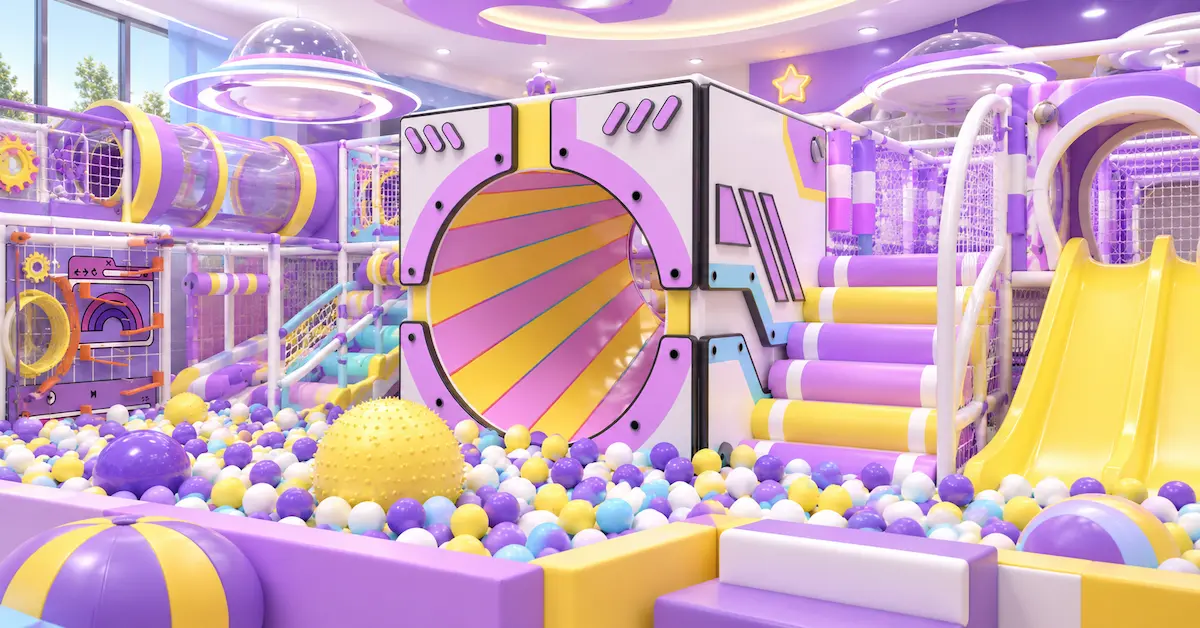
Prepare the RFQ before asking for a final price. Include a dimensioned plan, clear height, target ages, activity schedule, theme or brand files, destination, opening target, and the delivery scope you expect.
Send the Project BriefSupplier Audit Questions
- What exactly is standard: a component, a drawing, a bill of materials, a mould, or only a visual reference?
- Which site information did the supplier use, and who is responsible for validating it?
- Which changes are included in the quoted customization, and which trigger redesign or tooling charges?
- Can the supplier show a revision-controlled drawing and component schedule before production?
- Which materials apply to the framework, foam, covers, mats, slides, nets, barriers, and graphics?
- Which test reports or certificates apply to the actual configuration and destination market?
- What MOQ applies to the complete system, custom parts, packaging, and spare parts?
- Which approvals start the design and production schedule?
- How are substitutions, shortages, damage, missing hardware, and late changes controlled?
- Can the operator reorder parts using codes and receive cleaning, inspection, warranty, and training documents?
Frequently Asked Questions
Is custom playground equipment always more expensive?
No. Custom design usually adds design and approval work, but it can avoid costly site modifications, poor circulation, unusable corners, and later rework. Compare the total delivered scope and risk, not only the equipment line.
What does a custom indoor playground manufacturer actually customize?
Depending on the project, a custom indoor playground manufacturer can customize layout, structure arrangement, activity mix, height, entry, age zoning, colors, logo panels, theme artwork, packaging, and brand controls. Confirm each item in the quotation and drawing list rather than assuming “custom” covers everything.
Can standard playground equipment be branded?
Often yes, through colors, logo panels, signs, graphics, or a limited layout change. Ask whether the artwork is printed, sewn, moulded, or applied as a replaceable panel, and document who owns and approves the files.
How do I compare a standard quote with a custom quote?
Use the same site assumptions and a responsibility matrix. Compare design deliverables, equipment, materials, flooring, documents, packing, freight, installation, local work, spares, warranty, schedule, and exclusions. A standard quote should not hide modifications, and a custom quote should not hide assumptions.
Does EPARK publish a universal MOQ?
No universal MOQ should be inferred from one product page. MOQ depends on the deliverable and project scope. Ask EPARK to state MOQ for a complete system, custom component, branded package, prototype, or spare-parts order.
What materials does EPARK describe?
EPARK's safety page describes cold-rolled steel pipe with hot-dip galvanization, high-density foam, soft PVC sleeves, EVA or PU mats, FRP or composite-resin slides, safety nets, and railings. Confirm the exact material, finish, and supporting documents for the purchased configuration.
How long does custom design take?
EPARK's FAQ gives a general reference of 3-7 days for design and 15-30 days for production after design confirmation. Other pages show different production references. The signed quotation, approved drawings, and current project dependencies control the actual schedule.
When should I choose standard equipment for a franchise?
Choose a standard platform when the franchise needs stable modules, packaging, documents, and spare parts across similar sites. Add custom site adaptation when buildings differ. The brand system should identify fixed elements and allowable variations.
What should be completed before production?
Complete the site survey, design basis, activity schedule, approved drawings, material and finish schedule, artwork, bill of materials, inspection plan, packing requirements, delivery scope, installation responsibility, and document register.
Conclusion
Custom playground equipment is worth buying when it solves a real site, brand, age, operating, or rollout problem. Standard playground equipment is worth buying when a proven configuration fits the room and the business can accept limited variation. The strongest commercial route is often a controlled hybrid: proven components, custom site planning, clear age zoning, approved branding, and a repeatable document and maintenance system.
EPARK's indoor playground category, customization process, materials and safety page, and project pages such as the 506 m2 custom example can help a buyer establish a starting scope. The final decision should be based on measured site data, an approved drawing set, order-specific materials and documents, MOQ, schedule, packaging, installation, and after-sales responsibilities.
Choose with evidence, then request the quote. Send the site plan and operating brief so EPARK can identify what should remain standard, what should be customized, and what must be confirmed for your market.
Talk to a Custom Indoor Playground Manufacturer
General Disclaimer
All data on https://www.eparki.com is for general guidance only. As a leading indoor playground manufacturer and trampoline supplier, EPARK strives for accuracy but gives no express or implied warranty regarding completeness, performance or project fitness. Product specs, designs and results may vary with use and customer requirements. Buyers must verify technical details, compliance and suitability before purchase. EPARK OEM/ODM is not liable for any direct, indirect or consequential damages arising from site use. For custom solutions, contact our manufacturer and supplier team via the Contact page.
Intellectual Property
Text, images, videos, CAD files and software are Guangzhou EPARK Electronic Technology Co., Ltd. All rights reserved. No part may be copied, republished or used commercially without prior written permission. We will pursue legal action for copyright or design-patent infringement.
Trademarks
"EPARK", the EPARK logo and related graphics are registered trademarks of Guangzhou EPARK Electronic Technology Co., Ltd. Unauthorized use in ads, domain names or packaging is prohibited.
Governing Law
These terms are governed by the laws of the People's Republic of China.
Contact
Questions? Email sales@nanyuetech.com or WhatsApp +86 139 0307 9263.