Introduction: Why Trampoline Parks Matter to B2B Buyers
The indoor entertainment industry continues to evolve, and trampoline parks have become one of the most attractive investment models within the indoor playground and family entertainment center (FEC) sector. As consumers shift toward active, experience-driven leisure, trampoline parks deliver a strong combination of fitness, fun, and repeat visitation.
For B2B buyers—including FEC operators, shopping mall owners, commercial landlords, and amusement equipment distributors—starting a trampoline park offers clear advantages. Compared with traditional indoor playgrounds, trampoline parks generate higher per-capita spending and appeal to a broader age range, from children to young adults.
This Guide to Starting a Trampoline Park is designed to help decision-makers understand the full process—from concept planning to equipment selection—while avoiding common pitfalls. With the right strategy and a reliable supplier like EPARK, a trampoline park can become a long-term, scalable business asset.

What Is a Trampoline Park? Understanding the Business Concept
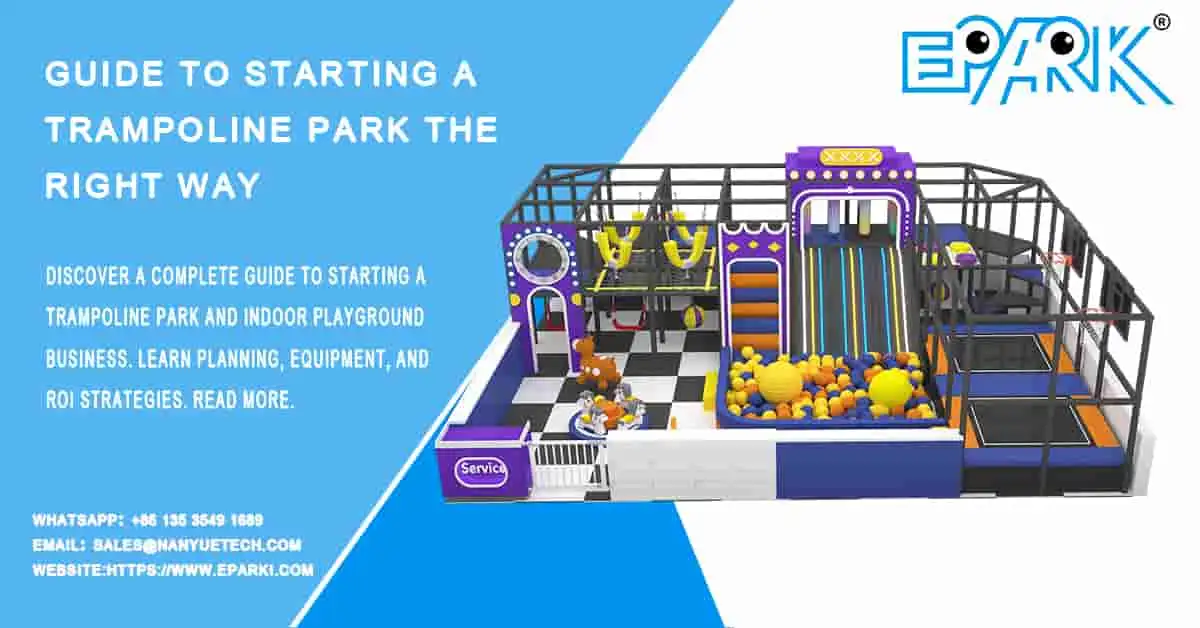
A trampoline park is a professionally designed indoor amusement venue centered around interconnected trampoline systems and complementary attractions. Unlike basic indoor playgrounds, trampoline parks emphasize physical activity, competitive play, and social interaction.
Modern trampoline parks often integrate multiple zones to maximize engagement and revenue. These venues are highly modular, allowing operators to expand or upgrade attractions as market demand evolves.
Core Revenue Streams of a Trampoline Park
| Revenue Stream | Description | Business Value |
|---|---|---|
| Entry Tickets | Time-based jumping sessions | Stable daily income |
| Birthday Parties | Private events & party rooms | High-margin revenue |
| Group Bookings | Schools & corporate events | Off-peak utilization |
| Memberships | Monthly or annual passes | Recurring cash flow |
| Add-on Attractions | Ninja course, climbing walls | Upsell potential |
This diversified structure makes trampoline parks more resilient than single-function indoor playgrounds.
Is Starting a Trampoline Park Profitable?
Market Demand and Industry Growth
The trampoline park industry benefits from several strong trends. Parents increasingly seek safe indoor playground alternatives, while teenagers and young adults prefer active entertainment over passive experiences. As a result, trampoline parks perform well in both mature and emerging markets.
They are especially effective in:
-
Shopping malls seeking experiential tenants
-
Repurposed warehouses and industrial buildings
-
Vacant retail spaces needing traffic revitalization
For more insights on converting unused spaces, see our related article:
What to Do With Vacant Retail Space: Indoor Playground Solutions
Cost Structure and ROI Expectations
While investment levels vary, a professionally planned trampoline park typically reaches break-even within 18–36 months, depending on location, size, and attraction mix.
| Cost Category | Estimated Share |
|---|---|
| Trampoline Park Equipment | 40–50% |
| Venue Renovation | 20–30% |
| Safety & Compliance | 5–10% |
| Marketing & Launch | 5–10% |
| Working Capital | 10–15% |
Choosing durable, certified trampoline park equipment significantly reduces long-term maintenance and insurance costs, directly improving ROI.
How to Start a Trampoline Park: Step-by-Step Guide
Step 1: Market Research and Target Audience
Every successful trampoline park starts with clear positioning. Operators must determine whether their venue will focus on:
-
Family-oriented indoor playground experiences
-
Teen and young adult adrenaline zones
-
Mixed-use family entertainment centers
Market research should analyze local demographics, competitor density, and spending habits. This step ensures your trampoline park meets real demand rather than assumptions.
Step 2: Location and Space Planning
Selecting the right venue is critical to safety and profitability. Unlike standard indoor playgrounds, trampoline parks require greater ceiling height and open-span structures.
| Key Requirement | Recommended Standard |
|---|---|
| Ceiling Height | 5.5–6.5 meters minimum |
| Floor Area | 800–5,000+ sqm |
| Floor Load | Industrial-grade reinforcement |
| Accessibility | Parking & public transport |
Warehouses offer flexibility and lower rent, while malls provide visibility and foot traffic. The best choice depends on your target market and business model.
Step 3: Trampoline Park Layout and Attractions
A professional layout maximizes safety, customer flow, and revenue per square meter. Poor zoning can lead to congestion, underused areas, or increased accident risk.
Common trampoline park zones include:
-
Main trampoline court
-
Dodgeball arena
-
Foam pit or airbag zone
-
Basketball dunk lanes
-
Ninja warrior course
High-performing parks balance excitement with accessibility, ensuring both first-time visitors and repeat customers remain engaged.
For layout inspiration, explore our guide:
Trampoline Solutions
Choosing the Right Trampoline Park Equipment Supplier
Why Equipment Quality Matters
Your trampoline park equipment supplier directly impacts safety compliance, insurance approval, and brand reputation. While low-cost suppliers may seem attractive, substandard materials often result in higher maintenance costs and operational downtime.
Professional B2B buyers prioritize certified equipment, engineering reliability, and long-term service support over short-term savings.
Key Criteria for a Reliable Manufacturer
| Evaluation Factor | Importance |
|---|---|
| Safety Certification | Regulatory & insurance approval |
| Custom Design | Space optimization |
| Manufacturing Quality | Durability & lifecycle cost |
| Installation Support | Project efficiency |
| After-Sales Service | Long-term stability |
Common international standards include ASTM F2970, EN 1176/1177, and ISO 9001. Working with a compliant manufacturer simplifies global project execution.
Why EPARK Is the Preferred Partner for Trampoline Parks
One-Stop Trampoline Park Solutions
EPARK offers complete turnkey trampoline park solutions, covering concept design, equipment manufacturing, logistics coordination, and installation guidance. This integrated approach reduces risk and shortens project timelines.
Each project begins with a site evaluation to ensure optimal zoning, safety compliance, and future expansion potential.
Designed for Long-Term ROI
EPARK trampoline systems are engineered for high-frequency commercial use. Reinforced steel frames, professional-grade springs, and wear-resistant jumping mats ensure consistent performance under heavy traffic.
Key advantages include:
-
Modular design for future upgrades
-
Easy maintenance and spare part replacement
-
Custom branding to strengthen market identity
These features help operators maintain competitiveness without costly renovations.
Trusted by Global B2B Clients
EPARK has delivered trampoline park and indoor playground projects across the Middle East, Europe, and North America. This global experience enables smoother compliance, faster delivery, and better risk management for international buyers.
Common Mistakes to Avoid When Starting a Trampoline Park
Many trampoline park failures stem from avoidable planning errors. Common mistakes include insufficient ceiling height, poor attraction mix, and choosing non-certified equipment.
Another frequent issue is working with suppliers who lack after-sales support, resulting in delayed repairs and lost revenue. Partnering with an experienced manufacturer helps eliminate these risks early in the project lifecycle.
Conclusion: Build a Future-Ready Trampoline Park
Starting a trampoline park requires more than enthusiasm—it demands strategic planning, professional design, and reliable equipment. From market research and location selection to layout optimization and supplier choice, each decision affects long-term profitability.
By working with EPARK, B2B buyers gain a trusted partner with proven experience in trampoline parks and indoor playground solutions. The result is a safer, more profitable, and scalable entertainment venue.
Start Your Trampoline Park Project with EPARK
Ready to turn your idea into a successful trampoline park?
Contact EPARK today to:
-
Get a free customized trampoline park layout
-
Receive a detailed equipment quotation
-
Consult with experienced FEC and indoor playground specialists
Start your trampoline park journey with EPARK—where safety, design, and profit come together.
General Disclaimer
All data on https://www.eparki.com is for general guidance only. As a leading indoor playground manufacturer and trampoline supplier, EPARK strives for accuracy but gives no express or implied warranty regarding completeness, performance or project fitness. Product specs, designs and results may vary with use and customer requirements. Buyers must verify technical details, compliance and suitability before purchase. EPARK OEM/ODM is not liable for any direct, indirect or consequential damages arising from site use. For custom solutions, contact our manufacturer and supplier team via the Contact page.
Intellectual Property
Text, images, videos, CAD files and software are Guangzhou EPARK Electronic Technology Co., Ltd. All rights reserved. No part may be copied, republished or used commercially without prior written permission. We will pursue legal action for copyright or design-patent infringement.
Trademarks
"EPARK", the EPARK logo and related graphics are registered trademarks of Guangzhou EPARK Electronic Technology Co., Ltd. Unauthorized use in ads, domain names or packaging is prohibited.
Governing Law
These terms are governed by the laws of the People's Republic of China.
Contact
Questions? Email sales@nanyuetech.com or WhatsApp +86 139 0307 9263.