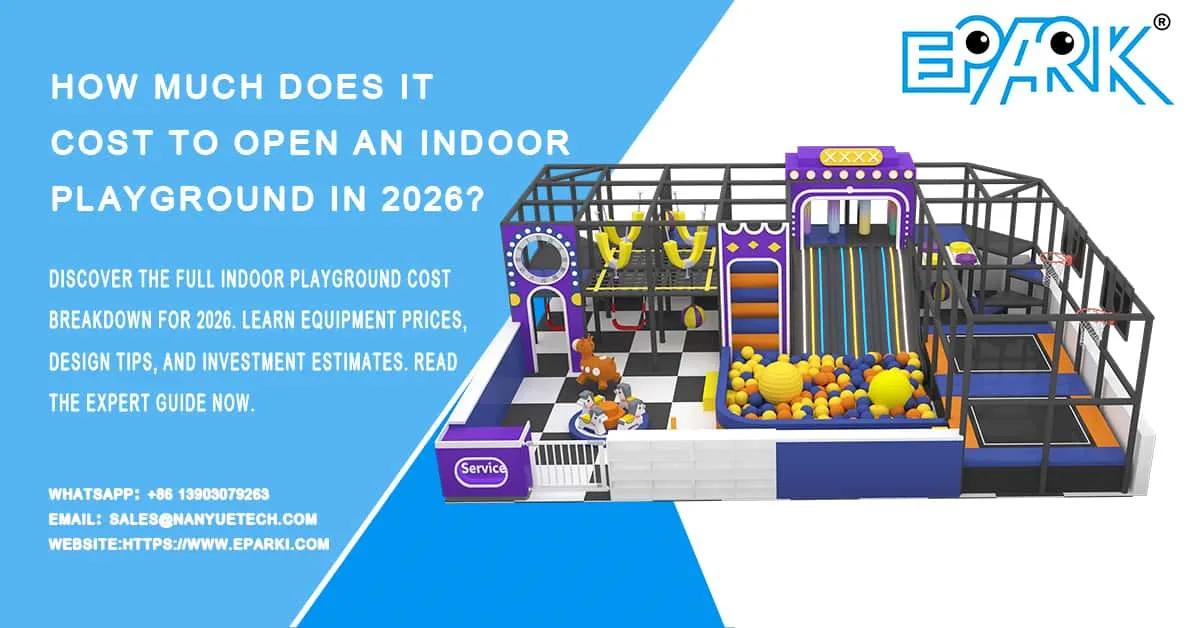
Introduction
In recent years, the indoor playground industry has experienced rapid global growth. Families are increasingly looking for safe and climate-controlled entertainment spaces where children can play, learn, and socialize. As a result, many investors, shopping malls, and entrepreneurs are launching their own indoor playground businesses or family entertainment centers.
One of the most common questions for new investors is:
How much does it cost to open an indoor playground in 2026?
The answer depends on multiple factors such as the size of the venue, the type of indoor playground equipment, theme design, and additional attractions like trampolines or climbing structures. A small children's play center may require an investment of around $100,000, while a large indoor amusement facility can exceed $1 million.
For B2B buyers and operators, understanding the real indoor playground cost structure is essential before starting a project. This guide will break down the key investment components, equipment pricing, and cost differences based on playground size. It will also explain how sourcing equipment from manufacturers can reduce startup costs.
If you are planning to start a playground business, this article will help you estimate your budget and choose the right solution for your project.
What Determines the Cost of an Indoor Playground?
Before calculating the total investment, it is important to understand what factors influence the indoor playground cost. These elements affect not only the price of equipment but also the overall business model and operational efficiency.
Venue Size
The size of the playground is the primary factor affecting startup costs. Larger facilities require more play structures, safety flooring, and installation work. They may also include additional entertainment zones such as trampoline areas or climbing courses.
Below is a common classification of playground sizes used in the industry:
| Playground Category | Size Range | Typical Business Model |
|---|---|---|
| Small Indoor Playground | 200–500 m² | Community play centers |
| Medium Indoor Playground | 500–1000 m² | Shopping mall attractions |
| Large Indoor Playground | 1000 m²+ | Family entertainment centers |
Small venues focus mainly on young children, while larger venues can offer multiple attractions that appeal to wider age groups.
A professional indoor playground design plan ensures that the available space is used efficiently while maintaining safe walking paths and clear visibility for parents.
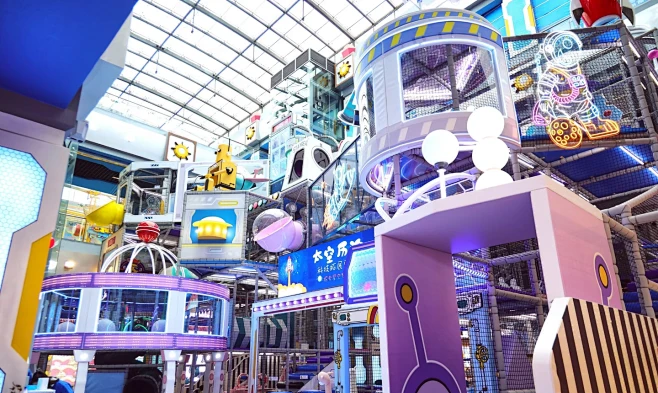 Type of Indoor Playground Equipment
Another important factor influencing investment is the type of equipment installed in the playground.
Different equipment categories serve different age groups and entertainment goals.
Soft Play Equipment
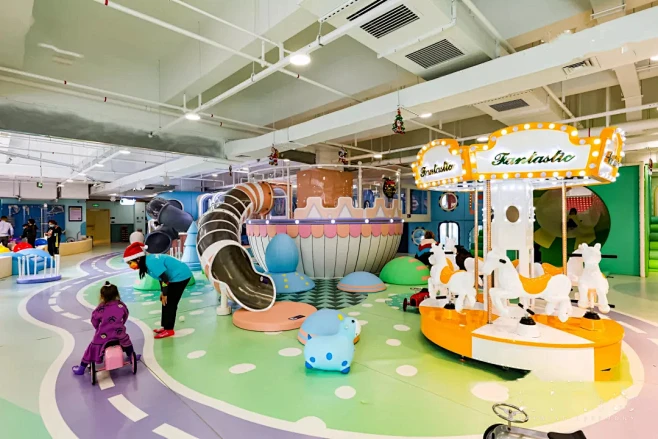
Soft play structures are the foundation of most children's playground centers. These structures are designed with padded materials to ensure safety while children climb, slide, and explore.
Typical soft play features include:
-
Ball pits
-
Spiral slides
-
Climbing tunnels
-
Obstacle bridges
-
Toddler play areas
Soft play equipment is widely used because it is cost-effective, safe, and highly customizable. It is particularly suitable for children between the ages of 2 and 10.
Trampoline Park Equipment
Trampoline attractions are becoming increasingly popular in modern playground facilities. They attract older children, teenagers, and even adults, which helps increase visitor traffic and ticket revenue.
Common trampoline park equipment includes:
-
Interconnected trampoline mats
-
Dodgeball trampoline courts
-
Foam pit jumping areas
-
Slam dunk basketball trampolines
-
Ninja warrior obstacle courses
Although trampoline systems require a higher initial investment, they can significantly improve the profitability of a family entertainment center.
Hybrid Family Entertainment Centers
Many modern indoor playgrounds combine multiple attractions to appeal to broader audiences. These hybrid entertainment centers integrate different types of play equipment into one venue.
Examples include:
-
Multi-level soft play structures
-
Trampoline zones
-
Interactive projection games
-
Climbing walls
-
Rope courses
This model is particularly popular in large entertainment venues because it extends the average playtime of visitors and increases revenue opportunities.
Theme Design and Customization
A well-designed theme can significantly improve the attractiveness of an indoor playground. Unique themes help create immersive experiences and make the venue more appealing for birthday parties and family visits.
Popular playground themes include:
-
Jungle adventure
-
Ocean world
-
Space exploration
-
Candy kingdom
-
Castle theme
Theme customization involves decorative panels, color schemes, lighting effects, and custom graphics. Although theme design can increase project costs, it also improves the visual identity and marketing potential of the playground.
 Average Indoor Playground Equipment Cost in 2026
For commercial projects, indoor playground equipment prices typically range from $180 to $450 per square meter. The price depends on the complexity of the design and the number of attractions included.
The table below shows typical pricing ranges.
| Playground Type | Average Cost per m² | Description |
|---|---|---|
| Standard Soft Play | $180 – $240 | Basic slides, tunnels, ball pits |
| Themed Playground | $240 – $330 | Custom design and decorative elements |
| Premium Hybrid Playground | $330 – $450 | Multi-level structures with trampoline zones |
These equipment costs usually include:
-
Custom playground layout design
-
Equipment manufacturing
-
Quality inspection and packaging
-
Installation instructions and technical support
However, shipping costs, venue decoration, and operational expenses are generally not included in this price.
Working with an experienced manufacturer can help optimize the layout and reduce unnecessary costs during the project planning stage.
Indoor Playground Cost by Venue Size
To better understand the investment required, let’s examine typical costs based on different playground sizes.
Indoor Playground Under 500 m²
Small playgrounds are ideal for community areas, shopping mall corners, or children's cafés. They usually focus on younger children and offer simple soft play attractions.
Typical equipment configuration includes:
-
Compact soft play structures
-
Ball pits and slides
-
Small climbing obstacles
-
Toddler play areas
Estimated equipment cost:
$60,000 – $120,000
Estimated total investment:
$100,000 – $200,000
This type of indoor playground is a good option for first-time investors because it requires relatively low startup capital.
Indoor Playground 500 m² – 1000 m²
Medium-sized playgrounds are the most common format in shopping malls and commercial entertainment venues.
Typical attractions include:
-
Large multi-level play structures
-
Tube slides and climbing nets
-
Obstacle courses
-
Small trampoline areas
-
Party rooms for events
Estimated equipment cost:
$120,000 – $300,000
Estimated total investment:
$200,000 – $500,000
This business model offers a balanced combination of reasonable investment and strong revenue potential.
Indoor Playground Over 1000 m²
Large playground facilities are often developed as full family entertainment centers. These venues offer multiple attractions and can host large numbers of visitors.
Typical attractions include:
-
Large soft play structures
-
Trampoline parks
-
Ninja obstacle courses
-
Climbing walls
-
Interactive digital games
-
Café and seating areas
Estimated equipment cost:
$300,000 – $800,000+
Estimated total investment:
$500,000 – $1,000,000+
Although the initial investment is higher, these large facilities can generate significant revenue through admission tickets, birthday parties, food services, and memberships.
Cost Breakdown of Opening an Indoor Playground
Besides equipment, several other costs must be considered when planning a playground project.
| Expense Category | Estimated Cost |
|---|---|
| Indoor Playground Equipment | $50,000 – $300,000 |
| Venue Rent & Deposit | $5,000 – $50,000 |
| Renovation & Decoration | $20,000 – $150,000 |
| Safety Flooring | $5,000 – $20,000 |
| Business Permits & Insurance | $1,000 – $10,000 |
| Marketing & Branding | $2,000 – $5,000 |
Interior renovation usually includes lighting systems, wall decoration, reception counters, and seating areas for parents. Safety flooring is another important expense because it reduces injury risks and improves compliance with safety regulations.
Why Many Investors Source Indoor Playground Equipment from China
Many international operators choose to purchase indoor playground equipment from Chinese manufacturers due to cost efficiency and strong manufacturing capabilities.
Lower Production Costs
China has a well-developed amusement equipment supply chain. Large-scale production and efficient manufacturing processes allow factories to offer competitive pricing.
In many cases, sourcing directly from manufacturers can reduce equipment costs by 30% to 50% compared to local suppliers.
Professional Playground Design Services
Most manufacturers provide complete project support, including:
-
Free indoor playground design plans
-
3D layout visualization
-
Theme customization
These services help investors better understand the final layout before production begins.
Global Export and Installation Support
Experienced suppliers usually offer comprehensive export services such as:
-
Professional packaging
-
Container loading
-
Shipping coordination
-
Remote installation guidance
These solutions make it easier for international buyers to complete projects efficiently.
How to Choose the Right Indoor Playground Equipment
Choosing the right equipment is essential for building a successful children's entertainment business. Investors should carefully consider several key factors.
Target Age Group
Different age groups require different play experiences. Designing zones based on age helps improve safety and customer satisfaction.
| Age Group | Recommended Equipment |
|---|---|
| 2–5 years | Soft play areas, ball pits |
| 5–10 years | Slides, climbing structures |
| 10–15 years | Trampoline zones, ninja courses |
Creating separate zones for toddlers and older children can prevent accidents and enhance the play experience.
Space Planning and Layout
A well-planned playground layout should balance entertainment zones with functional spaces.
Typical layout components include:
-
Main play structures
-
Toddler areas
-
Party rooms
-
Parent seating areas
Professional layout planning ensures efficient use of space and smooth visitor flow.
Safety Standards and Certifications
Safety compliance is critical for commercial playground equipment. Operators should ensure that the equipment meets international standards.
| Standard | Region |
|---|---|
| ASTM F1918 | United States |
| EN1176 | Europe |
| ISO 9001 | Quality management |
Using certified equipment helps protect children and ensures long-term business reliability.
 Conclusion
Starting an indoor playground business in 2026 can require an investment ranging from $100,000 to over $1 million, depending on the size of the facility and the attractions included.
For most investors, a 500–1000 m² indoor playground with soft play equipment and trampoline zones offers the best balance between investment cost and profitability. This format attracts a wide range of visitors while maintaining manageable startup costs.
Careful planning, professional playground design, and choosing reliable equipment suppliers are essential steps toward building a successful children's entertainment venue.
With the right strategy, an indoor playground can become a highly profitable and sustainable business in the growing family entertainment industry.
Start Your Indoor Playground Project Today
If you are planning to open a playground business, our team can help you from concept to installation.
We provide:
-
Free indoor playground design
-
Custom playground equipment solutions
-
Professional cost estimation
-
Global shipping and installation support
Contact us today to receive a free indoor playground project proposal and quotation.
General Disclaimer
All data on https://www.eparki.com is for general guidance only. As a leading indoor playground manufacturer and trampoline supplier, EPARK strives for accuracy but gives no express or implied warranty regarding completeness, performance or project fitness. Product specs, designs and results may vary with use and customer requirements. Buyers must verify technical details, compliance and suitability before purchase. EPARK OEM/ODM is not liable for any direct, indirect or consequential damages arising from site use. For custom solutions, contact our manufacturer and supplier team via the Contact page.
Intellectual Property
Text, images, videos, CAD files and software are Guangzhou EPARK Electronic Technology Co., Ltd. All rights reserved. No part may be copied, republished or used commercially without prior written permission. We will pursue legal action for copyright or design-patent infringement.
Trademarks
"EPARK", the EPARK logo and related graphics are registered trademarks of Guangzhou EPARK Electronic Technology Co., Ltd. Unauthorized use in ads, domain names or packaging is prohibited.
Governing Law
These terms are governed by the laws of the People's Republic of China.
Contact
Questions? Email sales@nanyuetech.com or WhatsApp +86 139 0307 9263.