What Does a Private Label Arcade Equipment Manufacturer Actually Do?
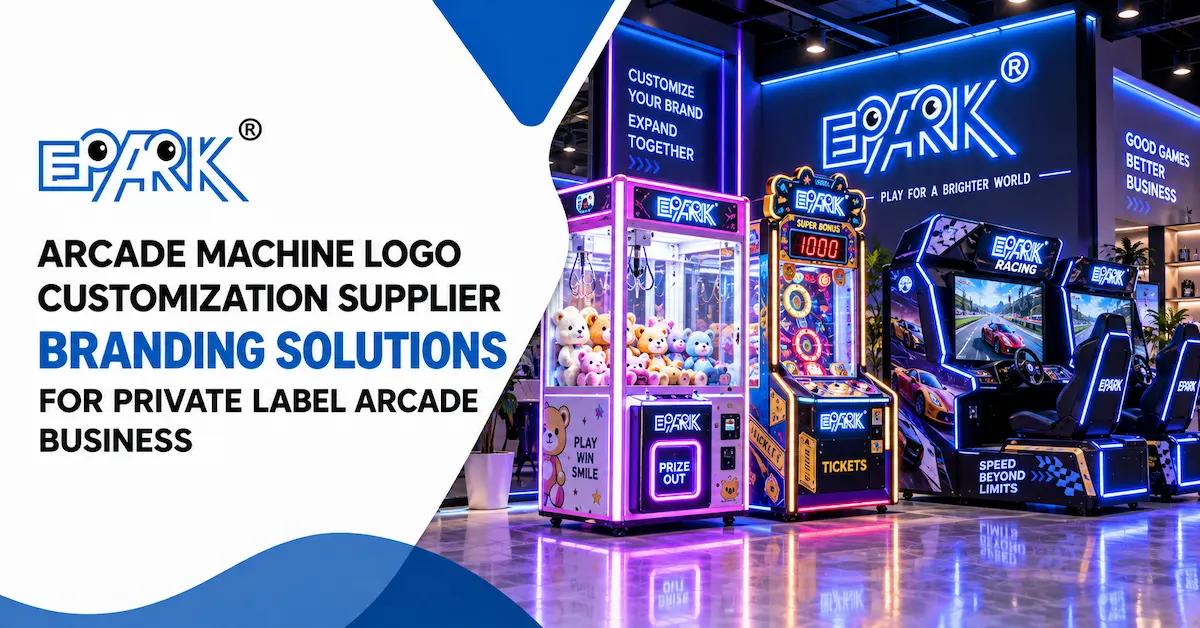
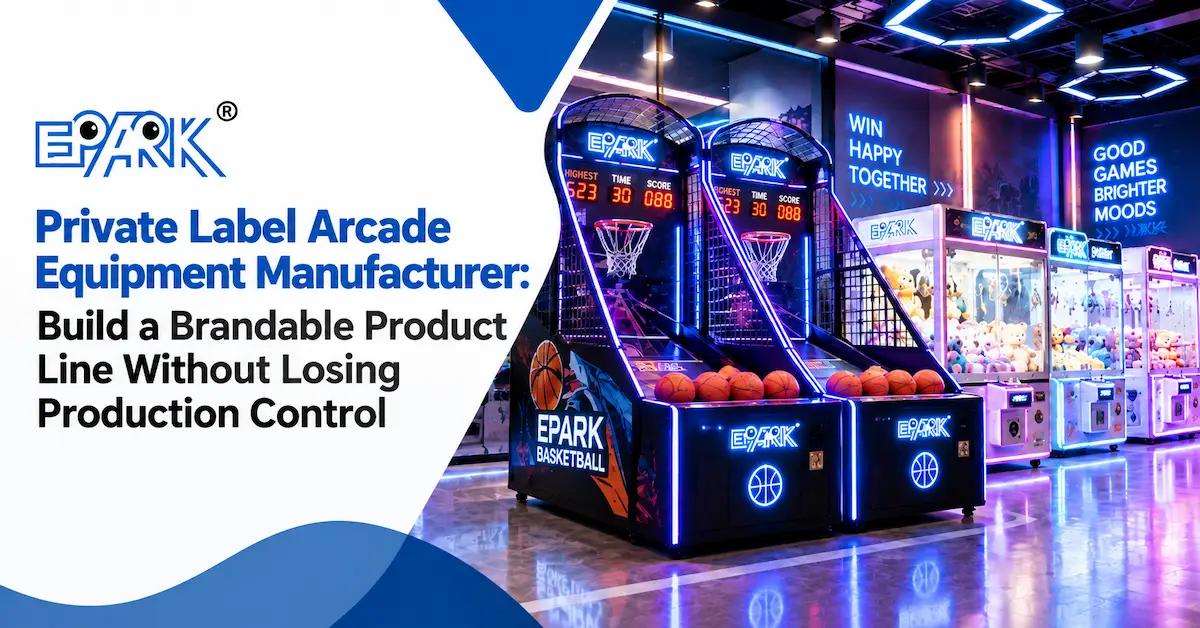
A private label arcade equipment manufacturer produces commercial amusement equipment that is sold under the buyer’s brand rather than only under the original manufacturer’s identity. Depending on the project, private-label work may cover logos, cabinet colors, exterior artwork, machine naming, labels, packaging, language, payment settings and selected hardware configurations. EPARK’s existing private label game machine guide describes private labeling around branded commercial machines for distributors, FEC operators and entertainment brands, while its OEM & Customization section groups deeper arcade customization and manufacturing topics in one content cluster.
The key purchasing distinction is that private labeling should create a controlled branded product, not merely a standard cabinet carrying a sticker. A distributor planning a long-term product line needs to know exactly which elements are unique to its version, which parts remain standard, how the approved configuration will be identified, and whether the same machine can be reproduced later. A branded exterior without configuration control can create a product that looks consistent while changing internally from batch to batch.
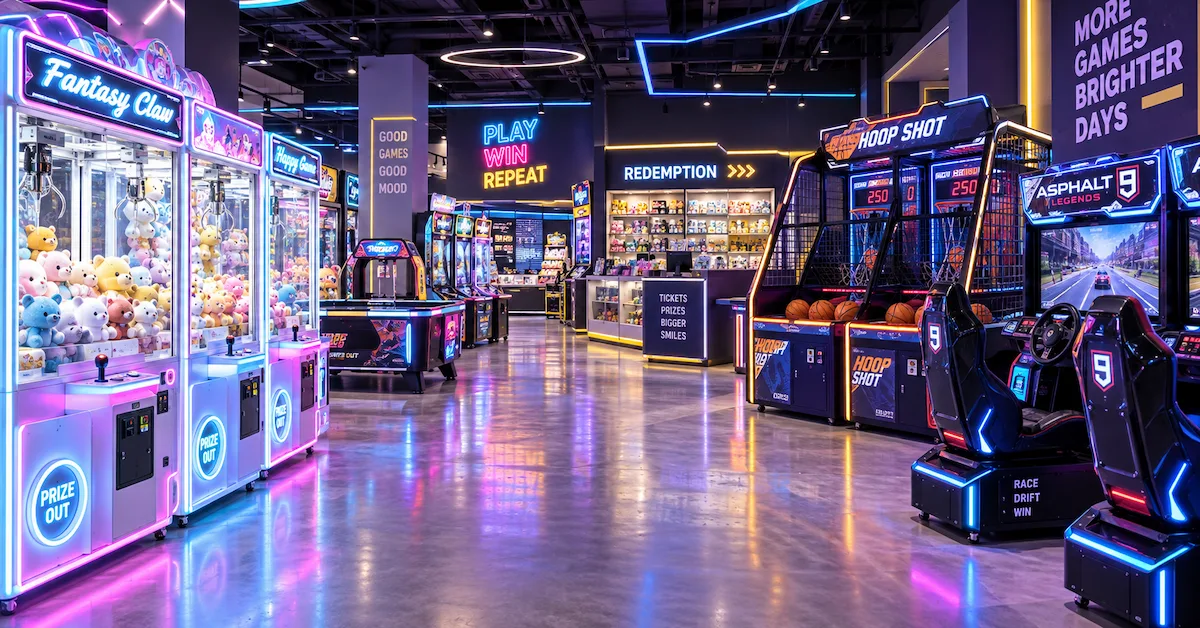
Who Benefits Most From Private Label Arcade Equipment?
Private-label manufacturing is especially relevant to arcade distributors, amusement-equipment importers, FEC chains, franchise operators, shopping-mall entertainment projects and established leisure brands that want recognizable equipment without developing every machine from zero. EPARK’s existing private-label content identifies distributors, FEC operators, entertainment brands, importers and franchise businesses among the common users of this sourcing model.
It is less useful when the buyer has not yet selected a product category, cannot define its downstream market or is still testing whether customers want the machine. In that case, beginning with an existing product from EPARK’s products range and validating market demand can be more practical than paying for branding and production changes too early. Private label works best when the buyer already understands the commercial role of the machine and wants to turn that proven requirement into a recognizable, repeatable product line.
Separate Private Labeling From Full Custom Development
Not every private-label project needs a new cabinet, new control system or new game architecture. EPARK’s current customization content distinguishes branding options such as logo, colors and packaging from hardware, payment and function changes.
| Project level | Typical scope | Buyer benefit | Main risk to control |
|---|---|---|---|
| Logo private label | Logo, product name and identification labels | Fast brand differentiation | Treating a simple logo change as a complete proprietary product |
| Visual private label | Cabinet colors, artwork, illuminated branding and packaging | Stronger visual consistency | Artwork revisions becoming inconsistent between batches |
| Regional private label | Branding plus voltage, plug, language and payment setup | Better market fit | Regional configuration not documented correctly |
| Configuration OEM | Branding plus selected hardware, control or payment changes | More differentiated product | Components become difficult to reproduce or support |
| Structural customization | Cabinet dimensions, layouts or mechanical interfaces | Greater product distinction | Higher prototype, QC and repeat-order complexity |
| ODM-style development | Broader concept and engineering work | Most design freedom | Responsibility, cost and validation scope become much larger |
For many distributors, the strongest first private-label project is not the deepest technical redesign. It is a proven base machine with controlled branding, regional configuration and clear production records.
Start With the Commercial Product Strategy
Before sending artwork to a private label arcade equipment manufacturer, define the business role of the product. Is it intended to be a core dealer stock item, a premium attraction for FEC projects, a chain-standard game or a regional product for a specific payment system? The answer determines how much customization is commercially useful.
For a distributor, a private-label claw machine might need a consistent cabinet style, logo placement, payment configuration and packaging so multiple dealers can recognize it as one product family. A chain operator may care more about matching venue colors and integrating the same cashless system across locations. A family entertainment brand may need several different game categories sharing a visual identity while keeping different internal hardware platforms.
EPARK’s custom game machine guide for FEC brands frames customization around design, function, branding, user experience and long-term maintenance rather than appearance alone.
Create One Private-Label Product Specification
A private-label machine should have one controlled specification used by purchasing, design, sales, engineering and production. This prevents branding files from being disconnected from the actual hardware version being purchased.
| Specification area | Information to define |
|---|---|
| Base machine | Supplier model and approved base configuration |
| Buyer product name | Private-label model name or internal SKU |
| Product category | Claw, racing, redemption, sports, simulator or other |
| Cabinet | Dimensions, construction and approved finish |
| Branding | Logo, colors, graphics, labels and illuminated elements |
| Controls | Buttons, joysticks, steering, pedals, sensors or other interfaces |
| Display | Screen configuration and mounting |
| Electrical version | Voltage, frequency and plug |
| Payment | Coin, token, card reader or other confirmed interface |
| Software | Version, language and operator settings |
| Reward system | Prize, ticket or electronic redemption where applicable |
| Accessories | Keys, cables, manuals and supplied components |
| Spare parts | Initial kit and identifiable part references |
| Packaging | Carton/crate, shipping marks and private-label artwork |
| Documentation | Manual, product labels and relevant technical records |
| Revision control | Hardware revision, artwork revision and sample reference |
The important principle is that the private-label product should remain identifiable even when several versions of the original manufacturer’s machine exist.
Build a Consistent Visual Identity Across Different Machine Categories
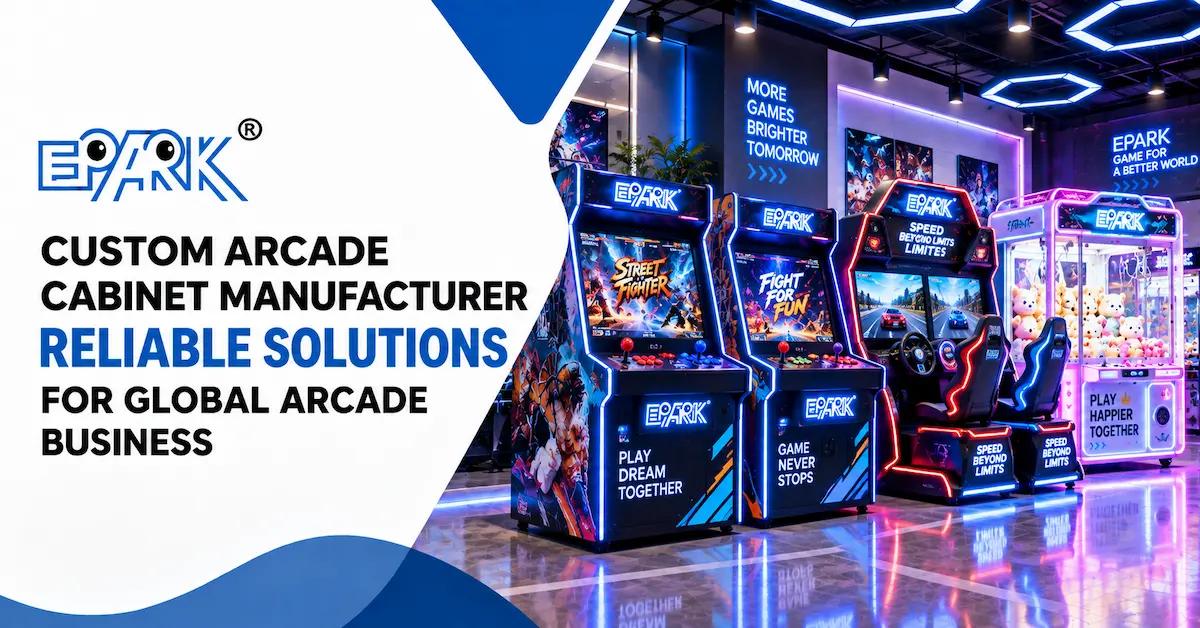
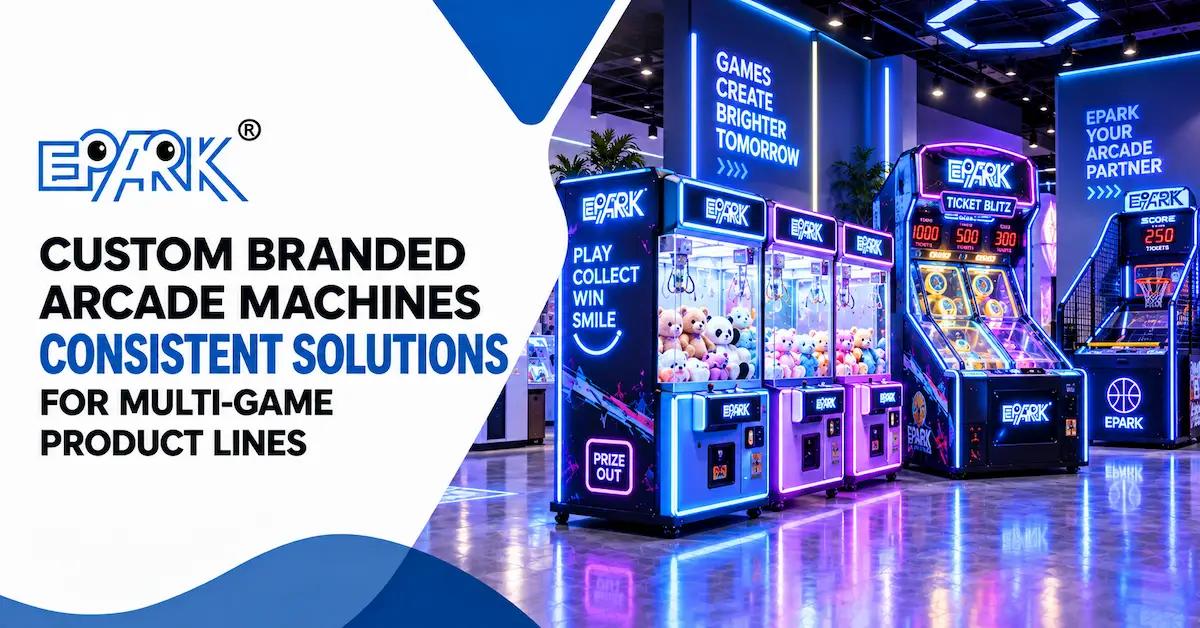
Private-label arcade programs often include several machines rather than one product. A distributor may want claw machines, basketball games and racing simulators to look like one family even though their physical shapes differ.
Instead of forcing identical designs onto very different cabinets, build a visual system containing repeatable elements: logo position, brand colors, graphic style, typography, label conventions and packaging identity. The artwork can then be adapted to the geometry of each machine.
EPARK’s game machine OEM customization guide lists cabinet colors, exterior artwork, branding and packaging among common customization directions.
Keep each machine’s production artwork as its own file and revision. One general brand guideline should not replace model-specific production files.
Do Not Let Branding Hide Hardware Differences
Two machines can carry identical private-label graphics while using different controllers, displays, controls or payment hardware. For distributors, this creates a major after-sales risk because customers may identify the machines by your brand while the internal components differ.
Record the important hardware in the private-label specification and connect replacement components to the correct model revision. If the manufacturer proposes a substitution, ask what changes in functionality, maintenance and spare-parts compatibility before approving it.
For example, a private-label racing series may maintain the same exterior artwork for several production batches, but a new steering assembly should still be treated as a hardware revision. The brand identity can remain constant while the technical record changes.
Validate Payment Configuration as Part of the Brand Promise
A private-label distributor often sells more than the cabinet. Customers expect the product to operate correctly in their venue. If your brand promises compatibility with a particular coin, token or cashless system, verify that configuration rather than relying on a reader opening or generic payment description.
The approval sequence should confirm:
Payment recognition → correct credit → game activation → normal gameplay → next transaction
For prize or redemption machines, include reward output as well.
EPARK’s existing arcade customization content specifically identifies payment systems and credit settings as areas commercial buyers may need to customize.
If an external payment provider is involved, define who supplies the reader, interface and integration work. Private labeling should not transform an untested payment arrangement into a customer-facing promise.
Use a Prototype to Approve the Complete Branded Product
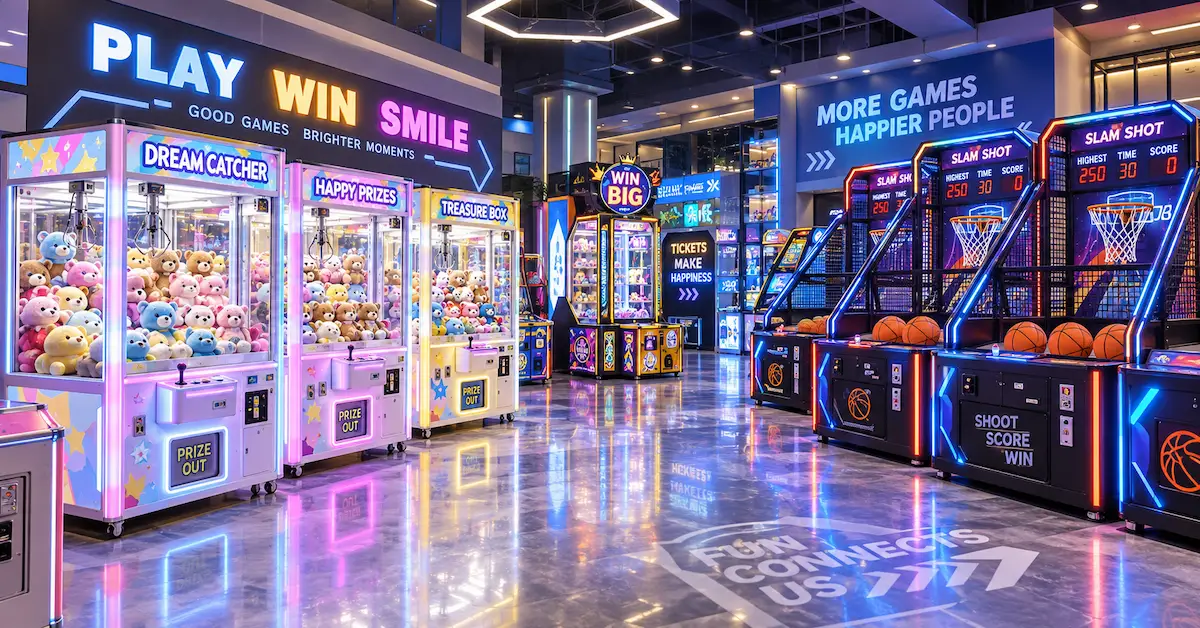
For a meaningful private-label project, the approval sample should represent more than the graphics. It should connect the physical product, branding and operating configuration.
A useful sample record can include:
Private-label SKU → manufacturer model → hardware revision → artwork revision → software version → payment configuration → electrical version → sample status
During approval, review cabinet appearance, graphics, controls, payment, software, labels, accessories and service access. If corrections are made, create a new sample revision rather than continuing to use photographs of the original prototype as the production reference.
This approach follows the broader manufacturing logic emphasized in the SaleAI framework you provided: specifications, technical details, workmanship, QC and repeatability should support the buying decision rather than relying on generic marketing language.
Control Packaging as Part of the Private-Label Product
Packaging is easy to treat as a shipping issue, but for distributors it is also part of product identity and warehouse control. Private-label packaging can include logos, product names, model codes, carton labels, handling marks and accessory identification.
Ask the manufacturer to connect the package label to the private-label SKU and technical revision. If the same cabinet is produced for several buyers, clear identification helps prevent artwork or accessories from being mixed during packing.
EPARK’s private-label and OEM content includes packaging among the available customization directions.
For a distributor carrying several branded products, packaging consistency also makes receiving and warehouse allocation easier.
Create a Private-Label QC Checklist
Quality control should verify both the underlying machine and the buyer-specific private-label configuration.
| QC area | What should be checked |
|---|---|
| Product identity | Correct private-label SKU and manufacturer model |
| Cabinet | Correct approved structure and finish |
| Artwork | Logo, colors and graphics match the signed-off revision |
| Controls | Approved control hardware installed |
| Display | Correct configuration fitted |
| Payment | Correct interface and credit behavior |
| Software | Correct version and language |
| Electrical version | Destination voltage, frequency and plug |
| Labels | Correct private-label product identification |
| Accessories | Correct keys, cables and manuals |
| Packaging | Correct branded package and shipping marks |
| Spare parts | Correct references for the approved revision |
Do not let artwork inspection replace machine testing. The customer will associate technical performance with the private-label brand, even when the underlying machine is manufactured by another company.
Review Technical Documents by Product Scope
A manufacturer may maintain company-level quality information, certificates or material reports, but buyers should verify which documentation applies to the actual private-label machine and configuration. A report covering an unrelated product or material should not automatically be presented as evidence for another arcade machine.
EPARK’s About Us page states that the company was established in 2012 in Guangzhou and supplies arcade machines alongside indoor playground and other amusement equipment. It also describes product development, manufacturing, sales and after-sales support as part of its business.
Those company-level capabilities are useful context, but the private-label buyer should still request model-specific documentation and confirm any destination-market requirements during product definition.
Separate One-Time Private-Label Costs From Repeat Production Costs
The first order can include costs that later reorders may not repeat in exactly the same way. Buyers should separate setup or development costs from the recurring production price.
Potential first-project costs can include artwork preparation, samples, specialized engineering or packaging development where applicable. Recurring costs may include customized components, branded graphics, labels and private-label packaging.
A useful internal calculation is:
Private-Label Launch Cost = Product Cost + One-Time Development + Sample Cost + Initial Spare Parts + Branded Packaging + Freight + Local Launch Costs
For repeat orders:
Repeat Supply Cost = Approved Production Configuration + Recurring Branding/Packaging + Spare Replenishment + Logistics
These are planning formulas, not EPARK price structures. Actual project costs need to be confirmed in the quotation.
Do Not Assume Private Label Means Market Exclusivity
Private labeling establishes the buyer’s brand identity on a product; it does not automatically create territory exclusivity, an exclusive cabinet design or restrictions on the manufacturer supplying similar equipment elsewhere.
If exclusivity matters commercially, discuss it as a separate contractual issue and define exactly what would be exclusive: artwork, cabinet design, a specific configuration, customer account or territory.
Likewise, do not assume a private-label logo grants ownership of third-party game software, artwork or characters. Define which creative assets are supplied by the buyer, which are supplied by the manufacturer and what rights apply to commercial use.
Plan Spare Parts Under Your Own Product Identity
When customers contact a private-label distributor, they may know only the branded product name. Your internal records must connect that name to the manufacturer’s technical version.
A useful structure is:
Dealer Model PL-R01 → Manufacturer Model R-17 → Hardware Rev B → Steering Part SW-B → Payment Interface P3
This example is illustrative, not an EPARK numbering system.
With this mapping, sales staff can use the private-label name while technicians can identify the correct parts. Without it, successful branding can actually make service harder because the manufacturer’s model identity becomes hidden from the after-sales team.
Use Service Feedback to Improve the Next Batch
Private-label manufacturing becomes more valuable when the buyer learns from actual installed equipment.
After the first batch, collect information about:
- frequently requested spare parts;
- payment or setup questions;
- packaging damage;
- artwork wear;
- service-panel access;
- installation issues;
- customer requests for new configurations;
- machine categories that reorder faster.
Then separate genuine improvement opportunities from unnecessary technical changes.
If a label is unclear, update the label. If a commonly serviced component is difficult to access, discuss whether a controlled cabinet revision is justified. If the machine performs well, avoid redesigning its internal system simply to create the appearance of a new generation.
Protect Private-Label Reorders With Revision Control
A strong private label arcade equipment manufacturer relationship becomes most valuable on the second and third production runs. Save the approved product specification, hardware, software, artwork, payment setup, labels, accessories, spare parts and packaging from the first batch.
When reordering, send the approved baseline and request a written declaration of any proposed change.
Use a delta table:
| Configuration item | Approved batch | Proposed reorder | Action |
|---|---|---|---|
| Cabinet | Revision B | Revision B | Same |
| Controls | Set C | Set C | Same |
| Display | Model D | Model E | Review |
| Payment | Interface P3 | Interface P3 | Same |
| Software | Version 2.1 | Version 2.2 | Review |
| Artwork | Rev 04 | Rev 04 | Same |
| Packaging | Rev 02 | Rev 02 | Same |
This makes it easier to decide whether a new sample, targeted test or updated spare-part list is required.
Compare Standard, OEM and Private-Label Supply
| Supply route | Best for | Main value | Key buyer risk |
|---|---|---|---|
| Standard machine | Buyers needing an existing configuration | Faster and simpler purchasing | Limited brand differentiation |
| Logo private label | Dealers needing basic brand identity | Low-complexity branding | Product may remain easily comparable with generic supply |
| Full visual private label | Brands wanting recognizable product families | Stronger market identity | Artwork and packaging revision control |
| Configuration OEM | Markets needing payment, electrical or hardware differences | Better local fit | Technical compatibility and service complexity |
| Structural custom project | Brands needing a unique cabinet platform | Strong differentiation | Engineering, prototype and repeat-production risk |
A buyer does not need the most customized option. The right level is the one that creates useful differentiation without introducing unnecessary cost or technical complexity.
Evaluate the Manufacturer’s Ability to Scale the Approved Product
The first private-label sample proves design intent; mass production proves manufacturing control.
Ask how the approved configuration is released to production, how artwork revisions are controlled, how custom components are identified, how QC distinguishes your branded version from standard machines and how substitutions are communicated.
EPARK describes itself as an integrated industrial and trading company and states that it handles product development, manufacturing, sales and after-sales activities.
For private-label buyers, those company-level capabilities should be translated into project-specific questions: which selected products are manufactured, assembled or coordinated by EPARK, who controls the final private-label configuration, and how will your approved version be reproduced?
Plan the Schedule Around Approvals
Avoid asking only for one lead-time number. Break the private-label project into milestones:
Product selection → private-label brief → artwork → technical configuration → sample/review → revisions → production approval → manufacturing → QC → branded packing → shipment
A visual-only project may move differently from one that includes payment or hardware changes. Ask which buyer approvals are required before production starts.
If the project includes several branded arcade machines, some categories may finish earlier than others. Decide whether the entire order must ship together before finalizing the delivery plan.
What Should You Send a Private Label Arcade Equipment Manufacturer?
A useful RFQ should explain the commercial product you want to create. Send the machine category or preferred base model, target market, buyer/customer type, expected first-order quantity, forecast repeat quantity, logo, colors, artwork direction, electrical configuration, payment system, software or language needs, packaging requirements, spare-parts expectations and delivery schedule.
Buyers can review EPARK’s private label game machine guide, OEM & Customization section, product catalog and About Us before defining the project.
Once the requirements are clear, use EPARK Contact Us to request a model-specific private-label proposal instead of asking only for a standard wholesale price list.
Frequently Asked Questions About Private Label Arcade Equipment
1. What is a private label arcade equipment manufacturer?
A private label arcade equipment manufacturer produces arcade equipment that is branded and configured for another business. Depending on the project, customization can include logos, cabinet graphics, colors, payment systems, language, packaging and selected hardware options.
2. Is private label the same as OEM arcade equipment?
Private labeling is commonly part of OEM cooperation, but OEM can include deeper technical changes. A private-label project may focus mostly on branding, while a larger OEM project can involve cabinet, controls, payment or software configuration.
3. Can I put my own brand on an existing arcade machine?
Private-label projects can start from existing machines, subject to the selected model and project terms. Confirm logo placement, graphics, colors, labels, packaging and any quantity requirements before approving production.
4. Can private-label machines use my payment system?
Payment integration can be evaluated depending on the machine and system. Confirm the reader or acceptor, interface, wiring, credit settings and integration responsibility, then test the intended transaction before production.
5.Can I customize packaging under my own brand?
Packaging design is included among the private-label and OEM customization directions discussed in EPARK’s current content. Confirm carton or crate format, artwork, labels and minimum-order requirements for the actual project.
6. Do I need a prototype for private-label arcade equipment?
A logo-only project may require less technical validation than a machine with hardware or structural changes. For meaningful customization, use an identifiable sample or other controlled production reference before volume manufacturing.
7. What should be checked during private-label QC?
Check the underlying machine configuration as well as branding. Relevant items can include cabinet, controls, payment, software, electrical version, artwork, labels, accessories, spare parts and packaging.
8. What determines the MOQ for a private-label arcade order?
MOQ can depend on the selected machine, customization level, packaging and production requirements. Request project-specific terms rather than assuming one universal minimum applies to every machine.
9. How can I keep repeat orders visually and technically consistent?
Archive the approved hardware revision, artwork, payment setup, software, labels and packaging. Send that baseline with every reorder and ask the manufacturer to disclose proposed changes before production.
10. How can I request private-label arcade equipment from EPARK?
Prepare the preferred product category or model, quantities, destination, branding files, colors, payment system, electrical requirements, packaging and delivery schedule, then submit the project through EPARK Contact Us.
Conclusion
Selecting a private label arcade equipment manufacturer should be treated as a brand-development and production-control decision rather than simply a logo-printing service. Start with a proven machine platform where possible, define what belongs to the private-label version, control branding and technical specifications separately, approve an identifiable production reference and verify both machine function and branded packaging during QC. For distributors and FEC brands, the long-term value comes from being able to reorder the same recognizable product while keeping spare parts, payment systems and technical revisions manageable. Buyers can review EPARK’s private label game machine guide, OEM & Customization resources and product range, then contact EPARK with the target products, brand requirements, quantities and market configuration for a project-specific private-label evaluation.
General Disclaimer
All data on https://www.eparki.com is for general guidance only. As a leading indoor playground manufacturer and trampoline supplier, EPARK strives for accuracy but gives no express or implied warranty regarding completeness, performance or project fitness. Product specs, designs and results may vary with use and customer requirements. Buyers must verify technical details, compliance and suitability before purchase. EPARK OEM/ODM is not liable for any direct, indirect or consequential damages arising from site use. For custom solutions, contact our manufacturer and supplier team via the Contact page.
Intellectual Property
Text, images, videos, CAD files and software are Guangzhou EPARK Electronic Technology Co., Ltd. All rights reserved. No part may be copied, republished or used commercially without prior written permission. We will pursue legal action for copyright or design-patent infringement.
Trademarks
"EPARK", the EPARK logo and related graphics are registered trademarks of Guangzhou EPARK Electronic Technology Co., Ltd. Unauthorized use in ads, domain names or packaging is prohibited.
Governing Law
These terms are governed by the laws of the People's Republic of China.
Contact
Questions? Email sales@nanyuetech.com or WhatsApp +86 139 0307 9263.