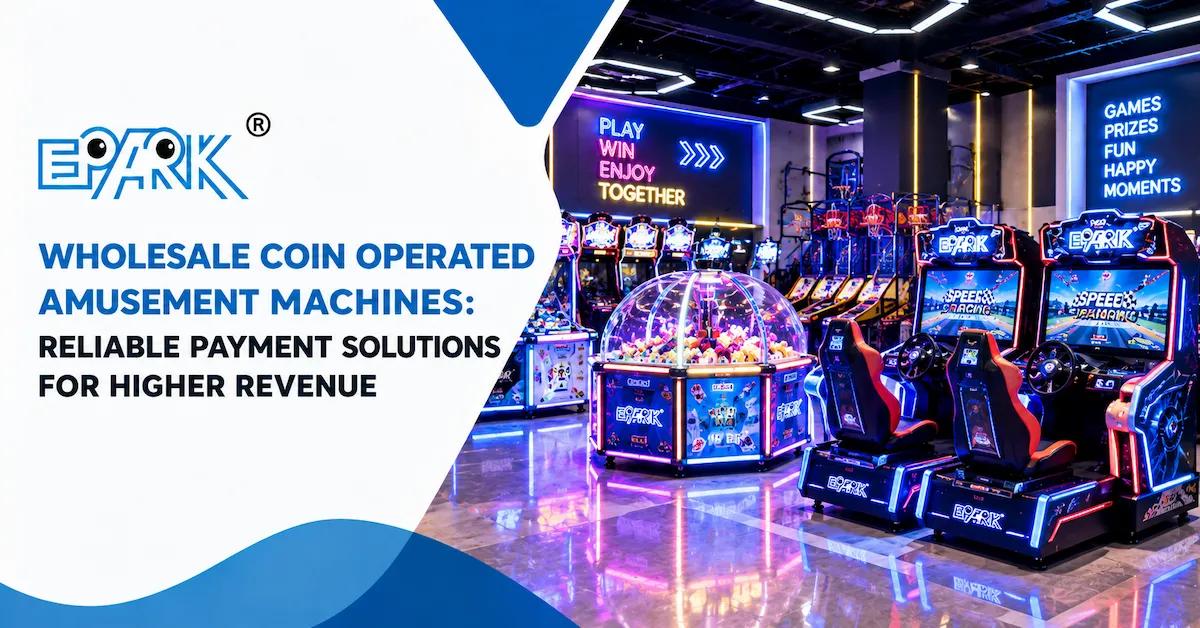
Start With the Payment Requirement Before Selecting Machines
Wholesale coin operated amusement machines should be purchased as complete operating systems rather than ordinary arcade cabinets with coin acceptors added at the end. For a commercial buyer, the payment unit has to recognize the intended coin or token, convert it into the correct number of credits, communicate with the game controller, allow the game to start correctly and remain practical for operators to collect, inspect and service. EPARK’s coin operated amusement equipment buying guide describes this purchasing sequence as payment requirement, integration, sample approval, payment testing, quality control and repeat supply. That sequence is especially important for distributors and multi-location operators because a small payment-configuration difference repeated across dozens of machines can become a large maintenance and inventory problem.
Who Should Buy Coin Operated Amusement Machines Wholesale?
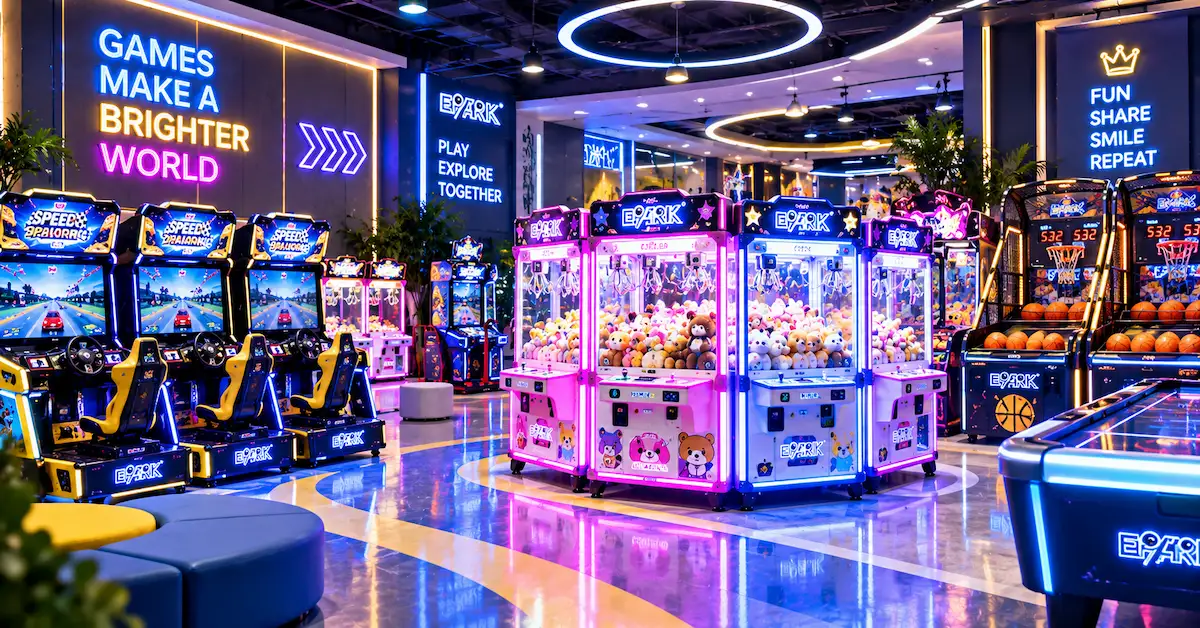
Wholesale purchasing is most relevant to regional arcade distributors, importers, FEC operators, arcade chains, shopping mall entertainment projects and contractors opening or expanding multiple commercial game zones. A distributor normally needs repeatable configurations and spare-payment components because machines may later be resold to different operators, while an FEC is more concerned with consistent customer payment behavior across different game categories. An importer additionally needs packed dimensions, electrical specifications, shipment planning and clear documentation. EPARK’s commercial arcade wholesale guide makes the same distinction between distributor, importer and venue-operator priorities. A very small buyer testing an unfamiliar game or an unproven local market may be better served by validating the product and payment configuration first rather than increasing quantity only to reach a lower unit price.
Choose Coin, Token or Other Payment Arrangements Deliberately
The phrase “coin operated” should not be treated as one universal specification. A venue may use local currency coins, proprietary tokens or another payment system, and each option creates different purchasing and operating requirements. The table below is a decision framework rather than a statement that every configuration is available for every EPARK machine; buyers should confirm the actual supported payment arrangement model by model.
| Payment configuration | Suitable purchasing scenario | Information to confirm | Main risk to control |
|---|---|---|---|
| Local currency coin | Venues where customers pay directly at each machine | Coin denomination, dimensions, material characteristics, acceptor model and credit value | Wrong coins may be rejected or unintended coins may be accepted if setup is not validated |
| Proprietary token | Arcades or FECs using a controlled internal token system | Token sample, dimensions, acceptor settings and credits per token | Future token changes can create compatibility problems |
| Multi-coin setup | Markets where more than one accepted denomination is required | Accepted denominations, credit conversion and test procedure | Different denominations may produce incorrect credits if logic is unclear |
| Card or cashless preparation | Venues using centralized payment systems | Reader model, interface, wiring, mounting, integration responsibility and software requirements | “Card ready” may describe physical space without proven system integration |
| Mixed payment strategy | Distributor stock or projects requiring different regional configurations | Configuration by model and destination market | Warehouse inventory can become difficult to identify and support |
Create a Payment Specification for Every Model
The safest wholesale order links each machine to a written payment specification rather than relying on phrases such as “standard coin acceptor” or “same as last order.” EPARK’s wholesale guidance recommends maintaining approved specifications for voltage, frequency, plug, payment system, controls, artwork and accessories so repeat orders can be reproduced accurately. The table below can be used as an RFQ and approval template; it does not contain universal machine specifications and should be completed with values confirmed for the actual models being purchased.
| Specification area | What the wholesale buyer should record |
|---|---|
| Machine identification | Product name, model code, quantity and approved configuration revision |
| Payment method | Coin, token, card interface or other agreed arrangement |
| Coin/token reference | Denomination or token ID, dimensions, weight or physical reference sample as required |
| Coin acceptor | Manufacturer/model or supplier-defined component reference |
| Credit logic | Number of credits received for each accepted payment |
| Game start logic | Credits required per play and how credits are deducted |
| Operator settings | Adjustable parameters and access method |
| Electrical configuration | Voltage, frequency, plug and relevant power requirements |
| Payment wiring | Interface, connector, harness and controller relationship |
| Operator access | Payment door, collection box, locks and service access |
| Accessories | Keys, cables, manuals, spare payment parts and other supplied items |
| Batch reference | Sample version or configuration document against which production is checked |
Test Recognition, Credit Registration and Game Start as One Sequence
A coin acceptor that successfully receives one sample coin has not completed a commercial acceptance test. Buyers should verify the whole transaction: the correct coin or token is inserted, the payment unit recognizes it, the expected credit appears, the game starts using the correct number of credits and another transaction can then be completed normally. EPARK’s coin operated equipment guide emphasizes that gameplay testing alone is insufficient for these machines. For a sample or pilot machine, record the actual payment sample, machine revision, acceptor configuration and credit settings used during testing. Where multiple denominations are intended, verify their separate credit values rather than assuming all accepted coins should generate identical credits. If card or cashless integration is planned later, record what has actually been tested and what remains the responsibility of the payment-system provider.
Match Payment Configuration to Different Amusement Machine Categories
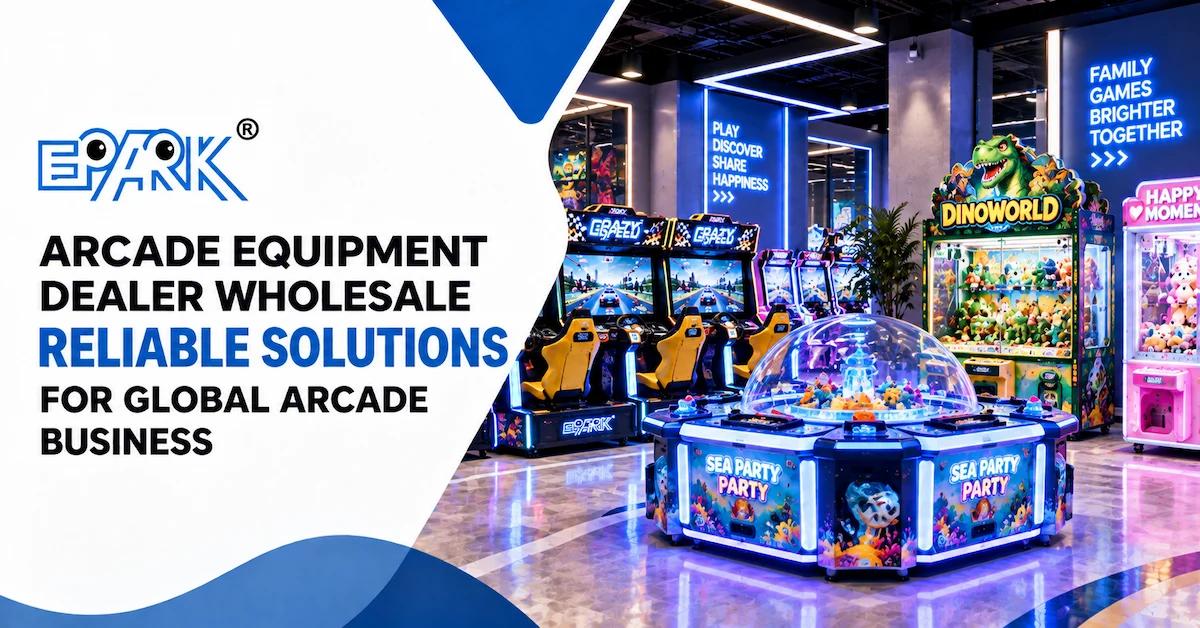
Wholesale coin operated amusement machines may include racing games, basketball machines, shooting games, claw machines, redemption equipment, kiddie rides and other commercial attractions. The payment principle can be similar while the gameplay and revenue event are different. A racing machine may need credits to activate an individual station or linked session; a claw machine combines payment with crane operation and prize access; a redemption machine connects payment, gameplay and ticket or electronic reward output. EPARK’s broader coin operated amusement machine factory guide identifies these categories as common commercial applications. When ordering mixed equipment, standardize the customer-facing payment logic where commercially practical, but do not force identical hardware or settings onto machines without confirming technical compatibility.
Inspect the Coin Door, Cash Box, Wiring and Service Access
Payment reliability also depends on the physical cabinet design. Buyers should inspect how the acceptor is mounted, whether connectors and wiring are identifiable, how the payment compartment opens, whether the collection box can be removed conveniently and whether technicians can replace relevant components without dismantling unrelated sections of the cabinet. For machines handling physical currency, operator procedures also need to consider access control, key management and cash collection; specific security features should only be claimed when they are included in the selected machine. A useful sample review is to ask a technician to identify the payment component from the documentation, remove or access it using the intended procedure and reconnect it correctly. This provides more purchasing value than a general claim that a cabinet is “easy to maintain.”
Make Payment Testing Part of Batch Quality Control
Once a sample configuration is approved, production inspection should verify that the important payment characteristics remain consistent across the agreed batch. The exact inspection plan depends on machine type and order size, so buyers should agree on the sampling or testing method rather than inventing a universal number of cycles. Relevant checks can include model identity, payment hardware, credit configuration, controls, display, gameplay, reward output where applicable, electrical configuration, accessories and cabinet condition. EPARK’s arcade equipment factory audit guide stresses the importance of consistent machine specifications, component control and pre-shipment verification for bulk orders. Ask which checks are performed on every machine and which are sampled, how failures are handled and what evidence is available before shipment.
Review Documents by Machine and Configuration
Do not treat company-level certificates, playground-material reports or unrelated equipment documents as automatic proof for wholesale coin operated amusement machines. The relevant question is what document applies to the specific machine, electrical configuration, component or destination requirement involved in your order. Ask the supplier to identify model-related documentation and arrange qualified review where the destination market has specific electrical, product or commercial requirements. EPARK publishes general Safety and Quality information, but buyers should still confirm which documents correspond to the arcade machine being purchased. This distinction protects both parties from turning broad quality claims into promises that the available documentation does not actually support.
Separate Machine Price From Payment-System Cost
The quoted cabinet price may not represent the complete cost of placing wholesale coin operated amusement machines into operation. Compare whether the quotation includes the acceptor, coin or token configuration, payment interface, spare units, customization, export packaging, manuals and technical support. After delivery, operating costs may include maintenance, replacement coin acceptors, power supplies, controls, technician labor and downtime. EPARK’s game machine cost and maintenance guide recommends evaluating total ownership cost rather than unit price alone. For example, two machines with similar purchase prices are not economically equivalent if one requires a separate payment integration project or uses payment components that cannot be sourced efficiently for your market.
Plan Spare Payment Components Before the First Shipment
Coin acceptors and related payment components are revenue-critical because a machine that cannot register payment may be mechanically functional but commercially unavailable. Build a spare-parts matrix from the actual models ordered and identify payment units, interfaces, wiring, power supplies, controllers and other components that your technical team considers appropriate to stock. EPARK’s wholesale guidance similarly identifies coin acceptors, card interfaces and other revenue-critical parts as important considerations for distributor support. Record part numbers or compatible component references rather than ordering a generic “spare parts kit,” and distinguish purchased spares from warranty replacements. For a distributor, this information should also be linked to the machine revision so that a replacement component for one batch is not assumed to fit a later batch after an undocumented design change.
Control OEM and Private-Label Changes Without Losing Payment Consistency
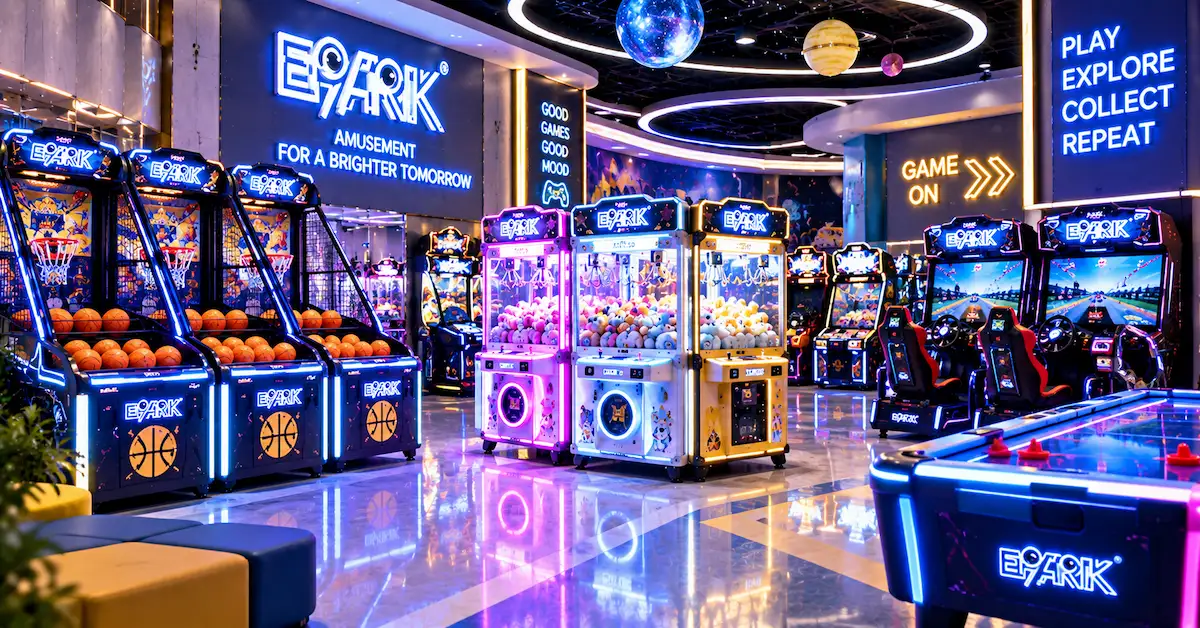
Wholesale orders frequently involve branding, cabinet artwork, labels, language and payment customization. The safest approach is to maintain separate approval records for visual changes and payment-system changes. EPARK’s customization process can support project discussions involving customized entertainment equipment, while payment requirements should still be documented at machine level. If a distributor changes cabinet graphics but intends to keep the same technical platform, the approved payment configuration should remain identifiable. If the buyer changes from local coins to tokens or requests a different payment interface, treat that as a technical revision and determine whether renewed sample testing is required. Private labeling creates commercial differentiation, but consistency across repeat shipments is often more important to distributors than the first custom appearance.
Build the Production Schedule Around Approvals
Do not ask only, “How many days is production?” A commercially useful schedule separates model selection, payment confirmation, sample or reference approval, OEM artwork approval, component preparation, production, payment testing, final inspection, packing and shipment. The total duration can change with model mix, customization and unresolved payment requirements. EPARK’s wholesale content recommends confirming actual order conditions rather than applying one MOQ or production assumption to every machine. For mixed wholesale orders, also ask whether one delayed customized model will hold the full shipment or whether staged delivery is practical. Capacity statements are company-level indicators rather than guaranteed allocation for your order, so current schedule and configuration-specific production timing should be confirmed in the quotation.
Protect Repeat Orders With a Configuration Baseline
The first wholesale order tests whether the selected payment system works; the repeat order tests whether the same system can be reproduced. Attach the approved configuration to every reorder and ask the supplier to disclose proposed changes to the coin acceptor, interface, controller, wiring, software settings or other relevant components before production. This is particularly important for distributors and arcade chains because silent substitutions can require different spare parts and create inconsistent customer experiences. EPARK’s China commercial arcade wholesale guide describes repeatability as an important part of wholesale product quality. Maintain a revision history that connects the model, payment setup, artwork and batch rather than asking staff to reconstruct the order from previous chat messages.
When EPARK Fits a Wholesale Coin-Operated Project
EPARK’s About Us page identifies Guangzhou EPARK Electronic Technology Co., Ltd. as a Guangzhou-based manufacturer and exporter established in 2012 whose business includes arcade machines, game machines and broader indoor entertainment equipment. The current company page also describes an integrated manufacturing and trading model with product development, production, sales and after-sales activities. These are company-level capability statements; buyers should still confirm manufacturing responsibility, current models, payment configurations and production allocation for their own order. This broader equipment scope can be relevant to distributors and FEC buyers sourcing multiple arcade categories or combining arcade machines with other entertainment areas.
What Should You Send for a Wholesale Quotation?
A stronger inquiry for wholesale coin operated amusement machines should include the destination country, venue or distributor type, machine categories, preferred models, quantity by model, intended coin or token, physical payment samples where appropriate, credits per payment, voltage, frequency, plug, OEM requirements, spare-parts expectations, delivery destination and target opening or shipment date. For an FEC project, attach a floor plan so machine categories and quantities can be discussed in the context of actual space. For distributors, include expected repeat-order needs and the markets in which the machines will be resold. Send this information through the EPARK Contact Us page so the quotation can identify confirmed configurations, optional items and questions that still require technical review.
Frequently Asked Questions
What are wholesale coin operated amusement machines?
Wholesale coin operated amusement machines are commercial game or amusement devices purchased in bulk or mixed quantities for arcades, FECs, distributors, shopping mall entertainment zones and similar businesses, with an agreed payment configuration based on coins, tokens or another supported system. Wholesale purchasing should include specification, testing, spare-parts and repeat-supply planning rather than focusing only on quantity discounts.
Can I use my country's local coins in the machines?
Possibly, but compatibility should be confirmed using the selected acceptor and the intended coin before the order is approved. Provide the supplier with the denomination and any requested physical samples or technical information, then agree on recognition and credit tests instead of assuming a generic coin acceptor supports every currency.
Can I use custom arcade tokens instead of currency coins?
A token-based configuration can be evaluated when supported by the selected machine and payment hardware. Submit the proposed token information or samples, define the number of credits assigned to each token and keep the approved token reference with the machine specification so future token orders remain compatible.
Can one machine accept more than one coin denomination?
This depends on the payment hardware and approved configuration. If multiple denominations are required, specify each one and define its credit value before testing. Do not assume that recognizing several coins automatically produces the correct commercial pricing logic.
Can coin-operated machines later be converted to card or cashless payment?
Some equipment may support modification or integration, but this should be evaluated by machine and payment system. Confirm reader hardware, interface, wiring, controller compatibility and integration responsibility. A physical mounting position does not by itself demonstrate complete card-system compatibility.
What coin-operated machine categories can be included in a wholesale order?
Commercial projects can involve racing, shooting, basketball, claw, redemption, kiddie ride and other amusement equipment categories. The available models, payment options and mixed-order conditions should be confirmed with EPARK for the current project rather than assumed from a general category list.
What should be tested before a bulk order is approved?
At minimum, establish a model-specific acceptance plan covering the agreed payment hardware, recognition of the intended coin or token, correct credit registration, game activation and relevant game or reward functions. Also review electrical configuration, controls, accessories and other machine-specific requirements.
Which spare parts are most important for coin-operated machines?
The correct list depends on the machines purchased. Payment-related components such as compatible coin acceptors, interfaces and wiring can be commercially important, while each game type also has its own controls, sensors, power components and specialized parts. Build the list from the approved models rather than using one universal kit.
How should distributors manage repeat orders?
Use an approved configuration record containing the model, payment hardware, credit logic, voltage, controls, artwork, accessories and relevant spare parts. Attach it to the reorder and request approval before any component or configuration substitution is made.
How can I get a quotation from EPARK?
Prepare your machine list, quantity, destination, required payment method, coin or token information, electrical requirements, OEM needs, spare-parts expectations and target schedule, then submit the project through EPARK Contact Us. A detailed brief makes it easier to compare an actual configuration rather than receiving only a generic machine price.
Conclusion
Buying wholesale coin operated amusement machines successfully depends on controlling the payment system as carefully as the cabinet, controls and gameplay. Define the intended coin or token before production, document the credit logic, test the complete payment-to-game sequence and retain an approved configuration for batch inspection and future reorders. For distributors and multi-location FEC operators, standardization is particularly important because inconsistent payment components create spare-parts, training and service problems long after the first shipment has arrived. Compare complete order scope and ownership cost rather than unit price alone, and keep OEM changes, payment changes and warranty responsibilities clearly separated. To discuss a configuration-specific project, contact EPARK with your machine categories, quantities, destination, payment samples or requirements, voltage, branding needs, spare-parts plan and target delivery date.
General Disclaimer
All data on https://www.eparki.com is for general guidance only. As a leading indoor playground manufacturer and trampoline supplier, EPARK strives for accuracy but gives no express or implied warranty regarding completeness, performance or project fitness. Product specs, designs and results may vary with use and customer requirements. Buyers must verify technical details, compliance and suitability before purchase. EPARK OEM/ODM is not liable for any direct, indirect or consequential damages arising from site use. For custom solutions, contact our manufacturer and supplier team via the Contact page.
Intellectual Property
Text, images, videos, CAD files and software are Guangzhou EPARK Electronic Technology Co., Ltd. All rights reserved. No part may be copied, republished or used commercially without prior written permission. We will pursue legal action for copyright or design-patent infringement.
Trademarks
"EPARK", the EPARK logo and related graphics are registered trademarks of Guangzhou EPARK Electronic Technology Co., Ltd. Unauthorized use in ads, domain names or packaging is prohibited.
Governing Law
These terms are governed by the laws of the People's Republic of China.
Contact
Questions? Email sales@nanyuetech.com or WhatsApp +86 139 0307 9263.