Start With a Defined Order, Not an Attractive Price
Before selecting an arcade equipment wholesale supplier, establish what you are buying, which specifications are approved and what evidence is required before production or shipment can proceed. A useful quotation should become the basis of an agreed order—not leave essential decisions scattered across messages. For an importer, that means understanding the supplied configuration and delivery scope; for a distributor, it includes local service responsibilities; for a family entertainment center, or FEC, it includes compatibility with the planned venue and payment system. This guide focuses on commercial bulk purchasing rather than occasional home-use purchases. Where the equipment, customer demand or operating conditions remain untested, consider a sample or limited trial before increasing quantities. EPARK’s wholesale purchasing guide distinguishes these initial validation decisions from established bulk purchasing.
Confirm Who Is Responsible for Each Product Line
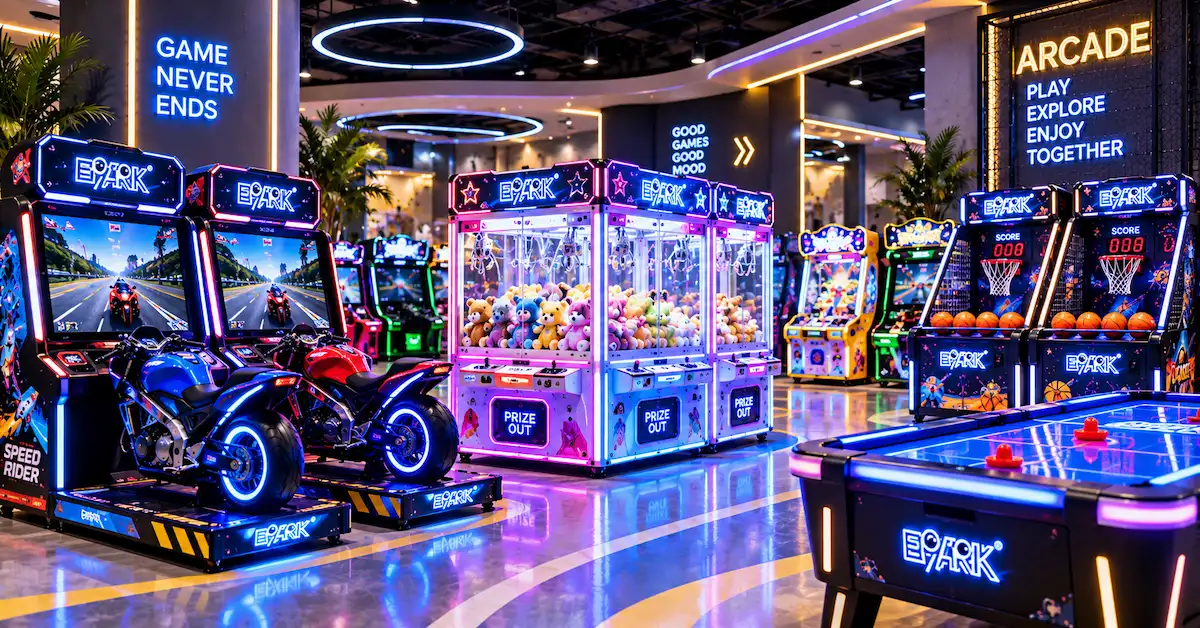
An arcade equipment wholesale supplier may manufacture equipment, assemble selected machines, coordinate externally sourced products or combine these activities. Evaluate the responsibility behind each quoted model rather than assuming that one company presentation explains the entire order. Ask who approves technical changes, performs final inspection, prepares export packing and authorizes replacement parts. For mixed orders, identify one coordinating contact while recording the technical responsibility for each machine category. EPARK’s equipment export guidance distinguishes manufacturing, product coordination and export functions and recommends checking responsibility for configuration, inspection and after-sales support. Use those distinctions to assess the proposed service. The important question is not simply whether the business uses “factory” or “supplier” in its description, but whether it can explain and document how your order will be handled.
Give Every Quotation Line a Complete Specification
Ask your arcade equipment wholesale supplier to identify each machine by model and configuration, not only by a photograph or broad category such as “racing game.” A practical specification sheet should connect the quotation to the approved sample and the eventual shipment. EPARK’s importer purchasing guide identifies dimensions, functions, components, accessories and electrical requirements as pre-order confirmation points. Use the following table as a specification checklist; it does not represent universal EPARK machine ratings. Record actual values and document references for the selected models, and leave unresolved fields clearly marked rather than filling them with assumptions.
| Specification item | Information to obtain from the supplier | What the buyer should verify |
|---|---|---|
| Model and configuration | Model code, configuration revision, quantity and included accessories | The quoted version matches the requested equipment |
| Installed dimensions | Assembled length, width, height and required operating or service space | Compatibility with the reviewed layout and access conditions |
| Electrical configuration | Rated input, frequency, power requirements and supplied plug | Agreement with the project’s specified electrical requirements |
| Cabinet and materials | Construction materials, relevant thicknesses, finish and removable sections | The proposal describes the actual supplied construction |
| Displays and controls | Screens, buttons, steering, pedals, sensors or other fitted controls | Components and functions correspond to the approved configuration |
| Payment and rewards | Hardware, interface, settings and ticket or reward output where applicable | Integration work and testing responsibilities are identified |
| Software and documentation | Supplied version, languages, manuals and relevant technical documents | The delivered package and support scope are clear |
| Packing data | Packed dimensions, gross weight, package count and detachable sections | Transport planning uses shipment measurements, not cabinet dimensions |
Compare Different Configurations of the Same Model
Before comparing suppliers, separate differences in equipment from differences in service scope. For example, a standard machine, the same machine with private-label artwork and a version requiring different payment hardware should not be treated as identical quotation lines. The comparison below shows configurations to request for a shortlisted model, not named EPARK products or verified price packages. Ask the supplier to identify which alternatives are technically available. Use a confirmed standard configuration as the comparison baseline, then price requested changes separately. EPARK’s OEM equipment guide discusses customization across appearance, branding, hardware and software settings, but the available scope must be established for each project.
| Model configuration | Purchasing purpose | Potential value | Additional checks and cost items |
|---|---|---|---|
| Existing model in a confirmed standard configuration | Buying equipment that already meets the project brief | Avoids unnecessary changes to an acceptable configuration | Confirm exactly which controls, software, payment hardware and accessories are standard |
| Same model with approved private-label artwork | Creating a consistent distributor or venue identity | Adds branding while retaining the agreed operating configuration | Separate artwork preparation, labels, packaging changes and approval requirements |
| Same model with requested payment or hardware changes | Meeting a specific operating-system or technical requirement | Addresses requirements not covered by the standard version | Confirm engineering feasibility, components, integration work, testing and any sample charges |
Look Behind the Cabinet Finish
During technical review, ask for evidence of the proposed materials and assembly—not simply a description such as “commercial-grade construction.” Review the cabinet structure, panel connections, fasteners, display mounting, cable routing and service openings against the supplied drawings or sample. EPARK’s arcade cabinet guide emphasizes internal layout and access to components alongside exterior design. Turn that guidance into a practical demonstration: have a qualified technician identify and access an agreed replaceable component using the proposed service instructions. Record whether the installed arrangement matches the documentation and whether unrelated sections must be removed. This review is especially useful when two quotations show similar cabinet artwork but provide different levels of construction detail. It gives purchasing staff something specific to compare beyond finish, lighting and branding.
Verify Payment Operation With the Intended Hardware
Make payment compatibility a defined approval item. Request the reader or acceptor model, interface, credit settings and integration responsibilities, including any work assigned to a third-party payment provider. EPARK’s coin-operated equipment guidance distinguishes payment recognition, credit allocation and game activation, and recommends evaluating repeated payment-and-play cycles rather than gameplay alone. For sample review, ask for a demonstration using the intended configuration: payment is recognized, the correct credit is allocated, a game starts and the expected result is produced. Include ticket or reward output where fitted. Record what remains untested when final hardware is unavailable. A mounting position for a card reader is not evidence of a completed integration, and a game operating in service mode does not establish that the customer transaction works correctly.
Agree on Sample Approval and Batch Acceptance Before Production
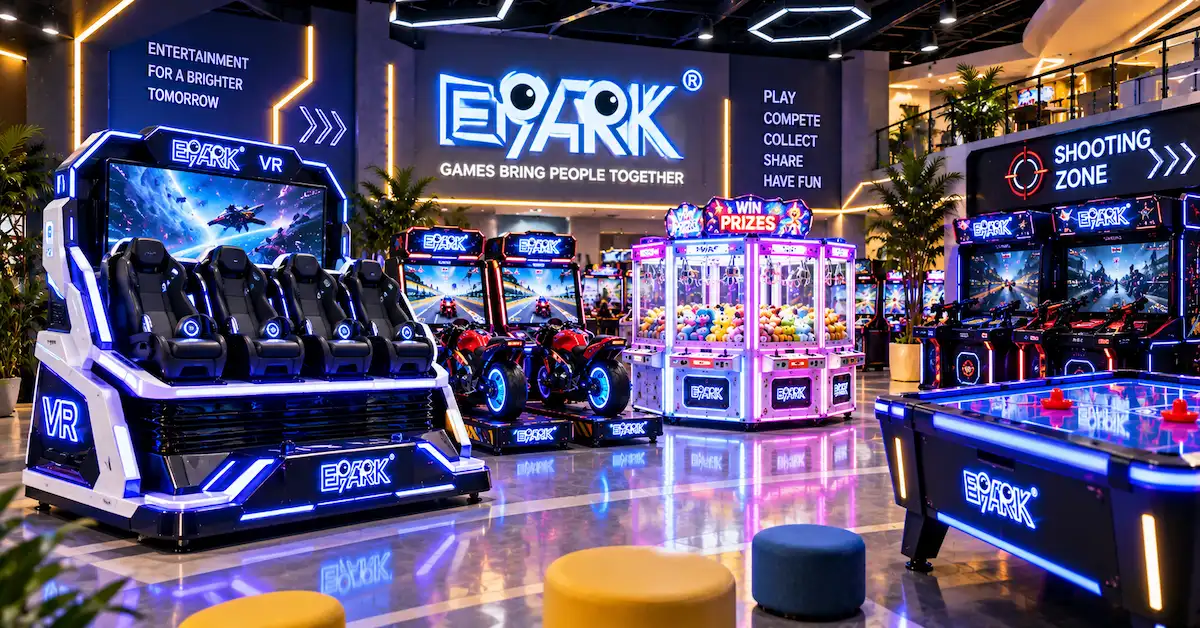
Decide in advance what the sample must demonstrate and what will be checked again on the production order. EPARK’s arcade factory evaluation guide covers incoming components, assembly, functional testing, appearance and pre-shipment inspection. Convert the relevant checks into an agreed acceptance record with the machine identity, approved configuration, test conditions, findings and corrective actions. For newly developed equipment, separate prototype approval from authorization for bulk production; a paid development stage should not be confused with approval of an unbuilt final machine. Ask for technical and test documents that identify the equipment or components they actually cover, and arrange qualified review of their relevance to the destination project. Do not treat a general certificate image as proof for every machine in the order. Likewise, ask what an extended-operation test involves rather than accepting the word “tested” without a defined method.
Compare the Cost of an Equivalent Order
Evaluate an arcade equipment wholesale supplier using comparable quotation scopes. EPARK’s factory quotation comparison guide identifies machine specifications, customization, packaging, spare parts, delivery terms and warranty as items to examine alongside price. Consider an illustrative situation: Quote A includes the machine and packing but leaves payment integration and initial spares unpriced; Quote B identifies those items and includes them. The totals cannot yet tell you which offer provides better value. Request the missing prices and compare the same configuration before deciding. Neither the lower nor the higher initial total proves superior quality. Keep estimated destination handling, local delivery and commissioning costs separate from supplier-confirmed charges, and do not enter zero for an unresolved item. The aim is to expose the difference between a genuine saving and work that has simply been left outside the quotation.
Keep Branding Approval Separate From Technical Changes
For private-label purchasing, maintain separate approval records for artwork and operating configuration. The OEM discussion may involve cabinet graphics, colors, labels, hardware or software settings, but those changes should remain individually identifiable. Ask the supplier to state which files or specifications authorize each change and which revisions require further testing. A useful internal approach is to keep the original request, the proposed change and its price or schedule effect together in one revision record. Where the project involves software, manuals or game artwork, request clarification of the supplied commercial-use documentation and update arrangements. Do not let a general promise of “customization included” stand in for a defined development scope.
Request a Schedule With Dependencies and Delivery Boundaries
Ask the arcade equipment wholesale supplier to explain what must happen before each stage can start. Separate specification approval, artwork approval, component preparation, assembly, testing, packing and dispatch; a general lead-time statement does not explain those dependencies. Request confirmation of current workload and the capacity available for the particular models being ordered, especially where custom and standard equipment are combined. EPARK’s manufacturing guidance recommends evaluating production capability and delivery timing as part of supplier selection. Also define the delivery endpoint and receiving responsibilities: who arranges transport, unloading, positioning, reassembly and commissioning? For export preparation, request packing details and accessory identification for the actual equipment, as described in EPARK’s export guide. Agree how a delay affecting one model would change the mixed-order plan instead of leaving that decision until the other machines are ready.
Test the Support Process Before You Need a Replacement
When reviewing an arcade equipment wholesale supplier, ask for a model-specific parts list and a clear explanation of how a technical request moves from diagnosis to replacement authorization. EPARK’s maintenance-cost guide distinguishes component costs, technician labor, troubleshooting and replacement shipping, and highlights the need to clarify warranty scope. A useful purchasing exercise is to ask your service team to identify one replaceable component from the proposed documentation and prepare a sample support request. Check whether the supplier can match that request to the correct configuration. Record warranty start conditions, coverage, exclusions, required evidence and freight or labor responsibilities separately. An initial spare-parts package is a purchasing item; it should not be confused with future warranty coverage.
Use an Approval Log to Decide What Still Blocks the Order
Before paying a deposit, give each important quotation item one status: included, optional, buyer-supplied or unresolved. For every unresolved item, record the responsible person, the information needed and the purchasing stage it affects. This is a suggested buyer-control method, not an EPARK service guarantee. For example, an undecided optional cabinet graphic need not have the same consequence as an unidentified payment interface. Separate matters that must be resolved before the deposit from approvals legitimately scheduled during paid development, and define what prevents bulk production or shipment from proceeding. Ask the arcade equipment wholesale supplier to return a consolidated quotation and approval schedule after clarifications, rather than relying on a long message history. The goal is not to eliminate every future question; it is to make the remaining decisions visible and assign responsibility for answering them.
Prepare a Project-Specific Inquiry for EPARK
EPARK’s company profile identifies Guangzhou EPARK Electronic Technology Co., Ltd. as a Guangzhou-based integrated industrial and trading company established in 2012. Its stated business includes arcade machines, game machines and other indoor entertainment equipment, with activities covering product development, manufacturing, sales and after-sales support. Buyers assessing EPARK as an arcade equipment wholesale supplier should request the current model list and project-specific terms rather than treating general website information as a final quotation. Prepare your machine categories, quantities, destination, electrical requirements, payment system, branding needs and target schedule. Include a floor plan for a venue project and your local service expectations for a distribution order. Ask the team to distinguish confirmed specifications, optional items and information still needed from you.
Frequently Asked Questions
What should an arcade equipment wholesale supplier include in a quotation?
Request model identification, configuration, quantities, prices, customization, packing, production timing, delivery scope and after-sales terms. Ask for quotation validity and payment conditions as well. Where an item is excluded or awaiting confirmation, have that status stated rather than inferred.
Should I choose a manufacturer or a supplier that coordinates several factories?
Evaluate the responsibilities and evidence behind the offer. Ask who controls configuration, inspection, packing and technical support for each model. For a mixed order, assess the proposed coordination process instead of assuming a business label guarantees either stronger or weaker service.
Is there one minimum order quantity for all arcade machines?
Confirm minimum quantities by model, configuration and customization scope. EPARK’s wholesale guidance does not establish one minimum that applies to every arcade product. Request separate answers for standard equipment, private labeling and development work.
Should a sample be approved before paying any money?
For an existing machine, request suitable evidence or a sample-review arrangement before committing to bulk production. For new development, a separately defined paid prototype stage may be necessary. Agree on its deliverables and approval process without presenting the prototype as an already validated production model.
How can I compare quotations when the product names are similar?
Compare the configuration rather than the name alone. Match dimensions, electrical details, controls, payment setup, software, accessories and supporting documents. Request an explanation of differences before treating the two prices as equivalent offers.
What should I do when a supplier says a machine is “cashless ready”?
Request a precise explanation: supplied hardware, supported interface, required wiring, integration work and testing. Have the machine supplier and payment provider confirm their respective responsibilities. Keep untested compatibility listed as unresolved until the agreed verification is complete.
Can several machine categories be included in one order?
Discuss a mixed-order proposal, then confirm quantities, packing data, production coordination and support responsibilities by model. Do not let a combined quotation remove the individual specification and acceptance records needed for the different machines.
Does a warranty automatically cover installation and local labor?
Do not assume coverage. Ask the supplier to identify included work, excluded items, claim evidence and responsibility for replacement freight and local service. Keep warranty obligations separate from commissioning services and purchased spare parts.
When should branding and software requirements be finalized?
Set their approval points in the project schedule. Ask which changes affect only artwork and which require technical review or another test. Obtain a revised scope and schedule before authorizing changes that alter the approved equipment configuration.
What should be confirmed before the shipment is released?
Use the agreed acceptance plan to check model identity, quantities, configuration, inspection results, accessories, spare parts, packing and documents. Record unresolved findings and the agreed corrective action before authorizing the relevant release step.
Conclusion
Choosing an arcade equipment wholesale supplier is a decision about a defined supply scope, not simply a machine price. Compare the same configurations, identify who owns each responsibility and agree on the evidence needed for sample approval, production and shipment. Treat missing information as an unresolved purchasing item rather than assuming it is included, and keep branding, technical changes and support commitments documented separately. A clear quotation should make the next decision easier: proceed, request further evidence or revise the order. To discuss your requirements, contact EPARK with your equipment list and project brief, including quantities, destination, payment preferences, customization needs and delivery expectations.
General Disclaimer
All data on https://www.eparki.com is for general guidance only. As a leading indoor playground manufacturer and trampoline supplier, EPARK strives for accuracy but gives no express or implied warranty regarding completeness, performance or project fitness. Product specs, designs and results may vary with use and customer requirements. Buyers must verify technical details, compliance and suitability before purchase. EPARK OEM/ODM is not liable for any direct, indirect or consequential damages arising from site use. For custom solutions, contact our manufacturer and supplier team via the Contact page.
Intellectual Property
Text, images, videos, CAD files and software are Guangzhou EPARK Electronic Technology Co., Ltd. All rights reserved. No part may be copied, republished or used commercially without prior written permission. We will pursue legal action for copyright or design-patent infringement.
Trademarks
"EPARK", the EPARK logo and related graphics are registered trademarks of Guangzhou EPARK Electronic Technology Co., Ltd. Unauthorized use in ads, domain names or packaging is prohibited.
Governing Law
These terms are governed by the laws of the People's Republic of China.
Contact
Questions? Email sales@nanyuetech.com or WhatsApp +86 139 0307 9263.