Introduction
The indoor amusement industry has entered a phase of rapid expansion and intense competition. Across the globe, Family Entertainment Centers (FECs), trampoline parks, indoor playgrounds, and mixed-use leisure venues are continuously upgrading their attractions to stay competitive and profitable. In this environment, operators are no longer relying only on traditional play equipment. Instead, they are investing in more interactive, technology-driven experiences that improve customer engagement and increase revenue per square meter.
One of the fastest-growing attractions in this category is the Commercial Twister Trampoline. Unlike a standard trampoline that only focuses on jumping activity, this equipment combines physical movement with interactive gaming technology. Players are required to react to dynamic LED signals, follow game instructions, and compete for scores, creating a highly engaging and repeatable experience.
For investors and operators, one question is asked more than any other:
How much does a Commercial Twister Trampoline cost?
The answer depends on multiple factors such as system configuration, technology level, supplier type, customization needs, and safety certification requirements. This guide provides a complete breakdown of pricing, key cost drivers, supplier comparison, ROI analysis, and purchasing considerations to help buyers make informed investment decisions.
What Is a Commercial Twister Trampoline?
Core Concept Explained
A Commercial Twister Trampoline is an interactive amusement system designed for indoor entertainment venues. It transforms traditional trampoline jumping into a game-based experience by integrating LED lighting systems, sensors, and digital scoring mechanisms.
During gameplay, different trampoline zones light up in real time. Players must jump quickly and accurately to the correct positions based on visual cues. Points are awarded depending on reaction speed, accuracy, and performance in multiplayer challenges.
Most modern systems include:
- LED-based interactive floor or trampoline zones
- Real-time scoring systems
- Multiplayer competition modes
- Game control software
- Sensor-based interaction modules
This combination creates a hybrid attraction that merges fitness, entertainment, and competitive gaming.
 |
 |
Why It Attracts Modern Audiences
The popularity of Twister Trampolines is closely tied to current consumer behavior trends. Today’s visitors are not just looking for passive entertainment—they want immersive, interactive, and shareable experiences.
There are three main reasons behind its rising demand:
First, it delivers strong social interaction. Friends and families can play together in competitive modes, which increases engagement time.
Second, it provides high replay value. Since each game round is different, users are encouraged to try again and improve their scores.
Third, it fits efficiently into limited space. Compared to large trampoline zones, a Twister Trampoline can generate higher engagement in a smaller footprint.
Commercial Twister Trampoline Cost Overview
Typical Price Range
The cost of a Commercial Twister Trampoline varies widely depending on specifications and supplier positioning. Below is a general market reference:
| System Type | Price Range |
|---|---|
| Entry-Level 2-Player System | $3,000 – $6,000 |
| Standard 4-Player System | $6,000 – $12,000 |
| Advanced Interactive Model | $12,000 – $20,000 |
| Fully Customized Large System | $20,000 – $40,000+ |
These figures usually refer to equipment pricing only and do not include shipping, installation, customs duties, or local compliance costs.
What You Are Actually Paying For
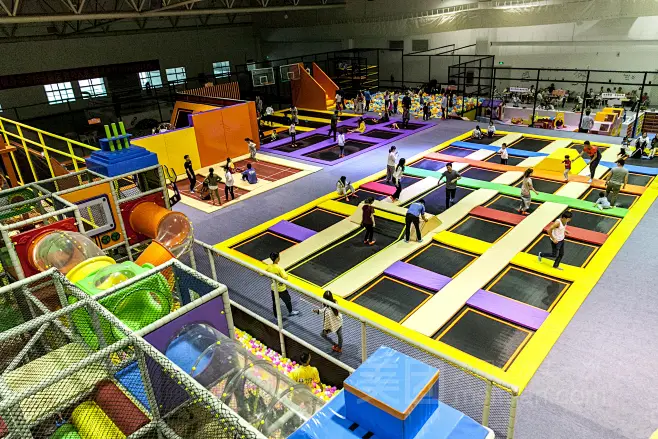
A complete Commercial Twister Trampoline system typically includes multiple integrated components rather than a single product.
Core components include:
- Steel structural frame
- Commercial-grade trampoline beds
- Protective padding system
- LED interactive lighting modules
- Motion detection sensors
- Control cabinet and software system
- Electrical wiring and power integration
- Safety netting (depending on design)
The quality and durability of each component directly affect overall pricing and long-term performance.
 Why Pricing Differs Between Suppliers
Two systems that look identical may have very different pricing structures. This is because commercial amusement equipment is not standardized across the industry.
Key pricing factors include:
- Material quality and thickness of steel structure
- Level of interactive technology integration
- Software development complexity
- Production location and labor cost
- Brand positioning and market reputation
- Warranty coverage and service support
- Custom design and branding requirements
Operators should evaluate total lifecycle value rather than focusing only on upfront cost.
Key Factors Affecting Twister Trampoline Pricing
Player Capacity Configuration
One of the biggest cost drivers is how many users can play simultaneously.
| Configuration | Suitable For |
|---|---|
| 2 Players | Small venues or test installations |
| 4 Players | Standard FEC zones |
| 6 Players | Medium to large trampoline parks |
| 8+ Players | High-traffic entertainment centers |
Higher capacity systems require more sensors, expanded trampoline zones, and advanced software coordination, which increases production complexity and cost.
Technology and Game Features
The level of interactivity significantly influences pricing. Basic systems may only include simple light-up zones, while advanced systems include:
- Dynamic LED animations
- Multiplayer competition modes
- Real-time scoring dashboards
- Cloud-based management systems
- Mobile app integration
The more advanced the software ecosystem, the higher the development and integration cost.
Structural and Material Quality
Commercial equipment must withstand heavy daily usage in high-traffic environments.
High-end systems typically use:
- Reinforced galvanized steel frames
- Industrial-grade welding structures
- UV-resistant materials
- High-elasticity trampoline mats
- Shock-absorbing safety padding
Stronger materials increase initial investment but reduce long-term maintenance costs.
Branding and Customization
Many operators request customized designs to match their venue identity.
Customization options include:
- Color scheme adjustments
- Logo integration
- Themed lighting effects
- Custom game UI design
Depending on complexity, customization may increase total cost by 5% to 20%.
 Safety Standards and Compliance Requirements
Why Certification Is Critical
Commercial trampoline systems must meet strict safety requirements to operate legally in many regions. Certified equipment reduces liability risks and improves insurance approval processes.
It also increases customer trust and enhances brand reputation.
Common Industry Standards
| Standard | Region | Purpose |
|---|---|---|
| ASTM F2970 | USA | Trampoline park safety standard |
| ASTM F1918 | USA | Soft-contained play equipment |
| EN1176 | Europe | Playground safety standard |
| EN13219 | Europe | Gymnastics equipment safety |
| CE Certification | Europe | Product compliance approval |
Certified systems may cost more but provide stronger long-term operational security.
Leading Commercial Twister Trampoline Manufacturers
EPARK (China)
EPARK is a well-established manufacturer with over 14 years of experience in the amusement equipment industry. The company provides integrated solutions for FECs, trampoline parks, arcades, and indoor playground projects.
Main offerings include:
- Commercial Twister Trampolines
- Arcade machines
- VR attractions
- Indoor playground systems
Price range: $3,500 – $18,000+
EPARK is widely known for providing full project solutions, including design, manufacturing, installation guidance, and after-sales support.
Guangzhou Tongle (China)
A specialized manufacturer focusing on indoor amusement and trampoline systems with strong customization capabilities.
Price range: $4,000 – $15,000+
ELI Play (Netherlands)
A premium European supplier known for high engineering standards and strict safety compliance.
Price range: $10,000 – $25,000+
SPI Global Play (Canada)
Focuses on large-scale customized FEC projects and premium installations.
Price range: $12,000 – $30,000+
PlayPower (USA)
One of the most recognized amusement equipment brands in North America, offering large institutional-grade solutions.
Price range: $15,000 – $40,000+
Fun Spot Manufacturing (China)
Provides cost-effective trampoline and interactive amusement solutions for global buyers.
Price range: $4,000 – $15,000+
Twister Trampoline vs Traditional Trampoline ROI
Traditional trampoline systems are cheaper, but they generate lower engagement levels compared to interactive systems.
| Attraction Type | Average Cost |
|---|---|
| Traditional Trampoline Lane | $2,000 – $5,000 |
| Commercial Twister Trampoline | $6,000 – $15,000 |
Revenue Advantage
A Twister Trampoline generates income through:
- Game sessions
- Competitive challenges
- Birthday packages
- Group events
- Tournament activities
This leads to higher monetization opportunities per square meter.
Engagement Advantage
Interactive gameplay increases:
- Average play duration
- Repeat visit rate
- Social media sharing
- Customer satisfaction
 Is It Worth Investing in a Commercial Twister Trampoline?
Suitable Business Types
This attraction performs especially well in:
- Trampoline parks
- Indoor playgrounds
- Family entertainment centers
- Shopping mall entertainment zones
- Sports recreation facilities
Example ROI Analysis
Initial investment breakdown:
- Equipment: $10,000
- Shipping & installation: $3,000
- Total: $13,000
Revenue assumption:
- 30 users per day
- $5 per user
- 30 operating days
Estimated monthly revenue:
$4,500
Under stable conditions, payback can occur within 3–6 months.
How to Select the Right Supplier
Before purchasing, operators should evaluate:
- Manufacturing experience and export history
- Real project references and case studies
- Safety certifications and compliance documents
- After-sales support and spare parts availability
A reliable supplier reduces operational risks and improves long-term profitability.
Conclusion
A Commercial Twister Trampoline typically costs between $3,000 and over $40,000, depending on configuration, technology level, customization, and supplier selection.
Although the initial investment is higher than traditional trampoline equipment, the added value in terms of engagement, replayability, and revenue generation makes it a highly attractive option for modern entertainment venues.
For FEC operators and investors, choosing the right supplier and understanding total project cost structure is essential for achieving sustainable ROI and long-term business success.
General Disclaimer
All data on https://www.eparki.com is for general guidance only. As a leading indoor playground manufacturer and trampoline supplier, EPARK strives for accuracy but gives no express or implied warranty regarding completeness, performance or project fitness. Product specs, designs and results may vary with use and customer requirements. Buyers must verify technical details, compliance and suitability before purchase. EPARK OEM/ODM is not liable for any direct, indirect or consequential damages arising from site use. For custom solutions, contact our manufacturer and supplier team via the Contact page.
Intellectual Property
Text, images, videos, CAD files and software are Guangzhou EPARK Electronic Technology Co., Ltd. All rights reserved. No part may be copied, republished or used commercially without prior written permission. We will pursue legal action for copyright or design-patent infringement.
Trademarks
"EPARK", the EPARK logo and related graphics are registered trademarks of Guangzhou EPARK Electronic Technology Co., Ltd. Unauthorized use in ads, domain names or packaging is prohibited.
Governing Law
These terms are governed by the laws of the People's Republic of China.
Contact
Questions? Email sales@nanyuetech.com or WhatsApp +86 139 0307 9263.