Introduction
Starting a play center business in 2026 is one of the most promising opportunities in the family entertainment industry. With increasing demand for safe and engaging indoor playground experiences, more investors and distributors are entering this market.
However, building a profitable play center is not just about buying equipment. It requires a structured approach that combines market research, design planning, equipment sourcing, and operational strategy.
For B2B buyers, understanding this process is essential to reduce risk and improve return on investment. In this guide, we break down each step to help you successfully launch and scale your play center business.
Step 1 – Conduct Market Research and Feasibility Analysis
Understand Your Target Market
Before launching a play center, you must clearly define your target customers. Analyze local demographics, family income levels, and children’s entertainment preferences.
For example, some markets prefer soft indoor playgrounds, while others demand interactive zones with digital experiences. Understanding these trends helps you design a competitive play center.
You should also evaluate existing competitors. Study their pricing, services, and customer reviews to identify gaps in the market.
Related reading: Indoor Playground Profitability Guide.
Evaluate Location Feasibility
Location plays a critical role in the success of a play center business. High-traffic shopping malls or commercial districts provide visibility but come with higher rental costs.
On the other hand, suburban areas may offer lower rent and larger spaces, which are ideal for bigger kids attraction setups.
Always consider accessibility, parking, and safety regulations before finalizing your location.
Estimate Initial Investment and ROI
A realistic budget is the foundation of a successful indoor play center. Below is a typical cost breakdown for a mid-sized project:
| Cost Category | Estimated Cost (USD) |
|---|---|
| Lease & Renovation | $325,000 – $1,500,000 |
| Play Equipment | $60,000 – $400,000 |
| Operations (Annual) | $160,000 – $500,000 |
| Marketing | $20,000 – $60,000 |
| Total Investment | $465,000 – $1,960,000 |
Understanding these numbers allows B2B buyers to plan financing and evaluate ROI more accurately.
See also: How to Design an Indoor Playground for Maximum Flow.
 Step 2 – Plan Your Play Center Design and Layout
Define Functional Zones
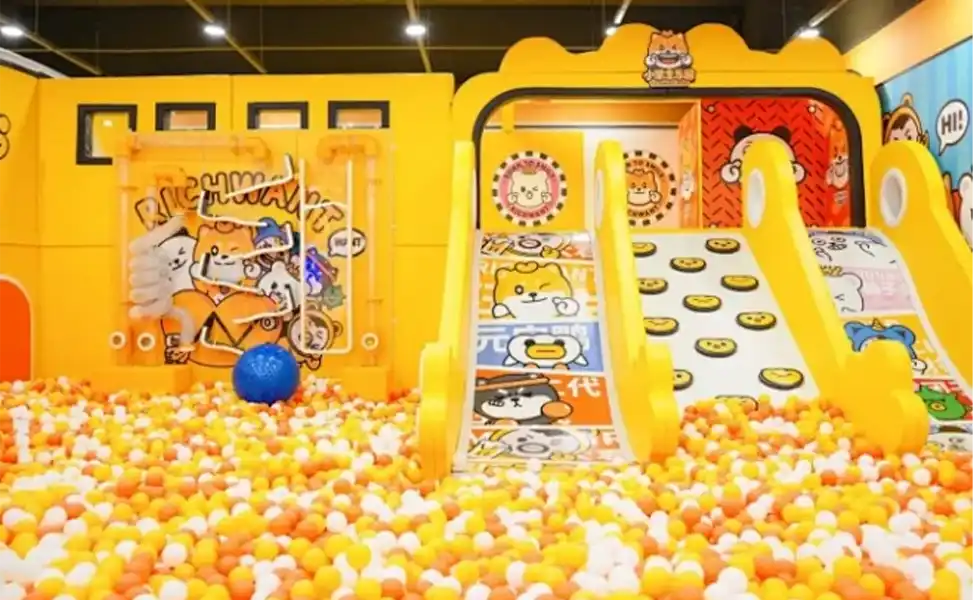
A well-designed play center includes multiple activity zones to increase engagement and revenue.
Typical zones include:
- Soft play areas for younger children
- Climbing structures and slides
- Interactive digital play areas
- Party rooms and seating areas
A balanced layout improves customer experience and extends visit duration.
Ensure Safety and Compliance
Safety is a non-negotiable factor in any indoor playground project. Equipment must comply with EN1176/1177 or ASTM standards.
In addition, your design should include:
- Emergency exits
- Fire safety systems
- Clear visibility for supervision
These elements not only ensure safety but also increase trust among customers and partners.
Optimize Space and Traffic Flow
Efficient space planning directly impacts profitability. Avoid overcrowded layouts and ensure smooth movement between zones.
Strategic placement of seating areas, entrances, and high-traffic attractions can improve operational efficiency.
Explore design ideas: How to Profile Your Indoor Playground Target Audience
Step 3 – Select and Procure Equipment
Choose Essential Equipment
The success of your play center depends heavily on equipment selection. Key categories include:
- Soft play systems
- Climbing and obstacle courses
- Slides and tunnels
- Interactive and digital attractions
Choosing high-quality equipment improves durability and customer satisfaction.
Work with Reliable Suppliers
Not all suppliers are equal. B2B buyers should evaluate:
- Product certifications
- Manufacturing quality
- Installation support
- After-sales service
A reliable supplier helps reduce long-term maintenance costs and ensures smooth project execution.
Browse options: Indoor Playground Equipment Catalog
HPlan Installation and Maintenance
Proper installation is critical for safety and performance. Work with experienced teams to ensure compliance with standards.
Maintenance should also be planned in advance. Allocate 5–10% of equipment cost annually for repairs and inspections.
Regular maintenance ensures long-term operation and protects your investment.
Step 4 – Hire Staff and Build Operations
Staffing Requirements
A typical indoor play center requires:
- Front desk staff
- Play area supervisors
- Cleaning and maintenance staff
Well-trained staff ensure safety, improve customer experience, and support daily operations.
Create Standard Operating Procedures
Clear procedures are essential for efficiency. Your play center should have:
- Entry and ticketing systems
- Safety guidelines
- Cleaning schedules
- Emergency response plans
These processes improve consistency and reduce operational risks.
Use Technology for Efficiency
Modern play centers use digital tools such as:
- POS systems
- Online booking platforms
- CRM systems
These tools help manage customer data, track performance, and improve marketing efficiency.
Step 5 – Build a Strong Marketing Strategy
Launch with a Strong Opening Campaign
A successful launch sets the foundation for your business. Use:
- Social media ads
- Local partnerships
- Opening promotions
This helps generate initial traffic and brand awareness.
Maintain Ongoing Marketing
Long-term growth depends on continuous marketing efforts, such as:
- Membership programs
- Seasonal events
- Online advertising
These strategies increase repeat visits and customer loyalty.
Expand Through Partnerships
Collaborating with schools, daycare centers, and event organizers can bring consistent traffic.
B2B partnerships are especially valuable for scaling your family entertainment business.
 Conclusion
Starting a successful play center business requires more than just investment—it requires strategy. From market research and layout design to equipment sourcing and marketing, each step plays a critical role.
For B2B buyers, the key to success lies in selecting the right suppliers, controlling costs, and focusing on customer experience. A well-planned indoor playground can deliver stable revenue and long-term growth.
Call to Action
Ready to start your play center project?
We provide:
- Custom equipment solutions
- Professional layout design
- One-stop project support
Contact us today to get your free quotation and start building your indoor play center now!
General Disclaimer
All data on https://www.eparki.com is for general guidance only. As a leading indoor playground manufacturer and trampoline supplier, EPARK strives for accuracy but gives no express or implied warranty regarding completeness, performance or project fitness. Product specs, designs and results may vary with use and customer requirements. Buyers must verify technical details, compliance and suitability before purchase. EPARK OEM/ODM is not liable for any direct, indirect or consequential damages arising from site use. For custom solutions, contact our manufacturer and supplier team via the Contact page.
Intellectual Property
Text, images, videos, CAD files and software are Guangzhou EPARK Electronic Technology Co., Ltd. All rights reserved. No part may be copied, republished or used commercially without prior written permission. We will pursue legal action for copyright or design-patent infringement.
Trademarks
"EPARK", the EPARK logo and related graphics are registered trademarks of Guangzhou EPARK Electronic Technology Co., Ltd. Unauthorized use in ads, domain names or packaging is prohibited.
Governing Law
These terms are governed by the laws of the People's Republic of China.
Contact
Questions? Email sales@nanyuetech.com or WhatsApp +86 139 0307 9263.