What Is Themed Soft Play Equipment for Commercial Projects?
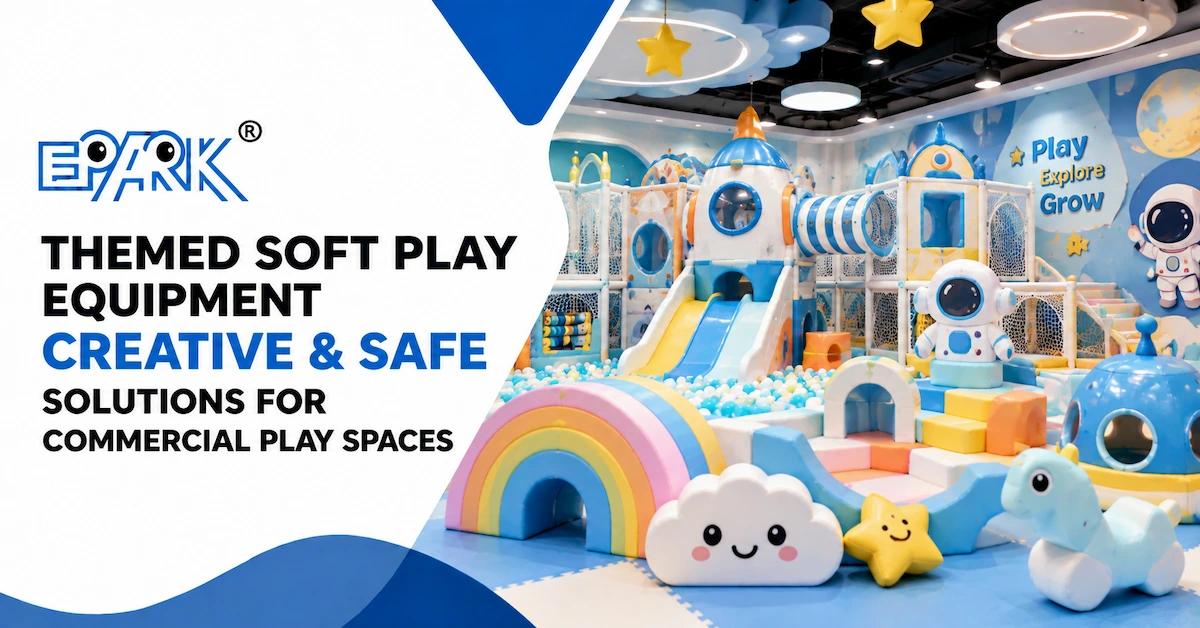
Themed soft play equipment is commercial indoor play equipment that combines padded, child-oriented play functions with a consistent visual concept such as ocean, space, forest, jungle, candy, castle or another project-specific theme. For B2B buyers, the value is not simply decorative. A well-planned themed project connects the visual identity with age-appropriate activities, space utilization, supervision, maintenance and long-term venue positioning. EPARK buyers can begin by reviewing the company’s broader product range and then use the customization process to define a site-specific project rather than selecting a layout only from appearance. The content framework you provided specifically emphasizes product positioning, application scenarios, technical requirements, materials, QC, customization, commercial risks and buyer FAQs, so this article treats themed soft play as a complete B2B project instead of a simple décor purchase.
Who Should Buy Themed Soft Play Equipment?
Themed soft play projects are most relevant to commercial operators that need a recognizable children’s activity environment rather than a collection of unrelated foam products. Typical buyers include indoor playground operators, shopping mall project teams, FEC investors, daycare and preschool operators, hotel or resort kids clubs, family restaurants and contractors developing children’s entertainment areas. The project priorities differ substantially by buyer type: a mall may prioritize visual impact and family traffic, an FEC may need stronger play variety and age segmentation, while a daycare may prioritize supervision, lower-height structures and easier cleaning. This is why a professional supplier should not offer the same themed layout to every buyer. Your uploaded quality checklist stresses matching content to the real search intent and covering the buyer’s full decision journey rather than answering only a narrow product question; the same principle applies to project planning.
| Buyer Type | Typical Application | Main Purchasing Priority |
|---|---|---|
| Indoor playground operator | Ticketed commercial play center | Play variety, capacity and repeat visits |
| Shopping mall | Family attraction zone | Visual identity and traffic attraction |
| FEC operator | Multi-activity entertainment venue | Age zoning and complementary activities |
| Daycare/preschool | Early-childhood activity area | Lower-height play, supervision and maintenance |
| Hotel/resort | Kids club | Premium appearance and practical operation |
| Project contractor | Commercial children’s play project | Drawings, production control and installation coordination |
Start With the Theme Strategy Before Choosing Individual Products
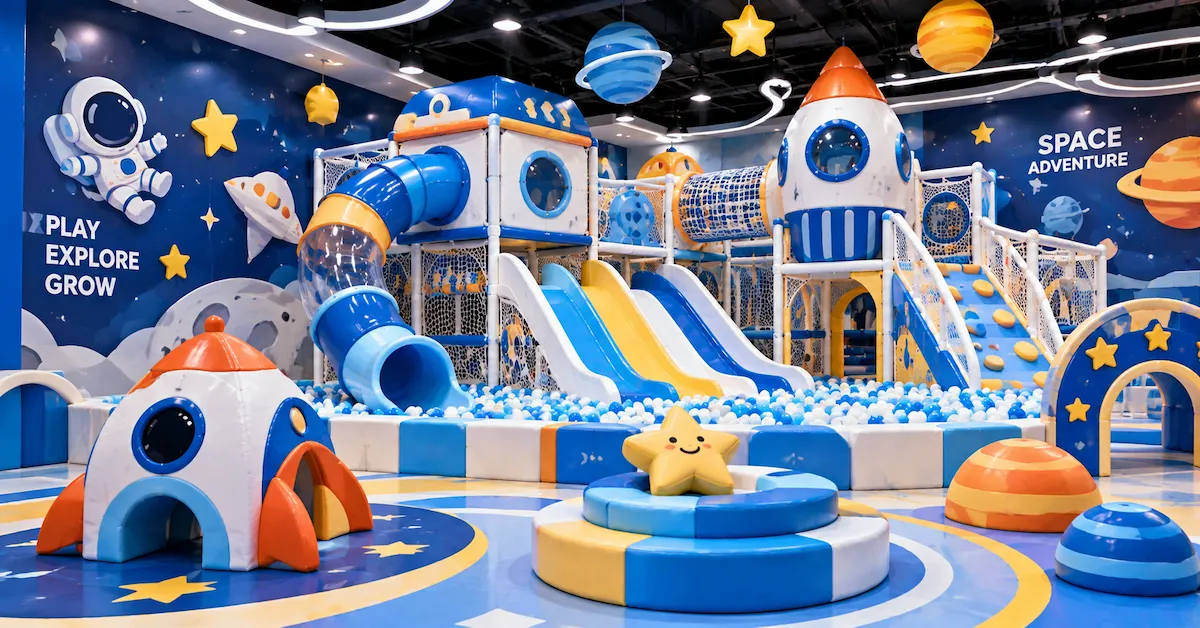
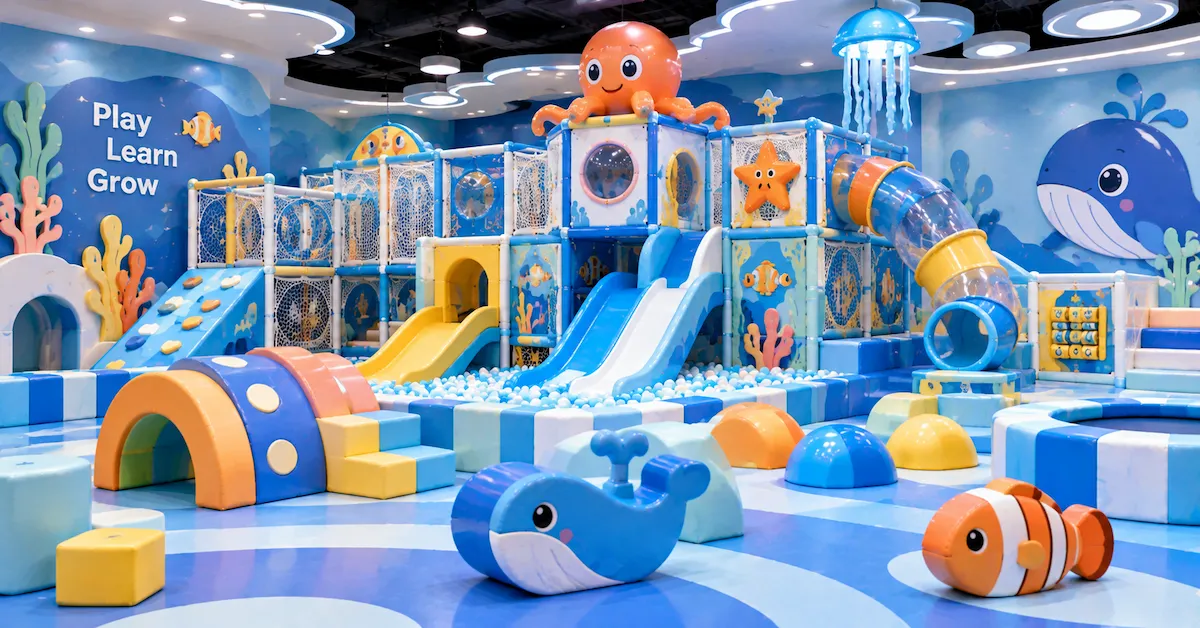
A common purchasing mistake is selecting soft play products first and applying a theme afterward. A better approach is to decide what kind of environment the venue needs, then translate that concept into equipment. “Ocean theme,” for example, can mean coral reef exploration, submarine adventure, tropical island play or a softer marine concept for toddlers. “Space theme” can range from a pastel toddler galaxy to a darker futuristic exploration center. Once the concept is defined, the supplier can adapt slides, tunnels, climbing elements, sensory panels and soft sculptures to the same visual language. Buyers can use EPARK’s products as a starting reference, but the final configuration should be based on the real site, target users and operating model rather than copied from a catalog image.
Build One Visual Language
The theme should control the main color palette, major shapes, decorative characters, entrance identity, wall treatment and key landmarks. This does not mean every surface needs decoration. Too many unrelated graphics can make a commercial playground look visually busy without improving play value. A stronger design usually uses several recognizable theme cues repeatedly and gives the venue one or two memorable visual focal points.
Translate Decoration Into Play
A marine animal can become a soft climbing shape, a rocket can become a play tower, a rainbow can become a crawl arch, and a forest hill can become a padded climbing ramp. When themed elements perform actual play functions, the project feels more integrated and every square meter works harder commercially.
Separate Theme Decisions From Age-Zone Decisions
The visual theme can remain consistent across an entire venue, but the equipment difficulty should not. Themed soft play equipment for toddlers needs a different physical experience from equipment designed for preschool or older children. Buyers should therefore define age zones before approving the full equipment list.
Toddler Zone
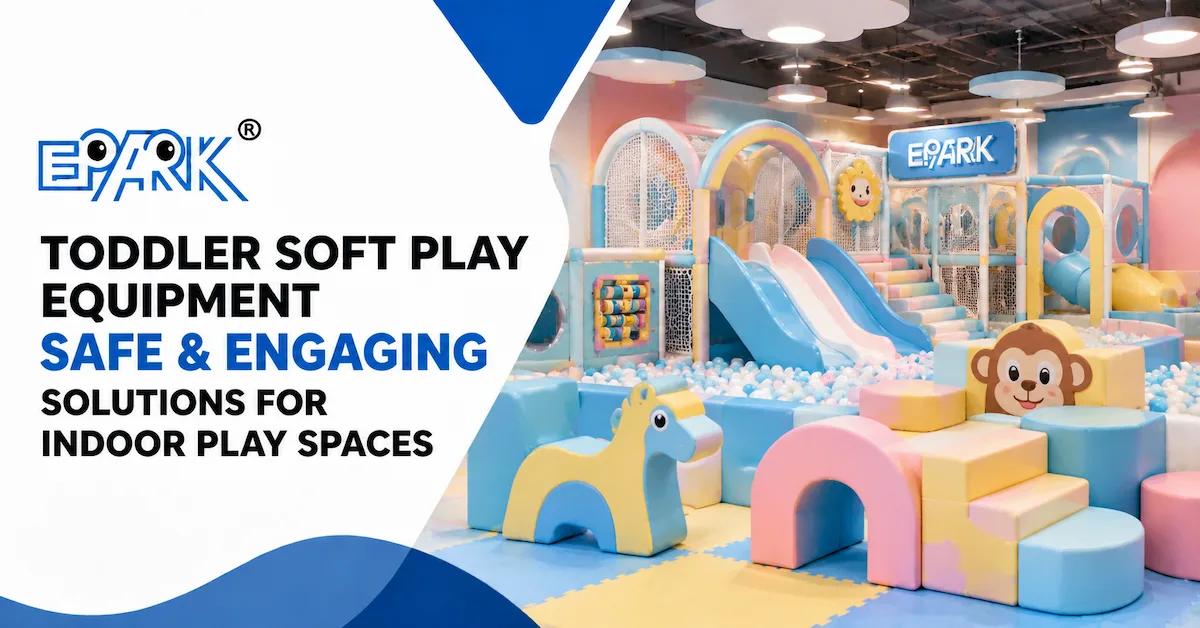
A toddler area typically requires lower, softer and simpler activities such as foam steps, crawl arches, gentle ramps, low slides, rocking pieces, sensory walls and small ball-pool areas. The theme can be expressed through color and recognizable soft shapes without introducing unnecessarily tall structures.
Preschool Zone
Preschool children can usually engage with longer routes, moderate climbing, tunnels, interactive panels and small multi-level structures. The theme can support a simple exploration journey that encourages children to move between activities instead of remaining at one isolated piece.
Older Children’s Zone
Where a project also serves older children, the supplier may propose larger climbing routes, higher activity density or more complex movement patterns. These should still be separated from toddler traffic so faster play does not dominate lower-intensity areas.
| Zone | Typical Activity Direction | Theme Application |
|---|---|---|
| Toddler | Soft steps, ramps, crawl shapes, small slide | Gentle characters and simplified themed forms |
| Preschool | Tunnels, climbing, ball pool, interactive panels | Story-based exploration |
| Older children | Larger routes, obstacle combinations, higher activity level | Adventure-focused interpretation |
| Family/parent-child | Interactive or cooperative soft activities | Shared branded experience |
Choose Equipment by Play Function, Not Only Theme Appearance
A well-designed themed project needs enough activity variety to avoid becoming a decorative photo area. Buyers should consider how children climb, crawl, slide, balance, interact, explore and rest. A project dominated by one activity may look impressive but provide limited repeat engagement. EPARK’s broader Indoor Playground Equipment offering can be used to compare possible activity directions before finalizing a custom mix.
| Equipment Type | Main Function | Possible Themed Interpretation |
|---|---|---|
| Soft steps and ramps | Balance and movement | Hills, waves, planets, clouds |
| Crawl tunnels | Exploration | Submarine, cave, rocket or tree tunnel |
| Soft climbing shapes | Gross-motor activity | Coral, mountain, island or moon rocks |
| Small slides | Repeated movement | Rocket launch, wave or rainbow |
| Ball pool | Active soft play | Ocean, galaxy or fantasy zone |
| Interactive wall panels | Sensory/learning activity | Mission board, sea-life wall, forest discovery |
| Soft rockers | Balance and imaginative play | Animals, vehicles or themed characters |
| Modular foam blocks | Open-ended construction play | Theme-colored building elements |
Build the Project Around the Real Site Dimensions
A supplier cannot design commercial themed soft play equipment accurately from a theme name alone. Buyers should send the actual floor plan, usable ceiling height, columns, entrances, fire or circulation constraints, windows and other fixed conditions. The strongest layout is the one that uses the site efficiently without creating crowded circulation, blocked supervision or difficult cleaning areas.
Confirm Usable Height
The nominal building height may differ from the usable play height because of ducts, lighting, beams or other services. The project brief should therefore identify the clear usable height in the exact play zone.
Map Fixed Building Features
Columns can sometimes become part of the theme, but their positions must be known before equipment routes are defined. Likewise, doors, windows and service access should be visible on the drawing.
Plan Parent Visibility
Many commercial indoor play venues depend on parents being able to observe children from nearby seating. Tall decorative walls or enclosed structures should not create unnecessary blind areas, especially around toddler zones.
Prepare a B2B Project Specification Before Requesting the Final Quote
The SaleAI framework in your files emphasizes technical specifications, buyer types, application scenarios, QC, commercial risks and OEM/ODM information as required components for B2B content. The same structure is useful when purchasing themed soft play equipment. A project should have one controlled specification instead of requirements scattered across drawings, chat messages and reference photos.
| Requirement Area | What the Buyer Should Define or Confirm |
|---|---|
| Venue type | Mall, FEC, daycare, hotel or standalone playground |
| Site size | Usable length, width and height |
| Fixed conditions | Columns, doors, windows and other constraints |
| Target ages | Toddler, preschool, older children or mixed groups |
| Theme | Visual direction and reference concept |
| Activity mix | Slides, tunnels, soft climbing, ball pool, interactive panels |
| Age zoning | Required separation between activity levels |
| Branding | Logo, colors and commercial identity |
| Materials | Requested project-specific material information |
| Supporting areas | Reception, parent seating, storage and shoe-changing area |
| Delivery | Destination and required timeline |
| Installation | Site access and responsibility |
| Maintenance | Cleaning and replacement requirements |
| Documentation | Drawings and project-specific records required |
A controlled specification also makes supplier comparison more meaningful because competing quotations can be reviewed against the same project scope.
How Should Buyers Evaluate Soft Play Materials?
Material evaluation should be based on function rather than a generic claim that one material is “best.” Themed soft play projects may include structural frames, padded surfaces, foam shapes, flooring, mesh barriers, plastic slides, graphics and decorative elements. Each performs a different job and should be evaluated accordingly. Buyers can review EPARK’s Safety and Quality page as background, but the exact materials and construction associated with the quoted design should still be confirmed in the project documentation.
Soft Contact Surfaces
Ask what padding and outer surface are proposed in areas where children crawl, climb or make frequent contact. The surface should also fit the venue’s cleaning and maintenance routine.
Foam Shapes
Foam modules should maintain their intended form under commercial use. Buyers should ask how frequently used pieces can be replaced without rebuilding the entire zone.
Decorative Components
Themed decorations should not make routine inspection difficult. A visually complex sea creature, rocket or castle feature still needs appropriate construction and accessible mounting.
Theme Design Should Not Reduce Supervision or Maintenance
Some custom projects become difficult to operate because visual elements were prioritized over daily management. A strong commercial design keeps high-use zones visible, allows cleaning equipment to reach necessary areas and avoids unnecessary decorative cavities where dirt can collect. Serviceable or removable elements should remain accessible after the final artwork is added. Your high-quality article checklist emphasizes practical, actionable information rather than generic statements, and this is one of the most useful operational filters for buyers comparing themed designs.
How Much Customization Does the Project Really Need?
Not every buyer needs a completely new structure. Themed soft play equipment can range from standard modules with custom colors to a fully site-specific play environment.
| Project Level | Scope | Main Benefit | Main Trade-Off |
|---|---|---|---|
| Standard soft play | Existing equipment/colors | Faster selection | Low theme differentiation |
| Theme color package | Existing equipment with coordinated colors | Simple visual consistency | Limited storytelling |
| Semi-custom theme | Adapted façade, graphics and modules | Strong cost/differentiation balance | Requires design approval |
| Fully custom theme | Site-specific shapes, layout and branded environment | Strongest identity | More design and production coordination |
A semi-custom approach is often commercially practical because it allows the supplier to use established play functions while adapting the appearance and layout to the customer’s theme. Buyers seeking a more specific solution can use EPARK’s customization process to structure the discussion.
Compare Popular Theme Directions by Commercial Objective
Different themes create different visual atmospheres, but there is no universal “best” theme.
| Theme Direction | Visual Character | Often Suitable For |
|---|---|---|
| Ocean | Blue, marine animals, coral, submarines | Malls, FECs, family play centers |
| Space | Rockets, planets, futuristic forms | Premium or adventure-oriented venues |
| Forest/Jungle | Trees, animals, natural colors | Family and education-oriented projects |
| Candy | Bright colors and playful shapes | Toddler and younger-child environments |
| Castle/Fantasy | Towers, arches and storybook elements | Themed family venues |
| Custom brand theme | Buyer’s own visual identity | Chains, franchises and branded playgrounds |
The theme should be selected based on the target customer, venue identity and marketing strategy rather than simply following design trends.
Build Quality Control Around the Approved Project
The final inspection should compare what was produced with what the buyer approved. A custom playground project involves many components, so “looks good” is not a sufficient acceptance method.
Layout and Component Verification
Confirm that the production component list corresponds to the approved layout and that key themed modules have not been omitted or substituted without review.
Visual Consistency
Check colors, graphics and theme elements against the approved design. This is particularly important when the project contains multiple sections produced separately.
Packing Identification
A large playground can contain many similar tubes, panels, foam elements and hardware packages. Package identification should help the installation team understand which zone each component belongs to.
Installation Documentation
Ask what drawings or references will be supplied for assembly and installation. The exact scope should be confirmed before shipment.
Plan Project Timing by Milestone Instead of Asking Only for Lead Time
There is no meaningful single lead time for every themed soft play project because a standard color change and a fully custom playground have different design workloads. A more useful schedule separates the project stages.
A typical sequence can be:
Site information → concept direction → layout → design review → revision → approval → production → QC → packing → shipment → installation
The buyer should know which approvals are required before production starts and whether late changes will alter the schedule. The uploaded framework recommends stage-based B2B content around capacity and lead time rather than vague delivery promises; that logic is equally useful in real project management.
Understand the Main Cost Drivers
Themed soft play equipment usually cannot be priced accurately from square meters alone because the equipment density and complexity can vary significantly. Two projects with the same area may contain very different amounts of climbing structure, soft modules, slides and customized decoration.
Major cost drivers can include total area, structure height, equipment quantity, theme complexity, custom façades, interactive components, material requirements, packaging, logistics and installation.
A useful internal budgeting model is:
Project Cost = Equipment + Theme Customization + Packaging + Logistics + Installation + Opening Preparation
This is a planning framework rather than EPARK’s pricing formula. For an actual quotation, buyers should send site information through EPARK Contact Us.
Evaluate Supplier Capability Beyond the 3D Rendering
A visually impressive rendering is useful for concept approval, but it does not prove that the supplier can manufacture, organize and deliver the project successfully. Buyers should assess the entire process.
Design Capability
Can the supplier adapt the theme to the buyer’s real site rather than reusing one stock layout?
Product Integration
Can the supplier combine toddler modules, slides, tunnels, ball pools and other functions into one coherent project?
Manufacturing Control
Can the approved design be converted into identifiable production modules and packages?
Quality Control
Is there a clear method for checking production against the approved layout?
Project Communication
Can the supplier identify what is confirmed, what is proposed and what still needs buyer approval?
Buyers evaluating EPARK can review About Us, Safety and Quality, FAQs and the company’s product range before requesting a project-specific proposal.
When Is Themed Soft Play Equipment Not the Best Choice?
Customization is not always necessary. A small daycare with a limited budget may benefit more from a simple modular soft play set than a complex themed environment. A temporary venue may also prioritize portability and simplified installation. A buyer who has not yet confirmed the site should avoid investing heavily in a layout that may need to be redesigned later.
Themed projects provide the greatest value when the venue needs stronger visual differentiation, intends to operate the play area long term, has a defined site and expects the design to contribute to customer experience or branding.
What Should Buyers Send EPARK for a Themed Soft Play Project?
A useful inquiry should include site dimensions, clear height, floor plan, venue type, target ages, preferred theme, required activities, branding requirements, destination and project timeline. Reference images can be helpful for communicating visual direction, but the final design should still be adapted to the real building and commercial requirements.
Buyers can first explore EPARK’s products, review the customization process and Safety and Quality information, then submit the project through Contact Us. This gives the supplier enough context to evaluate the project rather than responding to a request that only says “send price for themed soft play.”
Frequently Asked Questions About Themed Soft Play Equipment
1. What is themed soft play equipment?
Themed soft play equipment combines padded commercial play elements with a coordinated visual concept such as ocean, space, forest, jungle, candy or another custom theme. It can include soft climbing pieces, tunnels, slides, interactive panels and other child-focused activities.
2. Where is themed soft play equipment commonly used?
Typical applications include indoor playgrounds, shopping malls, FECs, daycare centers, preschools, family restaurants, hotels and other commercial children’s activity spaces.
3. Can the theme be customized for my brand?
Yes, project discussions can include brand colors, logos, themed graphics, entrance design and project-specific visual elements. The final customization scope should be confirmed for the actual layout.
4. Can themed soft play equipment be designed for toddlers?
Yes. A toddler-focused design can use lower-height structures, soft slopes, crawl elements, sensory panels and other simpler activities while retaining the same overall theme.
5. How do I choose between ocean, space and other themes?
Choose based on the target customer, venue identity, age group and marketing direction. Theme selection should support the business positioning rather than be based only on visual preference.
6. What information is needed before a supplier can design the project?
Provide usable dimensions, clear height, columns and entrances, target ages, venue type, theme direction, activity requirements, destination and expected schedule.
7. What affects the cost of themed soft play equipment?
Cost can be affected by area, structure height, equipment quantity, customization complexity, materials, special decorative features, packing, logistics and installation.
8. How should quality be checked before shipment?
Compare production against the approved layout and design, check key components and visual details, verify package identification and confirm the agreed installation documentation.
9. Can an existing soft play layout be re-themed instead of fully redesigned?
Potentially. If the existing equipment configuration already suits the project, colors, artwork and selected decorative elements may be adapted without redesigning every play function. Feasibility should be assessed for the specific project.
10. How can I request themed soft play equipment from EPARK?
Prepare the site plan, dimensions, target age groups, preferred theme, required activities and project timeline, then submit them through EPARK Contact Us for project-specific evaluation.
Conclusion
Themed soft play equipment should be selected as a complete commercial play solution rather than as decorative foam products. The most successful projects begin with the real site and target users, establish a clear theme strategy, separate toddler and higher-activity zones, choose equipment according to play function, and integrate branding without sacrificing supervision, maintenance or installation practicality. Buyers should also compare suppliers on design, manufacturing control, QC, documentation and project coordination rather than judging only the rendering or headline price. For shopping malls, FECs, daycare operators and indoor playground investors, EPARK’s products, customization process, Safety and Quality and FAQs can provide additional project context. Buyers with a defined site can then contact EPARK with the floor plan, target ages, preferred theme and required activities for a project-specific soft play proposal.
General Disclaimer
All data on https://www.eparki.com is for general guidance only. As a leading indoor playground manufacturer and trampoline supplier, EPARK strives for accuracy but gives no express or implied warranty regarding completeness, performance or project fitness. Product specs, designs and results may vary with use and customer requirements. Buyers must verify technical details, compliance and suitability before purchase. EPARK OEM/ODM is not liable for any direct, indirect or consequential damages arising from site use. For custom solutions, contact our manufacturer and supplier team via the Contact page.
Intellectual Property
Text, images, videos, CAD files and software are Guangzhou EPARK Electronic Technology Co., Ltd. All rights reserved. No part may be copied, republished or used commercially without prior written permission. We will pursue legal action for copyright or design-patent infringement.
Trademarks
"EPARK", the EPARK logo and related graphics are registered trademarks of Guangzhou EPARK Electronic Technology Co., Ltd. Unauthorized use in ads, domain names or packaging is prohibited.
Governing Law
These terms are governed by the laws of the People's Republic of China.
Contact
Questions? Email sales@nanyuetech.com or WhatsApp +86 139 0307 9263.