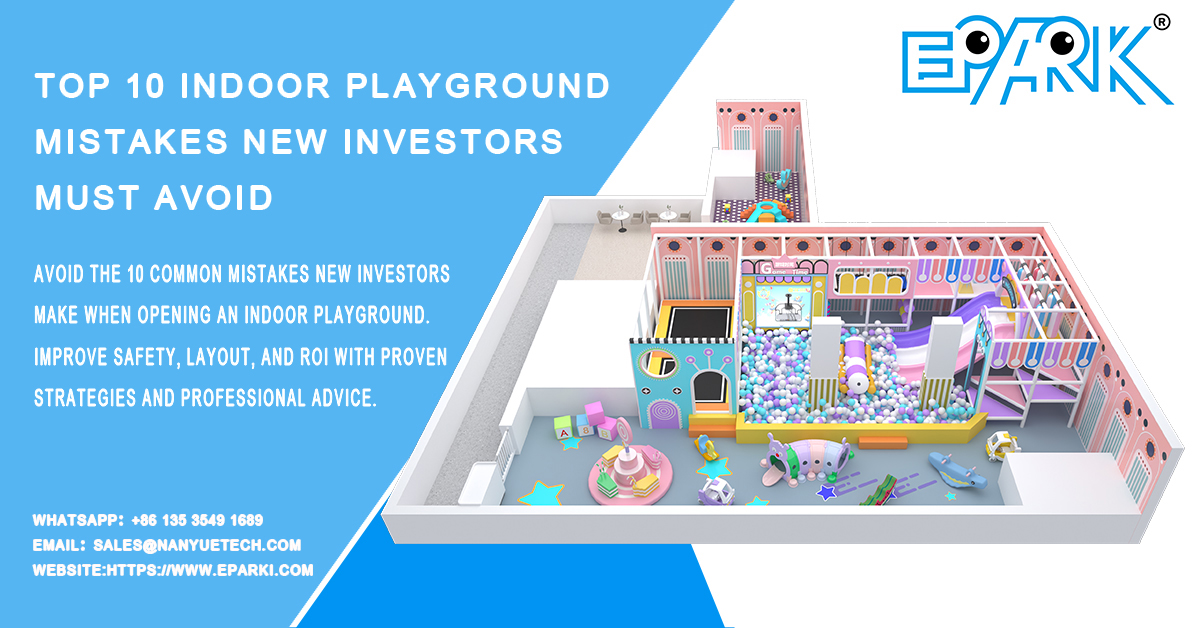
10 Common Mistakes New Investors Make When Opening an (And How to Avoid Them)
Opening an indoor playground has become one of the most attractive investment opportunities in the family entertainment sector. With global demand growing and parents seeking safe, weather-proof play environments, more entrepreneurs and B2B buyers are exploring new playground projects. But while the potential profit is high, many new investors fall into avoidable mistakes that increase costs and slow down business growth.
This guide explains the 10 most common mistakes investors make when opening an indoor playground, with practical strategies, industry insights, and internal reference links to help you build a safer, more profitable project.
If you need design ideas or product references, you may also explore our related resources:
Why These Mistakes Matter for B2B Buyers
For shopping malls, FEC operators, childcare centers, and first-time investors, an indoor playground is more than play equipment—it is a long-term business asset. The success of your project depends on the right manufacturer, compliance with safety standards, smart budgeting, and an efficient layout. A single mistake—choosing unreliable materials, misunderstanding space requirements, or ignoring local regulations—can turn your project into a costly redesign.
This article helps B2B buyers avoid those pitfalls and build a professional indoor playground that meets safety expectations, earns customer trust, and generates strong ROI.
Choosing a Manufacturer Blindly
Many first-time investors choose a supplier only based on price. But an indoor playground requires certified materials, reliable engineering, and long-term support—not the cheapest quote.
What Goes Wrong
Unqualified manufacturers often use:
-
Thin steel pipes
-
Low-density foam
-
PVC prone to cracking
-
Weak connectors
-
Poor welding techniques
These issues shorten lifespan and increase repair costs.
How to Avoid It
Check the following before committing:
| Evaluation Area | What to Look For | Why It Matters |
|---|---|---|
| Certifications | ASTM, EN1176, CE | Ensures global safety compliance |
| Past Projects | Installations in your region | Verifies real experience |
| Engineering Drawings | Detailed layouts and fall-zone plans | Ensures structural reliability |
| Warranty | Minimum 1–3 years | Indicates manufacturer confidence |
For a reliable comparison, visit our Indoor Playground Manufacturer Guide.
Overlooking Safety Standards
Safety is the foundation of any indoor playground. Ignoring regulations can cause legal penalties, insurance problems, or forced closures.
Key Standards
-
ASTM F1918 / F1487 – Common in North America
-
EN1176 / EN1177 – Required in Europe
-
CSA Z614 – For Canada
-
AS 4685 – For Australia
Consequences of Non-Compliance
-
Incorrect fall heights
-
Hazardous gaps
-
Insufficient flame-resistant materials
-
Poor cushioning
How to Ensure Compliance
-
Ask manufacturers for compliance certificates
-
Request technical drawings showing safety zones
-
Use flame-retardant PVC and non-toxic EPE foam
-
Hire certified installation teams
Safety should always be planned before purchase—not after installation.
Selecting the Wrong Materials
Material quality directly affects the durability of your indoor playground. Lower-grade materials may reduce upfront cost but increase long-term expenses.
Common Material Mistakes
-
Soft PVC that cracks within months
-
Low-density foam that compresses quickly
-
Rust-prone steel pipes
-
Weak netting
Recommended Material Specs
| Component | Specification | Benefit |
|---|---|---|
| Steel Pipes | ≥48 mm galvanized steel (≥2 mm wall) | Strong and corrosion-resistant |
| PVC Cover | 0.55–0.6 mm, anti-scratch | Long lifespan |
| Foam | High-density EPE, ≥5 cm | Better shock absorption |
| Netting | Polyester, high-tension design | Safe for climbing |
See our Material Comparison Guide for Indoor Playgrounds.
Poor Theme Selection
A theme shapes the identity of your indoor playground. But many investors choose aesthetic trends that do not fit their target customers.
Common Issues
-
Themes too complex for the budget
-
Designs that clash with mall branding
-
Themes unsuitable for local culture
Popular and Effective Themes
Best Practices
-
Study your target market
-
Analyze competitor themes
-
Ask designers for 3D previews
A well-selected theme increases customer engagement and helps build long-term brand recognition.

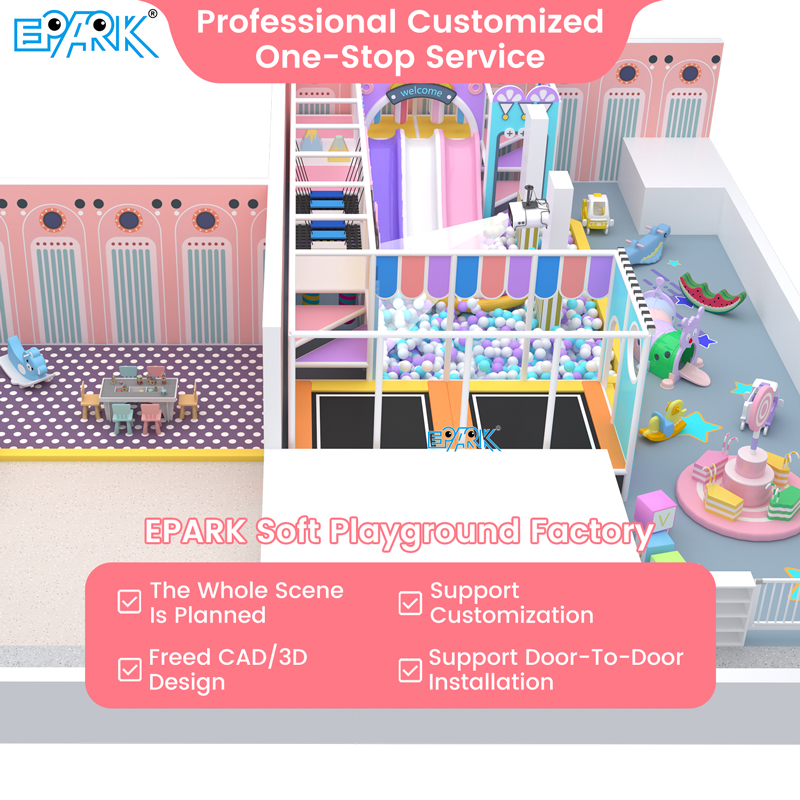
Miscalculating Space Requirements
Indoor playground projects often fail because investors misunderstand layout flow and spacing needs. Proper planning ensures comfort, safety, and higher customer satisfaction.
Typical Space Allocation
| Area | Recommended Percentage |
|---|---|
| Main Play Zone | 60–70% |
| Seating & Café | 10–15% |
| Party Rooms | 10–15% |
| Storage & Back Office | 5–10% |
What to Avoid
-
Equipment placed too close to columns
-
Blind spots for supervisors
-
No room for strollers or parents
Solutions
-
Arrange a professional site survey
-
Use 3D design services
-
Separate toddler areas from active zones
See our blog: How Many Square Meters Does Your Indoor Playground Need?
Ignoring Local Regulations
Every region has unique fire, construction, and safety codes. Ignoring these regulations often leads to expensive redesigns.
Common Compliance Errors
-
Not using flame-resistant materials
-
Insufficient emergency exits
-
Wrong ceiling height for equipment
-
Incompatible electrical systems
How to Stay Compliant
-
Research regulations early
-
Share local requirements with your supplier
-
Work with installers familiar with local laws
-
Get insurance that covers children’s playgrounds
Compliance prevents fines, liability risks, and project delays.
Underestimating the Total Budget
Many investors calculate only the equipment price and forget the full cost of opening an indoor playground.
Hidden Costs to Consider
| Category | Examples |
|---|---|
| Renovation | Flooring, lighting, décor |
| Shipping | Freight, customs, taxes |
| Installation | Labor, tools |
| Operation | Staff, utilities, cleaning |
| Marketing | Branding, events |
How to Budget Safely
-
Ask for an itemized cost breakdown
-
Prepare a 10–20% contingency fund
-
Plan long-term maintenance costs
Poor Layout Planning
Even premium equipment cannot perform well in a poorly designed layout. Proper space management improves safety and enhances user experience.
Common Layout Problems
-
Combining toddler and older-child zones
-
Insufficient pathways
-
Incomplete sightlines for staff
Better Layout Strategies
-
Use zone-based design for different age groups
-
Add viewing areas for parents
-
Consider emergency accessibility routes
-
Ensure all play modules integrate smoothly
Good layout = better flow, safer play, longer customer stays.
Forgetting About Maintenance
An indoor playground requires regular maintenance to keep it safe and attractive. Many investors overlook this step and face operational issues later.
What Needs Regular Check
-
Foam condition
-
Net stability
-
Connector tightness
-
Ball pit sanitation
-
PVC wear
Maintenance Tips
-
Create weekly and monthly checklists
-
Replace worn materials immediately
-
Train staff for safety inspections
-
Keep spare parts on site
Regular maintenance protects your investment and improves customer trust.
Weak Marketing & Business Model
Some investors believe location alone brings customers. But the indoor playground industry is competitive, and a strong marketing strategy is essential.
Common Mistakes
-
Relying only on walk-in customers
-
No membership or loyalty programs
-
Little online visibility
Stronger Business Strategies
-
Offer birthday party packages
-
Create memberships and monthly passes
-
Collaborate with schools and parenting groups
-
Produce short videos for TikTok, Instagram, or Facebook
-
Launch seasonal events and workshops
A healthy business model ensures long-term profitability, not just short-term sales.
 Conclusion
An indoor playground can be an excellent long-term investment, but the process requires careful planning and industry knowledge. By avoiding common mistakes—such as choosing unreliable manufacturers, overlooking safety standards, mismanaging space, and underestimating the total budget—you can build a safe, profitable, and competitive indoor playground that stands out in your market.
With proper research, high-quality materials, and a reliable supplier, your project can achieve long-term success and deliver a memorable experience for families.
Start Your Indoor Playground Project Today
Ready to design a safe, profitable indoor playground?
Contact our professional team for:
-
Free customized design
-
Material consultation
-
Safety compliance guidance
-
Factory-direct pricing
General Disclaimer
All data on https://www.eparki.com is for general guidance only. As a leading indoor playground manufacturer and trampoline supplier, EPARK strives for accuracy but gives no express or implied warranty regarding completeness, performance or project fitness. Product specs, designs and results may vary with use and customer requirements. Buyers must verify technical details, compliance and suitability before purchase. EPARK OEM/ODM is not liable for any direct, indirect or consequential damages arising from site use. For custom solutions, contact our manufacturer and supplier team via the Contact page.
Intellectual Property
Text, images, videos, CAD files and software are Guangzhou EPARK Electronic Technology Co., Ltd. All rights reserved. No part may be copied, republished or used commercially without prior written permission. We will pursue legal action for copyright or design-patent infringement.
Trademarks
"EPARK", the EPARK logo and related graphics are registered trademarks of Guangzhou EPARK Electronic Technology Co., Ltd. Unauthorized use in ads, domain names or packaging is prohibited.
Governing Law
These terms are governed by the laws of the People's Republic of China.
Contact
Questions? Email sales@nanyuetech.com or WhatsApp +86 139 0307 9263.